When you're deep in the woods or parked at a remote campsite, reliable power isn't a luxury—it's essential. Whether charging your camera, running a CPAP machine, or keeping your phone alive for emergencies, having a dependable energy source makes all the difference. But choosing between a portable power station and a gas generator comes down to more than just wattage. For campers who value peace, simplicity, and sustainability, the decision hinges on noise, convenience, environmental impact, and real-world usability.
This comparison dives into the core differences between portable power stations and gas generators, focusing on what matters most during quiet camping: sound levels, setup ease, runtime, and overall user experience. The goal isn’t to declare a universal winner but to help you match the right power solution to your outdoor lifestyle.
Noise Levels: The Heart of Quiet Camping
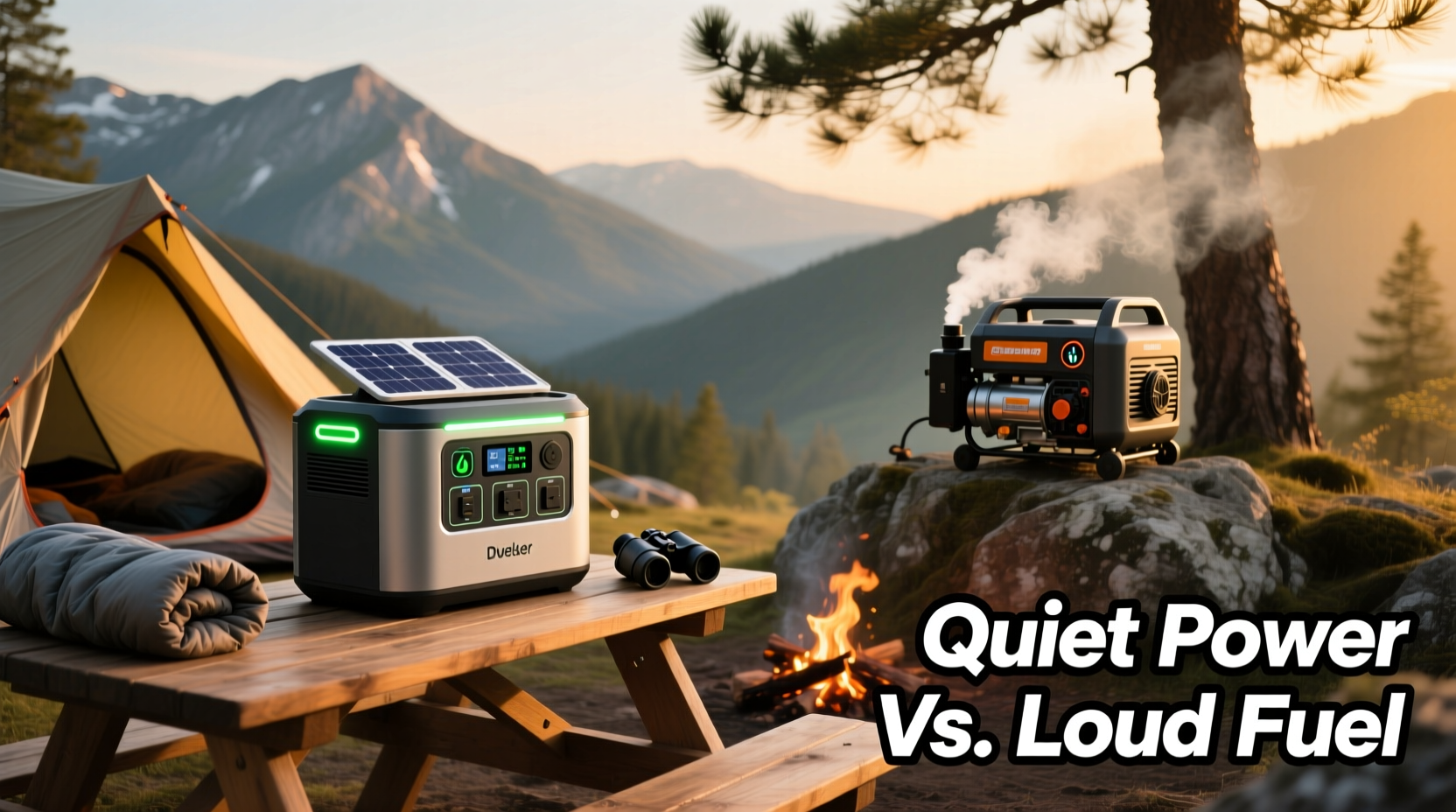
One of the most immediate distinctions between portable power stations and gas generators is noise. Campgrounds are shared spaces. The last thing anyone wants is the constant drone of an engine disrupting bird calls, conversation, or sleep.
Gas generators typically operate between 65 and 75 decibels—comparable to a vacuum cleaner or loud conversation. Even \"quiet\" models rarely dip below 58 dB, which is still noticeable in a serene forest setting. In contrast, portable power stations run silently. With no moving parts or combustion, they produce zero operational noise. This silence enhances the camping experience, allowing you to enjoy nature without mechanical interference.
Tip: If you plan to camp in bear country or areas with sensitive wildlife, silent operation reduces human disturbance and supports ethical outdoor practices.Consider this scenario: You're on a solo backpacking trip in the Sierra Nevada, nestled beside a high-altitude lake. It’s midnight. A sudden storm knocks out your satellite communicator. With a portable power station, you can recharge your gear quietly, without disturbing nearby hikers or alerting animals to your presence. A gas generator would not only wake others but could also attract unwanted attention from curious wildlife drawn to unfamiliar sounds.
Portability and Setup: Convenience in the Wild
Weight, size, and ease of use play a major role when selecting camping equipment. Portable power stations win hands-down in portability. Most models range from 10 to 30 pounds, fit easily in a car trunk or backseat, and require no fuel handling. Simply charge them at home, bring them along, and plug in your devices via AC outlets, USB ports, or DC adapters.
Gas generators, even compact ones, tend to be heavier (30–50 lbs), bulkier, and more complex to operate. They require fuel storage, oil checks, pull-start mechanisms, and regular maintenance. Spilling gasoline in the wilderness is not only dangerous but environmentally damaging. Transporting fuel also adds logistical weight and risk, especially on trails where every ounce counts.
For families or car campers, the extra weight might be manageable. But for backpackers, van lifers, or minimalist adventurers, the streamlined design of a power station offers unmatched convenience.
“Silence and simplicity are critical in backcountry settings. A portable power station gives you energy independence without the noise and hassle of combustion engines.” — Dr. Lena Torres, Outdoor Recreation Researcher, University of Colorado
Power Output and Runtime Comparison
While power stations excel in quietness and portability, gas generators generally offer higher continuous output and longer runtime—especially for energy-intensive appliances like electric grills, heaters, or air conditioners.
A typical mid-range portable power station (e.g., 500–1000Wh) can run a mini-fridge for 6–10 hours, charge a laptop 10+ times, or power LED lights and phones for days. However, once depleted, it must be recharged via wall outlet, solar panels, or car adapter—none of which may be readily available off-grid.
Gas generators, on the other hand, can run continuously as long as fuel is supplied. A 2000W inverter generator can deliver stable power for over 8 hours on a single tank and refuel quickly. This makes them ideal for extended trips without access to solar charging or grid power.
The trade-off? Noise, emissions, and maintenance. While gas generators provide raw power, they do so at the cost of serenity and ecological footprint.
| Feature | Portable Power Station | Gas Generator |
|---|---|---|
| Noise Level | Silent (0 dB) | 60–75 dB (noticeable) |
| Fuel Source | Lithium-ion battery (electric) | Gasoline or propane |
| Runtime (avg.) | 5–15 hours (depending on load) | 8–16 hours (refuelable) |
| Recharge Time | 3–8 hours (wall/solar) | N/A (refuels in minutes) |
| Maintenance | Minimal (battery care) | Regular (oil, spark plugs, carburetor) |
| Emissions | Zero during use | CO2, CO, NOx released |
| Portability | High (lightweight, handle-equipped) | Moderate to low (heavy, fuel required) |
Environmental and Safety Considerations
Camping responsibly means minimizing your environmental impact. Portable power stations are inherently cleaner. They produce no emissions during operation and can be recharged using renewable sources like solar panels. Many modern models integrate seamlessly with foldable solar kits, enabling off-grid sustainability.
Gas generators emit carbon dioxide, carbon monoxide, and other pollutants. In enclosed spaces—like tents or poorly ventilated shelters—this poses a serious health risk. Even outdoors, exhaust fumes contribute to air pollution and degrade the natural ambiance.
Safety is another concern. Gasoline is flammable and volatile, especially in hot conditions. Storing fuel near heat sources or inside vehicles increases fire risk. Power stations, while not immune to risks (lithium batteries can overheat if damaged), are far safer in typical camping environments when used according to manufacturer guidelines.
Tip: Always store lithium power stations in moderate temperatures. Avoid leaving them in direct sun or freezing vehicles to preserve battery life.Real-World Scenario: A Weekend Family Campout
Meet the Reynolds family: two parents, two kids, and a golden retriever. They’re spending three nights at a state park campground. Their gear includes a 12V cooler, string lights, two smartphones, a tablet for kids’ entertainment, and a CPAP machine for dad.
Last year, they brought a 2000W gas generator. It powered everything—but the noise drew complaints from neighbors. The kids couldn’t sleep past 7 a.m. due to morning engine starts, and refueling was messy. This year, they switched to a 1000Wh portable power station paired with a 200W solar panel.
Results? Total silence. The CPAP ran all night without issue. Lights and devices stayed charged. The solar panel topped up the station during daylight, even on partly cloudy days. No fumes, no noise, no maintenance. The only limitation was not running the cooler and CPAP simultaneously at full blast—but smart load management solved that.
For their needs, the power station wasn’t just quieter—it was smarter, cleaner, and more enjoyable.
Step-by-Step Guide: Choosing Your Camping Power Solution
Follow this process to determine the best option for your next trip:
- Assess your power needs: List all devices you’ll use and their wattage. Add up total daily consumption in watt-hours (Wh).
- Determine trip duration: Short weekend? A power station may suffice. Two weeks off-grid? Consider a hybrid approach or gas backup.
- Evaluate charging options: Will you have access to solar, car charging, or shore power? If not, gas refueling may be necessary.
- Prioritize noise sensitivity: Are you in a crowded campground or remote wilderness? Silence often outweighs raw power in shared spaces.
- Weigh portability: How will you transport the unit? Can you carry it short distances?
- Plan for contingencies: Bring a secondary battery pack or know fuel availability in case of emergency.
Expert Insight: The Future of Off-Grid Energy
As battery technology improves and solar efficiency rises, experts predict a shift toward clean, silent power solutions in outdoor recreation.
“The next decade will see lithium and solid-state batteries dominate portable energy. We’re already seeing power stations with faster charging, longer lifespans, and better cold-weather performance. For most campers, gas generators will become niche tools—not defaults.” — Mark Delgado, Senior Engineer at Renewable Energy Systems Lab
This evolution benefits both users and ecosystems. Quieter campsites mean less human intrusion into natural soundscapes, supporting wildlife behavior and visitor well-being.
Frequently Asked Questions
Can a portable power station run a small air conditioner?
It depends on the model. Most standard camping AC units require 1000–1500W to start and 600–1000W to run. Only high-capacity power stations (1500Wh+) with surge support (2000W+) can handle this. Check both continuous and peak wattage before attempting.
How long do portable power stations last?
Most quality units retain 80% battery capacity after 500–1000 charge cycles. With proper care—avoiding full discharges and extreme temperatures—they can last 5–7 years. Gas generators may last longer mechanically but require ongoing maintenance and part replacements.
Are gas generators allowed in all campgrounds?
No. Many national parks and designated wilderness areas restrict or ban gas generators due to noise and emissions. Always check local regulations. Some parks designate specific “generator hours” to minimize disruption.
Final Verdict: Matching Power to Purpose
The choice between a portable power station and a gas generator isn’t about which is objectively better—it’s about alignment with your camping values and practical needs.
If you prioritize silence, safety, and sustainability—and your power demands are moderate—a portable power station is likely your best companion. It integrates seamlessly with solar, eliminates fuel logistics, and preserves the tranquility of nature.
If you need high-output, long-duration power for heavy appliances or extended stays without recharging infrastructure, a gas generator remains a viable, though noisier, option. Just be mindful of noise etiquette, emissions, and safe fuel handling.
Many experienced campers now adopt a hybrid strategy: a primary power station for daily needs, backed by a compact gas generator for emergencies or high-load tasks. This balanced approach combines the best of both worlds—clean, quiet energy with fallback resilience.
🚀 Ready to upgrade your camping power? Start by auditing your energy needs, then test a mid-range power station on your next trip. Share your experience, compare notes, and help fellow adventurers make smarter, quieter choices in the wild.








