
When planning a camping trip, reliable power can make the difference between a comfortable experience and one filled with frustration. Whether you're running a mini-fridge, charging devices, or powering lights, having an off-grid energy source is essential. Two popular options are portable power stations and gas generators. While both deliver electricity in remote locations, they differ significantly in noise levels, safety, environmental impact, and ease of use. For campers who value peace, quiet, and safety, understanding these differences is critical.
Noise Levels: The Quiet Advantage of Portable Power Stations
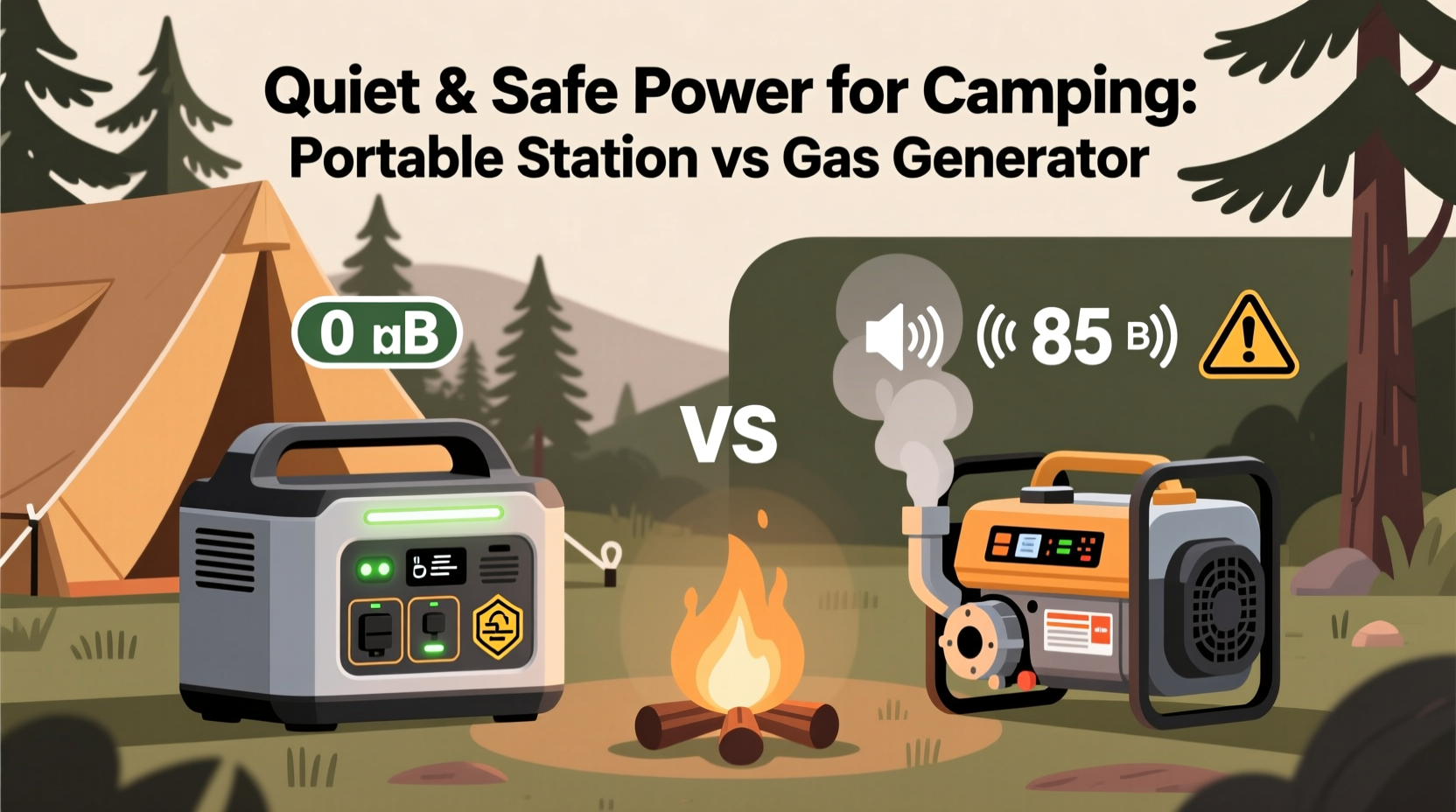
One of the most immediate and noticeable differences between portable power stations and gas generators is sound output. Gas generators rely on internal combustion engines to produce electricity, resulting in constant mechanical noise. Even \"quiet\" models typically operate between 50–75 decibels (dB), comparable to a normal conversation or a busy office. In contrast, portable power stations run silently—usually at 0 dB—because they have no moving parts or engine.
This silence matters in nature. Imagine sitting by a lake at dusk, listening to birds call and wind rustle through trees. A gas generator disrupts that serenity with a persistent hum or roar, potentially disturbing wildlife and nearby campers. Many campgrounds now enforce strict noise ordinances, especially during evening hours. Exceeding permitted noise levels can lead to warnings or even eviction.
Tip: If you must use a gas generator, place it at least 30 feet away from your tent and downwind to minimize noise and fumes.Safety Comparison: Why Electricity Without Fumes Matters
Safety is another area where portable power stations outperform gas generators. Gas-powered units emit carbon monoxide (CO), a colorless, odorless gas that can be deadly in enclosed or poorly ventilated spaces. According to the Centers for Disease Control and Prevention (CDC), over 400 people die annually in the U.S. from unintentional CO poisoning linked to portable generators.
Camping often involves using shelters like tents, pop-up trailers, or RVs. Running a gas generator inside or near these structures—even with ventilation—poses serious health risks. There have been documented cases of campers suffering CO poisoning after placing a generator too close to a tent flap or under a rainfly.
In contrast, portable power stations use lithium-ion or LiFePO4 batteries to store energy. They produce no exhaust, require no fuel, and do not generate harmful emissions during operation. This makes them safe to use indoors, in vehicles, or right next to your sleeping area. Their sealed design also eliminates fire hazards associated with fuel spills or engine overheating.
“Battery-based power stations eliminate the two biggest dangers of traditional generators: carbon monoxide exposure and flammable fuel storage.” — Dr. Alan Reyes, Outdoor Safety Researcher, National Institute of Environmental Health Sciences
Environmental and Practical Considerations
Beyond noise and safety, environmental impact plays a growing role in outdoor gear choices. Gas generators burn fossil fuels, contributing to air pollution and greenhouse gas emissions. Spilled gasoline can contaminate soil and water sources—a serious concern in pristine natural environments. Refueling requires careful handling and transport of hazardous liquids, which many campers prefer to avoid.
Portable power stations, while manufactured using resource-intensive processes, offer a cleaner operational footprint. When charged via solar panels or grid electricity from renewable sources, they become nearly zero-emission solutions. Modern models support fast recharging from wall outlets, car ports, or foldable solar arrays, offering flexibility without pollution.
Another practical advantage is maintenance. Gas generators require regular oil changes, spark plug replacements, air filter cleaning, and winterization if stored long-term. Neglecting maintenance leads to starting failures—often at the worst possible time. Portable power stations need almost no upkeep beyond occasional full discharge/recharge cycles to calibrate battery meters.
Detailed Comparison: Key Features Side-by-Side
| Feature | Portable Power Station | Gas Generator |
|---|---|---|
| Noise Level | 0 dB (silent operation) | 50–75+ dB (noticeable engine noise) |
| Emissions | Zero during use | Carbon monoxide, NOx, hydrocarbons |
| Fuel Required | No (rechargeable via AC/solar/car) | Yes (gasoline, propane, or diesel) |
| Indoor Use Safety | Safe | Extremely hazardous |
| Maintenance Needs | Minimal (battery calibration) | Regular (oil, filters, carburetor) |
| Lifespan (cycles/years) | LiFePO4: 3000+ cycles (~10 years) | Engine wear: ~1000 hours (~5–7 years) |
| Startup Time | Instant (press button) | Manual pull-start or electric (delayed) |
| Portability | Lightweight, compact (10–60 lbs) | Bulkier, heavier (40–100+ lbs with fuel) |
Real-World Scenario: Family Camping Trip Gone Right
The Thompson family planned a week-long camping trip in Yosemite National Park. They needed power for a CPAP machine, phone charging, a small cooler, and string lights. Initially, they considered renting a 2000-watt gas generator due to its lower upfront cost. However, after reading about CO risks and campground noise rules, they opted instead for a 1000Wh portable power station paired with a 200W solar panel.
During their stay, they appreciated the ability to place the unit inside their shaded awning without fear of fumes. At night, it powered the CPAP quietly beside the bed—something impossible with a noisy generator. On sunny days, the solar panel kept the station topped up. Though they had to manage power usage carefully, the system met all essential needs safely and silently. Neighboring campers even complimented how peaceful their site felt.
When a sudden storm delayed their return, they used the power station to keep radios and phones charged—critical for receiving weather updates. Unlike a gas generator, there was no risk in operating it under their covered trailer. The experience convinced them to purchase a second unit for future trips.
Step-by-Step Guide: Choosing the Right Option for Your Needs
- Assess your power requirements: List all devices you plan to run and their wattage. Add 20% buffer for surges. For example: mini-fridge (100W), lights (30W), CPAP (50W), phone charging (20W) = ~200W continuous. Multiply by hours used per day to get total watt-hours needed.
- Evaluate runtime and recharging options: Can you access sunlight for solar charging? Will you return to a vehicle daily? Power stations depend on recharge availability; gas generators only need fuel resupply.
- Consider location and regulations: Are you in a national park with noise limits? Is your shelter enclosed? These factors strongly favor power stations.
- Weigh portability: How far will you carry the unit? Power stations are generally lighter and easier to handle than gas generators of similar output.
- Factor in long-term costs: While gas generators may seem cheaper initially, ongoing fuel and maintenance add up. High-quality power stations last longer with less ownership hassle.
- Decide based on priorities: Choose a power station for quiet, clean, safe operation. Reserve gas generators for high-draw tools (e.g., power saws) or extended off-grid stays with reliable ventilation and fuel access.
Checklist: Preparing Your Power Source for Camping
- ✔ Calculate total watt-hour needs for your trip duration
- ✔ Fully charge your power station before departure
- ✔ Pack compatible solar panels if staying multiple days
- ✔ Bring necessary cables and adapters (AC, USB, 12V)
- ✔ Test all devices with the unit before leaving home
- ✔ For gas generators: check oil level, bring extra fuel in approved containers, and pack a CO detector
- ✔ Review campground rules on generator use and quiet hours
Frequently Asked Questions
Can I use a portable power station to run a rooftop air conditioner?
Most rooftop AC units require 1000–1500 watts to start and 600–800 watts to run. Few portable power stations can handle this load unless specifically designed for RVs (e.g., models with 2000W+ inverters and 2000Wh+ capacity). Even then, runtime will be limited. For frequent AC use, a gas generator or hybrid system may be more practical.
Are portable power stations waterproof?
No. Most are splash-resistant but not waterproof. Never expose them to rain or submerge them. Always use under cover or in a dry compartment. Moisture damage is not typically covered under warranty.
How long do portable power stations last on a single charge?
Runtime depends on capacity (measured in watt-hours) and total load. For example, a 500Wh station running a 50W cooler will last about 8–10 hours (factoring efficiency loss). Higher loads reduce runtime disproportionately due to inverter inefficiency and battery discharge curves.
Final Thoughts: Prioritizing Peace, Safety, and Simplicity
For the vast majority of campers, portable power stations represent a superior choice over gas generators when quietness and safety are priorities. Their silent operation enhances the natural experience, allowing you to enjoy the sounds of the wilderness rather than drown them out. More importantly, they eliminate life-threatening risks associated with carbon monoxide and flammable fuels.
While gas generators still hold value for high-power demands or extended expeditions where recharging isn't feasible, they come with significant trade-offs. Advances in battery technology have made portable power stations more affordable, durable, and powerful than ever. Models with LiFePO4 chemistry now offer thousands of charge cycles, extreme temperature tolerance, and exceptional safety profiles.
As outdoor recreation evolves, so should our gear. Choosing a portable power station isn’t just about convenience—it’s a commitment to responsible, respectful, and safe camping. Whether you’re a weekend warrior or a seasoned backcountry explorer, making the switch means fewer headaches, greater peace of mind, and a deeper connection to the environment around you.
🚀 Ready to upgrade your camping setup? Start by calculating your power needs and explore top-rated portable stations with solar compatibility. Share your experience or ask questions in the comments below—we’d love to hear how you stay powered in the wild!








