Ask a bartender in Berlin, Tokyo, or Melbourne to name three South American spirits—and most will cite rum, tequila, and maybe cachaca. Pisco rarely makes the list. Ask about Italian grape brandies, and many will default to brandy di Marsala or even generic “Italian brandy,” overlooking grappa entirely. Yet both pisco and grappa are centuries-old, terroir-driven, legally protected spirits with rigorous production standards, profound cultural roots, and extraordinary sensory complexity. Neither is a “lesser” spirit—they’re underrepresented. The real question isn’t which *deserves* global attention more, but why both have been systematically sidelined by marketing inertia, distribution bottlenecks, and outdated perceptions of “digestif-only” utility. This article cuts through the noise—not to crown a winner, but to equip you with the knowledge, context, and practical insight to appreciate, select, and champion these two remarkable distillates.
Origins & Legal Identity: More Than Just Geography
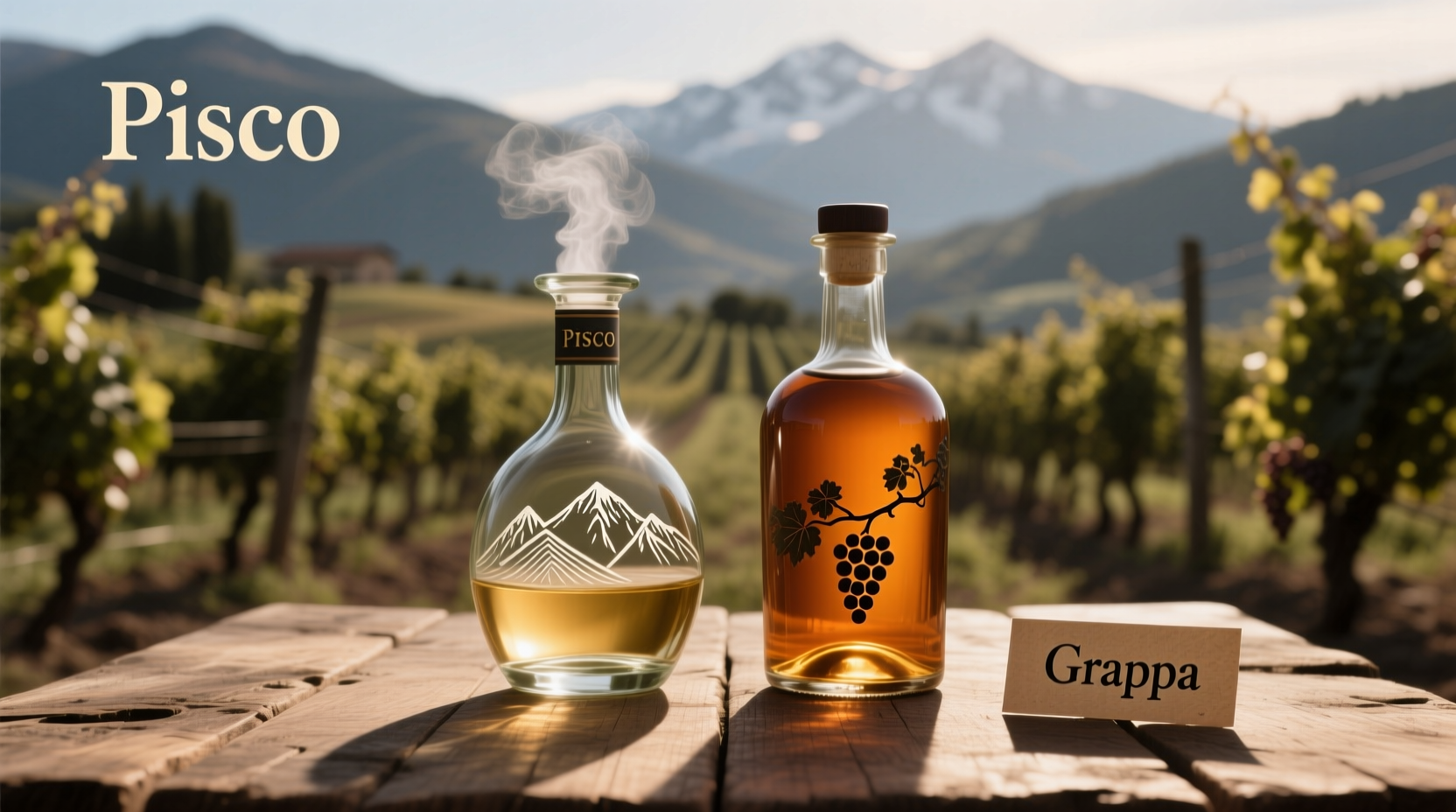
Pisco is a grape brandy born from colonial necessity and Andean adaptation. First distilled in Peru’s Ica Valley in the 16th century—shortly after Spanish settlers introduced Vitis vinifera grapes—it evolved as a response to wine spoilage during long sea voyages. By 1641, Peruvian records document “aguardiente de uva” (grape firewater) sold in Lima’s markets. Chile followed suit, developing its own traditions in the Elqui and Limarí Valleys. Today, pisco is governed by strict appellation laws: Peruvian pisco must be made from eight approved grape varieties (including Quebranta, Italia, and Moscatel), distilled in copper pot stills to proof without dilution or aging in wood, and bottled at 38–48% ABV. Chilean pisco allows aging in wood (often raulí or oak), permits column stills for certain categories, and defines “pisco” more broadly—including blended and flavored expressions. Crucially, both nations claim exclusive rights to the term “pisco”—a decades-long trade dispute recognized by the WTO and enshrined in bilateral agreements.
Grappa, meanwhile, emerged from frugality in Italy’s northern vineyards. After pressing grapes for wine, winemakers fermented the leftover skins, seeds, and stems—called vinaccia—and distilled them to recover residual alcohol and aromatics. Its earliest documented use dates to the 9th century in Aquileia, but it wasn’t codified until 1989, when the EU granted grappa Protected Geographical Indication (PGI) status. To bear the name “grappa,” the spirit must be produced exclusively in Italy (or San Marino) from pomace sourced from Italian grapes, distilled on the same premises where the grapes were pressed, and aged or unaged—but never diluted below 37.5% ABV. Unlike pisco, grappa has no single dominant region; excellence spans Trentino-Alto Adige’s alpine precision, Piedmont’s Nebbiolo intensity, and Veneto’s delicate Glera-based expressions.
“Grappa is not the ‘leftovers’ of winemaking—it’s the soul of the vintage made liquid. When you taste a well-made grappa, you’re tasting the vineyard’s breath, the harvest’s tension, and the distiller’s restraint.” — Giorgio Barchiesi, Master Distiller, Nonino Distillery, since 1897
Production Philosophy: Still vs. Still, But Worlds Apart
Both spirits rely on copper pot stills for aromatic fidelity—but their approaches diverge sharply in intent and execution.
Pisco distillation prioritizes preservation. Peruvian law forbids wood aging, fining, or filtration. The goal is to capture the purest possible expression of the grape’s varietal character and the microclimate of its valley. Distillers make only one pass through the still—no “heads” or “tails” cuts beyond basic safety removal. The resulting spirit is vibrant, floral, and fruit-forward, with layers of citrus zest, jasmine, quince, and saline minerality. Chilean pisco offers more stylistic range: some producers age in French oak for vanilla and spice; others rest in raulí (a native Chilean hardwood) for subtle cedar and dried herb notes.
Grappa distillation emphasizes transformation. Pomace is fermented before distillation—sometimes for weeks—to develop esters and volatile compounds absent in fresh grapes. The still run is highly selective: master distillers discard up to 30% of the initial and final fractions (“heads” and “tails”) to eliminate harsh fusel oils and preserve only the heart—the most aromatic, balanced portion. Many top-tier grappas are rested in stainless steel or neutral oak for 6–18 months, allowing integration without wood dominance. The result is less about primary fruit and more about texture, lift, and layered nuance: rose petal and bergamot in a Moscato grappa; tar, leather, and violet in a Barolo version; green almond and white pepper in a crisp Pinot Grigio expression.
Tip: When tasting grappa, serve it slightly chilled (10–12°C) in a tulip-shaped glass—never room temperature like whiskey. Cold temp tames alcohol heat and lifts delicate florals.Flavor & Function: Beyond the Digestif Stereotype
The biggest barrier to global appreciation is functional misclassification. Both spirits are routinely relegated to post-dinner sips—“grappa for digestion, pisco for celebration.” That’s reductive—and inaccurate.
Pisco shines in cocktails precisely because of its purity and structure. Its lack of wood influence means it doesn’t compete with modifiers; it amplifies them. A well-made Pisco Sour balances egg white’s silkiness with lime’s acidity and the spirit’s inherent salinity and floral lift. In a Chilcano (pisco, ginger beer, lime), its citrusy backbone harmonizes with spice and effervescence. Even neat, young Peruvian pisco delivers astonishing complexity: Quebranta offers roasted almond and dried fig; Italia bursts with orange blossom and lychee; Torontel whispers chamomile and wet stone.
Grappa, too, transcends its digestif role. Young, unaged grappas (grappa giovane) possess startling vibrancy—ideal for highballs with tonic or soda and a twist of citrus. Aged grappas (affinata or stravecchia) develop honeyed depth and supple tannins, making them exceptional partners for blue cheese, dark chocolate, or even braised short ribs. Their ethereal volatility also makes them superb in culinary reductions—think a few drops of Nebbiolo grappa folded into a veal jus.
| Characteristic | Pisco (Peruvian) | Grappa (Premium Italian) |
|---|---|---|
| Base Material | Fermented grape juice (must) | Fermented grape pomace (skins, seeds, stems) |
| Distillation Cut | Single run; minimal fraction separation | Meticulous heart-cut; up to 30% discarded |
| Aging | Prohibited in wood (Peru); permitted (Chile) | Optional; often in stainless steel or neutral oak |
| Typical ABV Range | 38–48% ABV | 37.5–60% ABV (most 40–45%) |
| Signature Serving | Cocktails (Sour, Chilcano), neat at room temp | Neat (chilled), in spritzes, or culinary infusions |
Real-World Recognition: A Mini Case Study from Brooklyn
In 2022, Brooklyn’s Bar Corte—a 32-seat natural-wine bar known for its hyper-seasonal cocktail menu—faced declining foot traffic among younger patrons who associated pisco and grappa with “grandfather drinks.” Owner Sofia Ruiz didn’t scrap them. Instead, she partnered with importer Vino Roma to source six small-batch grappas (including a rare wild-fermented Schiava from Alto Adige) and four Peruvian piscos (a single-varietal Quebranta, a field blend from Mendoza, and two experimental amphora-aged batches). She trained her staff not to say “try our grappa,” but “this Nebbiolo grappa tastes like rosewater and black truffle—perfect with the burrata.” For pisco, she built a “Pisco Hour” featuring $12 Chilcanos made with house-ginger syrup and local lime, served in copper mugs with candied ginger garnish. Within three months, pisco sales increased 220%, grappa by 170%. More tellingly, 68% of first-time buyers returned within 30 days specifically for another grappa or pisco experience. Ruiz attributes the shift not to novelty, but to contextualization: “People don’t reject tradition—they reject irrelevance. We showed them how these spirits live in their lives, not just in history books.”
How to Choose, Store, and Serve Authentically
Authentic appreciation begins with informed selection—and ends with respectful service.
- Read the label closely: For pisco, look for “Peru” or “Chile” clearly stated, grape variety, and distillery name (not just importer). Avoid “pisco-style” or “pisco liqueur”—these are not authentic. For grappa, verify “Grappa” (not “grape brandy”), “Made in Italy,” and ideally the grape variety and region.
- Start with approachable styles: New to pisco? Try a young, unaged Peruvian Italia or Moscatel—floral and easy. New to grappa? Begin with a young Glera or Müller-Thurgau—light, crisp, and low in alcohol heat.
- Store properly: Keep both spirits upright in a cool, dark place. Unlike wine, they won’t improve with time—but exposure to light, heat, or air accelerates oxidation. Once opened, consume within 6 months for peak vibrancy.
- Serve with intention: Pisco: Room temperature, in a copita (traditional shallow pisco glass) or white wine glass. Grappa: Slightly chilled (10–12°C), in a tulip-shaped grappa glass—never a shot glass or tumbler.
- Pair thoughtfully: Pisco with ceviche, grilled octopus, or citrus-marinated salads. Grappa with aged pecorino, amaretti cookies, or dark chocolate with sea salt.
FAQ: Clearing Common Misconceptions
Is pisco just South American brandy?
No. Brandy implies aging in wood and broader production allowances. Pisco is legally defined as an unaged, undiluted, unfiltered grape distillate—closer in philosophy to eau-de-vie than cognac. Its ABV range and production rules make it a category unto itself.
Isn’t grappa harsh and alcoholic?
That stereotype comes from industrial, mass-produced grappa—often made from mixed pomace and distilled without precision. Artisanal grappa, especially from single-variety, estate-grown pomace and careful heart-cutting, is remarkably smooth, aromatic, and balanced. If your last grappa tasted like paint thinner, you haven’t tasted real grappa.
Can I substitute pisco for gin or vodka in cocktails?
Yes—with nuance. Pisco works best where botanical sharpness isn’t required. It replaces gin beautifully in a Southside (lime, mint, simple syrup) or a riff on a Gimlet. Substituting for vodka requires adjusting sweetness and acid: pisco’s natural fruitiness means less added syrup may be needed, and its acidity pairs well with tart juices like yuzu or passionfruit.
Conclusion: Not a Competition—A Call for Curiosity
Pisco and grappa aren’t rivals waiting for a verdict. They’re parallel testaments to human ingenuity—Peru’s sun-baked valleys transforming fragile grapes into resilient, expressive spirits; Italy’s alpine slopes coaxing haunting perfume from what others discard. Their shared marginalization reflects not inferiority, but the global spirits market’s persistent bias toward scale, familiarity, and wood-aged narratives. Yet as drinkers grow more discerning—seeking authenticity, transparency, and terroir-driven stories—these two spirits offer something rare: profound regional identity, uncompromising craftsmanship, and versatility that defies old categories. Don’t choose between them. Seek out a bottle of Peruvian Quebranta pisco and a Nebbiolo grappa from Piedmont. Taste them side-by-side: feel the pisco’s saline lift against the grappa’s textural warmth. Then reach for your shaker or your cheese board—and let function follow flavor, not formula. The world doesn’t need another “next big thing.” It needs deeper attention to the things already here, patiently waiting to be understood.
💬 Which spirit surprised you most—and how did you discover it? Share your first pisco or grappa moment in the comments. Your story might be the nudge someone else needs to explore beyond the familiar.








