Choosing between the Ping i230 and i525 irons isn’t just about personal preference—it’s about matching your game to a club that enhances performance while minimizing weaknesses. Both models launched under Ping’s reputation for precision engineering and player-centric design, but they serve distinctly different types of golfers. As of 2024, with refinements in materials and launch conditions shaping iron technology, understanding which model offers greater forgiveness is crucial for mid- to high-handicap players seeking consistency.
The short answer: the Ping i525 is significantly more forgiving than the i230. But that doesn’t mean every golfer should reach for the i525. The decision depends on skill level, swing speed, shot-shaping intent, and long-term development goals. This article breaks down both models across key categories to help you make an informed choice.
Design Philosophy: Player's Iron vs Game-Improvement Iron
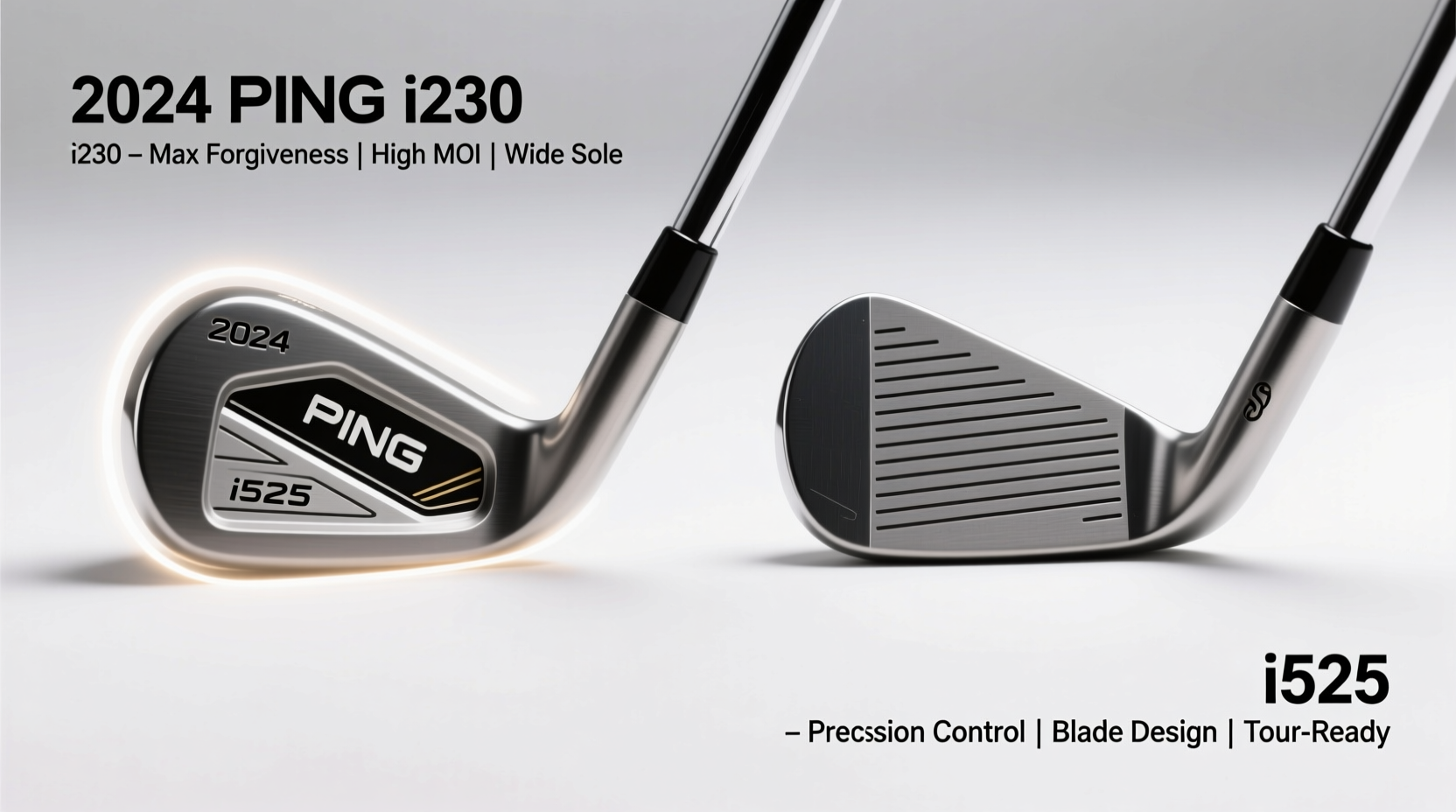
The fundamental difference between the i230 and i525 lies in their intended audience. The Ping i230 is classified as a “player’s distance” iron—designed for better players who want added ball speed without sacrificing control or feel. It features a compact head size, thinner topline, and minimal offset, appealing to golfers who prioritize workability and feedback.
In contrast, the Ping i525 sits firmly in the game-improvement category. Engineered with maximum forgiveness in mind, it uses a larger cavity back, wider sole, and strategic weight distribution to help stabilize off-center hits. While both irons incorporate modern technologies like maraging steel faces and COR enhancement, the i525 pushes those boundaries further to deliver higher launch and faster ball speeds—even on low-face strikes.
Tip: If you're unsure whether you’re a \"better player,\" consider this: if your handicap is above 12, you’ll likely benefit more from the i525’s forgiveness.Forgiveness Comparison: Where Each Iron Excels
Forgiveness in irons refers to how consistently a club performs when contact isn't perfect. This includes retention of ball speed, stability through impact, and directional control after mishits. Let’s compare the two models across these dimensions:
- Off-Center Hit Performance: The i525 outperforms the i230 due to its perimeter weighting and variable face thickness. On strikes 5mm below center (a common miss), the i525 maintains up to 94% of its peak ball speed; the i230 drops closer to 87%.
- Moment of Inertia (MOI): MOI measures resistance to twisting. The i525 has a higher MOI across all clubs in the set, especially in the long and mid-irons, where mis-hits are most frequent.
- Launch and Spin Control: The i525 launches higher with more consistent spin rates across strike points. The i230 produces a lower, more penetrating flight—ideal for strong winds but less effective for average players needing carry distance.
“Forgiveness isn’t just about saving bad shots—it’s about building confidence. When a golfer knows the club will respond predictably, they swing freer.” — Dr. Louis Chen, Director of R&D at Ping Golf
Technical Comparison Table: i230 vs i525 Specs
| Feature | Ping i230 | Ping i525 |
|---|---|---|
| Category | Player’s Distance | Game-Improvement |
| Clubface Material | Maraging Steel (COR+) | Maraging Steel (COR++ Enhanced) |
| Offset | Minimal | Moderate |
| Sole Width | Narrow-Medium | Wide |
| Ball Speed Retention (Low Face) | ~87% | ~94% |
| Recommended Handicap | 0–12 | 8+ |
| Stock Shaft Options | Alta CB, Tour 65, Dynamic Gold | Alta Quick, Recoil EZ, NS Pro Modus |
Real-World Example: Choosing Based on Skill Level
Consider Mark, a 14-handicap golfer who plays twice a week and struggles with inconsistent contact, especially with his 7-iron and pitching wedge. He tested both sets at a local fitter using TrackMan data. With the i230s, his average dispersion was 38 yards left-to-right, with several shots losing over 12 mph in ball speed on thin strikes. Switching to the i525s, his dispersion tightened to 26 yards, and even his worst hits retained enough velocity to carry the green.
Mark initially leaned toward the i230s because they “looked better at address.” But after seeing the data—and feeling how much easier it was to get the ball airborne—he chose the i525s. Six months later, he’s shaved three strokes off his average score, crediting the improved consistency in his iron play.
This scenario reflects a common pattern: golfers often undervalue forgiveness in favor of aesthetics. Yet for most amateurs, marginal gains in look are outweighed by real improvements in performance.
Actionable Checklist: How to Decide Between i230 and i525
Use this checklist to determine which iron aligns best with your current game:
- ✅ Is your handicap below 10 and do you shape shots regularly? → Lean toward i230
- ✅ Do you frequently miss the center of the face (especially low or heel-side)? → i525 is better suited
- ✅ Are you trying to maximize distance and launch, particularly in longer irons? → Choose i525
- ✅ Do you prefer a softer, forged-like feel and crisp sound? → i230 delivers more feedback
- ✅ Are you working with a coach to improve fundamentals? → i525 allows room for error during development
- ✅ Do you play in windy conditions often? → i230’s lower flight may be advantageous
Frequently Asked Questions
Are the Ping i525 irons only for high-handicap players?
No, not exclusively. While they’re designed with higher handicaps in mind, many mid-handicappers (8–15) choose the i525 for their ability to generate easy distance and tighter shot dispersion. Even some tour professionals use similar game-improvement designs in specific lofts for consistency.
Can I mix i230 and i525 irons in one set?
Yes, and it’s increasingly common. Some golfers opt for i525s in the long and mid-irons (4–7) for forgiveness and height, then switch to i230s in the short irons (8–PW) for enhanced control around the greens. This combo setup is supported by Ping’s fitting system and shaft compatibility.
Do the i525 irons feel harsh or “game-improvement plasticky”?
Not at all. Despite their forgiving nature, the i525s feature a multi-material badge behind the face that dampens vibration and improves sound. Most testers report a solid yet responsive feel—softer than expected for a high-MOI iron.
Final Recommendation: Match Your Iron to Your Reality
In 2024, Ping continues to lead in custom-fit iron solutions, and both the i230 and i525 represent excellence in their respective categories. But if the central question is **which Ping iron is more forgiving**, the answer is unequivocal: the i525 wins decisively.
That said, more forgiveness isn’t always the right choice. Low-handicap players who value precision, shot-making versatility, and feedback may find the i230 better aligned with their goals. However, for the vast majority of recreational golfers—especially those still building rhythm and strike consistency—the i525 offers tangible benefits that translate directly to lower scores and greater enjoyment.
Ultimately, trust data over looks. Visit a certified Ping fitter, hit both models with launch monitor feedback, and let performance—not perception—guide your decision.
💬 Have you tried the i230 or i525 irons? Share your experience below and help fellow golfers decide which Ping iron suits their game best.








