Keychains are more than just functional accessories—they’re daily companions. Whether clipped to a bag, looped through a belt, or jingling in your pocket, the type you choose affects convenience, comfort, and even peace of mind. Two of the most common styles—pendant keychains and carabiner keychains—offer distinct advantages and drawbacks. But when it comes down to real-world use, which one is genuinely less annoying?
This isn’t about aesthetics alone. It’s about practicality: noise levels, snagging hazards, ease of access, pocket bulge, and long-term wear. After analyzing user experiences, material durability, and design ergonomics, the answer isn’t as obvious as it might seem.
Understanding the Basics: What Defines Each Type?
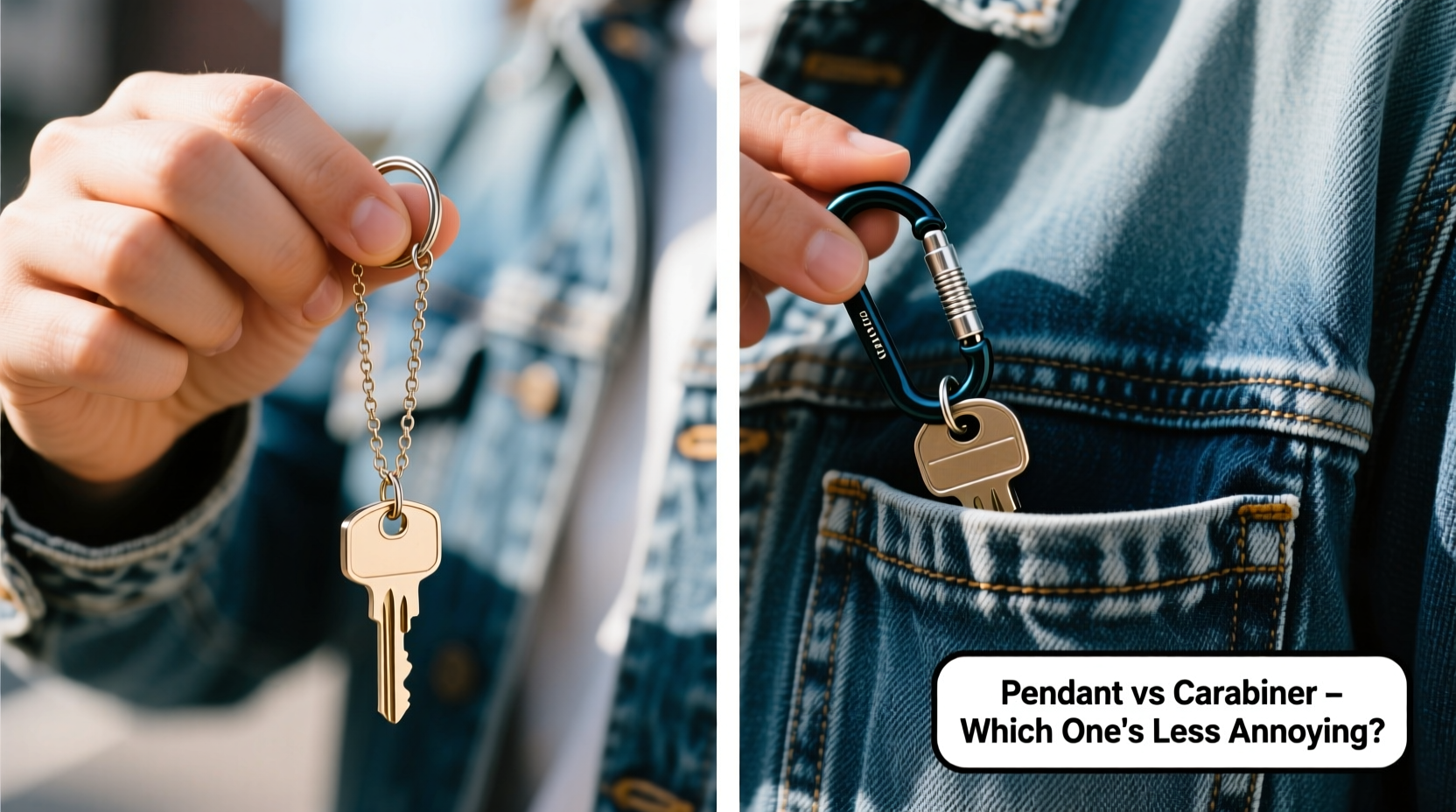
Pendant keychains are typically small decorative items attached to a ring via a short chain, leather strap, or plastic connector. They range from minimalist metal tags to elaborate charms, often personalized with initials, logos, or souvenirs.
Carabiner keychains, inspired by climbing gear, feature a spring-loaded gate that opens and closes to clip keys directly onto belts, bags, or loops. They’re usually made of aluminum or steel and designed for utility over decoration.
The core difference lies in attachment method and purpose. Pendants hang passively; carabiners actively secure. This fundamental contrast shapes how each performs in everyday life.
Noise and Clatter: The Annoyance Factor You Can’t Ignore
One of the most under-discussed aspects of keychains is sound. Keys rattle. Add a pendant or a metal clip, and the jingle multiplies. For many, this becomes a sensory burden—especially in quiet environments like libraries, meetings, or late-night walks.
Pendant keychains tend to amplify noise. The dangling element swings freely, creating a secondary point of contact between keys and surrounding surfaces. A metal charm hitting a phone case or jacket zipper produces an audible *clink* with every step.
Carabiners, while still metallic, reduce movement. When properly closed, they hold keys in a tighter cluster. There’s less swinging, fewer loose parts, and therefore less incidental noise. Some high-end models even feature rubberized gates or silicone sleeves to dampen sound further.
Tip: If noise bothers you, opt for a carabiner with a rubber-coated body or pair it with a silicone key cover to minimize clatter.Bulk and Pocket Comfort: How They Feel in Daily Carry
Comfort matters. No one wants a key digging into their thigh during a commute or distorting the shape of a favorite jacket pocket. Here, carabiners generally win—but with caveats.
A compact carabiner keeps keys organized and flat against a surface. Many models are designed to lie flush when clipped inside a bag or onto a belt loop. However, oversized or poorly designed carabiners can be bulky, especially if the gate sticks out or the body is thick.
Pendant keychains don’t add much thickness, but their dangling nature creates uneven weight distribution. In a tight pocket, the pendant may twist or press awkwardly against fabric, causing discomfort over time. Worse, if the pendant is sharp or rigid (like a metal logo), it can scratch phones or wallets.
“Most people underestimate how much small friction points affect long-term carry comfort. A 2mm edge on a pendant can wear through fabric in weeks.” — Jordan Lin, Urban Gear Designer
Snagging and Safety: Real-World Hazards
Snagging is where pendants truly fall short. That decorative charm? It can catch on seatbelt buckles, backpack straps, or even children’s fingers. In rare but serious cases, dangling accessories have been reported to interfere with machinery or emergency egress.
Carabiners, when fully closed, present a smooth profile. High-quality versions lock automatically and resist accidental opening. Still, low-grade carabiners with weak springs can pop open under stress—potentially leading to lost keys.
Consider this real-life scenario:
Mini Case Study: Sarah, a nurse working 12-hour shifts, switched from a pendant keychain to a micro-carabiner after her pendant caught on a patient’s IV line. Though no harm was done, the near-miss prompted a permanent change. “I didn’t realize how often I reached into pockets or leaned against equipment,” she said. “Now my keys stay put—and so do I.”Durability and Longevity: Which One Lasts Longer?
Pendant keychains often fail at the weakest link: the connector. Chains break. Leather straps fray. Plastic joints crack under repeated stress. Even high-end enamel pendants can chip when dropped.
Carabiners, built for load-bearing applications, are inherently more durable. Aerospace-grade aluminum models withstand drops, corrosion, and daily abuse. Stainless steel variants resist rust even in humid climates. The moving part—the gate mechanism—is the only potential failure point, but reputable brands engineer these to last thousands of cycles.
| Feature | Pendant Keychains | Carabiner Keychains |
|---|---|---|
| Noise Level | High (dangling parts) | Low to moderate |
| Pocket Bulge | Moderate (uneven weight) | Low (compact, flat) |
| Snag Risk | High | Low (when closed) |
| Durability | Varies (often weak connectors) | High (industrial-grade materials) |
| Access Speed | Slow (must remove entire ring) | Fast (clip/unclip individual keys) |
| Aesthetic Flexibility | High (customizable) | Limited (functional design) |
Step-by-Step: Choosing the Right Option for Your Lifestyle
Selecting between pendant and carabiner keychains shouldn’t be arbitrary. Follow this decision timeline to find your best fit:
- Assess your daily routine: Do you carry keys in a pocket, on a bag, or clipped to a belt? Frequent access favors carabiners.
- Evaluate noise sensitivity: Are you in quiet environments often? Choose quieter options—carabiners or silent pendants (e.g., rubberized).
- Check for snag zones: Work around machinery, drive frequently, or wear tight clothing? Avoid dangling elements.
- Test for comfort: Place a mock setup in your pocket for a day. Note pressure points or irritation.
- Decide on priorities: Is personalization more important than function? Or do reliability and silence take precedence?
FAQ: Common Questions About Keychain Annoyances
Can I make a pendant keychain less noisy?
Yes. Use a silicone sleeve on the keyring, choose softer materials (leather, rubber), or eliminate loose chains. Some users wrap the pendant in thin neoprene for sound dampening.
Are carabiner keychains safe for all key types?
Most modern carabiners accommodate standard key heads. However, very wide or oddly shaped keys (like some smart keys) may not fit comfortably. Always check the internal width before purchasing.
Do carabiners wear out over time?
They can, but slowly. Look for models with replaceable gates or sealed bearings. Regular cleaning and occasional lubrication with dry Teflon spray extend lifespan significantly.
Final Verdict: Which Is Actually Less Annoying?
The data, user feedback, and ergonomic analysis point clearly in one direction: carabiner keychains are objectively less annoying for most people in most situations.
They reduce noise, minimize bulk, eliminate snag risks, and offer faster access. While pendants serve emotional or aesthetic purposes—memorials, gifts, branding—they introduce friction into daily routines that accumulates over time.
That said, “less annoying” doesn’t mean “one-size-fits-all.” If your joy comes from a sentimental charm or a custom-engraved tag, a pendant may be worth the trade-offs. But if you value efficiency, discretion, and reliability, the carabiner is the superior choice.
“The best tool disappears in use. A keychain should secure your keys—not announce them.” — Mark Tran, Industrial Designer at Urban Carry Co.
Take Action: Optimize Your Key Game Today
Stop enduring unnecessary jingles, snags, and discomfort. Audit your current keychain: does it serve you, or just decorate? Consider switching to a compact, locking carabiner—or at least modifying your setup to reduce movement and noise.
Small changes compound. A quieter pocket, a smoother reach, a safer carry—these aren’t luxuries. They’re signs of thoughtful design in action.
💬 What’s your go-to keychain, and what drove your choice? Share your experience and help others find smarter ways to carry.








