In 2019, two smartphones captured attention for very different reasons: the OnePlus 7 Pro, a flagship killer with premium features at a mid-tier price, and the Samsung Galaxy Note 10 Lite, released nearly six months later as a budget-friendly version of Samsung’s high-end Note series. On paper, both devices targeted users seeking powerful hardware without paying flagship prices. But when placed side by side, the differences raise an important question—did Samsung misstep with the Note 10 Lite while OnePlus delivered a near-perfect balance?
This article dives deep into the design, performance, camera capabilities, software experience, and long-term value of both phones to determine whether Samsung compromised too much in pursuit of affordability.
Design and Build Quality: Premium vs Practical
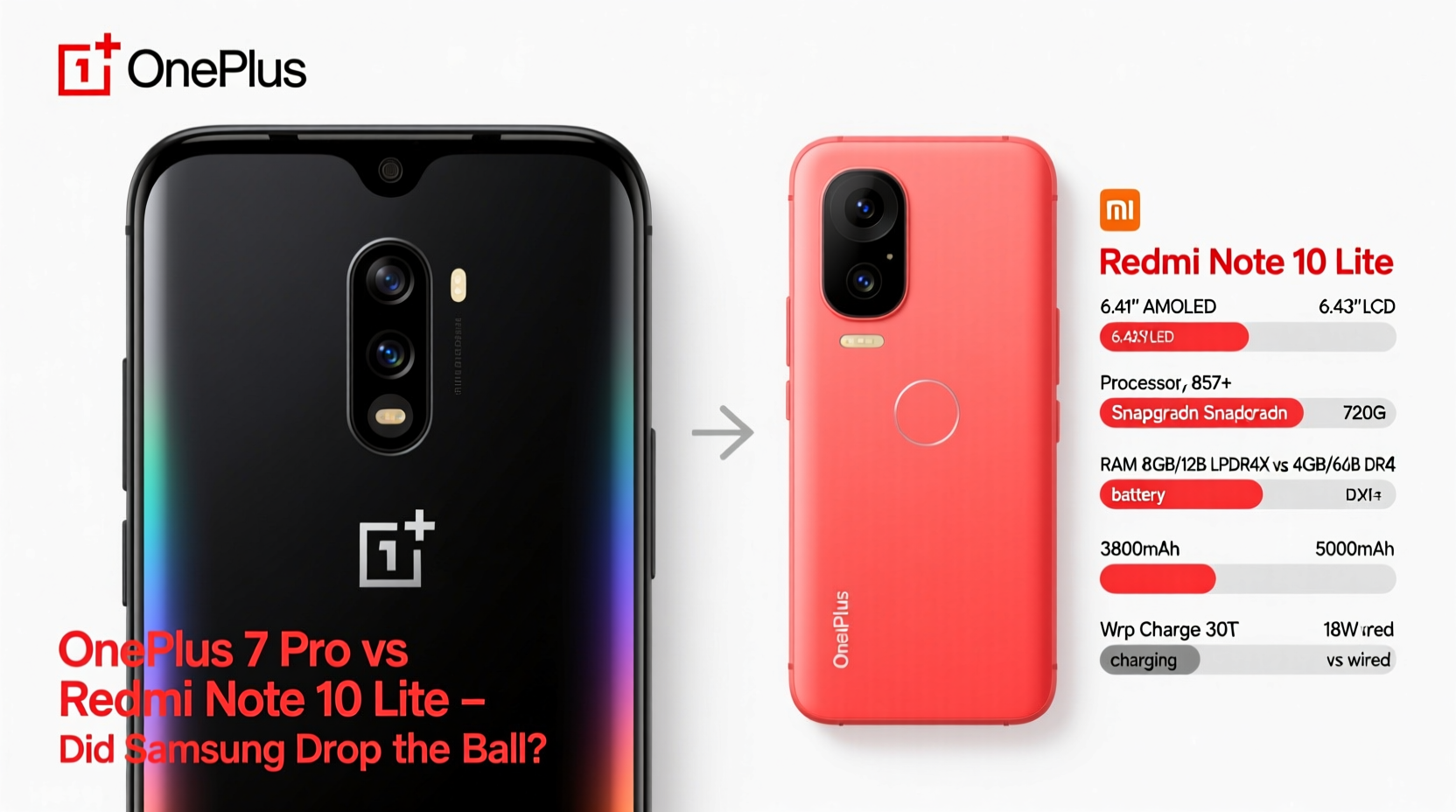
The OnePlus 7 Pro stood out immediately upon release with its sleek, curved glass body, pop-up front camera, and smooth matte finish options. It felt like a luxury device—something typically reserved for phones costing $800 or more. The lack of a notch improved screen immersion, and the device's weight distribution made it comfortable despite its size.
In contrast, the Note 10 Lite adopted a more traditional design. It used a flat glass front with a hole-punch camera and plastic back panel—a noticeable downgrade from the glass-backed Note 10+. While still ergonomic and functional, especially with the included S Pen, the build quality lacked the refinement of the OnePlus. For many, this signaled cost-cutting rather than smart engineering.
Tip: When comparing phones, hold them in hand if possible—materials matter more than specs on paper.Display Comparison: Fluid AMOLED vs Flat HD+
The OnePlus 7 Pro featured a groundbreaking 6.67-inch Fluid AMOLED display with QHD+ resolution (3120 x 1440) and a 90Hz refresh rate. At the time, few phones offered such a smooth scrolling experience, and none under $700. The colors were vibrant, blacks were true, and brightness outdoors was excellent thanks to HDR10+ support.
The Note 10 Lite came with a 6.7-inch Super AMOLED display but only Full HD+ resolution (2400 x 1080) and a standard 60Hz refresh rate. While Samsung’s panels are known for color accuracy and viewing angles, the lower pixel density and lack of high refresh rate made the interface feel less responsive compared to the OnePlus. In daily use, especially during gaming or fast browsing, the difference was palpable.
“High refresh rate displays changed user expectations overnight. Once you go 90Hz, going back feels sluggish.” — David Kim, Mobile UX Analyst at TechPulse Insights
Performance and Hardware: Flagship Chipset vs Mid-Tier Compromise
The heart of any smartphone is its processor, and here the gap widens significantly. The OnePlus 7 Pro launched with the Qualcomm Snapdragon 855—the top-tier chipset of 2019—paired with up to 12GB of RAM and UFS 3.0 storage. This combination ensured seamless multitasking, quick app launches, and sustained performance even under heavy loads.
Samsung opted for the Exynos 9810 in most regions for the Note 10 Lite, a chip already outdated by late 2019. Though paired with 6GB or 8GB of RAM, it struggled with thermal throttling and lagged behind in GPU performance. In benchmark tests, the Snapdragon 855 outperformed the Exynos 9810 by over 30% in CPU tasks and nearly 50% in graphics rendering.
Additionally, the Note 10 Lite used slower UFS 2.1 storage, which affected file transfer speeds and app loading times. For power users, this was a frustrating compromise.
Key Performance Differences
| Feature | OnePlus 7 Pro | Note 10 Lite |
|---|---|---|
| Processor | Qualcomm Snapdragon 855 | Exynos 9810 |
| RAM Options | 6GB / 8GB / 12GB | 6GB / 8GB |
| Storage Type | UFS 3.0 | UFS 2.1 |
| Refresh Rate | 90Hz | 60Hz |
| Battery Capacity | 4000mAh | 4500mAh |
| Fast Charging | Warp Charge 30T (30W) | 25W (not always included) |
Despite having a larger battery, the Note 10 Lite didn’t last significantly longer due to less efficient hardware and software optimization. Meanwhile, the OnePlus 7 Pro could charge from 0 to 70% in just 30 minutes—real-world convenience that users appreciated.
Camera Capabilities: Versatility vs Consistency
Both phones featured triple rear cameras, but their approaches differed. The OnePlus 7 Pro had a 48MP main sensor (Sony IMX586), a 16MP ultra-wide lens, and an 8MP telephoto with 3x optical zoom. Image processing was aggressive early on, but updates improved dynamic range and white balance over time. Low-light performance was solid, though not class-leading.
The Note 10 Lite used a 12MP main sensor (with variable aperture f/1.7–f/2.4), a 12MP telephoto (2x zoom), and a 12MP ultra-wide. Samsung’s image tuning prioritized natural colors and consistency across lenses. However, the lack of a dedicated macro or depth sensor limited creative flexibility.
In real-world conditions, the Note 10 Lite produced more consistent point-and-shoot results, especially in daylight. But the OnePlus offered greater versatility with its wider field of view and higher-resolution primary sensor. Video recording favored the OnePlus thanks to better stabilization and 4K@60fps support across all lenses.
Mini Case Study: Travel Photography Showdown
Travel blogger Maya Tran used both phones during a week-long trip through northern Thailand. She found the OnePlus 7 Pro excelled in capturing sweeping landscapes with its ultra-wide lens and handled rapid shooting sequences better. However, she preferred the Note 10 Lite’s portrait mode for subject isolation and skin tone accuracy. Ultimately, she kept the OnePlus as her primary device due to faster app switching between navigation, camera, and editing tools.
Software Experience and Longevity
One of the most critical differentiators is software support. The OnePlus 7 Pro shipped with OxygenOS based on Android 9 and received official updates up to Android 11. While some users lamented the shortened update cycle, OxygenOS remained lightweight, bloat-free, and highly customizable—ideal for enthusiasts.
Samsung promised four years of security updates for the Note 10 Lite, a significant improvement over past practices. It launched with One UI 1.5 (Android 9) and was eligible for upgrades to Android 12. However, One UI, while feature-rich, introduced heavier system overhead and occasional lag, particularly on older Exynos models.
More importantly, the user experience around the S Pen gave the Note 10 Lite unique functionality—air actions, handwriting conversion, and precise note-taking. These features mattered deeply to productivity-focused users, making it more than just a phone.
Tip: If you rely on stylus input for work or creativity, the S Pen may outweigh raw performance advantages.Checklist: Choosing Between Them in 2024
- ✅ Need smooth scrolling and fast response? → OnePlus 7 Pro
- ✅ Prioritize stylus functionality and note-taking? → Note 10 Lite
- ✅ Want better long-term resale value? → OnePlus 7 Pro (still sought after)
- ✅ Prefer consistent camera output over versatility? → Note 10 Lite
- ✅ Looking for future-proof hardware? → OnePlus 7 Pro
- ✅ Use your phone for business or education? → Consider Note 10 Lite for S Pen
Frequently Asked Questions
Is the OnePlus 7 Pro still worth buying in 2024?
For light users or as a secondary device, yes. Its Snapdragon 855 remains capable for everyday tasks, and the 90Hz display offers a noticeably smoother experience than most budget phones today. However, lack of official OS updates beyond Android 11 and potential wear on the pop-up camera mechanism are concerns.
Why did Samsung use the Exynos 9810 instead of a newer chip?
Likely due to inventory and cost control. The Exynos 9810 was being phased out, and using existing stock reduced production costs. However, this decision hurt performance perception, especially when competing against Snapdragon-powered rivals.
Can the Note 10 Lite run modern apps smoothly?
Most current apps function adequately, but demanding games and multitasking scenarios expose limitations. Apps like Google Maps, WhatsApp, and YouTube run fine, but expect occasional stutters in complex interfaces or prolonged usage.
Conclusion: Did Samsung Drop the Ball?
The answer depends on perspective. From a pure specifications and performance standpoint, yes—Samsung compromised too heavily on core components. The Exynos 9810 was outdated, the 60Hz screen felt archaic next to OnePlus’s 90Hz panel, and the plastic build undermined the premium Note branding.
However, Samsung wasn’t aiming for a direct spec-for-spec battle. The Note 10 Lite was designed as an accessible entry into the Note ecosystem, emphasizing the S Pen and Samsung DeX integration. For students, professionals, or those invested in Samsung’s ecosystem, it provided unique utility that raw benchmarks can’t measure.
OnePlus delivered a near-flagship experience at a competitive price, maximizing value. Samsung delivered identity and functionality—but at the cost of performance credibility.
If Samsung’s goal was to offer meaningful innovation within a budget, they missed the mark. But if their aim was to extend the reach of the Note brand, then the Lite achieved its purpose, even if it stumbled technically along the way.
💬 Do you think Samsung should have used better hardware in the Note 10 Lite? Share your thoughts in the comments—let’s debate what really defines a “value flagship.”








