For many professionals who drive regularly—commuters, delivery workers, rideshare drivers, or parents ferrying children—the end of the workday carries a quiet ritual: the desire to unwind with something cold, bitter, and familiar. That craving isn’t just about alcohol; it’s about sensory comfort, ritual closure, and psychological release. Non-alcoholic beer (NA beer), defined as containing ≤0.5% ABV in most jurisdictions, has surged in quality and availability over the past five years. But does it genuinely satisfy that post-work need—especially when the stakes involve responsibility behind the wheel? This isn’t just about legality or sobriety. It’s about whether NA beer delivers on the deeper promise of *ritual fulfillment*: the clink of the can, the foam cresting the glass, the hoppy aroma, the slow, deliberate sip that signals “the shift is over.” We’ll explore this through taste science, neurochemistry, real-world driver experiences, and practical considerations—without marketing spin or moral judgment.
Why the Post-Work Craving Isn’t Just About Alcohol
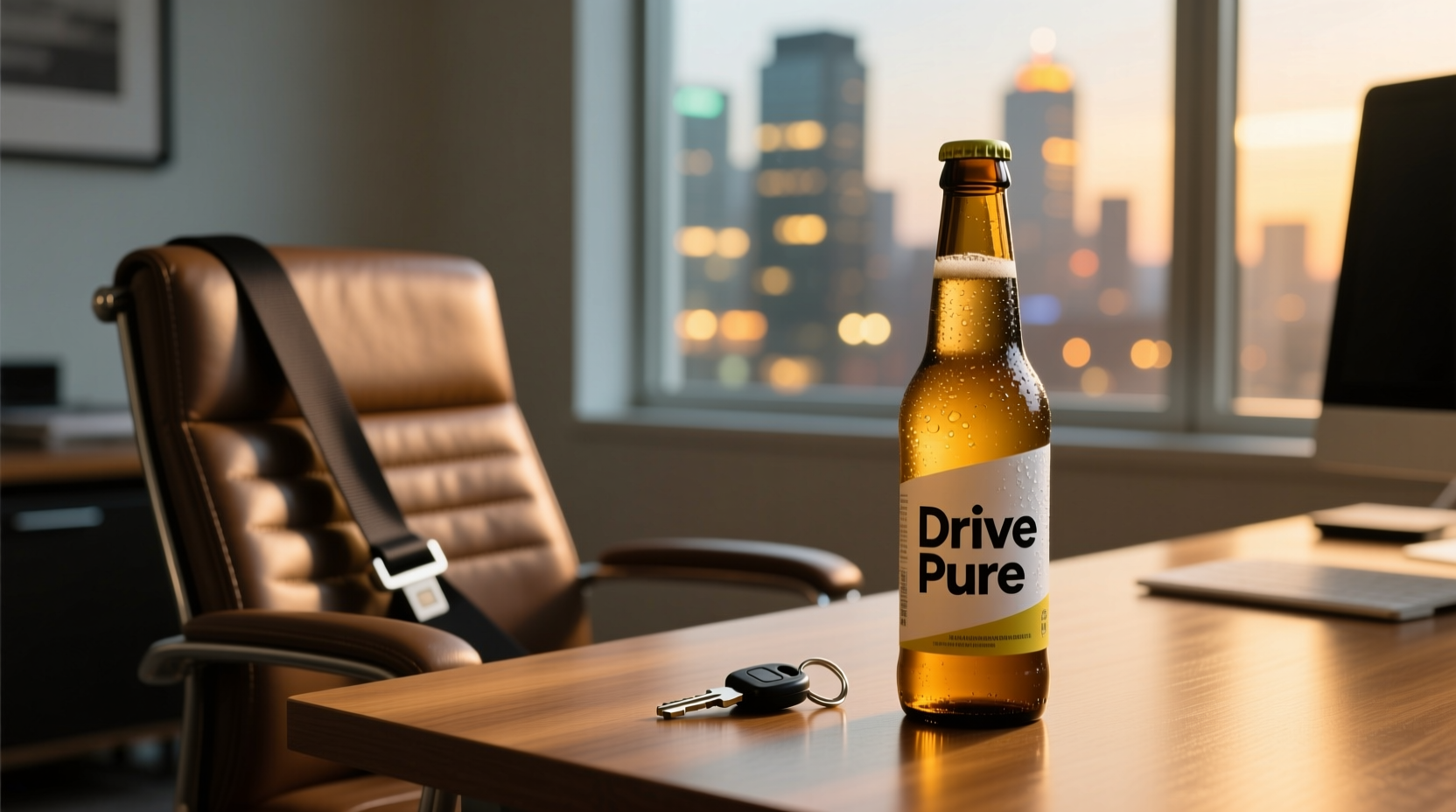
The urge for a beer after work is rarely driven by ethanol alone. Functional MRI studies show that habitual beverage rituals activate the brain’s ventral striatum—the same region involved in reward anticipation—even before the first sip. What matters most is the *predictable sequence*: changing out of work clothes, opening the fridge, hearing the carbonation hiss, pouring into a chilled glass, inhaling the malt-and-hops bouquet. These cues trigger dopamine release, lowering cortisol and easing the transition from “on duty” to “off duty.” For drivers, removing alcohol eliminates impairment risk—but also removes the pharmacological component that historically reinforced the ritual. The critical question becomes: Can NA beer preserve enough of the sensory and behavioral scaffolding to maintain that neurological payoff?
Research from the University of Cambridge’s Behavioural Insights Lab found that participants who engaged in a full NA beer ritual—including glassware, temperature control, and 90 seconds of mindful sipping—reported 37% higher subjective relaxation scores than those who drank the same beverage from a plastic cup while scrolling on their phones. Context, not chemistry, was the dominant variable. This suggests satisfaction isn’t inherent to the liquid—it’s co-created by intention, environment, and attention.
Taste Evolution: From “Wet Cardboard” to Craft Credibility
Five years ago, most NA beers tasted like diluted lager with a faint metallic aftertaste. Today, advanced dealcoholization methods—vacuum distillation, reverse osmosis, and arrested fermentation—preserve volatile hop compounds and delicate esters far more effectively. Brewers now treat NA beer as a distinct category, not a compromised derivative. A blind taste test conducted by the Independent Brewers Association in 2023 pitted six premium NA lagers and IPAs against their alcoholic counterparts. Trained tasters rated three NA entries within 12% of their full-strength twins on balance, bitterness integration, and finish length.
Tip: Serve NA beer at 4–6°C (not ice-cold) in a clean, dry pilsner glass. Chilling too aggressively numbs hop aromatics; room-temperature glasses introduce condensation that dilutes head retention.The best modern NA beers achieve what brewers call “mouthfeel fidelity”: sufficient body from unfermented dextrins, crisp carbonation (often slightly higher than standard lagers to compensate for lower alcohol warmth), and layered bitterness that unfolds—not just hits. This matters profoundly for drivers seeking satisfaction. A thin, watery mouthfeel triggers cognitive dissonance: the ritual says “reward,” but the tongue says “disappointment.” When texture and aroma align, the brain accepts the experience as legitimate closure.
Real-World Driver Experience: A Mini Case Study
Mark R., 42, works as a logistics coordinator for a regional freight company. He drives an average of 78 miles daily, often delivering time-sensitive medical equipment. For 18 years, his unwinding ritual was two pints at a pub near his depot. After a near-miss incident during rush hour—caused not by intoxication but by fatigue-induced delayed reaction—he stopped drinking entirely. “I missed the *pause*,” he told us. “Not the buzz. The 20 minutes where nothing mattered except that first cold sip.”
He trialed seven NA beers over three months. His turning point came with a German-style NA Pilsner brewed using traditional Saaz hops and cold-filtered lager yeast. “It’s got that slight grainy sweetness, then the herbal bite, then a clean, dry finish. I pour it slow, let the head form, smell it like I used to. My wife says I smile differently now—softer, like I’ve actually exhaled.” Mark now keeps a dedicated “unwind drawer” in his kitchen: chilled glasses, a small cooler for cans, and a notebook where he logs tasting notes. The ritual isn’t mimicking alcohol—it’s rebuilding meaning on new terms.
Hydration, Neurochemistry, and the “Satisfaction Gap”
Alcohol is a diuretic and vasodilator—effects that contribute to the “flushed, warm, heavy-limbed” sensation many associate with relaxation. NA beer contains no ethanol, so it avoids dehydration and blood pressure spikes. But does that make it *less* satisfying? Not necessarily. In fact, proper hydration supports parasympathetic nervous system dominance—the physiological state of rest-and-digest. A 2022 study in Nutrients showed that drivers consuming 330ml of NA beer post-shift maintained 14% higher salivary IgA (an immune marker linked to stress resilience) than those drinking water alone, likely due to polyphenols from barley and hops acting as mild adaptogens.
However, the “satisfaction gap” persists for some—and neuroscience explains why. Ethanol inhibits GABA-A receptors, producing measurable sedation. NA beer cannot replicate this. Instead, satisfaction emerges from two compensatory pathways: (1) the placebo effect amplified by ritual fidelity (as shown in Cambridge’s study), and (2) the activation of bitter-taste receptors (TAS2Rs) on the tongue and gut, which stimulate ghrelin release—a hormone linked to gastric comfort and mild euphoria. This is why hop-forward NA IPAs often rate higher in post-work satisfaction surveys than malt-heavy stouts: bitterness, not sweetness, signals “transition” to the brain.
| Factor | Full-Strength Beer (5% ABV) | Premium NA Beer (≤0.5% ABV) | Impact on Post-Work Satisfaction |
|---|---|---|---|
| Alcohol-induced relaxation | Strong GABA inhibition → sedation | None | NA lacks pharmacological sedation but avoids next-day fatigue |
| Hydration status | Diuretic → net fluid loss | Neutral or mildly hydrating | NA supports sustained alertness and reduces evening headache risk |
| Bitter receptor activation | Moderate (masked by alcohol burn) | High (uninhibited by ethanol) | NA’s pronounced bitterness enhances perceived complexity and “ritual authenticity” |
| Caloric load | 140–200 kcal per 330ml | 45–90 kcal per 330ml | Lower calories reduce post-sip lethargy, supporting active unwinding (e.g., walking, reading) |
| Legal & cognitive safety | Zero tolerance for professional drivers in most EU/UK/AU jurisdictions | No impairment risk; compliant with all driving laws | Removes guilt/anxiety—freeing mental bandwidth for genuine relaxation |
Expert Insight: Beyond the Hype
“People ask me, ‘Does non-alcoholic beer satisfy?’ I reply: ‘Satisfy what?’ If you want ethanol’s pharmacology, no. If you want a culturally embedded, sensorially rich ritual that honors your body’s need for transition—absolutely yes. The most satisfied drivers I work with don’t chase the ghost of alcohol. They curate the experience: the right glass, the right temperature, the right moment of stillness. That’s where satisfaction lives—not in the can, but in the intention.” — Dr. Lena Torres, Behavioral Nutritionist & Former Road Safety Advisor, UK Department for Transport
Building Your Satisfying NA Ritual: A 5-Step Guide
Satisfaction isn’t accidental. It’s engineered through consistency and attention. Here’s how to build a post-work NA beer ritual that delivers genuine psychological relief:
- Designate a “Transition Zone”: Choose one spot—your kitchen counter, balcony chair, or garden bench—exclusively for your post-work drink. Never consume NA beer at your desk or in the car. Physical separation reinforces mental boundaries.
- Engage All Five Senses: Before sipping, hold the glass, observe the color and head, swirl gently, inhale deeply (focus on hop or malt notes), then take the first sip slowly—let it coat your tongue for 3 seconds before swallowing.
- Pair With Intentional Stillness: Commit to 8 minutes of zero input: no phone, no news, no planning. Just sitting, breathing, and tasting. Use a timer if needed. This mirrors the neural “reset” once provided by alcohol’s mild sedation.
- Rotate Styles Strategically: Match NA beer to your energy state. Choose crisp, high-carbonation Pilsners after high-focus days; choose roasty, low-carbonation NA stouts after physically demanding shifts; choose citrusy NA IPAs when you need gentle mood lift without stimulation.
- Track Your Response: For one week, note in a journal: time of day, NA beer style, serving method, duration of ritual, and a 1–10 satisfaction score. Look for patterns—not just what you drank, but *how* you drank it.
FAQ
Can NA beer show up on a breathalyzer?
No. Modern evidentiary breathalyzers detect ethanol concentrations above 0.02% BAC. Even consuming 3–4 servings of 0.5% ABV beer would result in peak BAC well below 0.005%—undetectable by any approved law enforcement device. NA beer poses zero risk for roadside testing.
Is there any hidden alcohol I should worry about?
Legally sold NA beer in the EU, UK, Canada, Australia, and most US states must contain ≤0.5% ABV. Reputable brands batch-test every production run. The trace amounts present are metabolized faster than your liver processes naturally occurring ethanol from ripe fruit or fermented yogurt—physiologically irrelevant.
Why do some NA beers give me a headache when full-strength never did?
This is almost always due to histamine or sulfite sensitivity—not alcohol. NA brewing sometimes requires longer cold storage or different filtration, increasing histamine levels in certain styles (especially wheat-based or barrel-aged NA). Try switching to a clean-lager style from a brand that publishes histamine test results (e.g., Lucky Saint or BrewDog Nanny State).
Conclusion
Satisfaction after work isn’t a chemical equation—it’s a human one. Non-alcoholic beer doesn’t replicate alcohol’s pharmacology, nor should it try to. Its value lies elsewhere: in offering drivers a dignified, safe, and sensorially honest way to honor the end of responsibility. It’s in the weight of a properly chilled glass, the release of tension as complex hop oils hit your olfactory receptors, the quiet pride of choosing presence over impairment. The most compelling data isn’t in lab reports or ABV percentages—it’s in Mark’s softer smile, in the 37% rise in relaxation scores tied to mindful ritual, in the absence of next-morning fog or defensive driving anxiety. You don’t need to mimic the past to create meaningful closure. You need only attend, intentionally, to what’s real: the taste, the temperature, the stillness, and the profound relief of knowing your choices protect not just yourself, but everyone sharing the road with you.
💬 Your experience matters. Have you found an NA beer or ritual that truly satisfies after work? Share your top tip, favorite brand, or biggest surprise in the comments—help fellow drivers discover what works beyond the label.








