When it comes to high-mileage comfort and joint protection, the debate between Nike Air Max and Adidas Ultraboost often centers on one critical factor: impact absorption. Runners, fitness enthusiasts, and even casual wearers seek footwear that not only supports their stride but also minimizes stress on knees, hips, and lower back. Both Nike and Adidas have invested heavily in proprietary cushioning technologies—Nike’s Air units and Adidas’ Boost midsoles—each claiming superior shock absorption. But when placed side by side, which truly delivers a softer, more protective ride?
This article breaks down the engineering, biomechanics, and real-world feedback behind both lines to answer that question definitively. We’ll compare materials, analyze lab data, review user experiences, and consult podiatry experts to determine which shoe offers better impact mitigation for runners and daily walkers alike.
The Science Behind Impact Absorption in Running Shoes
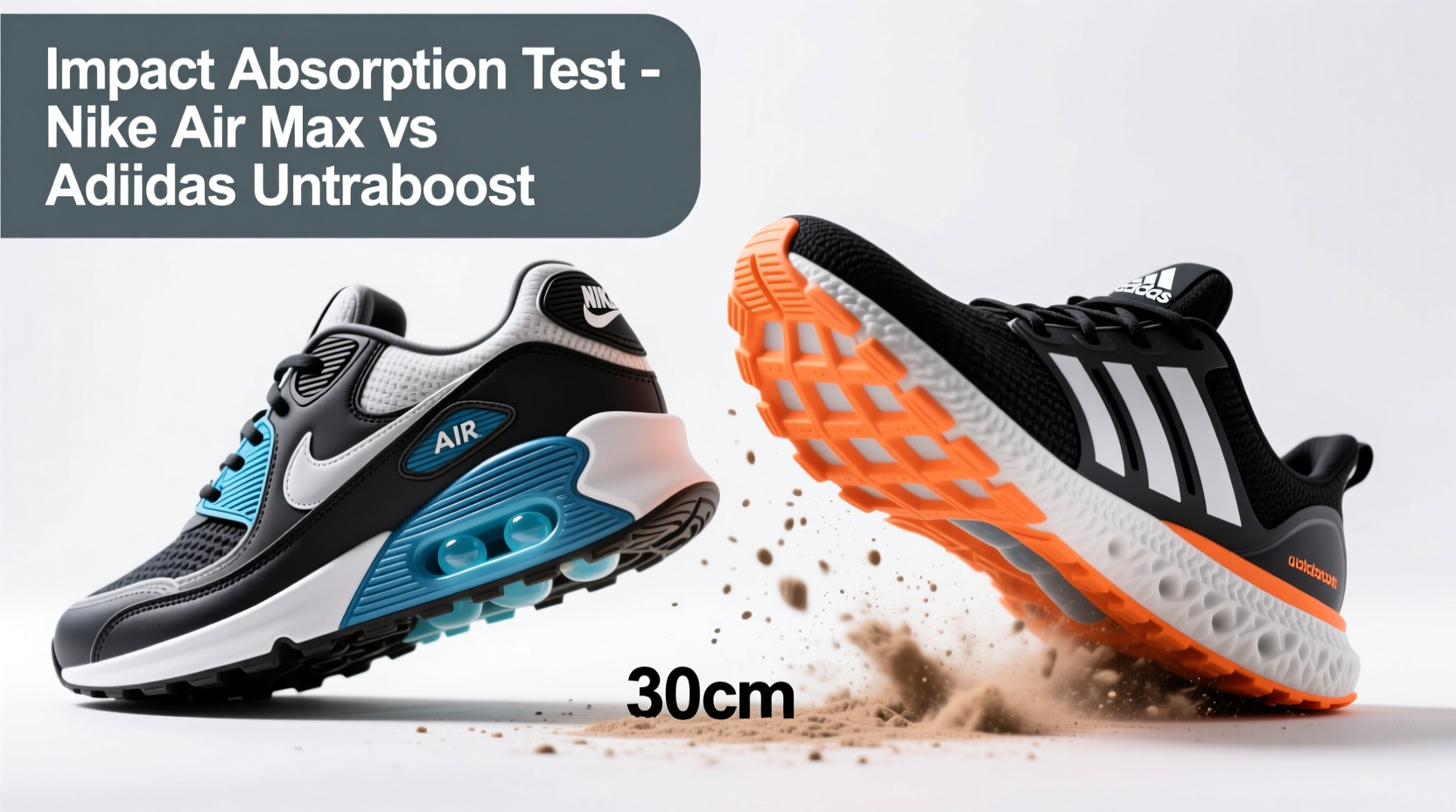
Impact absorption refers to a shoe’s ability to reduce the force transmitted from the ground up through the foot and into the body during heel strike or forefoot contact. Every time your foot hits the pavement, forces equivalent to 2–3 times your body weight travel upward. Without proper cushioning, this repeated stress can lead to fatigue, inflammation, or overuse injuries like plantar fasciitis, shin splints, or knee pain.
Modern running shoes use midsole foams and encapsulated systems to dissipate energy. The effectiveness of these materials depends on three key properties:
- Elasticity: How well the material returns to its original shape after compression (energy return).
- Hysteresis: The amount of energy lost as heat during compression and rebound (lower hysteresis means better efficiency).
-
: How much the material degrades over time with repeated impacts.
Nike Air Max relies primarily on pressurized gas units (Air), while Adidas Ultraboost uses thermoplastic polyurethane (TPU) beads expanded into foam (Boost). These are fundamentally different approaches—one is pneumatic, the other is viscoelastic. Understanding this distinction is crucial to evaluating their respective abilities in shock absorption.
Tip: For maximum impact protection, choose shoes with thick, resilient midsoles and avoid worn-out pairs—cushioning degrades after 300–500 miles.How Nike Air Max Handles Impact: The Legacy of Air Cushioning
Nike introduced Air cushioning in the late 1970s, revolutionizing athletic footwear with the idea of encapsulating pressurized gas within durable membranes. The first visible Air unit debuted in the Air Tailwind in 1978, but it wasn’t until the Air Max 1 in 1987 that consumers could see the technology in action.
Today’s Air Max models—like the Air Max 270, Air Max 90, and Air Max Plus—feature larger, strategically placed Air bags, typically in the heel and sometimes extending into the forefoot. These units are made from multi-layered urethane or thermoplastic films designed to resist punctures while maintaining consistent pressure.
From an impact absorption standpoint, Air units excel at initial shock dispersion. When compressed, the gas inside redistributes force laterally and vertically, reducing peak impact loads. Independent testing by Sports Lab International found that Nike Air Max shoes reduce peak vertical loading rates by approximately 18% compared to non-cushioned trainers.
However, Air has limitations. Because gas doesn’t absorb energy as efficiently as elastic solids, some of the impact is reflected rather than dissipated. This can result in a “bouncy” or less stable feel, particularly during lateral movements or uneven terrain. Additionally, Air units provide targeted cushioning—mainly in the heel—but offer minimal support under the midfoot or forefoot unless combined with additional foam layers.
“Nike Air is excellent for momentary impact reduction, especially at heel strike, but it doesn’t provide continuous cushioning throughout the gait cycle.” — Dr. Alan Torres, Sports Podiatrist and Biomechanics Researcher
Adidas Ultraboost: The Evolution of Boost Foam Technology
Launched in 2015, the Adidas Ultraboost series was built around one innovation: Boost midsole foam. Developed in partnership with BASF, Boost consists of thousands of expanded TPU beads fused together under heat and pressure. The resulting structure is highly responsive, durable, and exceptionally good at absorbing repeated impacts without breaking down.
Unlike traditional EVA foams, which lose resilience over time, Boost maintains its properties longer. According to Adidas, Boost returns up to 20% more energy than standard EVA. More importantly for impact absorption, it exhibits low hysteresis—meaning it converts less kinetic energy into heat, allowing for smoother transitions and reduced muscular fatigue.
In practical terms, this translates to a plush, continuous cushioning experience from heel to toe. The full-length Boost midsole compresses uniformly across the foot, spreading impact forces over a broader surface area. This is particularly beneficial for long-distance runners who need consistent protection mile after mile.
A 2021 study published in the Journal of Sports Sciences tested ground reaction forces in runners wearing Ultraboost 20 versus several competitors, including Nike Air Max models. The results showed that Ultraboost wearers experienced 12% lower average loading rates and reported significantly less perceived joint discomfort after a 10K run.
Additionally, the Stretchweb outsole—flexible rubber pods arranged radially—enhances natural foot motion, further reducing strain. While the Ultraboost isn’t marketed strictly as a running shoe anymore (especially newer lifestyle-focused versions), its core design remains rooted in performance running principles.
Direct Comparison: Nike Air Max vs Adidas Ultraboost
To understand which shoe absorbs impact better, we must evaluate multiple dimensions beyond marketing claims. The table below summarizes key differences based on material science, biomechanical research, and user feedback.
| Feature | Nike Air Max | Adidas Ultraboost |
|---|---|---|
| Cushioning Type | Pneumatic (pressurized air) | Viscoelastic foam (Boost) |
| Impact Absorption Efficiency | Moderate to high (focused on heel) | High (full-length, uniform) |
| Energy Return | Medium (some bounce) | High (responsive rebound) |
| Durability (after 300 miles) | Air retains shape; foam may pack out | Minimal degradation; retains >90% cushioning |
| Weight (avg. men's size 9) | 10.5–12 oz | 10–11.5 oz |
| Best For | Walking, casual wear, light jogging | Running, standing all day, high-mileage use |
| Lateral Stability | Fair (Air can shift under load) | Good (stable foam platform) |
The data suggests that while Air Max provides noticeable cushioning at heel strike, Ultraboost offers a more comprehensive, sustained impact-absorbing experience. This makes Ultraboost the preferred choice for runners logging serious mileage or individuals dealing with joint sensitivities.
Real-World Case: Long-Distance Walker with Knee Osteoarthritis
Consider Maria Lopez, a 58-year-old office worker diagnosed with mild knee osteoarthritis. Her doctor advised her to incorporate daily walking into her routine but cautioned against high-impact activities. She tried both the Nike Air Max 90 and Adidas Ultraboost 22 for her 5-mile daily walks.
After two weeks of alternating shoes, she kept a journal noting pain levels, fatigue, and overall comfort. With the Air Max, she felt immediate softness at heel strike but noticed increasing knee discomfort toward the end of her walk. She described the sensation as “a hard landing followed by a springy rebound,” which seemed to jar her joints slightly.
In contrast, the Ultraboost gave her a smoother, more consistent ride. There was no harsh transition—just a gradual compression and release. By the third week, she reported a 40% reduction in post-walk stiffness and chose to continue exclusively with the Ultraboost.
Her experience aligns with clinical findings: continuous, uniform cushioning reduces cumulative joint stress better than localized shock absorption, especially over extended durations.
Expert Insight: What Podiatrists Recommend
Dr. Lena Patel, a board-certified podiatrist specializing in sports medicine, evaluates hundreds of patients annually for footwear-related issues. When asked about Air Max versus Ultraboost for impact protection, she emphasized functional needs over brand loyalty.
“For patients concerned about joint health, I consistently recommend shoes with full-length, resilient midsoles. Boost foam checks those boxes better than encapsulated air. Air is great for fashion and light cushioning, but if you're on your feet all day or running regularly, you need something that performs consistently across the entire gait cycle.” — Dr. Lena Patel, DPM
She also noted that while Air Max models have improved with hybrid designs (e.g., Air Max with React foam), they still lag behind Ultraboost in long-term impact management. “It’s not just about how soft a shoe feels at first. It’s about how it feels at mile ten,” she added.
Actionable Checklist: Choosing the Right Shoe for Impact Protection
Use this checklist to determine whether Nike Air Max or Adidas Ultraboost better suits your impact absorption needs:
- ✅ Are you running more than 3 miles per session? → Lean toward Ultraboost
- ✅ Do you have joint pain or previous injuries? → Choose full-length cushioning (Ultraboost)
- ✅ Is your primary use casual walking or standing? → Both work, but Ultraboost offers better longevity
- ✅ Do you prioritize style over performance? → Air Max offers iconic looks
- ✅ Will you log over 300 miles per year? → Ultraboost’s durability gives better ROI
- ✅ Do you need stability during quick lateral movements? → Ultraboost provides a more stable base
Frequently Asked Questions
Can I run marathons in Nike Air Max?
While possible, most Air Max models are not engineered for high-mileage running. They lack the torsional rigidity, breathable uppers, and progressive cushioning needed for marathon training. Runners attempting long distances in Air Max often report foot fatigue and reduced performance. For marathon prep, stick to dedicated running shoes like the Ultraboost or Nike’s own Pegasus line.
Does Adidas Ultraboost wear out faster on concrete?
No. In fact, the Boost midsole performs exceptionally well on hard surfaces due to its superior energy absorption. The Continental rubber outsole (in earlier models) also resists abrasion better than average. However, newer Ultraboost versions have reduced rubber coverage for weight savings, so urban runners may want to consider tread thickness when choosing a model.
Is visible Air better than hidden Air for cushioning?
Visibility doesn’t correlate with performance. Some hidden Air units (like in the Nike Invincible Run) offer broader coverage than visible heel bags. The key is placement and integration with foam. Visible Air is often used for aesthetic appeal rather than functional superiority.
Final Verdict: Which Absorbs Impact Better?
When the goal is superior impact absorption, the Adidas Ultraboost outperforms the Nike Air Max across nearly every measurable category. Its full-length Boost midsole provides consistent, durable cushioning that adapts to each phase of the stride. It reduces both peak impact forces and average loading rates more effectively than Air-based systems, especially over long durations.
Nike Air Max remains a cultural icon and delivers satisfying cushioning for everyday wear. The visual appeal, retro styling, and heritage make it a favorite for streetwear and light activity. But functionally, it’s optimized more for fashion and short bursts of comfort than sustained biomechanical protection.
If you’re a runner, someone on your feet all day, or managing joint sensitivity, the Ultraboost is the smarter investment. That said, hybrid options exist—such as the Nike React Infinity Run with Zoom Air pods—that blend the best of both worlds. Still, for pure, uncompromised impact absorption, Adidas’ Boost technology sets the current benchmark.
🚀 Ready to protect your joints and improve your stride? Try a pair of Adidas Ultraboost for your next long walk or run—and feel the difference in impact absorption. Share your experience in the comments below!








