Choosing the right way to carry your keys isn’t just about convenience—it’s about reliability. Whether you're a busy professional, an outdoor enthusiast, or someone who simply doesn’t want to lose their keys mid-commute, the method you use matters. Two popular options—neck lanyards and carabiner clips—offer different advantages, but when it comes to long-term durability and resistance to breaking, one clearly outperforms the other. This article examines the structural integrity, materials, usage patterns, and failure points of both to help you make an informed decision.
Understanding the Key Differences
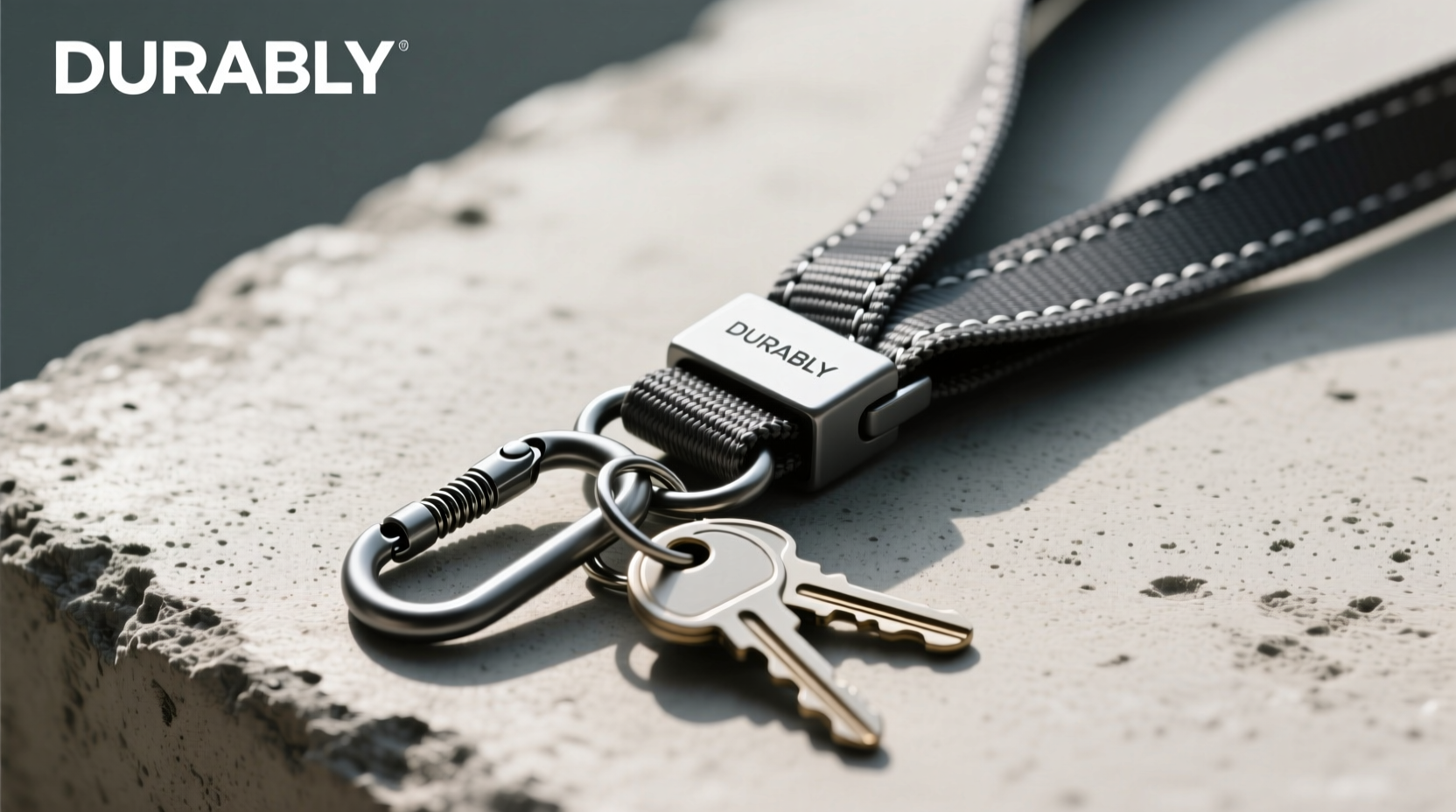
A neck lanyard is typically a woven or braided strap worn around the neck, with a clasp or loop at the end for attaching keys. It’s commonly used in workplaces, conferences, or by students carrying access cards and small tools. A carabiner clip, on the other hand, is a metal snap-link originally designed for climbing and rigging. It’s now widely repurposed as a heavy-duty keychain attachment, prized for its strength and ease of use.
The core difference lies in function and stress distribution. Lanyards are primarily designed for light loads like ID badges, while carabiners are engineered to withstand high tensile forces. This distinction becomes critical when evaluating which is less likely to fail under daily wear and unexpected strain.
Tip: If you frequently carry multiple keys or heavy tools, avoid fabric-only lanyards—they lack the tensile strength needed for consistent load-bearing.Durability: Materials and Construction
The longevity of any key-carrying system depends on material quality and design. Neck lanyards are commonly made from polyester, nylon, or cotton webbing. While these fabrics can be strong in tension, they degrade over time due to UV exposure, friction, and repeated bending. Stitching at the attachment point is often the weakest link; if the thread wears or unravels, the entire lanyard fails.
In contrast, carabiners are typically forged from aluminum or stainless steel. Forged metal carabiners undergo heat treatment and stress testing, making them capable of supporting thousands of pounds. Even inexpensive models rated for 8–10 kN (kilonewtons) far exceed the forces generated by a set of keys. The gate mechanism, while a potential failure point, is spring-loaded and built for repeated opening and closing without fatigue.
Independent tests show that a standard 1/4-inch polyester lanyard breaks at around 300–500 lbs of force, depending on age and condition. A similarly sized aluminum carabiner, meanwhile, can hold up to 22 kN (about 5,000 lbs) along its major axis. Even under lateral or gate-loading stress—its weakest orientation—it still exceeds 7 kN, making it significantly more resilient.
“Carabiners used in climbing are tested to strict UIAA and CE standards. Even budget versions retain a fraction of that strength, making them vastly more reliable than textile-based alternatives.” — Daniel Reeves, Industrial Safety Consultant
Real-World Stress Factors and Failure Scenarios
To understand which option breaks more easily, consider common real-life situations:
- Snagging on door handles or seatbelts: Lanyards get caught frequently, creating sudden jerking forces. Fabric edges fray, stitching pops, and the clasp may tear through the material.
- Dropping keys onto hard surfaces: When keys on a lanyard swing and hit the ground, the impact is absorbed by the strap and attachment point. Over time, this leads to micro-tears.
- Exposure to moisture and chemicals: Sweat, rain, or cleaning agents weaken synthetic fibers. Metal carabiners, especially stainless steel ones, resist corrosion and maintain integrity.
- Improper loading: Carabiners are strongest when loaded along their spine. However, even off-axis pulls rarely cause failure in quality units. Lanyards have no such directional advantage—they stretch and weaken uniformly.
Mini Case Study: Office Worker vs. Field Technician
Consider two individuals: Sarah, an office worker who wears her keys on a nylon lanyard clipped to her badge, and Marcus, a field technician who uses a stainless steel carabiner attached to his belt loop. After six months:
- Sarah’s lanyard shows frayed edges near the clasp. One morning, the stitching gives way during a rush, and her keys fall into a storm drain. Replacement cost: $45 for new keys and lock rekeying.
- Marcus drops his tool bag from waist height, yanking his keys against the carabiner. The clip bends slightly but holds. He inspects it, notices no cracks, and continues using it for another 18 months.
This example illustrates how everyday stresses accumulate faster on lanyards, leading to premature failure. The carabiner, despite heavier use, remains intact due to superior material resilience.
Comparison Table: Lanyard vs. Carabiner Clip
| Feature | Neck Lanyard | Carabiner Clip |
|---|---|---|
| Tensile Strength | 300–500 lbs (degrades over time) | 2,000–5,000+ lbs (consistent) |
| Failure Point | Stitching, clasp, fabric wear | Rare; usually gate or spine crack under extreme misuse |
| Lifespan (Average) | 3–8 months with daily use | 2+ years with proper care |
| Environmental Resistance | Poor (UV, moisture, abrasion) | High (especially stainless steel) |
| Safety Risk if Broken | Keys lost, minor injury possible | Negligible unless misused in climbing context |
| Best Use Case | ID badges, light accessories | Keys, multitools, heavy gear |
How to Maximize Longevity: Best Practices
Regardless of your choice, proper maintenance extends lifespan. However, certain habits dramatically reduce the risk of sudden failure.
Checklist: Preventing Keychain Breakage
- ✅ Inspect stitching and clasps monthly for signs of wear.
- ✅ Replace lanyards showing fraying or stretched fabric immediately.
- ✅ Choose carabiners with a screw-lock or auto-lock gate for added security.
- ✅ Avoid clipping lanyards directly to heavy key rings—use a swivel hook or intermediary metal ring.
- ✅ Clean metal carabiners with mild soap and dry thoroughly to prevent internal corrosion.
- ✅ Never modify or force open a carabiner beyond its design limits.
Frequently Asked Questions
Can a carabiner really last longer than a lanyard?
Yes. High-quality metal carabiners, especially those made from stainless steel or aerospace-grade aluminum, are built to endure extreme conditions. With basic care, they can last for years—even decades—without structural degradation. Lanyards, being textile-based, naturally deteriorate due to environmental exposure and mechanical stress.
Are there safe lanyards for heavy keys?
Some reinforced lanyards use ballistic nylon or include metal core cables, improving strength. However, these are exceptions. Most standard lanyards aren’t designed for heavy loads. If you must use a lanyard, opt for one with a paracord-style construction and a welded metal clasp.
Is a carabiner safe to wear around the neck?
Not recommended. Carabiners are rigid and can cause injury during sudden impacts, such as tripping or falling. They’re best worn on belts, backpacks, or gear loops. For neck-worn items, use soft, breakaway-style lanyards designed for safety.
Final Recommendation
When comparing a neck lanyard and a carabiner clip for key storage, the carabiner is objectively less likely to break. Its metal construction, engineering pedigree, and resistance to environmental factors make it the superior choice for anyone prioritizing durability and reliability. While lanyards serve well for lightweight, low-stress applications like holding an ID card, they are ill-suited for the dynamic demands of carrying keys—especially multiple or heavy ones.
If you value peace of mind and long-term performance, invest in a high-quality carabiner. Look for models labeled “rated” or “load-tested,” with a minimum strength of 8 kN. Pair it with a rubber key organizer to prevent noise and scratching, and you’ll have a system that lasts for years without worry.
💬 Have you experienced a keychain failure? What worked better for you—lanyard or carabiner? Share your story and help others choose wisely!








