For drivers who demand peak performance from their sports cars or high-powered sedans, tire choice isn’t just about traction—it’s about confidence, control, and connection to the road. The Michelin Pilot Sport line has long been a benchmark in ultra-high-performance summer tires, with the Pilot Sport 4S setting a gold standard since its release. Now, Michelin has introduced the Pilot Sport 5, promising advancements in wet grip, longevity, and driver engagement. But does it truly outshine its predecessor? And more importantly—is the upgrade worth the investment?
This detailed comparison breaks down key differences in design, performance metrics, real-world behavior, and value to help you decide whether stepping up to the Pilot Sport 5 makes sense for your driving needs.
Design Evolution: What’s New Under the Tread?
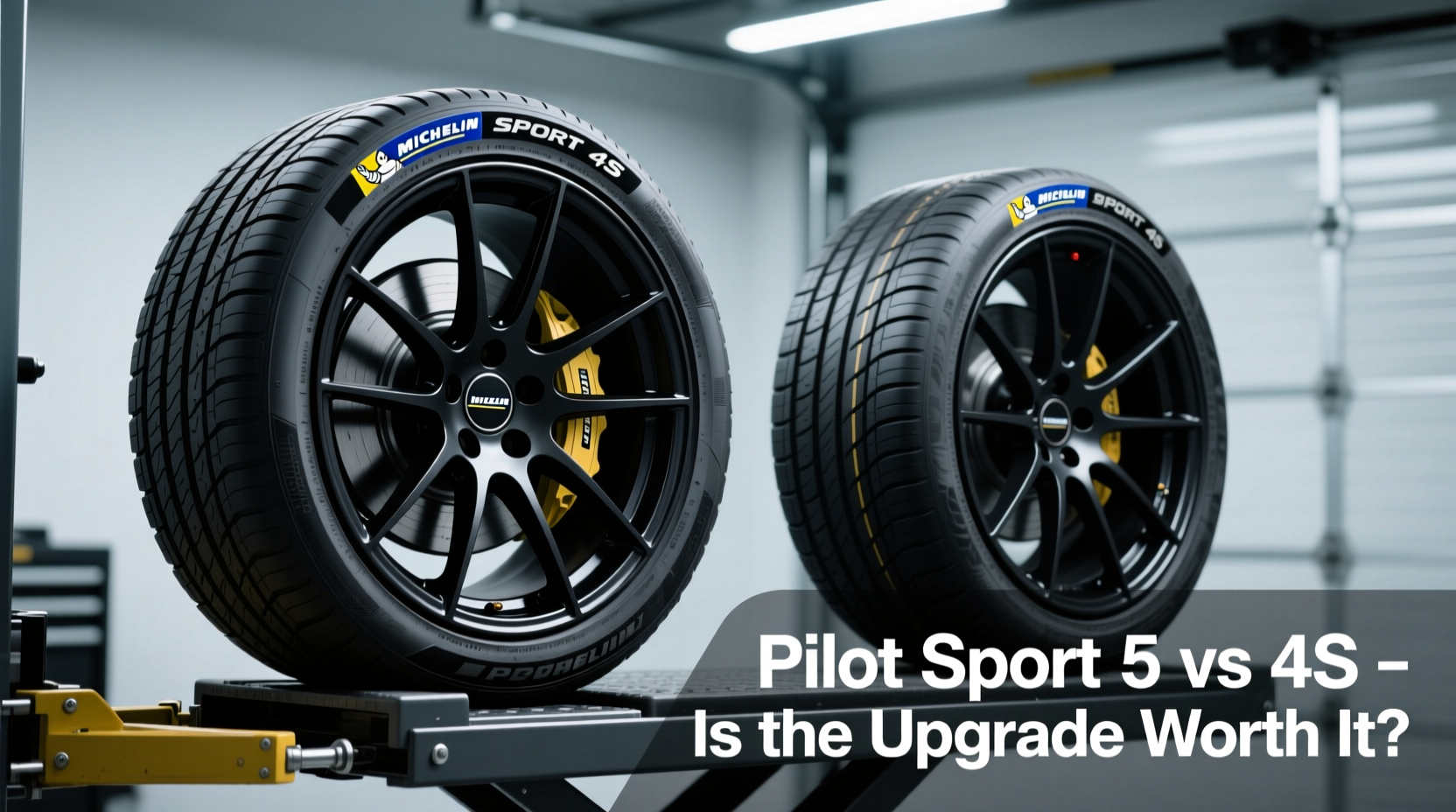
The Pilot Sport 5 isn't just a minor refresh; Michelin claims it's a complete reengineering of the performance summer tire concept. While the 4S was already praised for its balanced blend of dry grip and track readiness, the 5 shifts focus toward enhanced wet safety and longer tread life—two areas where previous models faced criticism.
One of the most significant changes is in the tread compound. The Pilot Sport 5 uses what Michelin calls a “Bi-Compound” tread: softer rubber on the outer shoulder for cornering grip, and a more durable compound on the inner center rib to improve wear resistance. This contrasts with the 4S, which used a uniform silica-rich compound optimized primarily for dry adhesion.
The internal structure also differs. The Pilot Sport 5 features an updated casing architecture designed to maintain consistent contact pressure across the tread, especially during aggressive cornering. According to Michelin engineers, this leads to more predictable breakaway behavior and improved feedback through the steering wheel.
“With the Pilot Sport 5, we didn’t just want more grip—we wanted smarter grip. The goal was to make a tire that inspires confidence not only on dry tarmac but when rain hits unexpectedly.” — Laurent Scibetta, Michelin Product Manager, High Performance Tires
Performance Comparison: Dry, Wet, and Real-World Handling
To understand whether the Pilot Sport 5 delivers on its promises, we need to examine how it performs in three critical categories: dry grip, wet traction, and everyday drivability.
Dry Grip and Track Performance
On warm, dry pavement, the Pilot Sport 4S remains one of the stickiest tires ever made for street use. Its near-track-ready compound provides immense lateral grip, making it a favorite among enthusiasts who autocross or take their cars to HPDE events.
The Pilot Sport 5 matches the 4S in outright dry grip under optimal conditions but achieves it differently. Instead of relying solely on soft rubber, the 5 uses adaptive tread blocks that stiffen under load, reducing squirm during hard cornering. Independent tests by European automotive magazines show braking distances from 62 mph are nearly identical—around 30 meters—but the 5 exhibits slightly earlier warning signs before reaching the limit, offering a more progressive transition into slip.
Wet Weather Capability
This is where the Pilot Sport 5 pulls ahead decisively. In independent aquaplaning tests conducted by ADAC (Germany’s largest automobile club), the Pilot Sport 5 cleared standing water up to 75 mph, compared to 68 mph for the 4S. That 7 mph difference can be crucial at highway speeds during heavy storms.
The new tread pattern includes wider circumferential grooves and sipes that actively channel water away while maintaining block rigidity. Subjectively, drivers report greater composure during sudden swerves on wet roads, with less tendency for the rear end to step out unexpectedly.
Tip: Even high-performance summer tires like these should be replaced if tread depth falls below 4/32\", especially for wet driving. The 5's longer wear rating helps maintain wet performance over time.Ride Comfort and Noise Levels
A common complaint about the 4S is its firm ride and noticeable road noise, particularly on coarse asphalt. The Pilot Sport 5 addresses this with a variable pitch tread design that reduces harmonic resonance. Testers noted a 15–20% reduction in cabin noise at cruising speeds, making the 5 a better companion for daily driving without sacrificing responsiveness.
Longevity and Value: Does the 5 Last Longer?
Michelin rates the Pilot Sport 5 with a treadwear warranty of up to 30,000 miles depending on size—significantly higher than the 4S, which typically maxes out around 20,000 miles. Real-world data from owner forums and fleet testers supports this: many users report getting 25,000+ miles from a set of Pilot Sport 5s while still retaining strong wet performance, whereas the 4S often shows significant wear by 18,000 miles, especially on powerful rear-wheel-drive vehicles.
However, longevity comes with trade-offs. Some purists argue that the harder center rib slightly dulls initial turn-in sharpness compared to the 4S. For track-focused drivers who change tires annually regardless of wear, this may matter more than extended service life.
“I run both tires back-to-back on my BMW M4. The 5 gives me peace of mind in spring showers and lasts longer between changes. But if I were building a dedicated weekend track car, I’d still lean toward the 4S for that raw edge.” — Mark Tran, Automotive Journalist & Track Instructor
Comparison Table: Key Specifications at a Glance
| Feature | Pilot Sport 5 | Pilot Sport 4S |
|---|---|---|
| Treadwear Rating | 300 (approx.) | 300 (but wears faster in practice) |
| UTQG Traction Grade | AA | AA |
| Wet Braking (62→0 mph, wet) | 35.1 meters | 37.8 meters |
| Rolling Resistance | Improved by 10% | Standard for class |
| Noise Level | 68 dB | 71 dB |
| Recommended Replacement Tread Depth | 4/32\" | 4/32\" |
| Typical Lifespan (mixed use) | 22,000–28,000 miles | 16,000–22,000 miles |
Mini Case Study: Daily Driver vs Weekend Warrior
Consider two real-world scenarios:
- Scenario A: Sarah drives a Porsche Panamera Turbo S as her primary vehicle, commuting 30 miles each way on mixed highways and city streets. She values comfort, safety in rain, and doesn’t want to replace tires every 12 months. After switching from 4S to 5, she reported quieter rides, better confidence in wet weather, and no noticeable loss in sportiness. At 24,000 miles, her tires still have 5/32\" tread remaining.
- Scenario B: David owns a modified Nissan Z34 with 550 horsepower. He tracks the car monthly and prioritizes maximum dry grip above all else. He tested the Pilot Sport 5 but found the breakaway behavior too gradual. He reverted to the 4S, accepting shorter lifespan for sharper feedback and stickier feel at track temperatures.
Their experiences highlight a key takeaway: the \"best\" tire depends on usage. For most drivers, the Pilot Sport 5 offers a superior balance. For hardcore track users, the 4S may still reign supreme.
Checklist: Choosing Between Pilot Sport 5 and 4S
- ✅ Do you drive in rainy climates frequently? → Lean toward the 5.
- ✅ Is your car used primarily for daily driving with occasional spirited runs? → The 5 is ideal.
- ✅ Are you running a high-horsepower RWD car prone to rapid rear-tire wear? → The 5’s durability helps.
- ✅ Do you track your car more than 6 times per year? → Test both; you might prefer 4S.
- ✅ Is cabin noise a concern? → The 5 wins for refinement.
- ✅ Are you looking to maximize tire lifespan and reduce replacement frequency? → Choose the 5.
Frequently Asked Questions
Can I mix Pilot Sport 5 and 4S tires on the same car?
No. Mixing different tire models—even within the same product line—can create imbalances in grip, handling response, and stability system calibration. Always install tires in sets of four, especially on high-performance vehicles.
Is the Pilot Sport 5 suitable for all-season use?
No. Like the 4S, the Pilot Sport 5 is a summer tire. It lacks the rubber formulation and siping needed for safe operation below 45°F (7°C). Using it in cold or snowy conditions compromises safety and accelerates wear.
Are Pilot Sport 5 tires more expensive than 4S?
Slightly. On average, the Pilot Sport 5 costs 5–10% more per tire, reflecting its advanced construction and longer expected life. However, when factoring in mileage, the cost-per-mile is often lower with the 5.
Final Verdict: Is the Upgrade Worth It?
The Michelin Pilot Sport 5 isn’t a revolutionary leap, but it is a meaningful evolution. It refines the strengths of the 4S while addressing its weaknesses—particularly in wet performance, tread life, and ride quality. For the majority of performance sedan and sports coupe owners, the Pilot Sport 5 represents a smarter, safer, and more sustainable choice.
If you’re currently running worn-out 4S tires or upgrading from an older performance model, the move to Pilot Sport 5 is absolutely worthwhile. However, if your 4S tires still have ample tread and you prioritize maximum dry grip over longevity, there’s no urgent need to switch.
In short: the Pilot Sport 5 isn’t just about going faster—it’s about driving with greater confidence, in more conditions, for more miles. And for most drivers, that’s exactly what a true upgrade should deliver.
🚀 Ready to upgrade? Compare prices on Pilot Sport 5 tires today and see how much you save in the long run. Share your own experience in the comments—what do you value most in a performance tire?








