When the sky opens up and city sidewalks turn slick, your footwear choice becomes more than a matter of comfort—it’s about safety. Runners often assume that trail shoes, built for rugged terrain, automatically outperform road-oriented mesh runners in wet conditions. But does that hold true on wet pavement? The answer isn’t as straightforward as it seems. While tread depth and rubber compound matter, so do surface type, gait mechanics, and shoe construction. This article breaks down how mesh running shoes and trail runners perform on wet urban surfaces, focusing specifically on grip, stability, and long-term usability.
The Science of Traction on Wet Pavement
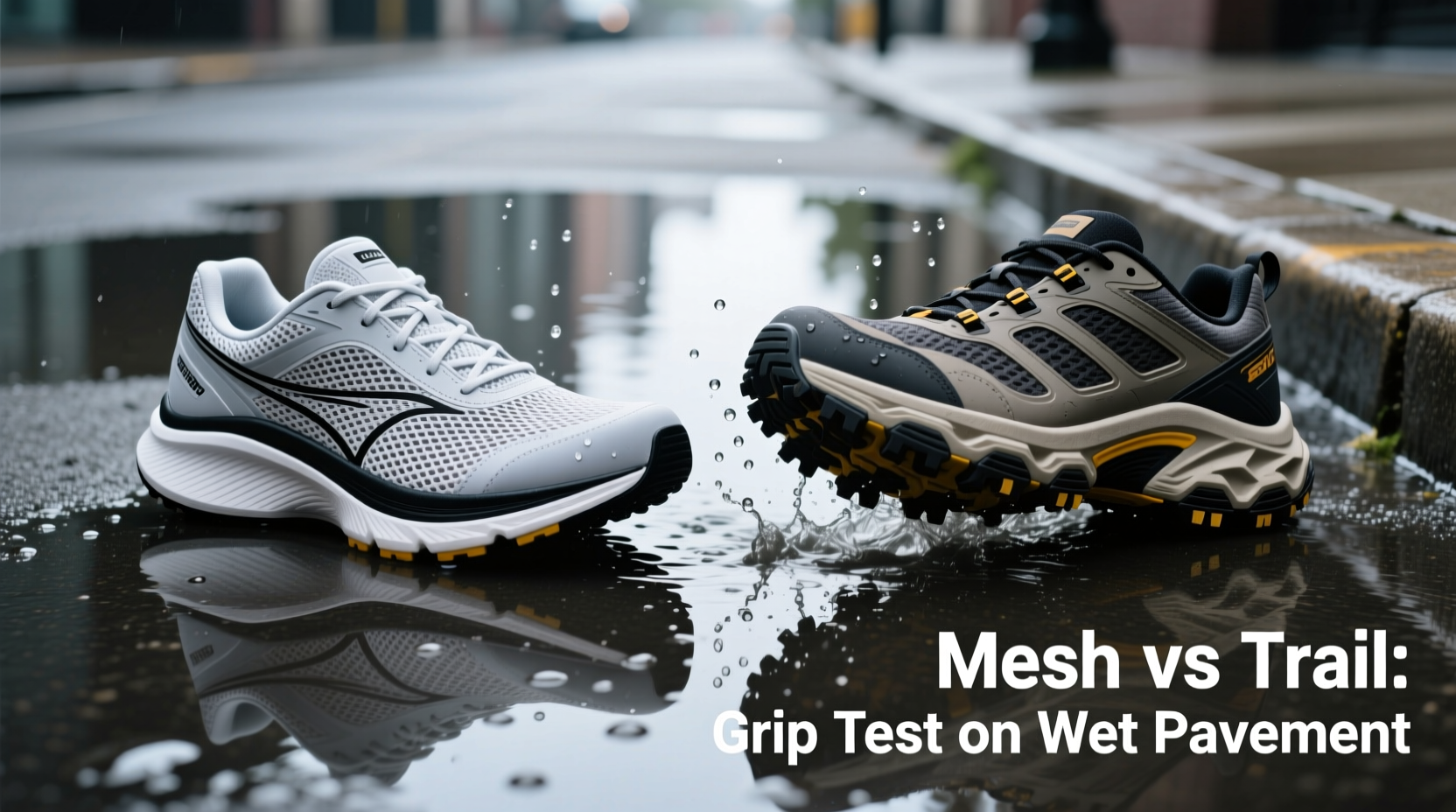
Grip on wet pavement depends less on aggressive lugs and more on rubber formulation, contact patch size, and channeling efficiency. Unlike muddy trails where deep treads bite into soft ground, asphalt offers a hard, flat surface. Water acts as a lubricant between the sole and pavement, creating a risk of hydroplaning—especially if water isn’t displaced quickly.
High-quality road running shoes use carbon rubber or blown rubber compounds engineered for durability and stickiness. Many feature siped outsoles—small slits in the rubber that flex under pressure, increasing surface contact and wicking away thin layers of water. These micro-grooves are particularly effective on smooth, wet surfaces like concrete or asphalt.
In contrast, trail runners prioritize multidirectional lugs made from sticky rubber compounds designed to dig into loose soil or grip rock. On pavement, those same lugs can create instability because they compress unevenly, reducing consistent ground contact. Moreover, large gaps between lugs trap water instead of dispersing it efficiently across the sole, potentially decreasing grip on flat, wet roads.
“On paved surfaces, especially when wet, excessive lug depth can reduce effective traction by limiting continuous rubber-to-ground contact.” — Dr. Lena Torres, Biomechanics Researcher at Portland State University
Design Differences: Mesh Runners vs Trail Runners
Understanding structural differences helps explain performance variances:
- Mesh Running Shoes: Built for breathability and lightweight speed, these typically use tightly woven synthetic mesh uppers. The midsole is tuned for cushioning and energy return on hard surfaces. Outsoles are flatter, with segmented rubber pods strategically placed in high-impact zones (heel, forefoot).
- Trail Runners: Feature reinforced uppers (often with protective toe caps), stiffer midsoles for underfoot protection, and deeper, widely spaced lugs. The goal is to prevent debris intrusion and enhance off-road propulsion—not optimize pavement grip.
While both types may use similar rubber blends, their geometry diverges significantly. Mesh runners distribute pressure evenly; trail shoes concentrate force through isolated lugs. On dry pavement, this difference is negligible. But when water forms a film between shoe and surface, even distribution wins over punctuated contact.
Tip: Look for road shoes labeled “wet-grip” or those using specialized rubber like Michelin Rubber or Continental Gripon—formulated specifically for superior adhesion on slick urban surfaces.Comparative Performance Table: Wet Pavement Grip Factors
| Feature | Mesh Running Shoes | Trail Runners |
|---|---|---|
| Outsole Contact Area | High – broad, flat rubber zones | Low – raised lugs with gaps |
| Water Channeling | Excellent – siping and grooves disperse water | Poor – lugs trap water beneath |
| Rubber Stickiness | Moderate to High – optimized for pavement | High – but ineffective without substrate penetration |
| Stability on Flat Surfaces | Superior – consistent platform | Reduced – lugs compress unevenly |
| Durability on Pavement | High – designed for repeated impact | Lower – lug wear accelerates on hard surfaces |
A Real-World Scenario: Commuting Through Rainy Seattle
Consider Sarah, a daily commuter in Seattle who runs three miles each way to work. Her route includes bike paths, crosswalks, and downtown sidewalks—all prone to puddles during frequent rains. She initially chose trail runners, believing their rugged look and deep treads would keep her safe. After two weeks, she noticed instability during sharp turns on wet crosswalks and discomfort from increased foot fatigue due to the stiff sole.
She switched to a pair of mesh runners with Continental rubber outsoles—specifically marketed for wet-weather traction. Immediately, she felt more connected to the ground. Turns were smoother, braking was more responsive, and her confidence improved despite heavier rainfall. Over six months, her new shoes showed minimal wear, while her old trail runners had worn-down lugs and cracking midsoles from constant pavement pounding.
Sarah’s experience reflects a broader trend: users who primarily run on urban surfaces report greater satisfaction with road-focused designs—even in adverse weather—because they’re engineered for the exact conditions encountered.
Key Features That Actually Improve Wet Pavement Grip
Regardless of shoe category, certain features directly influence traction on wet roads:
- Siped Outsoles: Small cuts in the rubber increase flexibility and surface conformity, improving grip by enhancing micro-contact points.
- Carbon or Sticky Rubber Compounds: Softer rubber formulations maintain elasticity in cold, wet conditions, increasing friction.
- Full-Rubber Coverage: Shoes with larger rubber patches (rather than exposed foam) provide more consistent contact.
- Heel Geometry: A wider heel base with lateral stabilizers reduces slipping during initial impact.
- Midsole Integration: Some models use dual-density foams to control torsion and improve balance during wet landings.
Notably, none of these rely on deep lugs. In fact, many top-performing wet-weather road shoes have relatively minimalist tread patterns—proof that subtlety often outperforms aggression on paved surfaces.
Checklist: Choosing the Right Shoe for Wet Urban Runs
- ✅ Prioritize shoes with siped or finely grooved outsoles
- ✅ Choose models with proven wet-pavement rubber (e.g., Continental, Michelin, or Vibram Wet Grip)
- ✅ Avoid exaggerated lugs unless also running off-road regularly
- ✅ Test lateral stability by twisting the sole—minimal flex side-to-side indicates better control
- ✅ Ensure snug heel lockdown to prevent slippage during damp conditions
- ✅ Consider color: darker soles hide wear, but lighter rubber often indicates softer, grippier compounds
Common Misconceptions About Wet Weather Footwear
Several myths persist in the running community:
- Myth: Bigger lugs = better grip everywhere. Reality: Lugs excel in mud and dirt but lose effectiveness on hard, flat surfaces where dispersion matters more than penetration.
- Myth: Waterproof shoes are safer in rain. Reality: Most waterproof membranes (like Gore-Tex) don’t affect outsole grip. Worse, they trap heat and moisture inside, increasing internal slip and blister risk.
- Myth: Any rubber grips well when wet. Reality: Hard, low-cost rubber compounds harden in cold rain, drastically reducing friction. Only specific formulations maintain tackiness.
These misconceptions lead many runners to over-engineer their footwear needs, sacrificing comfort and performance for features that don’t translate to urban environments.
Frequently Asked Questions
Can I use trail runners on wet pavement safely?
You can, but not optimally. Trail runners will provide some grip, especially if made with sticky rubber. However, their lug pattern limits full surface contact, increasing the chance of lateral slip during quick movements. Long-term pavement use also wears down lugs faster, reducing their effectiveness off-road.
Are there trail-inspired road shoes with good wet traction?
Yes. Hybrid models like the Saucony Endorphin Shift TR or Hoka Speedgoat Series (road version) blend aggressive aesthetics with flatter, siped outsoles suitable for mixed conditions. These offer enhanced durability and mild traction upgrades without compromising pavement stability.
Do shoe age and wear affect wet grip?
Absolutely. As rubber wears down, especially on cheaper compounds, it loses its ability to conform to surfaces. Worn-out grooves can’t channel water effectively, leading to reduced traction. Replace shoes every 300–500 miles, or sooner if you notice decreased grip in rain.
Final Verdict: Mesh Runners Win on Wet Pavement
Despite the intuitive appeal of rugged trail footwear, mesh running shoes consistently outperform trail runners on wet pavement. Their design prioritizes even pressure distribution, efficient water displacement, and durable rubber placement—all critical factors when running on slick urban surfaces. Trail runners, while excellent for off-road adventures, introduce unnecessary instability and accelerated wear when used predominantly on roads.
This doesn’t mean trail runners have no place in a runner’s rotation. If your route includes grassy parks, gravel paths, or occasional forest trails—even in rainy climates—they remain valuable. But for pure city commuting, early morning jogs on dew-covered sidewalks, or post-storm runs, a well-designed mesh runner with advanced rubber technology is the smarter, safer choice.
“The best shoe for wet conditions isn’t always the most aggressive-looking one. It’s the one that maintains consistent ground contact and uses intelligent materials.” — Mark Delgado, Lead Product Designer at SoleLab Innovations
Take Action: Optimize Your Wet-Weather Running Strategy
Don’t let rain dictate your pace or confidence. Reassess your current running shoes: Are they truly suited for the surfaces you cover most often? If you're logging miles primarily on pavement, consider transitioning to a road-specific model known for wet-weather performance. Brands like Adidas (with Continental rubber), Brooks (HydroFlow tech), and New Balance (blown rubber + siping) offer excellent options tailored to urban runners facing unpredictable weather.
Remember, traction isn't just about staying upright—it's about maintaining form, reducing injury risk, and enjoying your run regardless of conditions. Make an informed choice, test new shoes in light rain, and trust data over appearance.
💬 Have a favorite shoe for rainy runs? Share your experience below and help fellow runners find reliable grip in wet conditions!








