
When choosing running shoes, one of the most overlooked yet critical decisions involves the upper material—specifically, whether to go with traditional mesh or modern knit construction. While both are lightweight and breathable, they differ significantly in how they support the foot during movement. Runners often assume breathability equals comfort, but true performance comes from a balance of ventilation, fit, and structural integrity. Understanding the differences between mesh and knit uppers is essential for making an informed decision that aligns with your biomechanics, running style, and long-term foot health.
Understanding the Materials: What Are Mesh and Knit Uppers?
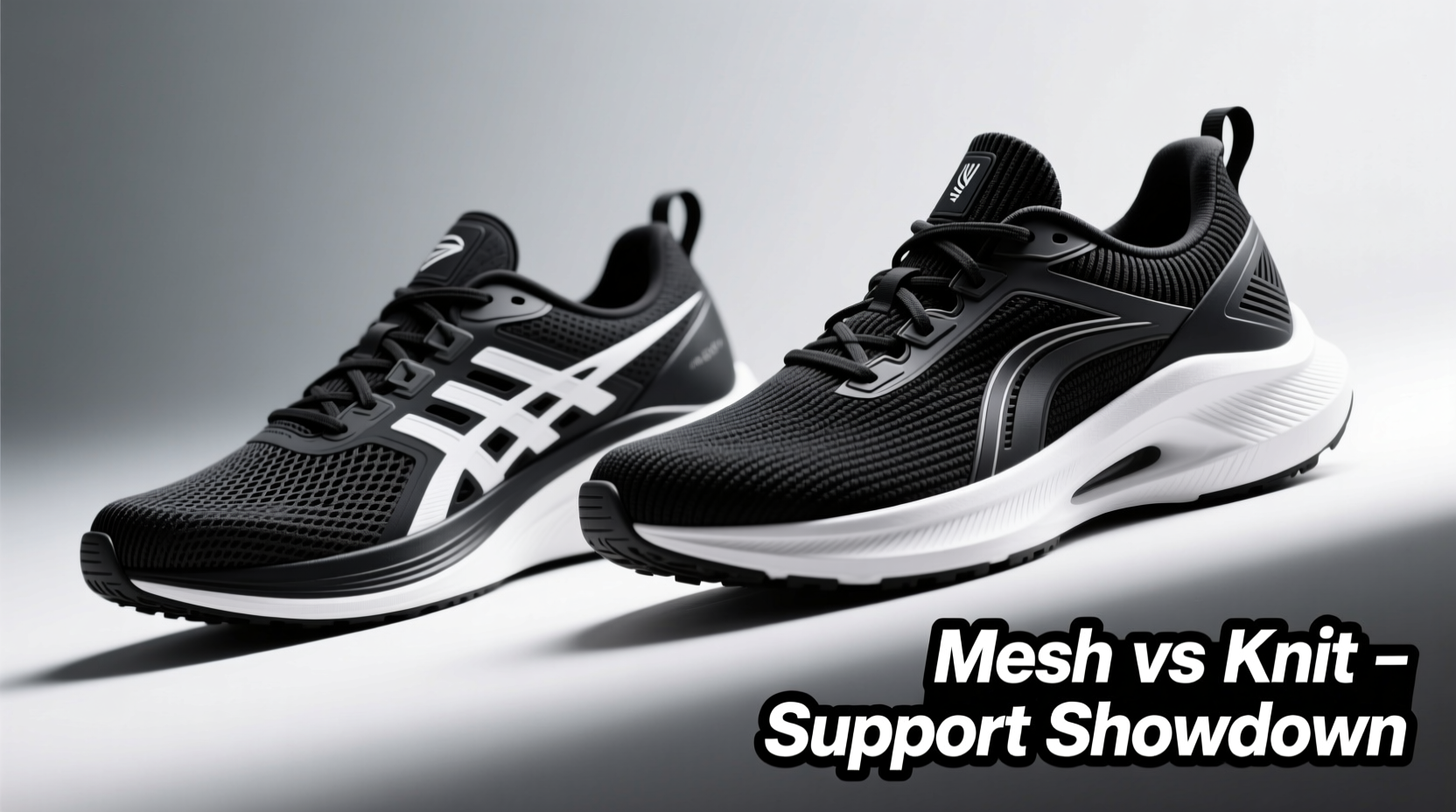
Mechanically speaking, the upper—the part of the shoe that wraps around the foot—plays a pivotal role in stability, lockdown, and motion control. The two dominant materials used today are engineered mesh and seamless knit, each born from different manufacturing philosophies and technological advancements.
Mesh has been a staple in athletic footwear for decades. It's typically made from tightly woven synthetic fibers like polyester or nylon, designed with small perforations to allow airflow. Traditional mesh is often layered, sometimes reinforced with overlays or TPU (thermoplastic polyurethane) patches to add durability and structure. This multi-layered approach gives manufacturers precise control over where support and flexibility are needed.
Knit uppers, on the other hand, emerged more recently with innovations from brands like Nike (Flyknit), Adidas (Primeknit), and New Balance (Engineered Knit). These are constructed using computer-guided knitting machines that create a single, sock-like piece of fabric. The weave density can be varied across the shoe—tighter in high-stress zones for support, looser in others for stretch and breathability. This results in a highly adaptive, form-fitting upper with minimal seams.
“Knit technology allows us to treat the upper like a second skin, dynamically supporting the foot through gait cycles.” — Dr. Lena Torres, Biomechanics Researcher at Sports Performance Lab, University of Oregon
Support Comparison: Structure, Fit, and Stability
Support in running shoes isn’t just about cushioning—it’s about how well the shoe controls foot movement, maintains alignment, and resists deformation under load. Let’s break down how mesh and knit compare across key support metrics.
Midfoot Lockdown and Heel Security
Mesh uppers, especially those with strategic overlays, tend to offer superior midfoot containment. The rigid structure of fused mesh panels helps prevent lateral slippage during sharp turns or uneven terrain. Brands like Brooks and Asics often use this design in stability models where controlled foot motion is paramount.
Knit uppers excel in heel fit due to their elasticity and anatomical shaping. When properly designed, they mold closely to the heel collar, reducing the risk of blisters and lift. However, some early-generation knit models were criticized for “ballooning” or stretching out after prolonged use, leading to reduced lockdown. Modern iterations have largely addressed this with denser weaves and internal heel counters.
Torsional Rigidity and Lateral Control
Torsional rigidity—the resistance to twisting along the sole axis—is crucial for maintaining stability, especially on trails or wet pavement. Mesh uppers, particularly those with exoskeleton frameworks or medial posts, provide higher torsional stiffness. This makes them ideal for overpronators or runners logging high mileage on roads.
Knit uppers, while flexible by nature, can be engineered with zoned reinforcement. For example, a tighter knit pattern along the medial side can simulate medial support without adding bulk. Still, pure knit lacks the inherent rigidity of structured mesh, meaning it may not be the best choice for runners needing aggressive motion control.
Tip: If you overpronate or run over 20 miles per week, prioritize shoes with structured mesh uppers and visible support elements.Performance in Real Conditions: Breathability, Weight, and Durability
Beyond pure support, practical factors influence how these materials perform day-to-day.
| Feature | Mesh Uppers | Knit Uppers |
|---|---|---|
| Breathability | High – consistent airflow due to uniform perforations | Moderate to High – varies by knit density; some zones less ventilated |
| Weight | Moderate – added overlays increase mass slightly | Low – seamless construction reduces overall weight |
| Durability | High – resistant to abrasion and tearing | Moderate – prone to snagging; degrades faster in rugged conditions |
| Water Resistance | Moderate – dries quickly but absorbs moisture | Low – knit fibers absorb water easily, increasing weight when wet |
| Fit Consistency Over Time | High – minimal stretch or deformation | Variable – some models stretch after 100+ miles |
The trade-offs are clear: mesh offers predictable durability and structure, while knit delivers a glove-like fit and lower weight at the cost of long-term resilience.
Mini Case Study: Trail Runner vs. Road Racer
Consider two runners with different needs:
- Sarah, 38, trail runner – She logs 35 miles weekly on rocky, uneven paths. Her priority is ankle protection, secure fit, and resistance to debris. She previously tried a knit-based trail shoe but found the upper snagged on branches and lost shape after six weeks. Switching to a dual-layer mesh shoe with TPU toe cap and mud guard improved her confidence on descents and eliminated heel slip.
- James, 29, marathon racer – He focuses on speed and efficiency. His ideal shoe is sub-9oz, snug-fitting, and aerodynamic. After testing several prototypes, he preferred a knit racing flat with zonal support near the arch. The seamless interior prevented hot spots during long runs, and the lightweight feel contributed to a personal best at his last half-marathon.
This contrast illustrates that neither material is universally superior. Support must be evaluated within the context of usage, environment, and individual biomechanics.
Step-by-Step Guide: Choosing the Right Upper for Your Needs
Selecting between mesh and knit shouldn’t be arbitrary. Follow this process to make a data-driven decision:
- Assess Your Running Style – Are you a neutral runner, overpronator, or supinator? Overpronators benefit from structured mesh with medial support. Neutral runners may enjoy the adaptive fit of knit.
- Evaluate Your Mileage – High-mileage runners (>30 miles/week) should lean toward mesh for its durability and consistent support.
- Consider Terrain – Road running favors knit for smooth surfaces; trail or mixed terrain demands the toughness of mesh.
- Test the Fit – Try both types in-store. Pay attention to heel grip, forefoot width, and whether the upper feels restrictive or too loose.
- Check for Reinforcements – Even knit shoes vary widely. Look for internal heel cups, saddle cables, or denser knit zones if you need extra support.
- Monitor Long-Term Wear – Track how the shoe feels after 50 and 100 miles. Does the upper stretch? Is there increased foot fatigue? Adjust accordingly.
Expert Recommendations and Industry Trends
Footwear engineers are increasingly blending both materials to leverage their strengths. For instance, Hoka One One uses a \"welded mesh\" technique combined with knit-like patterning for targeted flexibility. Saucony integrates mono-mesh with 3D-printed support grids. This hybridization suggests the future lies not in choosing one over the other, but in intelligent integration.
Dr. Alan Pierce, podiatrist and sports medicine consultant, notes:
“The foot isn’t static—it expands, shifts, and twists with every stride. The best uppers now mimic natural movement while still providing critical restraint where needed. We’re moving beyond ‘more support’ toward ‘smarter support.’”
Recent studies presented at the American College of Sports Medicine conference indicate that runners wearing shoes with zoned knit uppers reported 18% fewer instances of hot spots and 12% less perceived foot fatigue compared to traditional mesh—but only when the fit was precise. Poorly fitting knit shoes showed higher rates of midfoot instability.
Frequently Asked Questions
Can knit shoes support flat feet?
Yes, but with caveats. Knit shoes can support flat feet if they include built-in stability features such as dual-density midsoles, medial posts, or internal shanks. However, the upper alone—no matter how advanced—cannot correct overpronation. Look for knit models specifically labeled “stability” or “motion control,” and avoid minimalist knit designs if you have severe flat feet.
Do mesh shoes cause more blisters than knit?
Not inherently. Blisters are usually caused by friction from poor fit, not material type. That said, older mesh shoes with stiff overlays or internal seams can rub against sensitive skin. Seamless knit uppers reduce this risk, but if the knit is too tight or non-stretchy in certain zones, it can create pressure points. Moisture-wicking socks and proper lacing techniques matter just as much as the upper material.
Are knit running shoes worth the higher price?
For many runners, yes—but value depends on use case. Knit shoes often cost $20–$40 more due to complex manufacturing and premium materials. If you’re a competitive racer or prioritize lightweight performance, the investment may pay off in comfort and efficiency. For daily training or heavy-duty use, mesh-based shoes typically offer better longevity per dollar spent.
Final Checklist Before Buying
Before committing to a pair, ask yourself:
- ✅ Does the upper hold my midfoot securely without pressure points?
- ✅ Is there noticeable stretch or deformation when I twist the shoe?
- ✅ Are there reinforced zones in high-stress areas (heel, medial side, toe box)?
- ✅ How does it feel after 10 minutes of walking or light jogging?
- ✅ Is the shoe designed for my foot type and running goals?
- ✅ Does the brand offer a return policy or trial period?
Conclusion: Match Material to Mission
The debate between mesh and knit isn’t about declaring a winner—it’s about matching material properties to functional needs. Mesh remains the gold standard for durable, structured support, especially in stability and trail models. Knit excels in lightweight precision, offering a dynamic fit ideal for racers and neutral runners seeking minimal interference.
Ultimately, support is not just a feature of the upper; it’s the result of an integrated system including midsole geometry, outsole design, and fit. Don’t let marketing terms like “adaptive knit” or “engineered mesh” distract from what matters: how the shoe performs on your foot, over time, in real conditions.
🚀 Ready to find your perfect fit? Re-evaluate your current running shoes using the checklist above, then test one mesh and one knit model side by side. Your next PR might start with a smarter upper choice.








