
Summer rain is unpredictable—often arriving in sudden downpours that leave runners caught between pavement puddles and soaked socks. When choosing running shoes for warm, wet conditions, one question stands out: do mesh or knit uppers better manage moisture? While both materials are praised for breathability, their performance under rain exposure differs significantly. Understanding the structural, functional, and environmental nuances of each can help runners make smarter footwear choices, especially when dry comfort impacts endurance, blister risk, and foot health.
How Upper Materials Affect Moisture Management
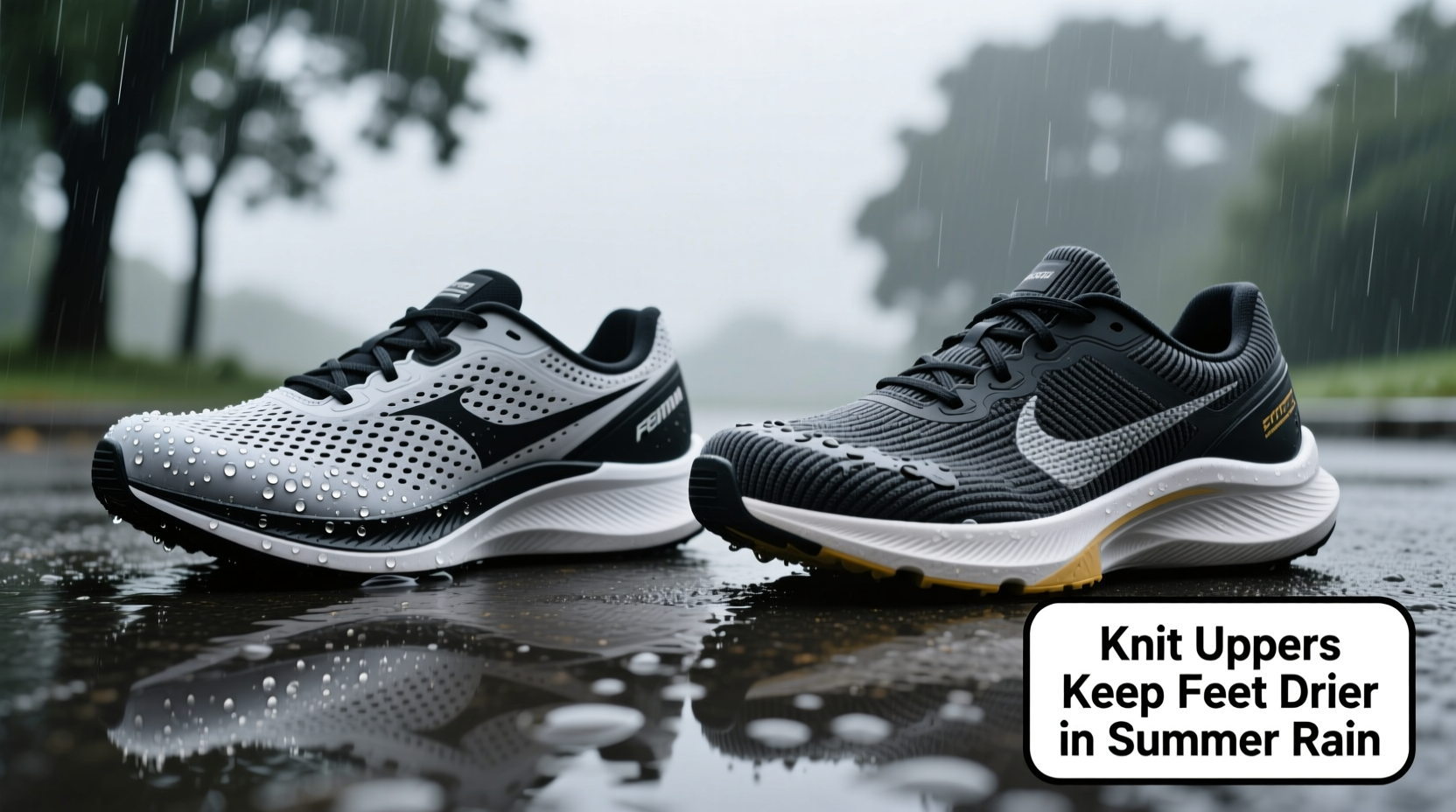
The upper—the part of the shoe covering the top of the foot—plays a critical role in breathability, water resistance, and moisture wicking. Mesh and knit are two dominant technologies in modern running footwear, each with distinct construction methods and performance profiles.
Mesh uppers are typically made from woven synthetic fibers like polyester or nylon, engineered into open-grid patterns. These designs prioritize airflow, making them ideal for heat dissipation. Traditional mesh is often layered or reinforced to balance durability and stretch.
Knit uppers, on the other hand, are constructed using seamless knitting techniques similar to athletic socks. Brands like Nike (Flyknit), Adidas (Primeknit), and Saucony (FLEXFILM) use precision-knitted yarns to create zones of support, stretch, and ventilation within a single piece of fabric.
In dry conditions, both materials allow excellent air circulation. But when exposed to external moisture—like summer rain—their behavior diverges due to differences in fiber density, coating treatments, and water absorption rates.
Tip: Not all mesh or knit is created equal—check if the shoe includes hydrophobic coatings or DWR (durable water repellent) finishes for improved rain resistance.Water Absorption: The Hidden Factor in Wet Weather Performance
When rain hits, two types of moisture affect your feet: external water penetration and internal sweat buildup. A shoe’s ability to handle both determines how dry your feet stay.
Mesh uppers tend to have larger openings between fibers. This allows rapid airflow but also makes them more vulnerable to direct water ingress. Light rain may bead on treated surfaces initially, but prolonged exposure causes water to seep through. Once wet, mesh dries relatively quickly due to low fiber density and high surface-area-to-volume ratio.
Knit uppers often use tighter, more intricate weaves. Some models incorporate hydrophobic yarns (e.g., recycled polyester treated for water resistance), which slow down water absorption. However, because knit fabrics are denser and more textile-like, they can retain moisture longer once saturated. The seamless construction reduces seams where water might enter, but the material itself may act like a sponge if not properly treated.
“Knit isn’t inherently waterproof, but its tight structure can delay water penetration compared to open mesh—assuming it’s designed with weather in mind.” — Dr. Lena Torres, Footwear Biomechanics Researcher at Oregon Institute of Sports Science
Comparative Analysis: Mesh vs Knit in Real Rain Conditions
To evaluate real-world performance, consider three key factors: water ingress rate, drying speed, and internal moisture control.
| Feature | Mesh Uppers | Knit Uppers |
|---|---|---|
| Water Ingress Speed | Faster (large pores) | Slower (tighter weave) |
| Absorption Capacity | Low to moderate | Moderate to high |
| Drying Time (post-rain) | Fast (1–2 hours in sun/airflow) | Slow to moderate (2–4+ hours) |
| Sweat Evaporation | Excellent | Good (varies by knit pattern) |
| Breathability in Heat | Superior | Good, but less than mesh |
| Seam Exposure | Higher (multiple panels) | Lower (seamless design) |
The data suggests a trade-off: mesh offers faster drying and better airflow but lets water in more easily. Knit resists initial saturation better but holds onto moisture longer once wet. For brief summer showers, knit may keep feet drier *initially*. Over longer distances or repeated exposure, mesh often performs better due to quicker evaporation.
Real Example: Urban Commuter Runner in Seattle Summer
Jamal, a 32-year-old runner in Seattle, logs 25 miles weekly, often commuting through light drizzle and sidewalk splashback. He tested two pairs over a rainy July: the Nike Pegasus 40 (engineered mesh) and the Adidas Adizero Boston 12 (Primeknit upper).
During a 5-mile run with intermittent rain, the Primeknit upper resisted water for the first 20 minutes—his feet stayed dry inside. But as the knit absorbed moisture, he noticed a slight heaviness and internal dampness despite wearing moisture-wicking socks. In contrast, the Pegasus allowed water to enter sooner, particularly around the toe box, but airflow dried his feet rapidly once the rain stopped. By mile 4, the mesh shoe felt lighter and less clammy.
His takeaway: “The knit kept me dry at first, but the mesh didn’t trap moisture. For back-to-back rainy days, I’d pick the mesh for comfort after the run.”
Design Innovations That Change the Game
Modern running shoes increasingly blend materials to overcome limitations. Hybrid uppers now integrate mesh panels in high-ventilation zones and knit or film overlays in high-impact or weather-exposed areas.
For example, the Hoka Mach 5 uses a lightweight engineered mesh with strategic reinforcement and a partial gusseted tongue to reduce water entry. Meanwhile, the New Balance FuelCell Rebel v4 combines Hypoknit with hydrophobic treatments to improve water shedding without sacrificing stretch.
Some brands also apply DWR (durable water repellent) coatings to upper materials. These treatments cause water to bead and roll off rather than soak in. However, DWR degrades over time with washing and abrasion, requiring reapplication or specialized care.
Tip: After several runs in wet conditions, refresh DWR performance using spray-on treatments designed for technical apparel.Step-by-Step Guide: Choosing the Right Shoe for Summer Rain
- Assess Your Rain Exposure: Do you face short drizzles or extended downpours? Brief exposure favors knit; prolonged wetness favors fast-drying mesh.
- Check for Hydrophobic Treatments: Look for terms like “water-repellent,” “DWR-coated,” or “hydrophobic yarns” in product descriptions.
- Evaluate Ventilation Needs: Hot climates demand maximum breathability—prioritize mesh unless rain is constant.
- Consider Midsole Drainage: Some shoes feature perforated midsoles or drainage channels that expel water, reducing internal pooling.
- Test Dry Time: If you run daily, choose a shoe that dries quickly overnight. Mesh generally wins here.
- Prioritize Sock Synergy: Pair your shoe with merino wool or synthetic wicking socks that pull moisture away from skin, regardless of upper type.
Expert Recommendations and Common Misconceptions
Many runners assume “more breathable” means “wetter feet in rain.” This isn’t always true. Breathability refers to air exchange, not water resistance. In fact, excessive breathability can increase water ingress—but it also accelerates drying.
Dr. Elena Ruiz, podiatrist and sports medicine consultant, emphasizes the importance of post-run care: “A shoe that gets wet but dries fast is safer than one that stays damp. Prolonged moisture leads to maceration, blisters, and fungal growth.”
Another myth: “knit feels sock-like, so it must protect better.” While the snug fit enhances lockdown, it doesn’t equate to waterproofing. Without proper treatment, knit fibers absorb water more readily than tightly woven mesh.
“Don’t confuse fit with function. A snug knit upper won’t keep your feet dry any more than a cotton sock would in the rain.” — Mark Delgado, Lead Designer at TrailForm Footwear Labs
Checklist: Optimizing Foot Dryness in Summer Rain
- ✅ Choose mesh for frequent, short rain exposure and hot climates
- ✅ Opt for knit with DWR treatment if you prefer structured fit and face light, infrequent showers
- ✅ Avoid untreated knit in heavy or prolonged rain
- ✅ Use moisture-wicking socks (avoid cotton)
- ✅ Air shoes thoroughly after each wet run—never store damp
- ✅ Reapply water-repellent sprays every 6–8 weeks with regular use
- ✅ Rotate shoes to allow full drying between runs
Frequently Asked Questions
Can I make my knit shoes more water-resistant?
Yes. Use a silicone-free DWR spray designed for technical fabrics. Apply evenly and let dry 24 hours before use. Note: this won’t make them waterproof but will improve beading and slow absorption.
Do mesh shoes wear out faster in wet conditions?
Not necessarily. High-quality engineered mesh is durable and resistant to mildew when dried properly. The key is avoiding prolonged damp storage. Mesh may degrade faster with abrasive debris, but moisture alone isn’t the primary wear factor.
Are there truly waterproof running shoes with breathable uppers?
Some models integrate waterproof membranes (e.g., Gore-Tex) with mesh or knit, but these often sacrifice breathability. They’re effective in cold, wet conditions but can overheat feet in summer. For warm rain, most experts recommend quick-dry materials over sealed membranes.
Final Verdict: Which Keeps Feet Drier?
In summer rain, **mesh uppers generally keep feet drier over time**, despite allowing faster water ingress. Their superior breathability and rapid drying prevent prolonged moisture buildup, which is more damaging than temporary wetness. Knit uppers offer better initial resistance and a snugger feel, but once saturated, they retain water longer and create a damper microclimate inside the shoe.
The best choice depends on your environment and routine. If you run in humid heat with occasional sprinkles, mesh provides optimal balance. If you face consistent mist or need structured support, a hydrophobically treated knit may suit you—but expect slower recovery between wet runs.
Ultimately, no running shoe stays perfectly dry in rain. The goal isn’t absolute dryness but effective moisture management. Prioritize materials that work with your body’s cooling system, dry quickly, and resist bacterial growth. With the right combination of upper technology, sock choice, and post-run care, you can stay comfortable, blister-free, and ready for the next mile—even when clouds roll in.
🚀 Ready to test your next run in the rain? Grab your favorite pair, check the forecast, and log how your feet feel at mile 3 and after. Share your findings with fellow runners—real-world experience is the best guide.








