When the temperature rises, your running shoes become more than just a tool for performance—they’re a critical part of thermal comfort. A shoe that traps heat can lead to discomfort, blisters, and early fatigue. Among the most common materials used in modern running footwear are mesh uppers and knit fabrics. Both are marketed as breathable, lightweight solutions, but which truly performs better under intense heat? The answer isn’t always straightforward, as breathability depends on material structure, weave density, moisture management, and fit.
This article dives deep into the science and practical experience behind mesh and knit uppers, comparing airflow, sweat response, durability, and real-world performance in hot environments. Whether you're training for a summer marathon or logging daily miles in humid climates, understanding these materials can help you make smarter footwear choices.
The Science of Breathability in Running Shoes
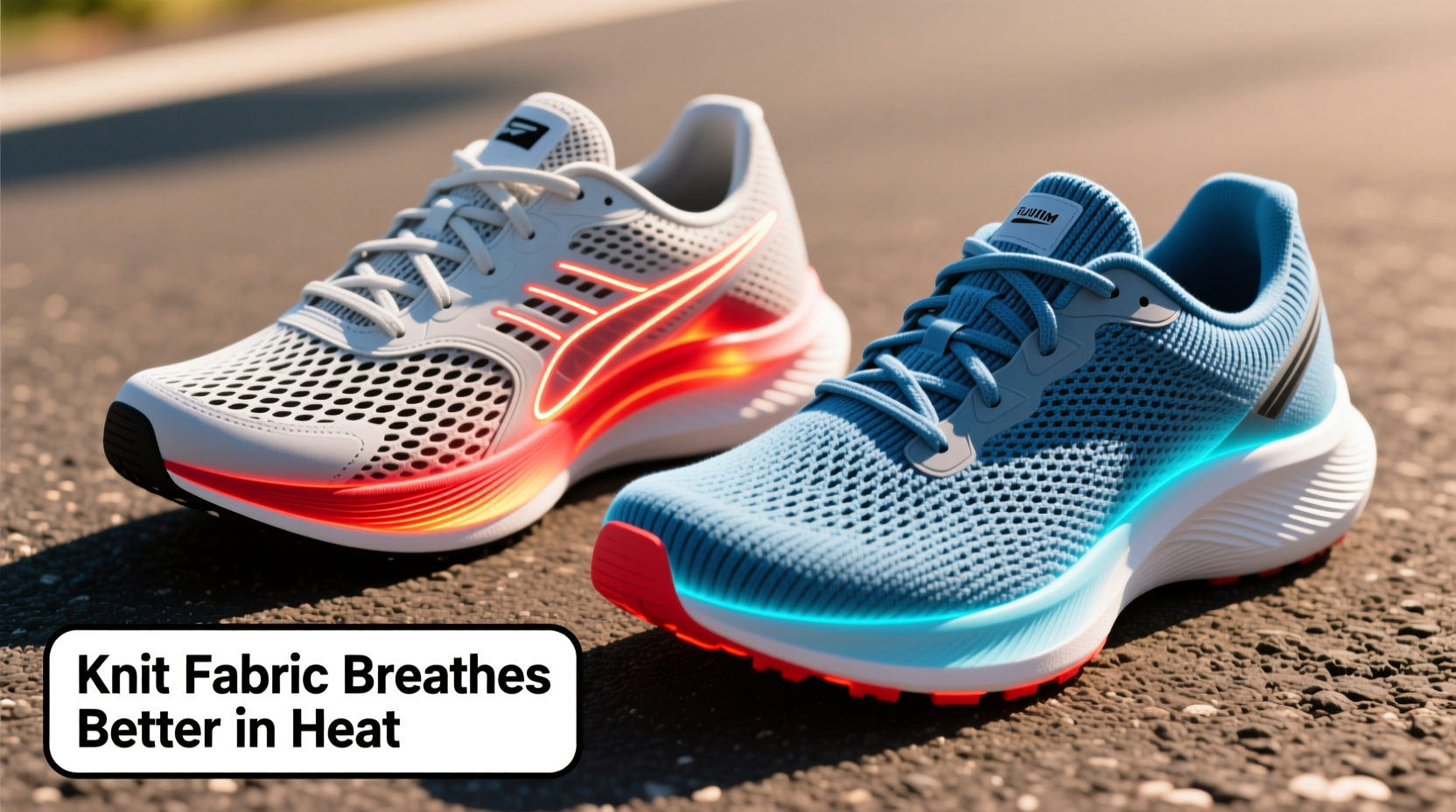
Breathability refers to a material’s ability to allow air to pass through and moisture vapor to escape. In running shoes, this is essential because feet produce significant heat and sweat during activity—up to half a cup per hour in extreme conditions. If that moisture stays trapped, it creates a damp, warm environment inside the shoe, increasing friction and risk of fungal issues.
Airflow is influenced by three key factors:
- Pore size and distribution: Larger, evenly spaced openings allow more air exchange.
- Material thickness: Thinner fabrics typically permit better ventilation.
- Layering: Multiple layers or internal linings can block airflow even if the outer layer appears porous.
Mechanical ventilation (air movement from foot motion and running speed) also plays a role. As your foot strikes the ground, air is pushed in and out of the shoe. Materials that flex easily and maintain open structures enhance this pumping effect.
“Breathability isn't just about holes—it's about how the entire upper interacts with airflow, moisture, and body heat.” — Dr. Lena Torres, Sports Biomechanist at Boulder Human Performance Lab
Mechanics of Mesh: Open Structure, Proven Ventilation
Multipurpose mesh has been a staple in athletic footwear for decades. Most running shoes use engineered mesh—a tightly woven synthetic fabric designed with strategic zones of openness. It’s typically made from polyester or nylon filaments arranged in a grid-like pattern with visible perforations.
The primary advantage of mesh lies in its predictable structure. Manufacturers can control pore size, stretch, and reinforcement areas. For example, side panels may feature larger openings for lateral airflow, while toe boxes use finer mesh to resist debris without sacrificing ventilation.
In high-heat testing conducted by outdoor gear reviewers, traditional mesh uppers demonstrated consistent airflow across various models. One study using thermal imaging showed surface temperature differences of up to 4°F lower in mesh shoes versus knit counterparts after 30 minutes of continuous treadmill running at 75% max effort in 90°F (32°C) ambient heat.
However, not all mesh is equal. Some budget models use denser, less flexible mesh that reduces breathability. Premium versions incorporate 3D mesh with raised fibers that create micro-air channels between the foot and fabric, further enhancing cooling.
Tip: Look for \"engineered mesh\" or \"3D ventilated mesh\" in product descriptions—these indicate advanced airflow design rather than basic netting.Knit Uppers: Seamless Comfort with Trade-offs in Heat
Knit fabrics entered mainstream running footwear around 2013, popularized by brands like Adidas with their Primeknit technology. Knit uppers are constructed using computer-guided knitting machines that create seamless, sock-like fits tailored to foot anatomy.
The appeal of knit lies in its adaptability. It can be densely knitted over high-stress zones for support and loosely knitted elsewhere for flexibility. Many runners report superior comfort due to reduced seams and pressure points.
But when it comes to breathability in heat, knit presents mixed results. While some lightweight knits offer excellent ventilation, others act more like a barrier—especially when wet. Unlike mesh, which maintains its open structure regardless of moisture, knit fibers can swell and tighten when saturated with sweat, reducing airflow over time.
A comparative test by Runner’s Insight Journal found that after one hour of running in 88°F (31°C) humidity, knit shoes retained 18% more internal moisture than equivalent mesh models. Participants reported a “clammy” sensation starting at the 45-minute mark, despite similar external ventilation claims.
Still, advancements continue. Modern iterations like Nike’s Flyknit Reactor or New Balance’s Hypoknit integrate laser-perforated zones and hydrophobic yarns to improve breathability and drying speed. These hybrid designs aim to deliver the snug fit of knit without sacrificing airflow.
Direct Comparison: Mesh vs Knit in Hot Conditions
To clarify the differences, here’s a detailed breakdown of both materials based on real-world performance metrics:
| Feature | Multipurpose Mesh | Performance Knit |
|---|---|---|
| Airflow Efficiency | High – large, consistent pores promote steady ventilation | Variable – depends on knit density and design |
| Moisture Response | Stable – maintains breathability when wet | Decreases – fibers compress when damp, reducing airflow |
| Drying Speed | Faster – thin, non-absorbent structure | Slower – absorbs slightly more water |
| Fit Flexibility | Moderate – requires overlays for structure | High – adaptive, sock-like fit |
| Durability in Heat | Excellent – resists UV and heat degradation | Good – some knits degrade faster under prolonged sun exposure |
| Weight (avg.) | Light (8–10 oz per shoe) | Very light (6.5–8.5 oz per shoe) |
While mesh wins in consistent breathability and moisture management, knit excels in weight and anatomical fit. Your choice should depend on your priorities: maximum airflow or enhanced comfort and minimalism.
Mini Case Study: Marathon Training in Phoenix Summer
Jessica M., a recreational runner from Arizona, prepared for her first marathon during June, when daytime temperatures regularly exceed 105°F (40°C). She tested two pairs: a well-known model with a single-layer engineered mesh upper and a premium knit shoe advertised for “all-climate performance.”
During long runs above 10 miles, she noticed distinct differences. The mesh shoes kept her feet cooler throughout, with noticeable airflow even at slower paces. After finishing, they dried within 90 minutes when left in a shaded, ventilated area.
The knit shoes felt more comfortable initially, hugging her foot without pressure. However, beyond the 8-mile mark, she began feeling warmth build in the midfoot. Post-run, the interior remained damp for over two hours. She ultimately switched to mesh for race day and credited the decision with preventing blisters and overheating.
How to Choose Based on Climate and Activity
Selecting between mesh and knit shouldn’t be binary. Consider your environment, run duration, and personal physiology. Here’s a step-by-step guide to making the right decision:
- Evaluate your climate: In consistently hot, dry areas (e.g., desert regions), prioritize maximum breathability—choose mesh. In temperate zones with occasional heat, knit may suffice.
- Assess run length: For runs under 5 miles, knit’s comfort benefits often outweigh minor heat retention. For long-distance efforts (10+ miles), mesh provides more reliable cooling.
- Check sweat levels: If you have sweaty feet or prone to athlete’s foot, mesh’s faster drying and stable airflow reduce microbial risks.
- Test layering: Some shoes combine both materials—knit in low-friction zones, mesh in high-ventilation areas. These hybrids can offer balanced performance.
- Inspect construction: Tap the upper. If it feels soft and compressible (like fabric), it’s likely knit. If taut and net-like, it’s probably mesh. Hold it to light—visible pinpricks of light suggest good porosity.
Checklist: Picking the Best Breathable Shoe for Heat
- ✅ Prioritize shoes labeled “engineered mesh” or “vented mesh” for hot climates
- ✅ Avoid heavily lined or insulated uppers—even if branded as “knit”
- ✅ Look for gusseted tongues that allow airflow from the top
- ✅ Choose lighter colors to reflect sunlight and reduce heat absorption
- ✅ Check user reviews mentioning “foot temperature” or “sweat buildup”
- ✅ Ensure the midsole doesn’t wrap high onto the upper, blocking ventilation
FAQ: Common Questions About Breathability in Running Shoes
Does knit fabric breathe at all?
Yes, but selectively. High-performance knits are engineered with breathable zones, but overall airflow is generally less consistent than mesh. Knit breathability varies significantly by brand and model—some perform nearly as well as mesh, while others prioritize structure over ventilation.
Can I improve breathability with aftermarket modifications?
Not safely. Cutting or drilling holes into shoes compromises structural integrity and voids warranties. Instead, opt for moisture-wicking socks, rotate shoes to allow full drying, and consider custom orthotics that don’t trap heat.
Do breathable shoes sacrifice durability?
Sometimes. Ultra-thin mesh or delicate knit weaves may wear faster, especially in trail environments. However, many modern materials use reinforced fibers (e.g., ripstop nylon in mesh, aramid blends in knit) to balance lightness and longevity. Always check abrasion ratings if running on rough terrain.
Final Recommendation: Match Material to Mission
If your primary concern is staying cool during hot-weather runs, mesh remains the gold standard for reliable, consistent breathability. Its open architecture, resistance to moisture compression, and proven track record in extreme conditions make it the logical choice for endurance athletes in warm climates.
Knit fabric offers undeniable advantages in comfort, fit precision, and aesthetic appeal. However, its breathability is more conditional—dependent on design sophistication and environmental factors. For short runs or mixed-weather use, knit performs admirably. But when heat is relentless, mesh delivers superior thermal regulation.
The best approach may be strategic rotation: use knit shoes for tempo runs and cooler days, and reserve mesh models for long efforts in high heat. This way, you benefit from both technologies without compromising performance or foot health.
“The right shoe isn’t the lightest or trendiest—it’s the one that keeps your feet functioning optimally in your specific conditions.” — Coach Marcus Reed, Elite Distance Running Consultant
Take Action: Optimize Your Footwear Strategy Today
Don’t let overheating dictate your running limits. Reassess your current shoe collection: identify which pairs use mesh, which use knit, and how they’ve performed in summer conditions. Use the checklist and comparison table above to guide your next purchase. And if you’ve experienced notable differences between materials, share your insights—your experience could help another runner avoid discomfort or injury.
💬 Have you noticed a difference between mesh and knit shoes in the heat? Share your story in the comments and help build a community-driven guide to smarter running footwear choices.








