
Kicking a soccer ball high with both power and accuracy is a skill that separates competent players from truly dynamic ones. Whether launching a long cross, executing a goal kick, or delivering a pinpoint lob over defenders, the ability to elevate the ball while maintaining force and control is invaluable. This isn’t about raw strength—it’s about biomechanics, timing, and intelligent repetition. The best players don’t just kick harder; they kick smarter. By refining your form, understanding the physics behind the motion, and practicing with purpose, you can consistently send the ball soaring exactly where you want it.
The Science Behind a High-Powered Kick
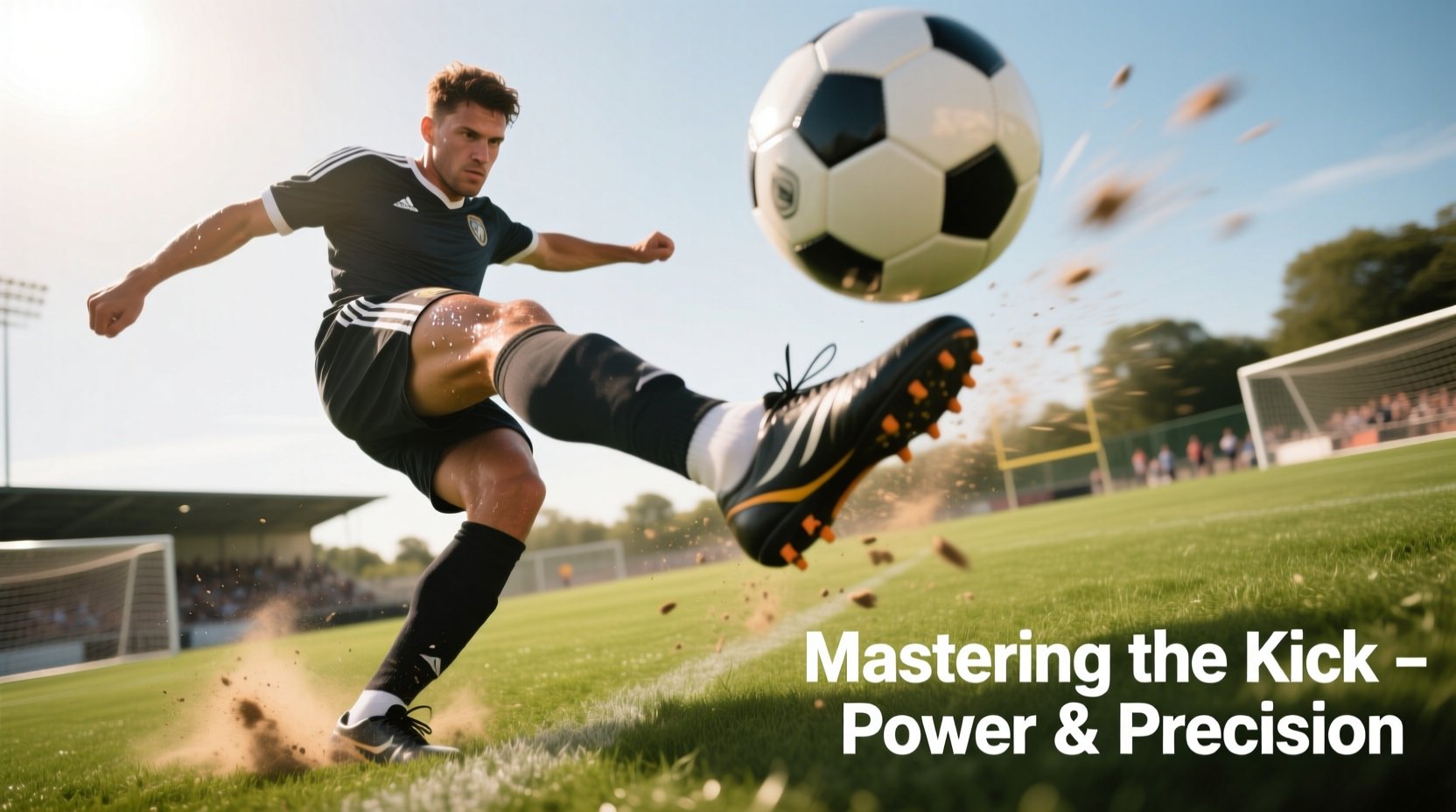
To generate height and power, two key elements must align: contact point and body mechanics. When you strike the lower third of the ball, you create backspin and lift—similar to how a golf ball gains altitude off a driver. The angle of your plant foot, the swing of your kicking leg, and the position of your hips determine not only trajectory but also velocity.
Power originates in the core and transfers through the hip flexors into the thigh and finally the foot. The follow-through dictates direction and spin. Many players focus solely on the foot-to-ball impact, but the real difference lies in what happens before and after that split second. Proper alignment ensures energy flows efficiently, minimizing wasted motion and reducing injury risk.
“Kicking high without sacrificing control comes down to balance and timing. It’s not about swinging harder—it’s about swinging right.” — Diego Alvarez, UEFA A Licensed Coach and Performance Analyst
Step-by-Step Guide to Executing the Perfect High Kick
Follow this structured approach to build consistency and confidence in your high kicks:
- Approach the Ball at an Angle: Approach from a 30- to 45-degree angle relative to the ball’s target line. This allows your body to open slightly, creating space for a full hip rotation.
- Plant Your Non-Kicking Foot: Place your plant foot about 10–15 inches beside and slightly behind the ball. Keep your toes pointing toward the target to maintain directional alignment.
- Lock Your Ankle and Aim Low: Firmly lock your ankle on the kicking foot. Strike the bottom third of the ball with the instep (laces area) to generate upward lift.
- Swing Through with Hip Extension: Drive your knee forward and upward, extending your hip fully. This generates maximum power from your glutes and quadriceps.
- Follow Through Upward: Continue your leg swing high across your body. A high follow-through naturally encourages elevation and helps stabilize trajectory.
- Keep Your Head Still and Eyes on the Ball: Avoid looking up too early. Maintain focus until after contact to ensure clean execution.
Do’s and Don’ts of Kicking for Height and Power
| Do’s | Don’ts |
|---|---|
| Strike the lower third of the ball | Hit the center or top half (causes low trajectory) |
| Lean back slightly to encourage lift | Over-lean backward (loses balance and control) |
| Use a full knee drive and hip snap | Shorten your swing to kick faster |
| Keep your head steady during contact | Look up before striking the ball |
| Follow through high and across your body | Cut off your follow-through abruptly |
Essential Drills to Build Skill and Muscle Memory
No amount of theory replaces deliberate practice. Incorporate these drills into your weekly routine to ingrain proper mechanics:
- Wall Target Drill: Mark a spot 8–10 feet high on a wall. Stand 15 yards away and attempt to hit the target with laces kicks. Focus on clean contact and follow-through.
- One-Bounce Clearance Drill: Have a partner roll balls toward you. Let each bounce once, then clear it high and far. Simulates real-game pressure and improves timing.
- Hanging Ball Drill: Suspend a ball from a rope at waist height. Practice striking underneath it to simulate lifting a stationary ball. Helps refine contact point awareness.
- Distance-Accuracy Ladder: Set up cones at increasing distances (20, 30, 40 yards). Kick to each with the goal of landing within a 3-foot radius. Builds control under power.
Real Example: From Struggles to Success
Jamal, a 17-year-old central midfielder, struggled with his long balls during tryouts. His passes lacked height and often sailed out of bounds. After video analysis, his coach noticed he was planting too close to the ball and striking it with a stiff leg, limiting hip extension. Over six weeks, Jamal focused on lengthening his approach, adjusting his plant foot, and emphasizing a high follow-through. He practiced 15 minutes daily using the wall target drill. By the next evaluation, his aerial distribution success rate improved by 68%, earning him a starting role. His transformation wasn’t due to increased strength—it came from technical refinement.
Checklist: Mastering the High Kick
Before every practice session, run through this checklist to ensure quality repetition:
- ✅ Approach at a 30–45° angle
- ✅ Plant foot 10–15 inches beside and behind the ball
- ✅ Point plant foot toward target
- ✅ Lock ankle on kicking foot
- ✅ Strike the lower third with instep
- ✅ Drive knee and extend hip aggressively
- ✅ Follow through high and across the body
- ✅ Keep head still until after contact
- ✅ Practice with intention, not just volume
Frequently Asked Questions
Why does my ball go sideways when I try to kick it high?
This usually results from improper foot alignment or striking off-center. Ensure your plant foot points at the target and your kicking foot contacts the center-lower part of the ball. Also, check that your hips are rotating forward—not sideways—during the kick.
Can I kick high without losing power?
Absolutely. Power and height aren’t mutually exclusive. In fact, striking the lower third correctly creates both lift and speed. The key is maintaining strong hip extension and a full follow-through. Avoid “chopping” down on the ball, which kills momentum.
Should I use the inside of my foot for high kicks?
The inside of the foot is better suited for short, accurate passes. For maximum height and power, use the instep (laces area). It provides greater surface stiffness and allows more force transfer.
Conclusion: Elevate Your Game, One Kick at a Time
Mastery of the high-power soccer kick doesn’t happen overnight. It demands attention to detail, patience, and consistent effort. But the payoff is immense—greater field vision, enhanced tactical options, and the ability to influence play from deep positions. Every time you step onto the pitch, remember that precision and power begin long before contact. They start with preparation, rooted in correct technique and reinforced through smart training. Now that you understand the mechanics, drills, and common pitfalls, it’s time to put knowledge into motion.
🚀 Grab a ball, head to the field, and apply one technique today. Track your progress weekly, and within a month, you’ll see—and feel—the difference.








