On rugged trails, every step counts. The footwear you choose doesn’t just influence your comfort—it shapes your pace, endurance, and even your risk of injury. In recent years, a growing debate has emerged among hikers and backpackers: Should you opt for supportive luxury hiking shoes or embrace the lightweight agility of trail runners? While traditional wisdom favors high-top boots or sturdy hiking shoes for ankle protection, modern trail runners have evolved to handle technical terrain with surprising confidence. The real question is no longer whether ankle support matters—but whether it’s worth the trade-off in speed, efficiency, and responsiveness.
The Evolution of Trail Footwear
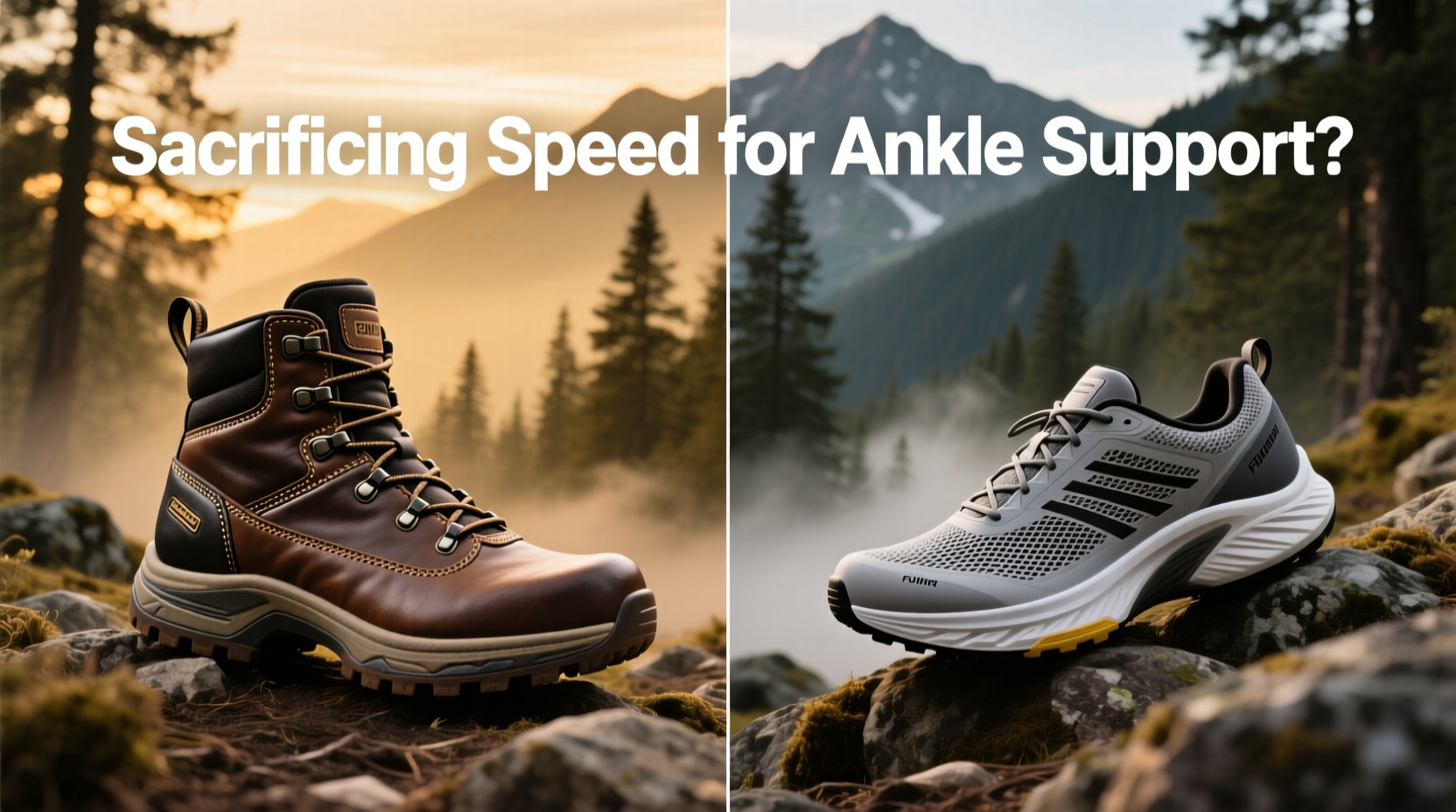
Gone are the days when hiking meant lacing up heavy leather boots regardless of trail conditions. Today’s outdoor enthusiasts have access to advanced materials, precision engineering, and biomechanical research that inform both luxury hiking shoes and performance trail runners. Luxury hiking shoes now feature premium waterproof membranes, Vibram soles, cushioned midsoles, and anatomical lasts designed for all-day wear. Meanwhile, trail runners have adopted aggressive lug patterns, rock plates, gusseted tongues, and improved torsional stability—bridging the gap between running efficiency and trail durability.
This convergence has blurred the lines between categories, forcing hikers to reconsider long-held assumptions about ankle support. Studies suggest that ankle sprains are not significantly more common in low-cut footwear when users are experienced and terrain is moderate. In fact, increased proprioception—the body’s ability to sense joint position—often gives trail runners an edge in dynamic balance on uneven ground.
Performance Comparison: Speed, Support, and Stability
The core tension between luxury hiking shoes and trail runners lies in their design philosophy. One prioritizes protection and structure; the other emphasizes agility and responsiveness. To understand the implications, consider three key factors:
- Weight: A typical luxury hiking shoe weighs between 1.5 and 2.5 pounds per pair. Trail runners average 10–14 ounces. Over 10 miles, that difference translates into thousands of extra lifting motions and measurable energy expenditure.
- Ground Feel: Trail runners offer superior feedback from the terrain, allowing quicker adjustments on loose rock or root-covered paths. This can enhance balance but may increase fatigue on long, rocky descents without adequate cushioning.
- Ankle Support: High collars in hiking shoes restrict lateral motion, which some believe reduces sprain risk. However, research from the American College of Sports Medicine indicates that restricted mobility can weaken stabilizing muscles over time, potentially increasing dependency on external support.
Luxury Hiking Shoes: When Protection Outweighs Pace
Luxury hiking shoes excel in specific scenarios. On multi-day treks with heavy packs, wet environments, or highly technical ascents, their robust construction provides tangible benefits. Features like full-grain leather uppers, deep heel counters, and stiff shanks help manage load transfer and reduce foot slippage inside the shoe. Waterproof linings (e.g., Gore-Tex) keep feet dry in stream crossings and alpine snowmelt zones.
However, these advantages come at a cost. Increased weight slows cadence. Stiff soles limit natural foot flexion, which can lead to hotspots or blisters over extended use. And while ankle collars feel secure, they don’t eliminate the risk of rolling—an event often dictated more by trail awareness and fitness than footwear alone.
Trail Runners: Speed and Sensitivity on Challenging Terrain
Modern trail runners are engineered for performance. Brands like Salomon, Altra, and Hoka have redefined what's possible off-road. With responsive EVA or foam midsoles, aggressive outsoles, and breathable mesh uppers, they deliver a nimble ride ideal for fastpacking, thru-hiking, or day hikes where covering distance efficiently matters most.
Many seasoned hikers report fewer injuries when switching to trail runners, attributing this to improved stride mechanics and reduced fatigue. Without the bulk of traditional boots, there’s less strain on knees and hips—especially during prolonged downhill sections. Additionally, quick-drying materials mean wet conditions don’t turn into blister-inducing slogs.
“On well-maintained trails with moderate loads, I see no compelling reason to default to heavy boots. Lighter shoes promote better movement patterns and lower cumulative impact.” — Dr. Lena Torres, Sports Biomechanist & Outdoor Medicine Researcher
Side-by-Side Comparison: Key Features at a Glance
| Feature | Luxury Hiking Shoes | Trail Runners |
|---|---|---|
| Average Weight | 28–40 oz per pair | 18–26 oz per pair |
| Ankle Collar Height | Mid-to-high cut | Low cut |
| Water Resistance | Often waterproof (Gore-Tex) | Water-resistant, quick-dry |
| Traction | Deep lugs, durable rubber | Aggressive multidirectional lugs |
| Break-in Period | Required (5–10 hikes) | Minimal to none |
| Best For | Heavy loads, rough terrain, cold/wet climates | Fast hiking, dry/moderate trails, ultralight trips |
Real-World Scenario: The John Muir Trail Transition
Consider Sarah Kim, a section hiker who completed the John Muir Trail in 2023. She began her journey wearing premium hiking shoes with ankle support, believing they’d protect her on steep Sierra descents. After two weeks, persistent Achilles irritation and foot fatigue led her to switch to a trusted pair of trail runners she’d used for mountain races.
Initially hesitant about stability, Sarah found that her stride became smoother and her daily mileage increased by nearly 20%. She encountered no ankle issues—even when navigating loose scree slopes—and appreciated how quickly her shoes dried after river crossings. Her experience mirrors a broader trend: many long-distance hikers on the PCT, AT, and CDT now favor trail runners, citing reduced injury rates and greater enjoyment.
How to Choose Based on Your Needs
The decision isn’t universal. It depends on individual physiology, trip duration, pack weight, and environmental conditions. Use this checklist to guide your choice:
Checklist: Choosing Between Luxury Hiking Shoes and Trail Runners- ✅ Will you carry a pack over 30 lbs? → Lean toward hiking shoes.
- ✅ Is the terrain extremely rocky, icy, or unstable? → Hiking shoes offer better underfoot protection.
- ✅ Are you hiking in persistently wet conditions without easy drying opportunities? → Waterproof hiking shoes may be preferable.
- ✅ Do you prioritize speed, range, and comfort over maximum protection? → Trail runners are likely the better fit.
- ✅ Have you previously suffered ankle sprains or chronic instability? → Consider stability-focused trail runners with added arch support before defaulting to high-tops.
Frequently Asked Questions
Can trail runners really handle rocky mountain trails?
Yes, especially models with rock plates and reinforced uppers. Modern trail runners are built for technical terrain. Success depends more on tread pattern, sole stiffness, and fit than collar height.
Don’t high-top shoes prevent ankle rolls?
Not necessarily. Ankle sprains typically occur due to missteps or uneven surfaces, not lack of external support. Strong intrinsic foot muscles and good balance play a larger role in prevention. Relying solely on a high collar may actually inhibit neuromuscular adaptation.
How long do trail runners last compared to hiking shoes?
Trail runners generally have shorter lifespans—about 500–800 miles—due to lighter materials. Hiking shoes can last 1,000+ miles. However, the reduced weight and increased comfort of trail runners often justify more frequent replacement for active hikers.
Final Thoughts: Reassessing the Trade-Off
The idea that you must sacrifice speed for ankle support is increasingly outdated. While luxury hiking shoes remain essential for certain conditions, they are no longer the default choice for every trail. Advances in footwear technology, combined with a deeper understanding of human movement, show that agility, ground feel, and efficient biomechanics often contribute more to safety and performance than rigid support.
Ultimately, the best shoe is the one that matches your body, your goals, and your environment—not one that conforms to tradition. Whether you’re summiting alpine peaks or covering vast distances on well-worn paths, listen to your feet. Test both options on shorter outings. Pay attention to how you feel after five miles, not just five minutes.
💬 Have you made the switch from hiking shoes to trail runners—or stuck with support? Share your experience and help others find their perfect fit.








