For runners, knee pain is one of the most common and persistent issues—often sidelining even the most dedicated athletes. While training volume, form, and recovery play critical roles, footwear choices significantly influence joint stress, particularly at the knee. The debate between lightweight running shoes and stability trainers has long divided runners and experts alike. One promises speed and freedom; the other, structure and support. But when it comes to preventing knee pain, which type actually delivers?
This article breaks down the biomechanical realities behind both shoe types, evaluates their impact on knee joint loading, and provides evidence-based guidance to help you make a smarter, safer choice.
Understanding Knee Pain in Runners
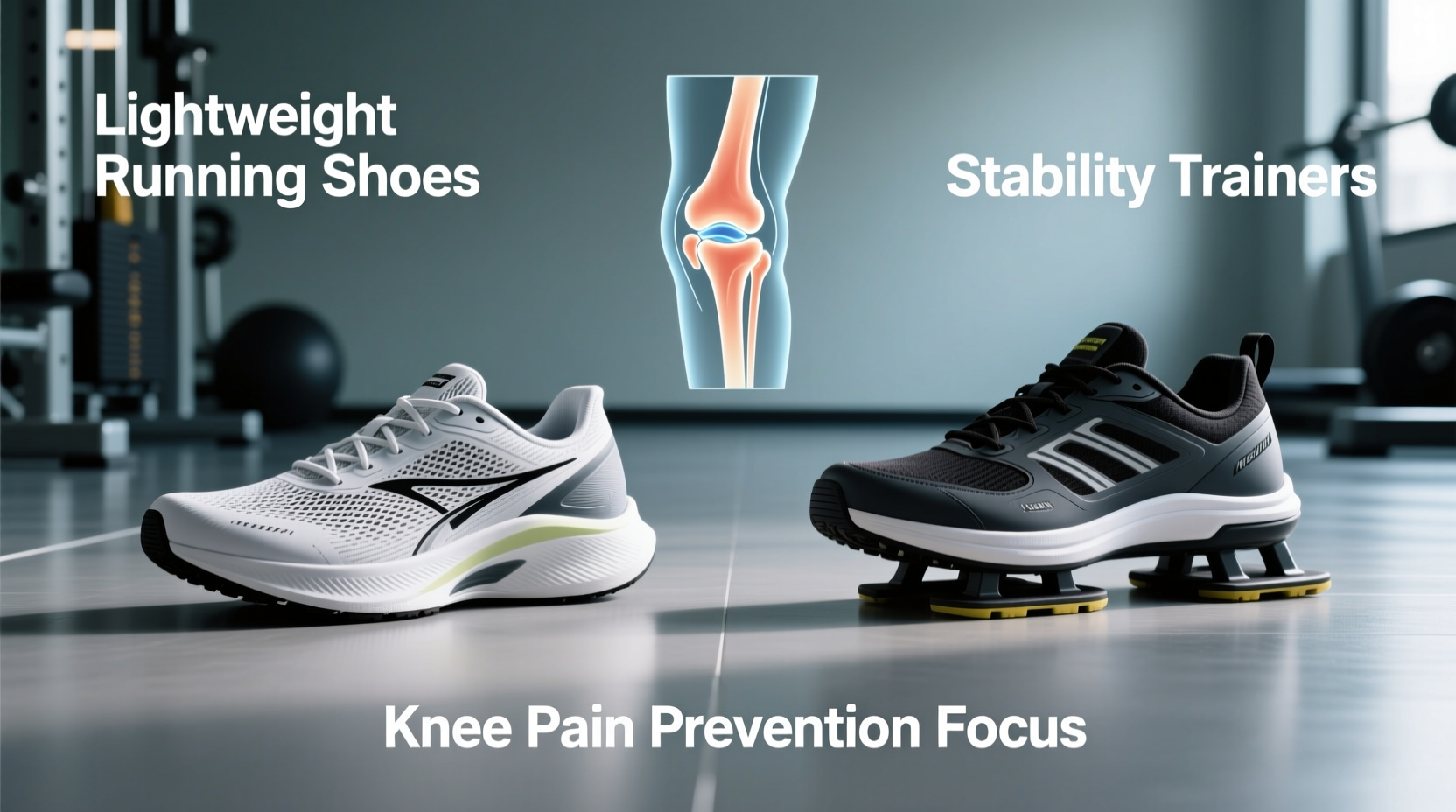
Knee pain among runners often stems from overuse, improper mechanics, or inadequate shock absorption during footstrike. Common conditions like patellofemoral pain syndrome (runner’s knee), iliotibial band syndrome (ITBS), and patellar tendinitis are frequently linked to excessive rotational forces, poor alignment, or repetitive impact.
The knee joint acts as a hinge but also experiences subtle rotation and lateral movement with each stride. When the foot strikes the ground, forces travel up through the ankle, into the tibia and femur, converging at the knee. If those forces are poorly managed—due to overpronation, weak glutes, or insufficient cushioning—the joint bears more load than it can safely handle over time.
Footwear directly influences how those forces are distributed. A shoe that encourages natural motion may reduce muscle fatigue, while one that corrects misalignment might prevent excessive internal rotation of the tibia—a known contributor to knee strain.
“Shoe selection should be based on individual biomechanics, not marketing trends. The right shoe reduces joint stress, not just enhances performance.” — Dr. Lena Torres, Sports Biomechanist, University of Colorado Boulder
Lightweight Running Shoes: Speed vs. Protection
Lightweight running shoes are designed for efficiency. They typically feature minimal cushioning, lower heel-to-toe drop (often 4–6mm), flexible soles, and reduced overall mass—sometimes under 7 ounces for men’s size 9. These characteristics promote a forefoot or midfoot strike, encourage higher cadence, and allow greater proprioceptive feedback from the ground.
Proponents argue that lighter shoes improve running economy and reduce braking forces, potentially lowering injury risk. However, less cushioning means more impact force transmitted upward through the kinetic chain. For some runners, especially those with efficient form and strong lower limbs, this isn’t problematic. For others, it can increase stress on the knees.
A 2020 study published in *Medicine & Science in Sports & Exercise* found that minimalist and lightweight shoes led to increased peak knee flexion moments in habitual rearfoot strikers who transitioned too quickly. This suggests that without proper adaptation, lightweight shoes may elevate knee joint demand rather than reduce it.
Tip: If switching to lightweight shoes, do so gradually—start with 1–2 short runs per week and build up over 6–8 weeks to allow tissues to adapt.When Lightweight Shoes Help Prevent Knee Pain
- Natural forefoot strikers: These runners already absorb impact through the arch and calf, reducing tibial shock and knee torque.
- Experienced runners with strong musculature: Strong quads, hamstrings, and hip stabilizers can manage increased joint loads effectively.
- Racers or tempo runners: Short-duration efforts benefit from reduced weight without prolonged exposure to high impact.
When They May Worsen Knee Pain
- Rearfoot strikers making abrupt transitions: Increased vertical loading rates can amplify knee joint stress.
- Runners with weak glutes or poor hip control: Without adequate stabilization, excess femoral adduction increases patellofemoral pressure.
- High-mileage runners: Cumulative impact from low-cushion shoes may contribute to overuse injuries over time.
Stability Trainers: Support and Alignment
Stability running shoes are engineered to counteract excessive foot motion—particularly overpronation, where the foot rolls inward too much after heel strike. These shoes incorporate medial posts, dual-density midsoles, or guide rails to limit inward collapse, aiming to align the lower leg more efficiently during stance phase.
By reducing overpronation, stability trainers theoretically decrease internal rotation of the tibia, which in turn lowers rotational shear forces at the knee. This makes them a logical choice for runners prone to ITBS or runner’s knee, especially if those conditions are linked to poor foot control.
Modern stability shoes have evolved beyond rigid, heavy constructions. Many now use lightweight materials and adaptive support systems—such as Brooks’ GuideRails or ASICS’ LITETRUSS—offering moderate correction without sacrificing comfort or responsiveness.
Research supports their protective role. A large 2016 Danish study tracking over 900 novice runners found that those assigned to stability shoes based on pronation level had significantly fewer knee injuries compared to those wearing neutral shoes despite needing support.
Key Features of Stability Trainers
| Feature | Purpose | Impact on Knee Health |
|---|---|---|
| Medial post / firmer foam | Resists inward foot roll | Reduces tibial internal rotation, decreasing knee shear |
| Heel counter reinforcement | Stabilizes rearfoot motion | Improves alignment from ankle to knee |
| Moderate cushioning | Balances protection and responsiveness | Dampens impact without encouraging overstriding |
| Guide rail systems | Limits excessive motion without rigid control | Supports natural gait while protecting joints |
Comparative Analysis: Which Is Better for Knee Pain Prevention?
There is no universal answer. The effectiveness of either shoe type depends on your individual biomechanics, injury history, and running style. Consider the following factors:
1. Foot Type and Gait Pattern
Overpronators—especially those with flat feet or hypermobile arches—typically benefit more from stability features. Their inward foot collapse creates a chain reaction up the leg, increasing valgus stress at the knee. In contrast, neutral or supinated runners may find unnecessary support restrictive and counterproductive.
2. Running Form and Cadence
Lightweight shoes reward good form. High cadence (170+ steps per minute), slight forward lean, and midfoot striking reduce braking forces and knee joint loading. If your form is inefficient, however, a lightweight shoe won’t fix it—and may exacerbate existing issues.
3. Injury History
Runners with recurrent knee pain linked to alignment issues—such as ITBS or patellofemoral syndrome—often respond well to stability shoes. Those with achilles or calf problems may fare better in lighter, lower-drop models.
4. Training Volume and Surface
High-mileage runners logging 30+ miles per week on hard surfaces may benefit from added cushioning and support. Occasional runners doing shorter distances on trails or treadmills might prefer the agility of lightweight options.
“Think of stability shoes as orthotics you can wear outside the house. They’re not for everyone, but for those who need them, they’re preventive medicine.” — Dr. Rajiv Mehta, Physical Therapist and Running Injury Specialist
Mini Case Study: Sarah’s Recovery from Runner’s Knee
Sarah, a 34-year-old recreational runner, began experiencing sharp pain around her kneecap during long runs. She attributed it to increased mileage but noticed the discomfort worsened on downhill sections. After visiting a sports clinic, video gait analysis revealed significant overpronation and excessive internal rotation of her left tibia.
She had been using a lightweight racing flat for all her runs, believing lighter shoes were inherently healthier. Her physical therapist recommended switching to a stability trainer—specifically the Brooks Adrenaline GTS—with a structured midsole and GuideRail support.
Within four weeks of consistent use, combined with hip strengthening exercises, Sarah’s knee pain decreased dramatically. Six weeks later, she completed a half marathon pain-free. “I thought I needed to go minimalist to run better,” she said. “But my body needed alignment more than ounces saved.”
Actionable Checklist: Choosing the Right Shoe for Knee Health
- Get a gait analysis: Visit a specialty running store or physical therapist for video assessment.
- Assess your arch type: Perform the wet foot test or consult a podiatrist.
- Review injury history: Note patterns—knee pain? Shin splints? Achilles issues?
- Try before you commit: Test-run both lightweight and stability models on a treadmill or track.
- Listen to your body: Persistent knee discomfort during or after runs is a warning sign.
- Replace shoes regularly: Most running shoes last 300–500 miles; worn-out cushioning increases joint stress.
- Strengthen supporting muscles: Focus on glutes, hips, and core—not just footwear fixes the problem.
Frequently Asked Questions
Can lightweight shoes cause knee pain?
Yes, especially if you're a rearfoot striker, have weak lower-body muscles, or transition too quickly from cushioned shoes. Reduced shock absorption and increased loading rates can elevate stress on the knee joint over time.
Do stability shoes weaken foot muscles?
There’s limited evidence to suggest modern stability shoes weaken intrinsic foot muscles. Most provide moderate support rather than full immobilization. True muscle atrophy is more likely from complete lack of activity, not supportive footwear.
Should I switch to stability shoes if I have knee pain?
Not automatically. Knee pain has many causes—including weak hips, poor flexibility, or training errors. A stability shoe may help if overpronation is contributing, but it’s not a standalone solution. Combine footwear changes with strength work and professional evaluation.
Conclusion: Match the Shoe to the Runner, Not the Trend
The choice between lightweight running shoes and stability trainers isn’t about which is universally superior—it’s about alignment with your body’s needs. Knee pain prevention hinges on minimizing harmful joint forces, and footwear plays a pivotal role in that equation.
Lightweight shoes offer efficiency and responsiveness but demand strong form and resilient tissues. Stability trainers provide structural guidance that can protect the knee from malalignment-related strain, particularly in runners with overpronation or prior injuries.
Ultimately, the best shoe is the one that allows you to run consistently, comfortably, and without pain. Don’t be swayed by race-day aesthetics or outdated myths about “natural” running. Let biomechanics, experience, and evidence guide your decision.
🚀 Ready to run pain-free? Get a gait analysis, assess your current shoes, and make an informed change today. Your knees will thank you mile after mile.








