In the fiercely competitive mid-range smartphone market of the late 2010s, LG and Samsung both aimed to capture budget-conscious consumers with feature-rich devices. The LG Stylus 2 and Samsung Galaxy A8 (2016) were released within months of each other, targeting users who wanted premium aesthetics without the flagship price tag. On paper, the Galaxy A8 should have had the upper hand—Samsung’s brand strength, superior hardware, and marketing muscle often dominate this segment. But when placed side by side with the LG Stylus 2, questions arise: Did Samsung overprice its device? Did LG sneak in with better value? And most importantly—did Samsung actually drop the ball?
Design and Build: Premium Looks vs Practicality
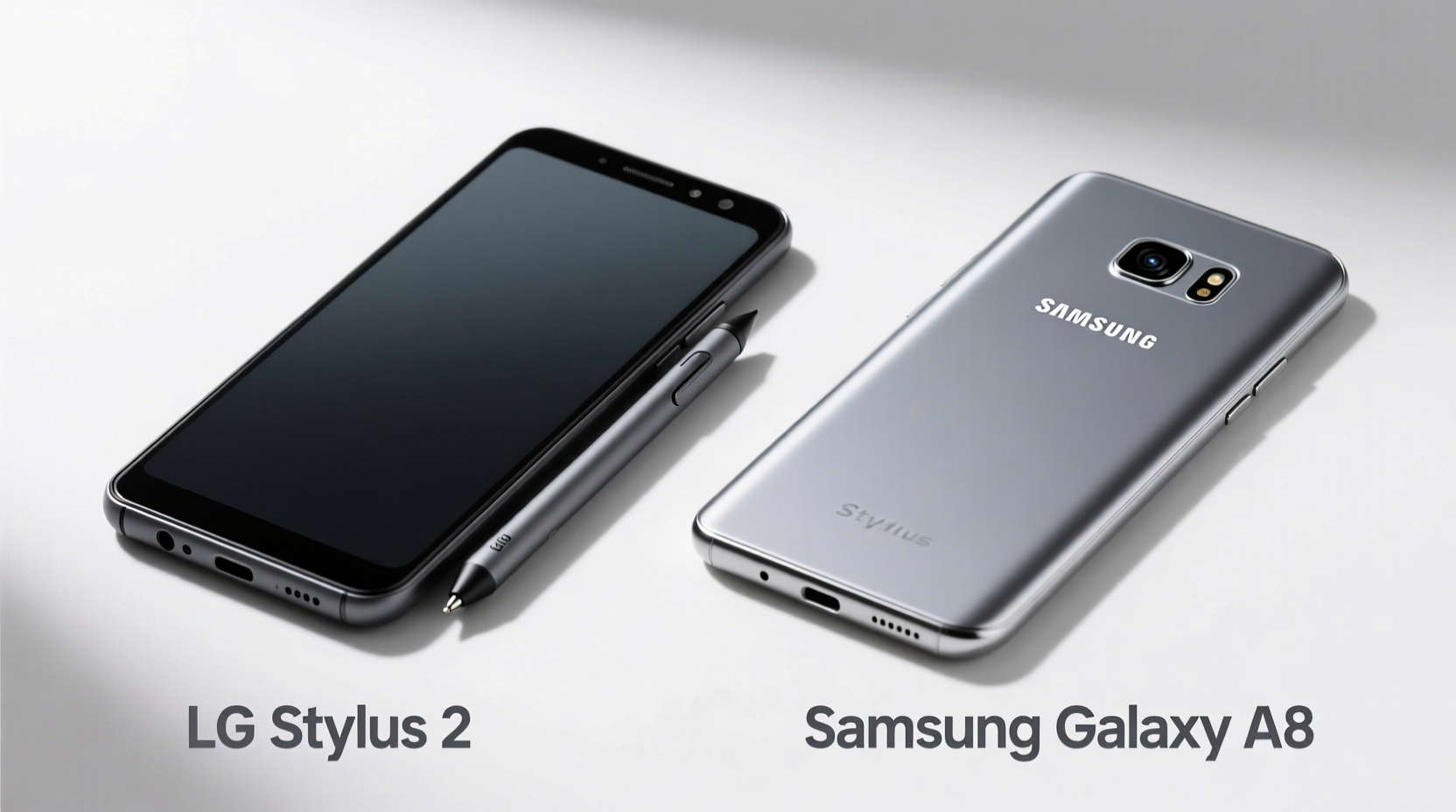
The Samsung Galaxy A8 (2016) immediately stands out with its sleek metal unibody, slim profile, and dual front-facing speakers. At 7.0mm thick and weighing just 151g, it felt like a miniaturized version of Samsung’s high-end S-series phones. Its 5.7-inch Full HD Super AMOLED display delivered vibrant colors and deep blacks—a hallmark of Samsung’s screen technology.
On the flip side, the LG Stylus 2 adopted a more utilitarian design. With a plastic body and slightly bulkier frame (8.5mm thick), it didn’t exude the same premium feel. However, it offered something the A8 lacked: a dedicated stylus. Integrated into the lower-left side of the chassis, the stylus allowed for note-taking, screenshot marking, and enhanced drawing functionality—features that appealed to students, creatives, and productivity-focused users.
Tip: If you frequently take handwritten notes or annotate documents, a built-in stylus can significantly boost daily productivity—even on a budget phone.Performance and Hardware: Specs Don’t Tell the Whole Story
Looking at raw specs, the Galaxy A8 clearly wins. It was powered by an octa-core Exynos 7420 processor (the same chip used in the Galaxy S6), paired with 3GB of RAM and 32GB of storage. This configuration ensured smooth multitasking and efficient app handling, even under moderate loads.
The LG Stylus 2, however, ran on a less powerful quad-core Snapdragon 425 processor with only 2GB of RAM. In day-to-day use, this translated to slower app launches, occasional stutters during transitions, and limited performance when running multiple apps simultaneously.
Yet, despite the hardware gap, user experience wasn't as lopsided as expected. Samsung’s TouchWiz interface at the time was notoriously bloated, consuming memory and slowing down responsiveness. LG’s UX 5.0, while not flawless, was lighter and more streamlined. As a result, the performance difference in real-world usage was noticeable but not crippling.
“Spec sheets don’t always reflect real-life usability. A well-optimized software experience can compensate for weaker hardware.” — David Kim, Mobile Analyst at TechPulse Asia
Display and Battery Life Comparison
The Galaxy A8’s 5.7-inch 1080p Super AMOLED panel was a standout feature. Colors popped, contrast was excellent, and viewing angles were wide—ideal for media consumption. However, this high-resolution screen came at a cost: battery life.
Despite packing a 3050mAh battery, the A8 struggled to last a full day with moderate to heavy use. Streaming video, gaming, or extended web browsing drained the battery quickly, especially with adaptive brightness turned up.
The LG Stylus 2, meanwhile, featured a larger 3000mAh battery but a lower-resolution 720p IPS LCD display. While the screen wasn’t as sharp or vivid, it was far more energy-efficient. Combined with LG’s power-saving modes, the Stylus 2 regularly achieved 1.5 days of mixed usage—something the A8 couldn’t match.
| Feature | LG Stylus 2 | Samsung Galaxy A8 (2016) |
|---|---|---|
| Display | 5.7\" 720p IPS LCD | 5.7\" 1080p Super AMOLED |
| Processor | Quad-core Snapdragon 425 | Octa-core Exynos 7420 |
| RAM | 2GB | 3GB |
| Battery | 3000mAh | 3050mAh |
| Stylus | Yes, built-in | No |
| Rear Camera | 13MP f/2.4 | 16MP f/1.9 |
| Front Camera | 8MP f/2.4 | 8MP f/1.9 |
| Water Resistance | No | No |
Camera Performance: Low Light Matters
On paper, the Galaxy A8 has the edge with a 16MP rear sensor and a faster f/1.9 aperture compared to the Stylus 2’s 13MP f/2.4 lens. In daylight, photos from both phones are acceptable—though Samsung’s color tuning produces richer, more saturated results preferred by casual photographers.
However, in low-light conditions, the advantage becomes clearer. The A8’s wider aperture captures more light, resulting in brighter night shots with less noise. The Stylus 2 struggles here, producing grainy images and smeared details when lighting is poor.
That said, the LG offers one useful camera feature absent on the A8: manual mode. Users could adjust ISO, shutter speed, white balance, and focus—giving enthusiasts greater creative control. For those interested in mobile photography beyond point-and-shoot convenience, this was a meaningful differentiator.
Real-World Example: The Student’s Dilemma
Consider Maria, a university student in 2017 looking for her first smartphone above $300. She needed long battery life for back-to-back lectures, a decent camera for scanning documents, and a way to take quick notes during seminars.
She initially leaned toward the Galaxy A8 for its sleek look and strong brand reputation. But after testing both in-store, she chose the LG Stylus 2. Why? The built-in stylus let her jot down lecture points directly on PDFs. The battery lasted through her 12-hour campus days. And despite the weaker processor, it handled her core apps—email, Chrome, WhatsApp, and Spotify—without issue.
For Maria, Samsung’s “premium” experience didn’t translate into practical benefits. LG’s focus on utility won her over.
Did Samsung Drop the Ball?
Not entirely—but they missed the mark on value positioning. The Galaxy A8 launched at around $550, while the LG Stylus 2 retailed for approximately $350. That $200 gap is significant, especially when much of it funds cosmetic upgrades rather than transformative features.
Samsung delivered a beautiful phone with excellent display quality and strong processing power. But it failed to include essential utilities like a stylus, expandable storage (the A8 had non-expandable 32GB), or exceptional battery endurance. Meanwhile, LG packed niche functionality into a more affordable package, sacrificing raw power but winning on versatility.
In markets where price sensitivity is high—Latin America, Southeast Asia, parts of Africa—the Stylus 2 outsold expectations. The A8, while respected, never gained the same traction outside of urban tech circles.
Checklist: Choosing Between Utility and Polish
- Prioritize battery life? → LG Stylus 2
- Need a stylus for notes or drawing? → LG Stylus 2
- Want the best display quality? → Samsung Galaxy A8
- Run many apps at once? → Samsung Galaxy A8
- Work in low-light photo environments? → Samsung Galaxy A8
- On a tight budget? → LG Stylus 2
Frequently Asked Questions
Can the LG Stylus 2 run modern apps smoothly?
Light apps like messaging, social media, and email work fine. However, graphically intensive games or multitasking with multiple tabs may cause lag due to the 2GB RAM and older processor.
Is the Galaxy A8 still usable today?
As of 2024, both phones are outdated by modern standards. They no longer receive OS updates or security patches. While basic functions still work, compatibility with newer versions of Android apps is limited.
Why did LG include a stylus in a budget phone?
LG aimed to differentiate itself in a crowded market. By offering Wacom-style stylus functionality at a low price, they targeted users who valued input precision—students, artists, and professionals needing annotation tools—without paying for a Note series device.
Final Verdict: Value Over Vanity
The LG Stylus 2 vs Samsung Galaxy A8 debate isn’t about which phone is technically superior—it’s about what kind of user you are. Samsung built a polished, attractive device that impresses at first glance but falls short in longevity and practical extras. LG built a functional, no-frills phone that delivers where it counts for everyday users: battery, utility, and affordability.
Samsung didn’t exactly “drop the ball”—they played a different game. But in a segment where value reigns supreme, LG scored a quiet victory by understanding that not every user wants flash. Sometimes, all they need is a pen in their pocket and a phone that lasts until bedtime.
💬 Do you remember using either of these phones? Share your experience—was the Galaxy A8 worth the premium, or did the Stylus 2 surprise you with its staying power?








