
The debate over who holds the title of Greatest of All Time (GOAT) in basketball is more than a fan-driven argument—it’s a conversation about legacy, longevity, dominance, and cultural transformation. LeBron James, himself a central figure in this discussion, has often reflected on the criteria that define greatness. As one of the most statistically accomplished and globally influential players in NBA history, his perspective carries weight. This article explores the dimensions of the GOAT debate through LeBron’s lens, analyzing performance, accolades, impact, and the evolving standards by which legends are measured.
Defining Greatness: What Makes a GOAT?
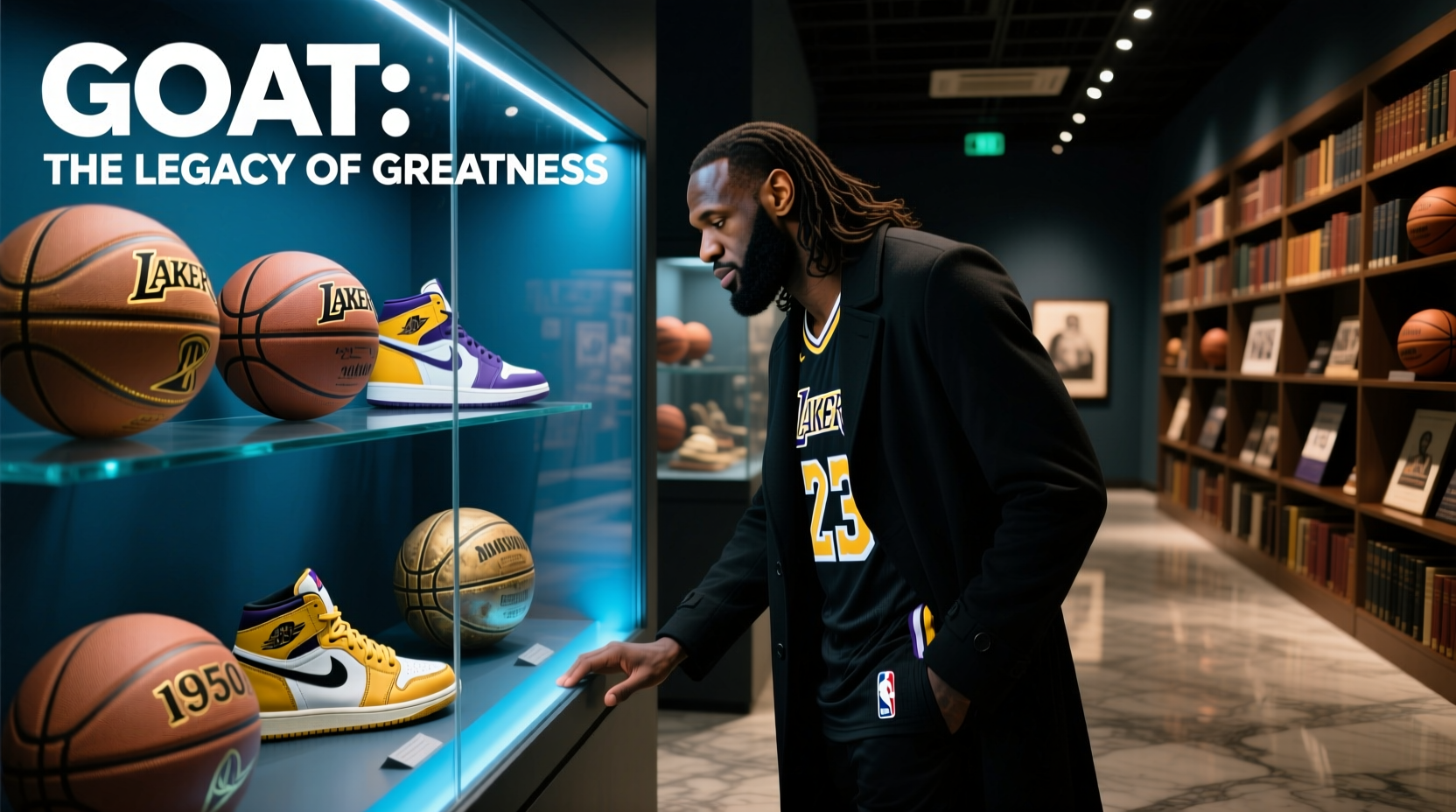
There is no single metric that definitively crowns a basketball GOAT. Instead, the evaluation spans multiple categories: statistical output, championship success, individual awards, longevity, peak performance, influence on the game, and cultural significance. LeBron James has consistently emphasized context—how a player elevates teammates, performs under pressure, and adapts across eras.
In interviews, he’s noted that “greatness isn’t just about rings or points. It’s about consistency, impact, and how you change the way the game is played.” This broader view challenges narrow narratives that prioritize championships above all else.
“Legacy isn’t built in a season. It’s built over decades of excellence, leadership, and evolution.” — LeBron James
Statistical Dominance: A Numbers Perspective
LeBron’s career numbers stand as one of the strongest arguments in his favor. He is the NBA’s all-time leading scorer, with over 40,000 points, and ranks in the top five in assists—a rare feat for a non-guard. His ability to contribute across scoring, playmaking, rebounding, and defense redefines what it means to be a complete player.
Compare key career averages among top contenders:
| Player | Points (Career Avg) | Assists | Rebounds | Championships | MVPs |
|---|---|---|---|---|---|
| LeBron James | 27.0 | 7.5 | 7.5 | 4 | 4 |
| Michael Jordan | 30.1 | 5.3 | 6.2 | 6 | 5 |
| Kareem Abdul-Jabbar | 24.6 | 3.6 | 11.2 | 6 | 6 |
| Magic Johnson | 19.5 | 11.2 | 7.2 | 5 | 3 |
| Larry Bird | 24.3 | 6.3 | 10.0 | 3 | 3 |
While Jordan’s scoring average and win record are unmatched, LeBron’s all-around impact and durability across 20+ seasons offer a different kind of dominance. His sustained excellence at an elite level past age 35 defies historical norms.
Tip: When evaluating GOAT claims, consider not just peak performance but career arc—how long a player remained among the best.The Cultural and Global Impact of LeBron James
Beyond statistics, LeBron’s influence extends into social activism, business, and youth development. He founded the I PROMISE School in Akron, Ohio, providing education and support for at-risk children. His production company, SpringHill Entertainment, amplifies diverse voices in media. These contributions elevate his legacy beyond sports.
Unlike earlier generations of stars, LeBron leveraged his platform during an era of social media and global connectivity. His decisions—like leaving Cleveland for Miami in 2010 or returning in 2014—shaped modern athlete autonomy and free agency. He didn’t just play the game; he helped reshape its structure.
Jalen Rose once said, “LeBron changed the blueprint. Before, stars waited for ownership to build around them. Now, they build their own empires.”
A Step-by-Step Look at GOAT Evaluation Criteria
To fairly assess the GOAT conversation, consider the following framework—something LeBron himself appears to apply when discussing legends like Jordan, Magic, and Kobe.
- Longevity: Did the player maintain elite performance over a decade or more?
- Peak Dominance: How overwhelming was their impact during their best years?
- Championship Success: Titles matter, but so does playoff performance and clutch play.
- Versatility: Could they impact the game in multiple ways—scoring, passing, defense?
- Teammate Elevation: Did they make others better? (Measured via team improvement, All-Star emergence of role players.)
- Cultural Influence: Did they transcend the sport and affect society or future generations?
- Adaptability: Could they succeed under different systems, teammates, and coaching styles?
Using this checklist, LeBron scores highly across all seven areas. Jordan leads in peak dominance and cultural icon status in the 1990s. Kareem stands out in longevity and individual accolades. But few match LeBron’s balance across every category.
Mini Case Study: The 2016 NBA Finals
No moment encapsulates LeBron’s GOAT argument more than Game 7 of the 2016 NBA Finals. Facing a 3–1 deficit against the 73-win Golden State Warriors, LeBron delivered a triple-double: 27 points, 11 rebounds, 11 assists. His chase-down block on Andre Iguodala remains one of the most iconic defensive plays in history.
What made this performance legendary wasn’t just the stats—it was the stakes. No team had ever come back from 3–1 in the Finals. LeBron carried the Cavaliers offensively, orchestrated the offense, and anchored the defense. He averaged 29.7 points, 11.3 rebounds, and 8.9 assists for the series, earning unanimous Finals MVP.
This series demonstrated his ability to rise in the biggest moments, silencing critics who questioned his clutch gene. It wasn’t just a victory; it was a defining chapter in Cleveland’s sports history—and a cornerstone of his legacy.
Common Counterarguments and Rebuttals
Critics often cite LeBron’s 1–6 record in NBA Finals as a weakness compared to Jordan’s 6–0. However, context matters. LeBron reached the Finals with three different franchises (Cavaliers, Heat, Lakers), often carrying rosters with limited star power. Jordan had Scottie Pippen and a dominant defensive system in Chicago.
Additionally, the league’s competitive balance has increased since the 1990s. In the 2010s, parity, small-ball strategies, and three-point shooting created more unpredictable outcomes. Winning four titles across two decades in such an environment underscores adaptability.
“You can’t compare eras like they’re identical labs. The game evolves. The real test is who can dominate *despite* the changes.” — Stan Van Gundy, Former NBA Coach
FAQ
Does LeBron have a stronger GOAT claim than Michael Jordan?
It depends on the criteria. Jordan has a higher peak and a flawless Finals record, making him the choice for many traditionalists. LeBron counters with greater longevity, versatility, and statistical accumulation. There’s no definitive answer—only reasoned preference based on values like consistency vs. perfection.
Can a player be a GOAT without six championships?
Yes. Championships reflect team success, not solely individual greatness. Players like Karl Malone and Charles Barkley never won titles but are universally respected. LeBron’s four titles, combined with his overall impact, place him firmly in the conversation regardless of total count.
How does era impact the GOAT debate?
Era shapes opportunity, competition level, and playing style. Bill Russell won 11 titles in a less physically diverse league. Wilt Chamberlain dominated statistically but lacked consistent team success. Modern analysts use advanced metrics (e.g., PER, Win Shares, RPM) to normalize performance across time, allowing fairer comparisons.
Conclusion: The Evolving Nature of Legacy
LeBron James doesn’t need the GOAT title to validate his career. His records, honors, and societal contributions already cement him as one of basketball’s most transformative figures. Yet by engaging thoughtfully in the debate, he encourages fans and analysts alike to think deeper about what greatness truly means.
The GOAT conversation isn’t about declaring a winner—it’s about appreciating the layers of excellence across generations. Whether one favors Jordan’s aura, Magic’s joy, or LeBron’s relentless evolution, each legend adds depth to the sport’s narrative.
🚀 What do you value most in a basketball legend—peak performance, longevity, or cultural impact? Share your thoughts and keep the conversation alive.








