For years, the humble keyring has been the default method for carrying keys and small accessories. But in recent years, carabiner clips—once reserved for climbers and outdoor enthusiasts—have made their way into urban pockets, EDC (everyday carry) kits, and minimalist wallets. With their sleek design and promise of durability, many now wonder: are carabiners actually better than traditional keyrings? The answer isn’t a simple yes or no—it depends on use case, lifestyle, and priorities like security, weight, and accessibility.
Understanding the Basics: Keyrings vs Carabiners
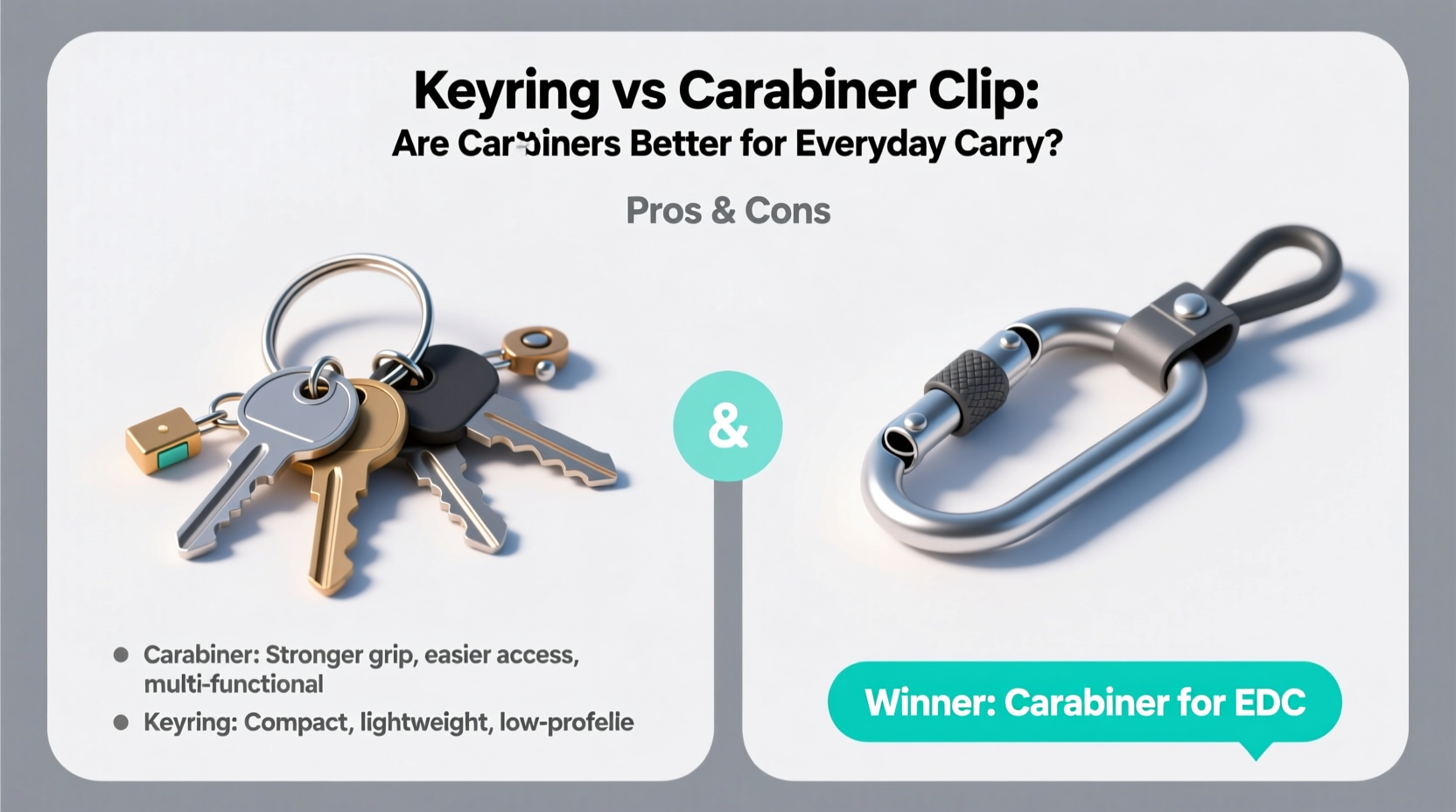
A standard keyring is typically a circular loop made from stamped metal or coiled steel wire. It’s designed to hold multiple keys together and allows them to rotate freely. Most are inexpensive, lightweight, and widely available. However, they offer minimal control over individual items and can become bulky when loaded with more than a few keys.
Carabiners, by contrast, are load-rated metal clips originally developed for climbing and rescue operations. They feature a spring-loaded gate that opens and closes securely, allowing quick attachment and detachment from belts, bags, or keychains. Modern EDC carabiners are often made from aerospace-grade aluminum or stainless steel, balancing strength with portability.
The fundamental difference lies in function: keyrings prioritize simplicity and cost, while carabiners emphasize utility, strength, and controlled access.
Strength and Load Capacity
One of the most compelling arguments for carabiners is their superior strength. While a typical keyring may fail under 20–50 pounds of force, a properly rated carabiner can withstand thousands. Climbing-rated carabiners are tested to hold at least 20 kN (about 4,500 lbs) along the major axis—a level of strength far beyond what’s needed for everyday carry.
Even non-climbing EDC models, such as those made from aluminum alloys, usually support 500–1,000 lbs. This makes them ideal for securing heavier tools, flashlights, multitools, or even emergency gear without fear of accidental breakage.
“Carabiners were engineered for life-critical applications. That inherent safety margin translates into unmatched reliability—even in everyday use.” — Mark Delaney, Gear Engineer & Former Search and Rescue SpecialistTip: Always check the manufacturer’s load rating and avoid using worn or corroded carabiners for critical tasks.
Security and Gate Mechanisms
Traditional keyrings offer no real security—keys can slide off if the ring bends, and there's no locking mechanism. Carabiners, however, come in several gate types, each offering different levels of security:
- Auto-locking (screw-gate): Requires manual twisting to open; highly secure but slower to use.
- Spring-gate (non-locking): Opens with pressure; fast but can accidentally open if snagged.
- Twist-lock or push-button auto-lock: Combines speed with security via internal mechanisms.
For EDC use, a twist-lock or screw-gate model offers peace of mind, especially when attaching valuables like house keys or USB drives. A basic spring-gate might suffice for less critical items but carries a higher risk of accidental release.
Real-World Example: The Commuter’s Dilemma
Consider Alex, a city commuter who rides a bike to work. He used a standard keyring clipped to his backpack, but during a bumpy ride, his keys fell out unnoticed. After replacing them, he switched to a compact titanium carabiner with a push-button lock. Now, his keys, bike lock key, and pocket flashlight stay securely attached—even during rough commutes. The carabiner also doubles as a temporary hook to hang his bag in crowded transit areas.
This scenario illustrates how a slightly more advanced tool solves multiple problems: loss prevention, accessibility, and versatility.
Usability and Everyday Functionality
While carabiners win in strength and security, keyrings still have advantages in simplicity and form factor. Keyrings allow keys to spin freely, making it easier to find the right one quickly. Carabiners, especially larger ones, can make keys clatter or bind together unless organized with split rings or key organizers.
However, modern EDC-focused carabiners are designed with daily use in mind. Many feature:
- Low-profile shapes that fit comfortably in pockets
- Magnetic gates for silent closure
- Integrated bottle openers or flathead screwdrivers
- Textured finishes to reduce noise
In contrast, keyrings rarely innovate beyond color or material changes. Their design has remained largely unchanged for decades.
Comparison Table: Keyring vs Carabiner Clip
| Feature | Standard Keyring | EDC Carabiner |
|---|---|---|
| Material | Steel wire or stamped metal | Aluminum, titanium, or stainless steel |
| Load Capacity | 20–50 lbs | 500–4,500+ lbs |
| Security | Low (no gate lock) | High (locking gate options) |
| Weight | Light (under 0.5 oz) | Light to moderate (0.3–1.5 oz) |
| Noise Level | High (keys rattle freely) | Low (especially with dampeners) |
| Versatility | Limited to holding keys | Can attach to belts, bags, rails, or act as hooks |
| Cost | $1–$5 | $10–$30+ |
When a Carabiner Makes Sense (And When It Doesn’t)
Carabiners excel in situations demanding reliability, multi-functionality, or frequent attachment/detachment. They’re ideal for:
- Outdoor workers needing secure tool tethering
- Cyclists or motorcyclists with limited storage
- Minimalists using single-point carry systems
- Travelers managing multiple access cards and keys
But they’re not always the best choice. For someone with only a house key and car fob, a slim key holder or basic ring may be simpler and quieter. Additionally, some carabiners can scratch phone screens or damage fabric linings if not carefully positioned.
Tip: Pair your carabiner with a silicone sleeve or rubber washer to prevent scratches and reduce noise.Step-by-Step: Building a Smarter EDC Setup with a Carabiner
- Evaluate your carry needs: List all items you carry daily (keys, knife, light, etc.).
- Choose a locking carabiner: Opt for a compact, auto-locking model under 1 oz.
- Organize attachments: Use split rings or key keepers to group items neatly.
- Clip strategically: Attach to belt loops, bag straps, or MOLLE webbing.
- Test in real conditions: Walk, sit, bike—ensure nothing snags or swings excessively.
- Inspect monthly: Check for wear, corrosion, or gate spring fatigue.
Frequently Asked Questions
Can I use a climbing carabiner for everyday carry?
Yes, but it may be overkill. Climbing carabiners are durable but often heavier and bulkier than EDC-specific models. Also, once used for climbing, they should never be reused for life-support activities—even if they look fine.
Do carabiners damage keys over time?
Not significantly. Metal-on-metal contact is minimal, and most wear comes from keys rubbing against each other. Using individual key clips or stack organizers minimizes this regardless of attachment method.
Are keyrings obsolete?
No. For users with simple needs, low budgets, or concerns about noise and bulk, keyrings remain practical. They’re also easier to share or hand off temporarily.
Final Verdict: Are Carabiners Better?
For most people seeking greater control, security, and functionality in their everyday carry, carabiners are objectively better than standard keyrings. They offer superior strength, customizable attachment options, and long-term durability. Advances in materials and design have made them lighter, quieter, and more pocket-friendly than ever.
That said, “better” depends on context. If you value silence, simplicity, and tradition, a keyring may still serve you well. But if you want a versatile, rugged, and future-proof solution, upgrading to a quality EDC carabiner is a smart move.
“The right tool isn’t always the fanciest one—it’s the one that works reliably when you need it. For many, that tool is now a carabiner.” — Lena Torres, Urban Gear Reviewer & EDC Blogger🚀 Ready to upgrade your carry game? Try a compact locking carabiner this week and see how such a small change can improve convenience, security, and confidence in your daily routine.









