
For decades, keychains have been the default way to keep keys organized and accessible. Traditionally, split rings—those tightly wound metal loops—have dominated the market. But in recent years, carabiner clips, borrowed from climbing and outdoor gear, have surged in popularity as a modern alternative. They’re sleek, strong, and often marketed as more functional. But is that really the case? When comparing keychain rings versus carabiner clips, which one offers better practicality for everyday use?
This isn’t just about aesthetics. It’s about strength, ease of use, security, and long-term reliability. Whether you're attaching house keys, work access cards, or a small multitool, the method you choose affects convenience and peace of mind. Let’s break down the differences and determine whether carabiners truly outperform traditional key rings.
Durability and Material Strength
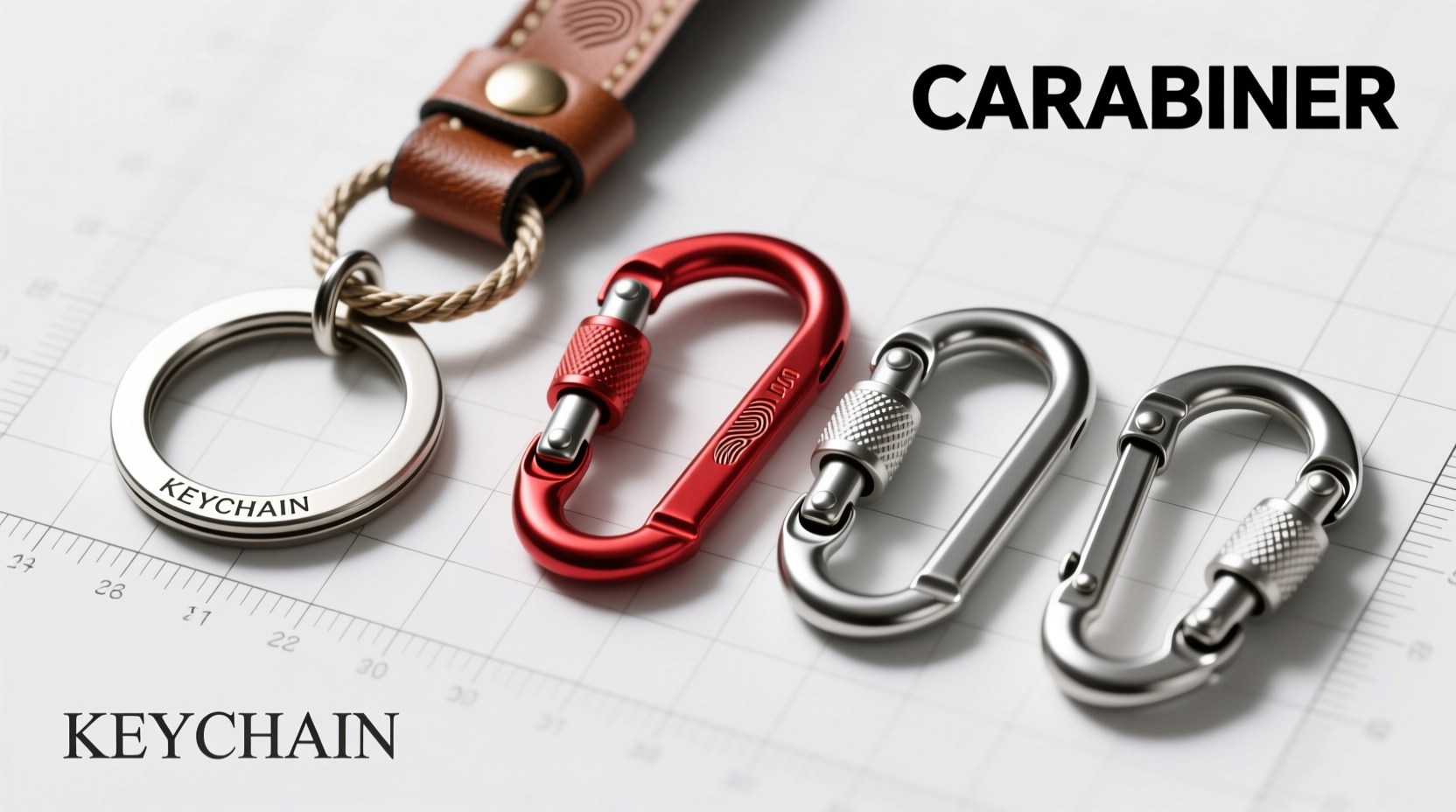
The first factor to consider is durability. Traditional keychain rings are typically made from spring steel and rely on tight winding to hold keys in place. While effective, they can weaken over time due to repeated stretching when adding or removing keys. Eventually, this leads to deformation or even breakage—especially with heavier keychains.
Carabiners, by contrast, are engineered for load-bearing applications. Originally designed for rock climbing, they’re built to withstand significant force. Most everyday-use carabiners are made from aluminum or stainless steel and feature a gated mechanism that opens and closes securely. Even basic models are rated to hold tens of kilograms, far exceeding what any keychain would require.
“Carabiners are tested to meet UIAA or CE safety standards—they’re not just convenient, they’re engineered for performance.” — Jordan Hale, Outdoor Equipment Designer
While most users won’t be hanging from their keychain, the structural integrity of a carabiner means it’s less likely to fail under normal conditions. This makes them inherently more durable than standard split rings, especially when carrying multiple keys or additional accessories like flashlights or bottle openers.
Tip: Look for carabiners with a screw-lock or auto-lock gate mechanism if you frequently carry valuable items—this prevents accidental opening.Versatility and Functional Use
One of the strongest arguments in favor of carabiners is their versatility. Unlike fixed split rings, carabiners can be clipped onto belts, backpacks, purses, or even dog leashes without needing a dedicated loop. This makes them ideal for people who want quick access to their keys during activities like hiking, cycling, or urban commuting.
Additionally, carabiners allow for modular organization. You can attach different keys or tools on separate smaller rings and then clip them all onto a single carabiner. This simplifies access—you don’t need to fumble through a jumbled cluster of keys. Just unclip the one you need.
In contrast, split rings are limited in function. They only serve to hold keys together and must be manually threaded onto a belt loop or bag zipper pull, which can be awkward and time-consuming.
Everyday Scenarios Where Carabiners Shine
- Clipping keys to a backpack while traveling to avoid digging through pockets.
- Attaching a multitool or mini flashlight alongside keys for emergency access.
- Hanging keys temporarily on a tent pole, bike frame, or utility hook.
- Quickly detaching keys when entering secure facilities (e.g., offices or gyms).
Security and Risk of Loss
Security is a critical consideration. Split rings are generally secure—keys stay put unless forcibly pulled off. However, they offer no protection against losing the entire keychain if it slips out of a pocket or bag.
Carabiners, particularly those with locking mechanisms, provide enhanced security. A screw-lock carabiner requires deliberate action to open, reducing the chance of accidental detachment. Some models even include rubber seals or silicone sleeves that dampen noise and prevent gate movement.
That said, non-locking carabiners can pose a risk. If the gate is bumped open during movement, keys may fall off unnoticed. This is especially true with cheaper, poorly manufactured models that lack tight tolerances.
“I lost my keys twice in one month using a basic carabiner—once at the gym, once on a train. Switched to a locking version, and haven’t had an issue since.” — Marcus T., frequent traveler
Comparison Table: Keychain Rings vs Carabiner Clips
| Feature | Split Keychain Ring | Carabiner Clip |
|---|---|---|
| Durability | Moderate – weakens with repeated use | High – built for heavy loads |
| Security | Good – keys stay on ring | Variable – depends on lock type |
| Versatility | Low – only holds keys | High – clips to bags, belts, gear |
| Access Speed | Slow – keys tangle easily | Fast – modular, easy to unclip |
| Noise Level | High – metal-on-metal jingle | Low – especially with silicone sleeves |
| Weight | Light | Light to moderate (steel vs aluminum) |
| Cost | Very low (under $1) | $5–$20 depending on quality |
When a Keychain Ring Still Makes Sense
Despite the advantages of carabiners, split rings still have their place. For individuals with minimal keys—say, just a house and car key—a traditional ring is lightweight, compact, and inexpensive. It also integrates seamlessly with existing key fobs and doesn’t add bulk.
Moreover, some high-security environments discourage the use of non-standard key attachments. Institutions may require keys to remain on closed rings to prevent unauthorized duplication or tampering. In such cases, switching to a carabiner might not be permitted.
Finally, aesthetics play a role. Many luxury key organizers and leather key holders are designed specifically for split rings. Carabiners, while utilitarian, may clash with a minimalist or formal style.
Step-by-Step Guide: Upgrading from Key Rings to Carabiners
If you're considering making the switch, follow this practical guide to ensure a smooth transition:
- Evaluate your key load: Count how many keys and accessories you carry. Heavy loads benefit more from carabiners.
- Choose the right size: Opt for a medium-sized carabiner (3–4 cm) for balance between strength and portability.
- Select a locking mechanism: For maximum security, go with a screw-lock or twist-lock model.
- Transfer keys gradually: Use small split rings for each key group, then clip them onto the carabiner.
- Test in daily routines: Wear it for a week and assess comfort, noise, and accessibility.
- Adjust as needed: Add a rubber silencer if noisy, or downsize if too bulky.
FAQ: Common Questions About Carabiners and Key Rings
Can I use a climbing carabiner for my keys?
Yes, but it's overkill. Climbing-rated carabiners are larger, heavier, and more expensive than necessary. Opt for a lightweight EDC (everyday carry) version instead.
Do carabiners damage keys or key finishes?
Not if used properly. Aluminum carabiners are softer than steel keys, so they won’t cause scratches. Avoid cheap, rough-edged models that could wear down key bows over time.
Are carabiners allowed on airplanes?
Generally yes, as long as they’re not lock-blade tools or combined with prohibited items. TSA allows carabiners in carry-ons, but always check airline-specific rules.
Final Verdict: Are Carabiners More Practical?
In most real-world scenarios, yes—carabiner clips are more practical than traditional keychain rings. Their superior durability, faster access, and versatile attachment options make them a smarter choice for modern lifestyles. They’re especially useful for active individuals, travelers, and anyone carrying more than a couple of keys.
However, practicality depends on context. For someone with a single key who values simplicity, a split ring remains perfectly adequate. The key (pun intended) is matching the tool to your needs.
If you prioritize organization, security, and adaptability, upgrading to a quality carabiner is a small change with noticeable benefits. It’s not just about holding keys—it’s about designing a system that works with your life, not against it.
🚀 Ready to upgrade your key game? Try a locking carabiner this week and experience the difference in convenience and control. Share your setup in the comments!








