In recent years, the way we accessorize our everyday carry items has evolved significantly. What was once a simple keychain dangling from a purse or backpack has transformed into a statement—sometimes functional, sometimes decorative. Two dominant players in this space are traditional keychain bag charms and modern carabiner clips. While both serve the purpose of attaching keys or small accessories to bags, their design, utility, and popularity have diverged sharply. So, are carabiners actually better for bags now? The answer depends on what you value most: aesthetics, strength, versatility, or convenience.
The Rise of the Carabiner Clip in Everyday Carry
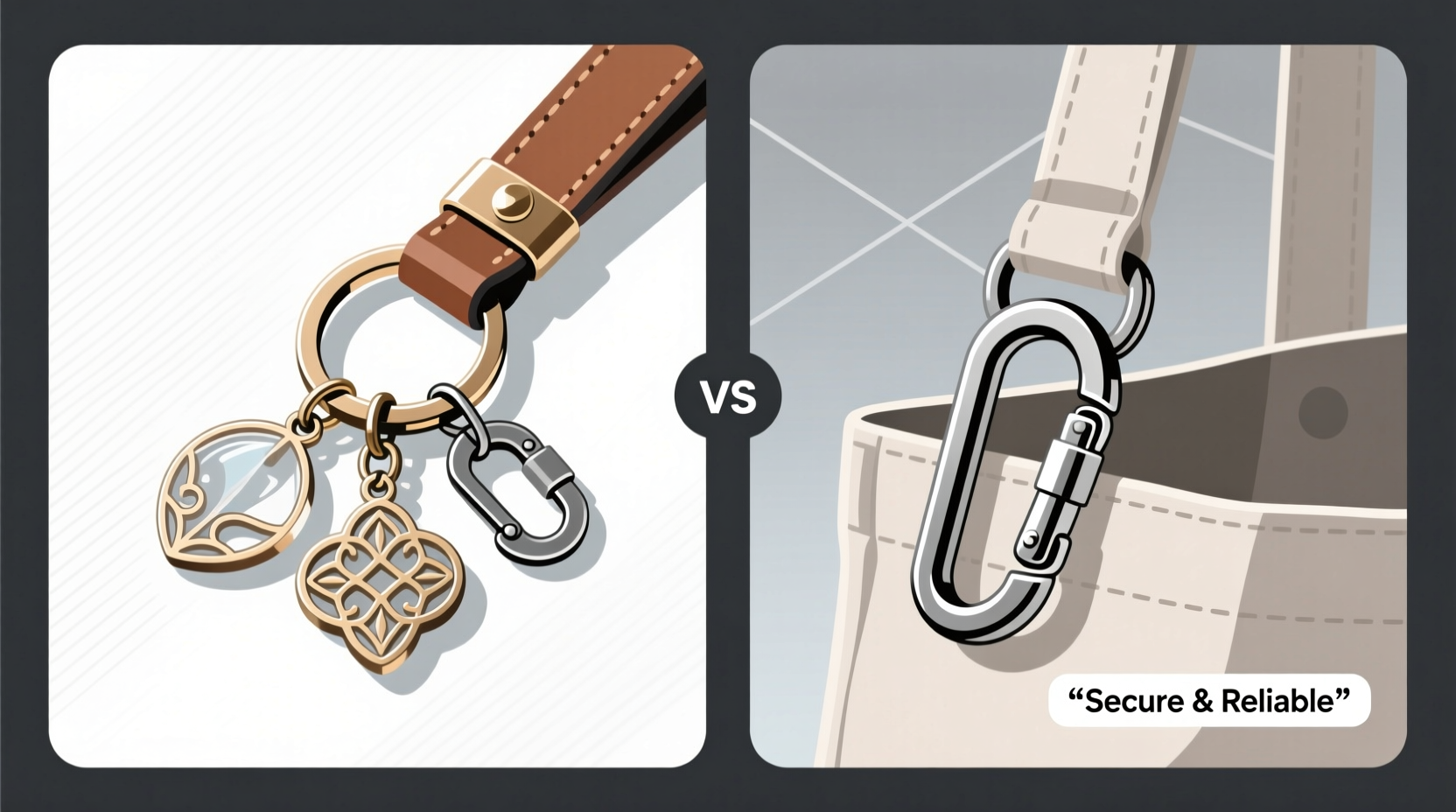
Originally designed for climbing and outdoor sports, carabiners were built to handle heavy loads, resist corrosion, and function reliably under stress. Their transition into urban fashion and daily use began with minimalist wallet enthusiasts and EDC (Everyday Carry) communities. Today, carabiners are commonly seen clipped onto tote bags, crossbody purses, and even high-end leather handbags.
What makes them appealing is their mechanical advantage: a spring-loaded gate that opens and closes securely, allowing quick attachment and detachment without unthreading keys. Unlike traditional keychains that require sliding keys on and off a ring, carabiners let users clip directly onto belt loops, bag straps, or D-rings with one hand.
“Carabiners bring industrial-grade reliability to personal organization. They’re not just tools—they’re becoming essential micro-accessories.” — Jordan Lee, EDC Product Designer
Functional Comparison: Carabiners vs Keychain Bag Charms
When evaluating these two options side by side, several factors come into play: load capacity, ease of use, security, and adaptability.
| Feature | Carabiner Clips | Keychain Bag Charms |
|---|---|---|
| Weight Capacity | Up to 22 kN (approx. 5,000 lbs) depending on grade | Limited by charm material; typically under 5 lbs |
| Attachment Speed | One-handed, instant clip-on | Requires threading; slower access |
| Durability | High—especially aluminum or steel models | Variable—plastic or resin charms can crack |
| Aesthetic Flexibility | Minimalist, utilitarian look; limited color options | High—wide range of designs, themes, and materials |
| Multipurpose Use | Yes—can hang water bottles, tools, gear | No—primarily decorative |
This table highlights a clear trade-off: carabiners win in performance and practicality, while keychain charms dominate in personal expression and style variety.
Tip: If you frequently switch bags or need fast access to your keys, a lightweight titanium carabiner offers durability without adding bulk.Style and Personalization: Where Charms Still Shine
Despite the functional advantages of carabiners, many people still prefer keychain bag charms for their ability to reflect personality. From enamel animals to luxury brand logos, custom initials to seasonal themes, these charms turn a mundane object into a fashion accent.
High-end designers like Gucci, Chanel, and Prada have capitalized on this trend, offering premium leather tags and jeweled trinkets specifically marketed as bag charms. These aren’t meant to bear weight—they’re meant to be seen.
Moreover, some users find carabiners too rugged or “technical” for delicate fabrics or formal attire. A polished silver carabiner might clash with a silk clutch, whereas a dainty charm complements it perfectly.
That said, the market has responded with hybrid solutions—stylish carabiners made from brushed brass, rose gold-plated metal, or those featuring engraved patterns. These aim to bridge the gap between form and function.
Real Example: Urban Commuter Adopts Carabiners
Sophie, a graphic designer in Seattle, used to collect whimsical keychain charms for each of her five bags. After losing keys twice when a charm broke during rush hour, she switched to a set of slim magnetic carabiners. “I was skeptical at first—it looked too ‘outdoorsy’,” she admits. “But within a week, I realized how much faster I could grab my keys while holding coffee and my laptop. Now I don’t go back. I even added a tiny charm *onto* the carabiner so I keep a bit of flair.”
Her experience reflects a growing trend: users prioritizing reliability but unwilling to sacrifice all sense of identity. The solution? Functional bases with decorative add-ons.
Choosing the Right Option: A Step-by-Step Decision Guide
Selecting between a keychain charm and a carabiner shouldn't be arbitrary. Follow this sequence to make an informed choice based on your lifestyle.
- Assess Your Daily Load: Do you carry heavy keys, multitools, or lanyards? If yes, a carabiner’s load rating matters.
- Evaluate Access Frequency: How often do you remove your keys? Frequent access favors carabiners.
- Match to Bag Type: Is your bag made of delicate fabric or structured leather? Delicate materials may benefit from softer attachments.
- Consider Security Needs: Are you in crowded areas where pickpocketing is a concern? Locking carabiners offer anti-theft benefits.
- Determine Style Priority: Is your bag part of a curated outfit? Then aesthetics may outweigh utility.
- Budget for Longevity: High-quality carabiners cost more upfront but last years. Cheap charms may break quickly.
Hybrid Solutions and Emerging Trends
The line between these two categories is blurring. Brands like Nite Ize, Gear Tie, and Bellroy now offer “lifestyle carabiners”—sleek, quiet-closing clips with rounded edges and muted finishes designed specifically for urban professionals.
Meanwhile, charm manufacturers are incorporating stronger hardware, such as reinforced lobster clasps and stainless steel rings, improving durability without sacrificing appearance.
One innovative product combines both: a detachable charm system that snaps onto a standard carabiner body. This allows users to swap styles while maintaining structural integrity—a best-of-both-worlds approach gaining traction among millennials and Gen Z consumers.
Checklist: Choosing Between a Charm and a Carabiner
- ✅ Need quick, one-handed access? → Choose a carabiner
- ✅ Carrying more than three keys or tools? → Choose a carabiner
- ✅ Prioritize fashion over function? → Choose a charm
- ✅ Using a luxury or delicate bag? → Consider a charm or low-profile carabiner
- ✅ Want something long-lasting and multipurpose? → Choose a rated carabiner
- ✅ Travel frequently or commute in crowds? → Carabiner with locking mechanism recommended
Frequently Asked Questions
Can carabiners damage my bag’s fabric or stitching?
Potentially, yes—if the carabiner has sharp edges or is oversized. Always opt for smooth, rounded models and avoid clipping to loosely woven straps. For sensitive materials, use a protective sleeve or attach via a soft loop.
Are all carabiners safe for everyday use?
No. Only use carabiners labeled as “rated” for safety applications (e.g., CE/UIAA certified). Avoid cheap, untested imports sold as “fashion accessories” if you plan to rely on them for security or load-bearing tasks.
Can I personalize a carabiner like a charm?
Absolutely. Many brands offer laser engraving services. Alternatively, you can attach small silicone tags, colored paracord wraps, or mini pendants to maintain individuality without compromising strength.
Final Verdict: Are Carabiners Better for Bags Now?
In terms of raw functionality, yes—carabiner clips are objectively superior to traditional keychain bag charms for most practical purposes. Their strength, speed, reusability, and adaptability make them ideal for modern lifestyles centered around efficiency and mobility.
However, “better” doesn’t mean universally preferable. For those who view accessories as extensions of self-expression, keychain charms remain relevant and valuable. The future likely lies not in choosing one over the other, but in integrating both: using durable carabiners as the foundation and layering on decorative elements selectively.
Ultimately, the best choice aligns with your routine, environment, and personal values. Whether you lean toward sleek utility or bold embellishment, understanding the strengths and limits of each option empowers smarter decisions.
🚀 Ready to upgrade your everyday carry? Try a lightweight, rated carabiner this week—and see how much smoother your day becomes. Share your favorite combo of function and flair in the comments below!








