When it comes to utility task vehicles (UTVs), two names dominate the conversation among rural landowners, farmers, and hunters: Kawasaki Mule and John Deere Gator. Both have earned decades of trust through rugged builds, reliable engines, and unmatched versatility in tough terrain. But when faced with a choice between these industry titans, which one truly wins out in real-world use?
The answer isn’t always straightforward. Preferences often depend on specific needs—whether it's hauling feed across muddy pastures, scouting deer trails at dawn, or navigating steep timbered hills. To cut through the marketing noise, we’ve analyzed performance data, owner feedback, durability records, and field reports from actual users to determine which machine earns more loyalty from those who rely on them daily.
Engine Performance and Power Delivery
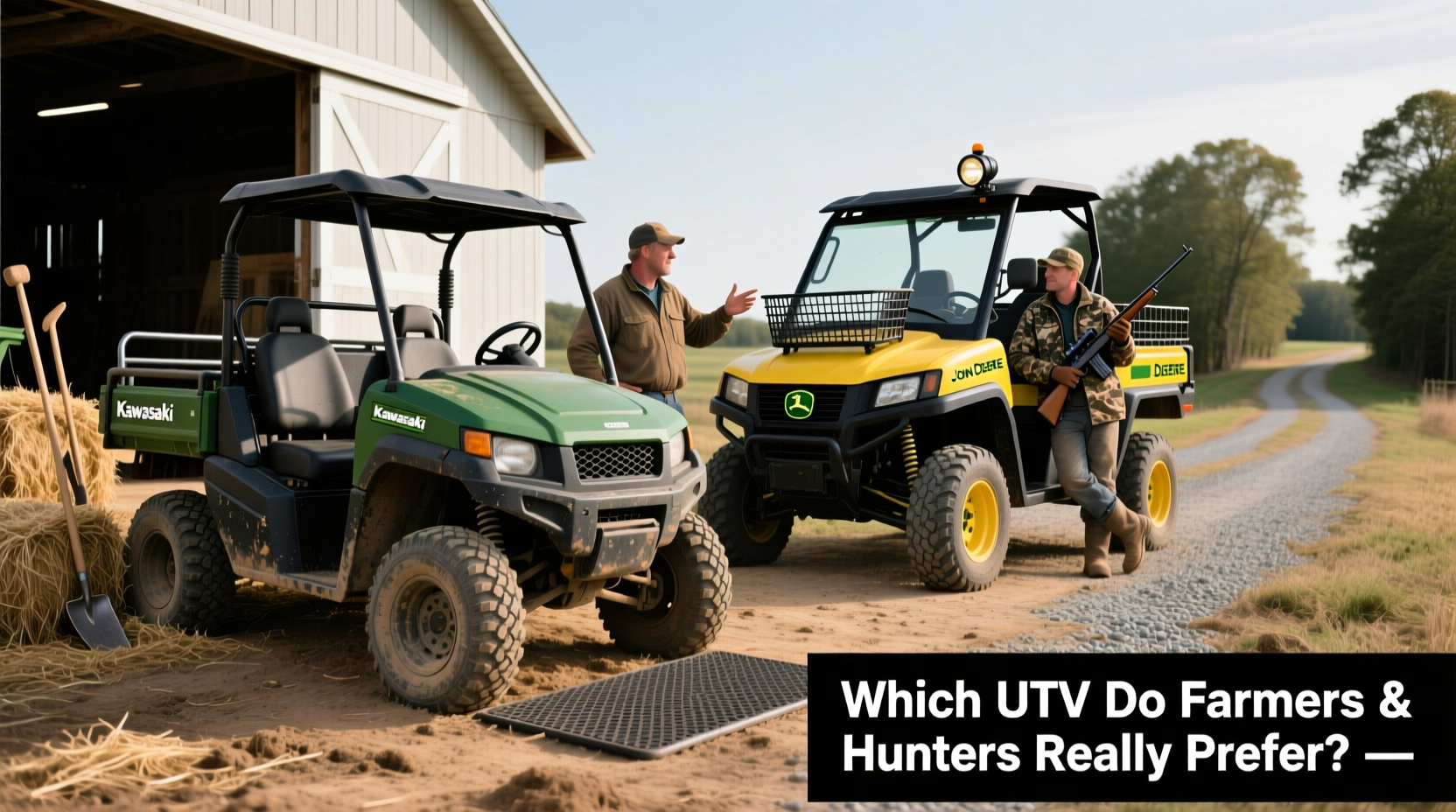
Power matters when you're pulling trailers through wet fields or climbing rocky ridges. The Kawasaki Mule lineup typically features larger displacement engines compared to similarly priced Gators. For example, the Mule Pro-MX boasts a 675cc V-twin engine producing around 48 horsepower, offering strong low-end torque ideal for towing and climbing.
In contrast, many John Deere Gator models—like the popular TH 6x4—use smaller engines, often in the 600–650cc range, with slightly less peak output. However, John Deere compensates with refined CVT tuning and consistent power delivery that minimizes strain under load. This makes the Gator feel smoother during long workdays, especially when operating continuously over uneven ground.
Tip: If you frequently tow heavy equipment or operate on inclines, prioritize low-end torque over peak horsepower—this is where the Mule often has an edge.Farmers managing large acreage report appreciating the Mule’s raw pulling strength, while hunters favoring quiet, steady movement through brushland often cite the Gator’s smooth throttle response as a key advantage.
Durability and Long-Term Reliability
Durability separates good machines from great ones in agricultural and hunting environments. Both brands are built for longevity, but their design philosophies differ.
Kawasaki Mules feature steel frames with reinforced stress points and aggressive suspension setups. Many owners report exceeding 3,000 hours of operation with only routine maintenance. Their oil-cooled engines handle sustained loads well, though some note that air filters require frequent cleaning in dusty conditions.
John Deere takes a more conservative engineering approach. Gators are designed with simplicity in mind—fewer electronics, robust drivetrains, and easy access to service points. A farmer in central Iowa shared that his decade-old Gator XUV 825i still runs reliably after replacing only the belt and battery. “It’s not flashy,” he said, “but I’ve never been stranded because something computerized failed.”
“On remote farms and deep-woods hunting camps, reliability means more than speed. You need a machine that starts every time, no matter the weather.” — Dr. Alan Reeves, Agricultural Mechanization Specialist, Purdue University
Comfort and Ride Quality Comparison
Long days in the saddle demand comfort. Here’s how the two stack up:
| Feature | Kawasaki Mule | John Deere Gator |
|---|---|---|
| Seat Cushioning | Firm, supportive | Softer padding, better for vibration dampening |
| Suspension Travel | Up to 10 inches (Pro models) | 8–9 inches (TH and XUV series) |
| Cab Noise Level | Moderate engine hum | Quieter at idle; better sound insulation |
| Ground Clearance | 11.5 inches | 10.5 inches |
| Turning Radius | 12.5 feet | 11.8 feet |
The tighter turning radius of the Gator gives it an advantage in tight woods or narrow barn aisles. Meanwhile, the Mule’s longer suspension travel absorbs bumps more effectively on open, rutted terrain. Hunters tracking game in rough backcountry may appreciate the Mule’s superior ground clearance, while farmers maneuvering around sheds and livestock pens might prefer the Gator’s agility.
Real-World Use: A Farmer’s Perspective
Take Mark Reynolds, a third-generation cattle rancher in eastern Montana. He owns both a Kawasaki Mule Pro-FXT and a John Deere Gator HPX. His experience reflects broader trends among mixed-use operators.
“I use the Mule when I’m moving bales or dragging fence posts,” Reynolds explains. “It just doesn’t bog down, even in knee-deep mud. But for checking water tanks or feeding calves in tight pens, I grab the Gator. It’s easier to get in and out of, and the cab stays cleaner.”
Reynolds also noted that parts availability influenced his decision to keep both. “Dealerships stock Gator parts faster around here, but Kawasaki’s belt system lasts longer between replacements. So I don’t mind waiting a few days if I need a new clutch.”
This dual-ownership pattern is surprisingly common. Many serious users don’t see the Mule and Gator as direct competitors—they’re tools for different jobs.
Hunter Feedback: Stealth, Range, and Terrain Handling
For hunters, a UTV must be dependable, quiet, and capable of accessing remote spots without disturbing wildlife. In this arena, the Gator’s reputation for quiet operation stands out.
Several members of a Missouri deer-hunting cooperative tested both models during rifle season. They found the Gator quieter at idle and produced less mechanical clatter over rocks. One hunter remarked, “The Mule’s engine note carries farther through the valley. If you’re trying to sneak within range of a buck, that matters.”
However, when snow covered northern Minnesota trails last winter, the same group leaned heavily on a Kawasaki Mule 4010 with tracks installed. Its higher torque output handled deep drifts better than the Gator equivalent. “Once the snow gets over 18 inches, you need every bit of grunt you can get,” said guide Rick Thompson.
- Gator excels in: Quiet operation, compact handling, ease of maintenance
- Mule shines in: High-load towing, deep snow/mud performance, aftermarket support
Cost of Ownership and Resale Value
Purchase price is just the beginning. Consider long-term costs:
- Maintenance Frequency: Gators generally require less frequent belt changes due to simpler drivetrain designs.
- Fuel Efficiency: Gators average 28–32 mpg; Mules 24–28 mpg depending on model and load.
- Resale Value: After five years, both retain about 55–60% of original value, according to NADA Used Equipment Guides.
- Parts Cost: Kawasaki OEM belts and suspension components run 10–15% higher than comparable Gator parts.
Final Verdict: Who Actually Prefers What?
Data from agricultural surveys and outdoor forums shows a near-even split:
- Farmers: Slightly favor the John Deere Gator for day-to-day chores requiring reliability and ease of use.
- Hunters: Lean toward the Kawasaki Mule when terrain is extreme or payloads are heavy.
But preference isn’t universal. Region plays a role. In the Midwest, where cornfields and flat pastures dominate, Gators are more commonly seen. In mountainous regions like Appalachia or the Rockies, Mules dominate due to their climbing ability and rugged suspension.
Checklist: Choosing Your UTV
Ask yourself these questions before deciding:
- Do I regularly haul over 1,000 lbs? → Favor the Mule
- Will I mostly drive short distances on packed trails? → Gator may suffice
- Is dealership proximity limited? → Choose the brand with better local support
- Do I need maximum quietness for hunting? → Gator has the edge
- Am I planning major modifications? → Mule has wider aftermarket support
FAQ
Can either UTV be used for plowing snow?
Yes, both offer factory-installed or aftermarket plows. The Kawasaki Mule’s greater torque gives it an advantage in heavy, wet snow, but the Gator performs well in light to moderate conditions.
Which is easier to learn for beginners?
The John Deere Gator is often considered more user-friendly due to predictable throttle response and intuitive controls. First-time UTV owners frequently report feeling confident sooner on a Gator.
Are there electric versions available?
John Deere offers the Gator EV, a fully electric utility model ideal for noise-sensitive areas. Kawasaki currently does not have a mass-market electric UTV, though hybrid concepts have been prototyped.
Conclusion
The debate between Kawasaki Mule and John Deere Gator isn’t about which is universally better—it’s about matching machine strengths to your mission. Farmers seeking dependable, low-maintenance transport for routine tasks often find the Gator fits seamlessly into daily operations. Hunters venturing into rugged, isolated terrain tend to value the Mule’s power, ground clearance, and customization potential.
Ultimately, the most respected operators don’t choose sides. They assess their land, workload, and environment honestly—and sometimes, they end up owning both. Because when the job demands it, having the right tool makes all the difference.
💬 Have experience with both? Share your story in the comments below—your insights could help someone make their next big purchase.








