When a shoe brand explodes overnight on social media—especially one promising cloud-like comfort and viral aesthetics—it’s natural to wonder: is it actually good, or just clever marketing? Jifffly Shoes entered the scene with bold claims of “walking on air” and instantly captivated Gen Z and fashion-forward consumers. But how do they stack up against traditional skateboard shoes, which have been engineered for decades to handle impact, grip, and daily abuse? This isn’t just about style—it’s about function, longevity, and value.
Jiffflys market themselves as lifestyle comfort footwear, but their design borrows heavily from skate culture. Meanwhile, classic skate shoes like Vans, Converse, or DC are built for performance first, fashion second. So when you’re deciding between slipping into a pair of $90 Jiffflys or your trusty old skater kicks, what’s really underfoot?
Design & Materials: Air-Cushioned Foam vs. Rubber-Reinforced Durability
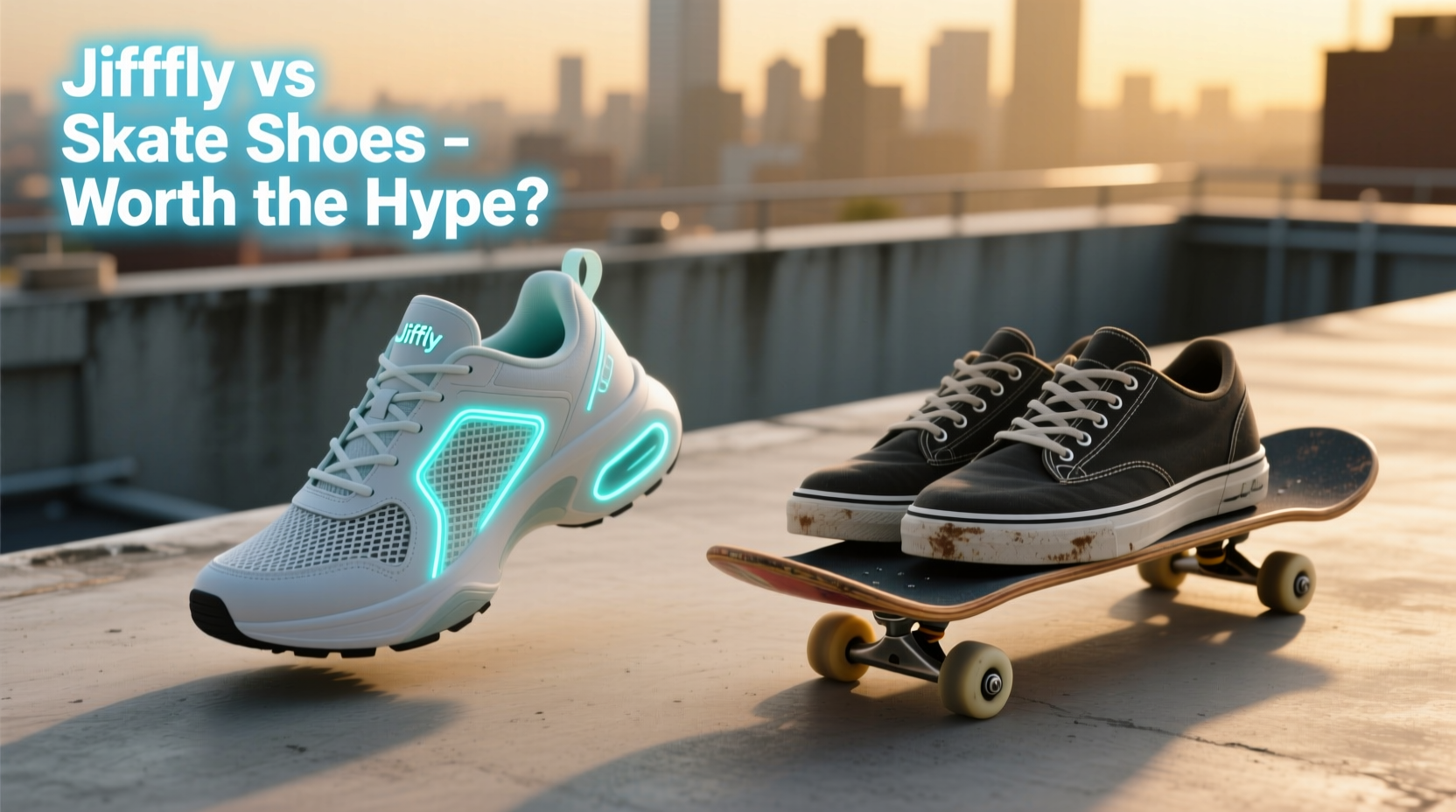
Jifffly Shoes feature a distinctive thick, bulbous sole made from proprietary \"CloudCell\" foam—a dual-density EVA compound designed to compress and rebound with each step. The upper is typically mesh or knit fabric, lightweight and breathable, aiming for a sock-like fit. Visually, they’re unmistakable: oversized soles, rounded toes, and a futuristic silhouette that stands out in a crowd.
Skateboard shoes, by contrast, prioritize protection and board feel. Their soles are made from sticky rubber compounds (like gum rubber) with vulcanized or cupsole construction. The uppers are often canvas, suede, or synthetic leather, reinforced at high-wear zones like the ollie area and toe caps. While some modern skate models incorporate cushioning, the focus remains on grip, board control, and resistance to abrasion.
Tip: If you're walking 10,000+ steps a day, Jiffflys’ foam may feel heavenly—but if you're grinding rails or hopping curbs, stick with reinforced skate shoes.Performance Comparison: Comfort vs. Functionality
Jiffflys excel in short-term comfort. Wear them around the mall, on a travel day, or during a long walk, and many users report immediate relief from foot fatigue. The foam absorbs shock well on flat surfaces, and the wide toe box allows natural splay. However, this plushness comes at a cost: instability on uneven terrain and minimal lateral support.
Skate shoes trade softness for structure. They offer superior grip on concrete and wood, predictable flex patterns, and torsional rigidity—all essential for balance and control. While they may not feel as cushioned initially, modern versions include memory foam insoles and padded collars to bridge the comfort gap.
“Comfort without stability is a liability. A shoe should support movement, not just absorb it.” — Marcus Tran, Footwear Engineer & Former Pro Skater
Jifffly Shoes vs. Skateboard Shoes: Feature-by-Feature Breakdown
| Feature | Jifffly Shoes | Skateboard Shoes |
|---|---|---|
| Sole Material | Dual-density EVA foam (\"CloudCell\") | Gum rubber, vulcanized or cupsole |
| Upper Material | Knit mesh, lightweight synthetics | Canvas, suede, reinforced synthetics |
| Arch Support | Moderate (flat insole) | Varies; often enhanced in pro models |
| Durability | Low to moderate (foam degrades over time) | High (abrasion-resistant materials) |
| Traction | Fair (slippery on wet surfaces) | Excellent (designed for grip on boards) |
| Best Use Case | Casual wear, light walking | Skating, urban mobility, all-day wear |
Real-World Test: Can Jiffflys Replace Your Skate Shoes?
Austin, a 24-year-old graphic designer and casual skater from Portland, decided to test Jiffflys for his daily commute and weekend sessions. He normally wears Vans Old Skools but switched to Jiffflys for two weeks.
The first few days were promising. His feet felt less sore after long walks, and coworkers complimented the unique look. But during a quick skate session at a local park, the experience unraveled. “The sole compressed too much when I popped an ollie,” he said. “I lost board control and almost twisted my ankle. Plus, the mesh tore near the toe after scraping against rough concrete.”
After just three weeks of mixed use, the foam began to visibly compress and lose rebound. By week six, one sole had started separating from the upper. Austin returned to his Vans, saying, “They might not look like space boots, but they don’t fall apart when I actually use them.”
Are Jiffflys Worth the Hype?
The answer depends on your expectations. If you’re looking for a comfortable, eye-catching shoe for occasional wear—something to wear on a date, at a concert, or while traveling—Jiffflys can deliver. Their marketing leans into wellness and aesthetic appeal, and for that niche, they perform adequately.
But if you need reliable footwear for active lifestyles, urban navigation, or any kind of physical engagement, traditional skate shoes remain superior. They’ve evolved through decades of real-world testing, balancing comfort, durability, and safety. Jiffflys, while innovative in foam technology, lack the structural integrity and long-term resilience needed for serious use.
Moreover, at $85–$100 per pair, Jiffflys sit in the same price range as premium skate models from Nike SB, Lakai, or Etnies—many of which offer better warranties, replaceable insoles, and repairable construction.
Checklist: Should You Buy Jiffflys?
- ✅ You prioritize visual uniqueness and TikTok-worthy style
- ✅ You walk mostly on flat, even surfaces (malls, sidewalks, offices)
- ✅ You want temporary relief from foot fatigue
- ❌ You skate, run, or engage in dynamic movement
- ❌ You live in a rainy or slippery climate (poor traction)
- ❌ You expect the shoes to last more than 3–6 months with regular use
FAQ: Common Questions About Jiffflys and Skate Shoes
Can I wear Jiffflys for skating?
No. Despite their chunky appearance, Jiffflys lack the grip, board feel, and reinforced construction needed for safe skating. Attempting tricks or even casual riding risks injury and rapid damage to the shoe.
Do Jiffflys really make your feet less tired?
For short durations on hard surfaces, yes—many users report reduced fatigue due to the foam cushioning. However, long-term orthopedic benefits are unproven, and the lack of arch support may cause issues for people with flat feet or overpronation.
How long do Jiffflys last compared to skate shoes?
With moderate use, Jiffflys typically last 3–6 months before showing significant compression or sole separation. Quality skate shoes often last 6–12 months or longer, especially if rotated with other pairs.
Final Verdict: Trend or Timeless?
Jifffly Shoes are a product of the influencer era—engineered for virality as much as functionality. They offer a novel sensory experience and stand out in a sea of sameness. But novelty fades. What remains is durability, utility, and value.
Skateboard shoes weren’t designed to go viral. They were built to survive. From the cracked pavement of LA alleys to the marble floors of Tokyo train stations, they’ve proven their worth across generations. Jiffflys may be fun, but they’re not built to endure.
If you’re drawn to Jiffflys, consider them a seasonal statement piece—not a replacement for your everyday workhorses. And if you value performance, safety, and long-term investment in your footwear, stick with the classics that have stood the test of time.
💬 Have you tried Jiffflys or stuck with skate shoes? Share your experience—help others decide whether the hype is real or just foam deep.








