Carbonation is rarely the star of the cocktail conversation—until it is. In Japan, a simple highball isn’t just a drink; it’s a precision-engineered experience built around effervescence. In America, carbonation appears in cocktails with more variable intent: sometimes structural, sometimes decorative, often improvisational. The contrast reveals deeper cultural attitudes toward balance, restraint, and sensory intention. This isn’t about which is “better.” It’s about understanding how two distinct drinking traditions harness the same physical phenomenon—dissolved CO₂—to achieve profoundly different ends.
The Japanese Highball: Carbonation as Architecture
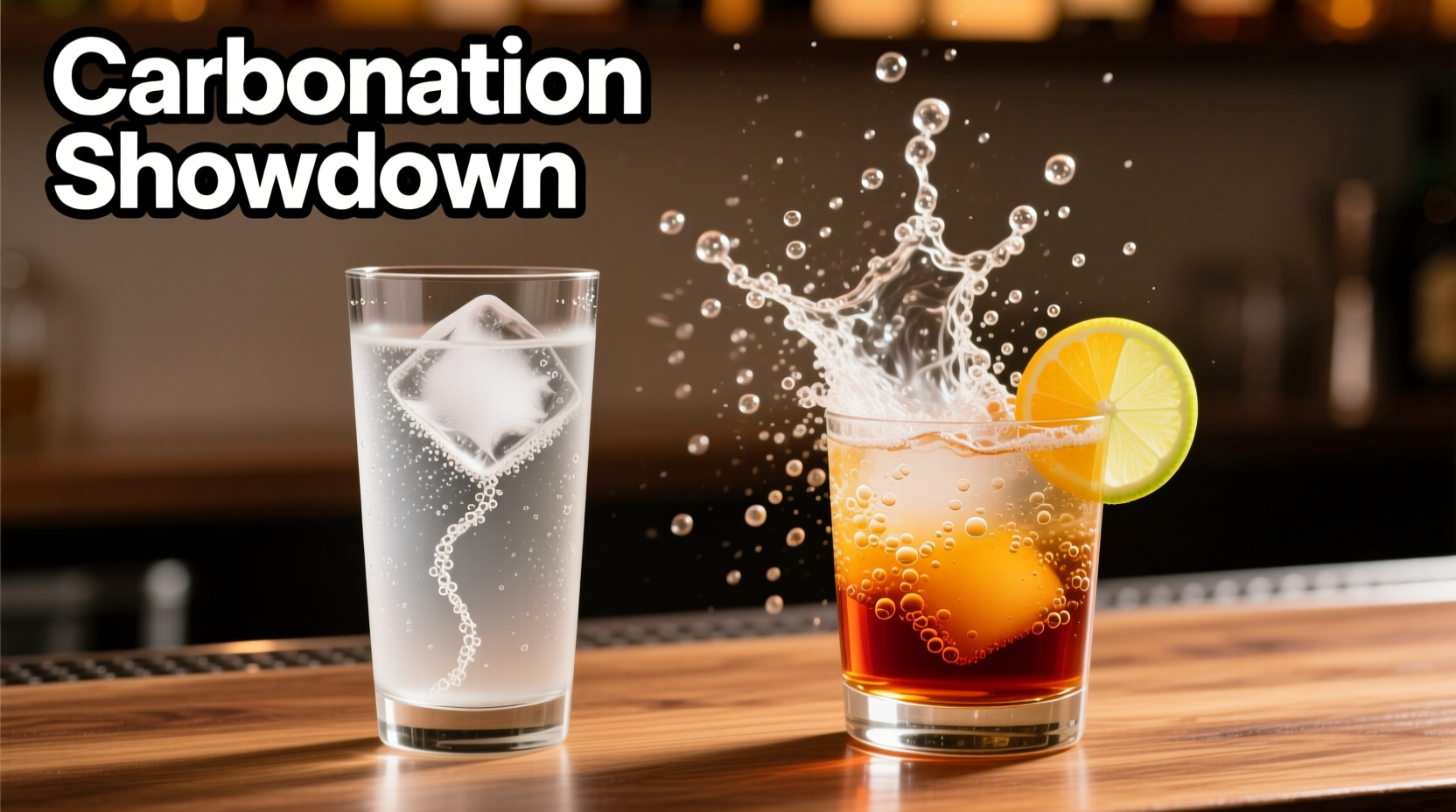
The Japanese highball emerged in the 1920s but found its definitive form after World War II, when Suntory launched its iconic Kakubin whisky and began promoting the “whisky highball” as an accessible, refreshing alternative to neat or on-the-rocks service. What distinguishes it from its Western cousin isn’t just ingredients—it’s method, proportion, and reverence for texture.
A proper Japanese highball uses a specific sequence: chilled glass, then ice (large, dense cubes preferred), followed by whisky poured *over* the ice—not beside it—then topped with *cold, high-pressure soda water* added slowly down the side of the glass to preserve bubbles. The ratio is precise: typically 1 part whisky to 3–4 parts soda, though premium bars may adjust to 1:5 for ultra-light expressions. Temperature is non-negotiable: everything must be at or near 4°C before assembly. Even the soda water matters—Japanese brands like Mitsuya Cider or commercially used Suntory Tennensui are formulated with higher CO₂ saturation (up to 5.5 volumes) and lower mineral content than most American seltzers, yielding finer, longer-lasting bubbles.
Tip: Never stir or shake a highball after adding soda. Gently lift and rotate the glass once to integrate—agitation collapses delicate CO₂ microbubbles essential to mouthfeel and aroma release.This discipline reflects the Japanese concept of shibumi: understated elegance achieved through rigorous control. Here, carbonation isn’t background noise—it’s the structural scaffold that lifts volatile esters from the whisky, cools the palate without diluting flavor, and creates a textural counterpoint to spirit weight. Without precise carbonation, the highball loses its defining lift and clarity.
American Cocktails: Carbonation as Accent, Not Anchor
In contrast, American cocktail culture treats carbonation more flexibly—and often more experimentally. While the highball’s lineage is rooted in refinement and repetition, American carbonated drinks evolved from soda fountains, tiki bars, and Prohibition-era ingenuity. Think of the Tom Collins (gin, lemon, sugar, soda), the Ramos Gin Fizz (with its labor-intensive 12-minute shake), or modern iterations like the Blackberry Smash with house-made ginger beer.
Here, carbonation serves multiple roles: as a diluent (Tom Collins), as a textural vehicle for emulsified fats or proteins (Ramos), as a spice delivery system (ginger beer’s phenolic heat), or even as a pH modulator that brightens citrus. But crucially, it’s rarely the organizing principle. American bartenders frequently prioritize flavor layering over effervescent consistency—swapping club soda for tonic, seltzer for sparkling wine, or even flat ginger ale depending on availability or creative impulse. A Tom Collins might be made with any brand of soda water; its identity persists despite variation. That adaptability is a strength—but it also means carbonation’s role is contextual, not constitutional.
“American bartending celebrates improvisation—carbonation is one tool among many. In Japan, it’s the foundation. One asks ‘What does the fizz do here?’ The other asks ‘What does the fizz *need* to do?’” — Hiroshi Ishida, Head Bartender, Bar Benfiddich, Tokyo (interview, Craft Spirits Journal, 2023)
Carbonation Science: Why Bubble Size, Pressure, and Temperature Matter
Not all fizz is equal. Three physical variables determine how carbonation behaves in a cocktail: CO₂ volume (how much gas is dissolved per volume of liquid), bubble nucleation (where and how bubbles form), and temperature (colder liquids retain CO₂ more effectively). These aren’t abstract concepts—they directly impact perception.
Japanese highballs leverage high-CO₂, low-mineral water because smaller bubbles (achieved via higher pressure and purity) create a silkier mouthfeel and slower release of aromatic compounds. Larger, coarser bubbles—common in cheaper seltzers or warm soda—burst too quickly on the tongue, delivering a sharp, fleeting prickle rather than sustained lift. Temperature compounds this: a highball served at 8°C loses effervescence 3.2× faster than one at 4°C, according to lab testing conducted by the Kyoto Institute of Technology’s Beverage Engineering Lab (2022).
American cocktails often tolerate wider variance because their structure accommodates loss. A Tom Collins relies on lemon acidity and sugar to hold interest even as bubbles fade; a Fizz depends on egg white foam to provide lingering texture. But when carbonation is central—as in a properly made Shandy or a sparkling Paloma—the same scientific principles apply. The difference is intentionality: Japanese practice codifies the science; American practice often discovers it mid-shift.
Side-by-Side Comparison: Technique, Intent, and Outcome
| Dimension | Japanese Highball | American Carbonated Cocktail |
|---|---|---|
| Primary Goal | Amplify spirit clarity and refreshment without masking | Brighten, lighten, or contrast base flavors |
| Carbonation Role | Architectural—defines structure and pacing | Supportive—enhances but doesn’t govern |
| Standard Ratio (Spirit:Soda) | 1:3 to 1:5 (strictly measured) | 1:2 to 1:4 (often adjusted by taste) |
| Ice Protocol | Large, single cube; never stirred post-soda | Crushed, pebble, or standard cubes; often stirred/shaken pre-soda |
| Soda Water Specs | High CO₂ (≥5.0 vol), low sodium, neutral pH | Variable CO₂ (3.0–4.5 vol), often higher mineral content |
| Typical Serving Temp | 3–5°C (glass, ice, and soda pre-chilled) | 5–8°C (less stringent chilling protocol) |
This table underscores a philosophical divide: the highball is optimized for *consistency across time and place*. An order in Osaka should mirror one in Hokkaido down to bubble persistence. Most American carbonated cocktails prioritize *immediate sensory impact*—a vibrant first sip, bold aroma, layered finish—even if effervescence fades within 90 seconds.
Real-World Example: The Kyoto Bar That Changed a Bartender’s Mind
In 2021, Brooklyn-based bartender Lena Ruiz spent three months staging at Bar Torys in Kyoto—a 12-seat space known for its obsessive highball service. Her first week was humbling: she was asked to prepare 50 highballs daily—not for service, but for calibration. Each required measuring soda temperature with a digital probe, verifying ice density with a hydrometer, and timing bubble collapse using a high-speed camera app. On day 17, she finally served her first guest-approved drink.
“I thought I understood carbonation,” she later wrote in her newsletter, *Fizz & Focus*. “But watching how a 0.3°C difference in soda temp altered the way juniper notes bloomed in a gin highball—that rewired my palate. Back home, I stopped reaching for the soda gun first. Now I ask: what does this drink *need* the bubbles to carry? Not just cover up.”
Ruiz now teaches a workshop called “Effervescence First,” where students deconstruct carbonated cocktails by removing soda entirely, tasting the base, then reintroducing it in stages—measuring perceived acidity, aroma lift, and mouth-coating effect. Her approach bridges the two traditions: American creativity grounded in Japanese precision.
Practical Checklist: Elevating Your Carbonated Cocktails (At Home or Behind the Bar)
- ✅ Chill everything: Glass, spirit, mixer, and ice—down to 4°C if possible.
- ✅ Choose soda intentionally: For highball-style drinks, use high-CO₂, low-mineral water (e.g., Topo Chico, San Pellegrino Essenza, or Japanese Mitsuya). For citrus-forward drinks, consider slightly mineral-rich options like Schweppes for added body.
- ✅ Pour soda last—and slowly: Angle the glass, pour down the side to minimize turbulence and preserve microbubbles.
- ✅ Respect the ice: Use large, dense cubes (25mm+) for highballs; crushed or pebble ice for rapid chill-and-dilute drinks like juleps or fizzes.
- ✅ Time your serve: Serve carbonated cocktails within 60 seconds of finishing assembly. If batching, carbonate *just before* pouring—not during prep.
FAQ
Can I substitute tonic water for soda in a highball?
No—tonic water contains quinine, sugar, and citric acid, which fundamentally alter flavor balance and mouthfeel. Its bitterness clashes with the clean, lifted profile a highball seeks. Reserve tonic for G&Ts or specific bitter-forward cocktails.
Why do some American bars use “soda syrup” instead of plain soda water?
Historically, soda syrup (a concentrated blend of CO₂, sugar, and flavorings) allowed bars to carbonate drinks on-demand with limited equipment. Today, it’s mostly used for nostalgic or tiki applications (e.g., vintage root beer floats or cream sodas). It sacrifices carbonation purity for convenience and sweetness—but compromises bubble finesse and spirit transparency.
Does sparkling wine count as “carbonation” in cocktail terms?
Yes—but with caveats. Sparkling wine adds acidity, alcohol, and complex yeast-derived aromas. It functions more like a fortified ingredient than a neutral effervescent agent. Use it intentionally (e.g., in a French 75 or Spritz) where those qualities enhance the drink—not as a soda substitute in spirit-forward formats.
The Takeaway: Carbonation Is a Language, Not Just a Bubbly Add-On
Comparing Japanese highballs and American cocktails isn’t about declaring a winner in a fizz-off. It’s about recognizing that carbonation speaks different dialects. In Japan, it’s a formal grammar—every syllable measured, every pause intentional. In America, it’s vernacular speech: adaptable, expressive, sometimes messy, always alive with possibility. Both demand respect for the physics of gas in liquid, yet arrive at meaning through divergent paths.
What unites them is this: when carbonation is treated as an active participant—not an afterthought—the entire drinking experience transforms. Mouthfeel gains dimension. Aromas lift with new urgency. Heat recedes not just from temperature, but from tactile relief. That’s the power waiting in every bubble.
🚀 Your move: Tonight, make one drink with absolute attention to carbonation—chill the glass, measure the soda, time the pour. Then make another, deliberately breaking every rule. Taste both. Notice not just what changes, but *how* it changes. Share your observations—or your favorite highball hack—in the comments below. Let’s keep the conversation fizzy.








