
Vermouth occupies a paradoxical space in modern cocktail culture: it’s both foundational and frequently overlooked. In stirred classics—Martinis, Manhattans, Rob Roys, and Negronis—it’s rarely the star, yet its aromatic profile, sweetness level, and oxidative character shape the drink’s balance, texture, and finish more decisively than most bartenders admit. For decades, vermouth was treated as a pantry staple—bottled, refrigerated, and used until it turned vinegary. Then came the “vintage vermouth” renaissance: auctioned 1970s Carpano Antica, sealed 1950s Noilly Prat Extra Dry, even pre-Prohibition Punt e Mes specimens fetching hundreds of dollars. But does that age translate to superiority—or is it a romantic misreading of oxidation, degradation, and context?
The answer isn’t binary. It hinges on chemistry, provenance, intention, and application. This article cuts through nostalgia and marketing to examine what happens inside a vermouth bottle over time—and why, for most stirred cocktails, freshness remains the gold standard—even as select vintage bottlings earn legitimate reverence in specific, narrow circumstances.
What Actually Happens to Vermouth Over Time?
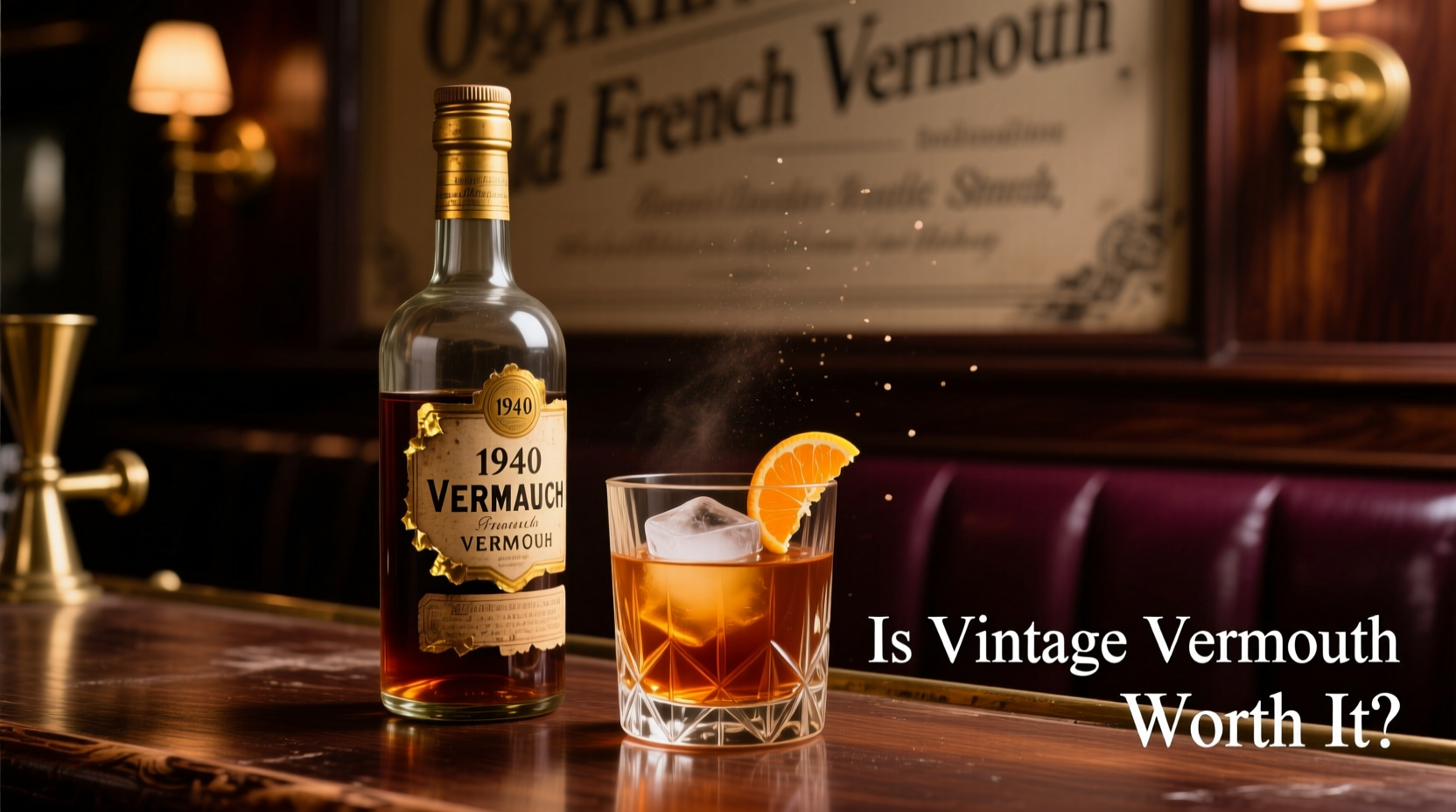
Vermouth is a fortified, aromatized wine—typically white (for blanc/dry) or red (for sweet), infused with botanicals, sweetened, and stabilized with brandy (15–22% ABV). Unlike whiskey or Cognac, it lacks tannin structure or high alcohol to resist oxidation. Its vulnerability begins at bottling: oxygen trapped under the cork reacts immediately with phenolics, terpenes, and esters. The result isn’t slow maturation but progressive chemical decay:
- Aldehyde formation: Ethanol oxidizes into acetaldehyde, contributing bruised apple or sherry-like notes—but also flatness and loss of lift.
- Terpene breakdown: Key aromatic compounds (limonene, pinene, myrcene) from citrus peels and herbs degrade, diminishing brightness and top-note complexity.
- Polyphenol polymerization: Tannins and flavonoids bind and precipitate, softening bitterness but also muting herbal definition and mouthfeel.
- Sugar inversion: Sucrose slowly hydrolyzes into glucose and fructose, subtly altering perceived sweetness and viscosity.
Crucially, these changes aren’t uniform. A tightly sealed, cold-stored, low-UV-exposure bottle degrades slower than one kept warm and upright for months. And degradation isn’t inherently negative—it can yield desirable qualities *in certain contexts*. But those qualities rarely serve the precise, clean architecture of a well-stirred Martini.
The Stirred Cocktail Imperative: Why Freshness Is Structural, Not Optional
Stirred cocktails demand clarity, precision, and seamless integration. Their low dilution (typically 15–25%), minimal aeration, and reliance on spirit-forward balance make them unforgiving of off-notes. Consider the Martini: gin or vodka, dry vermouth, chilled and stirred to -2°C, strained into a frost-rimmed coupe. Here, vermouth isn’t a background hum—it’s the bridge between spirit heat and saline-citrus finish. Its role is threefold:
- Tempering: Softening ethanol burn without masking botanicals.
- Binding: Providing glycerol and residual sugar to carry volatile aromas across the palate.
- Defining the finish: Contributing a clean, bitter-herbal echo that lingers just long enough—not so long it turns medicinal or musty.
Fresh vermouth (used within 1–3 weeks of opening, refrigerated) delivers exactly this: vibrant citrus peel, crisp wormwood, subtle floral lift, and bright acidity. Vintage vermouth, by contrast, often presents muted top notes, a heavier mid-palate, and a finish dominated by oxidized nuttiness or dried fruit—qualities that clash with gin’s juniper or rye’s spice, creating dissonance rather than depth.
Tip: Always taste your vermouth before building a stirred cocktail. If it smells flat, yeasty, or overly nutty—or tastes cloying or sour—discard it. Your Martini deserves better.Vintage Vermouth: When Age Adds Value (and When It Doesn’t)
Not all vintage vermouth is created equal. Provenance, bottling method, and original formulation matter profoundly. Pre-1960s Italian sweet vermouths—particularly Carpano Antica Formula (reintroduced in 1999 but modeled on 1786 recipes)—often used higher sugar levels, richer base wines, and less aggressive filtration. Some bottles from the 1970s retain surprising integrity: deep cocoa, fig, and aged wood notes with preserved wormwood bitterness. These work exceptionally well in *spirit-forward stirred drinks where weight and umami are assets*, such as a 2:1 Rittenhouse Rye–Carpano Antica Manhattan.
But “vintage” doesn’t guarantee quality. Many 1980s and 1990s European bottlings suffered from industrial consolidation—lower-quality base wines, artificial colorants, and inconsistent botanical sourcing. Oxidation here yields cardboard, vinegar, or cough-syrup notes—not complexity.
A telling case study comes from bartender and vermouth historian Michael Neff. In 2022, he conducted a blind tasting of six Martinis: three made with fresh Dolin Dry (opened 3 days prior), three with a verified 1974 Noilly Prat Extra Dry (stored upright in a Paris cellar, unopened). Panelists—12 experienced bartenders and spirits writers—ranked the fresh versions significantly higher for “aromatic clarity,” “balance with gin,” and “clean finish.” Only two preferred the vintage version, citing “unusual depth” but acknowledging “less precision.” As Neff noted afterward: “The 1974 had charm, like a weathered leather chair. But for a Martini? You want a tailored suit—not an heirloom coat.”
“The idea that older = better applies to vermouth only if you’re seeking a specific, oxidative profile—and even then, it’s about intention, not inevitability. Most vintage vermouth is simply oxidized wine with botanicals. That’s not inferior, but it’s not universally superior either.” — Meredith Yarbrough, Master Distiller & Vermouth Consultant, Atelier Vie
Practical Decision Framework: Fresh vs. Vintage, By Cocktail Type
Choosing between fresh and vintage vermouth isn’t philosophical—it’s functional. Below is a comparative guide grounded in real-world bar practice and sensory testing:
| Cocktail Type | Fresh Vermouth Recommended? | Vintage Vermouth Viable? | Rationale |
|---|---|---|---|
| Dry Martini (gin/vodka + dry vermouth) | ✅ Strongly | ❌ Rarely | Requires razor-sharp citrus and wormwood to cut spirit heat. Vintage dry vermouth loses volatility and gains heaviness. |
| Sweet Manhattan (rye + sweet vermouth) | ✅ Yes (within 2–3 weeks) | ✅ Selectively | Higher sugar and lower ABV buffer oxidation. Well-preserved 1970s Antica or Cocchi Vermouth di Torino can add resonant depth—but avoid anything with caramelized or sour notes. |
| Negroni (equal parts gin, Campari, sweet vermouth) | ✅ Essential | ❌ Not advisable | Campari’s intense bitterness amplifies any flatness or oxidation in vermouth, creating harsh, medicinal off-notes. |
| Rob Roy (scotch + sweet vermouth) | ✅ Yes | 🟡 Context-dependent | Peated scotch’s smokiness can harmonize with nutty, oxidized notes—but only if vintage vermouth retains clear wormwood and avoids mustiness. |
| Stirred Amaro Cocktail (e.g., Boulevardier) | ✅ Preferred | ✅ Occasionally | Amari’s inherent bitterness and herbaceousness create more forgiving terrain—but freshness still ensures aromatic lift against dense amaro profiles. |
Your Action Plan: Maximizing Vermouth Performance
Whether you chase rare vintages or prioritize daily freshness, performance depends on process—not just product. Follow this step-by-step protocol to ensure vermouth delivers its best in every stirred drink:
- Buy small-format bottles (375ml or less) unless serving high volume. Larger formats accelerate degradation after opening.
- Refrigerate immediately upon opening—even for “shelf-stable” brands. Cold slows oxidation by ~70% versus room temperature.
- Use inert gas (Private Preserve or similar) before recorking. A 2-second spray displaces oxygen in the headspace, extending peak freshness by 2–3 weeks.
- Store upright, not on its side. Minimizing cork contact reduces taint risk and limits surface area exposed to air.
- Label the bottle with opening date using waterproof tape. Discard dry vermouth after 3 weeks; sweet vermouth after 4–5 weeks—even if it smells fine.
- For vintage bottles: Open only when needed, decant into a smaller vessel if possible, and use within 48 hours. Never store vintage vermouth long-term post-opening.
FAQ: Addressing Real Concerns From Home Mixologists and Bar Managers
How do I know if my “vintage” vermouth is actually valuable—or just old?
Provenance is everything. Look for intact tax stamps, original labels with consistent typography, and documented storage history (cool, dark, stable temp). Bottles sold on auction sites without condition reports or temperature logs are high-risk. When in doubt, open a small sample and compare side-by-side with a fresh benchmark (e.g., Dolin or Cocchi). If it lacks vibrancy and reads as “dusty” rather than “deep,” it’s likely past its prime—not priceless.
Can I revive oxidized vermouth with a splash of fresh citrus or acid?
No. Oxidation is irreversible chemical change—not simple staleness. Adding lemon juice or citric acid will only introduce competing flavors and destabilize the delicate sugar-acid-botanical equilibrium. It may mask flaws temporarily but won’t restore aromatic fidelity or structural integrity.
Is there any vermouth that improves with bottle age *before* opening?
Almost none. The exception is unfiltered, high-sugar, barrel-aged vermouths like Cocchi Dopo Teatro or some small-batch artisanal releases—designed and tested for 6–12 months of pre-opening cellaring. Even then, improvement is marginal and highly batch-dependent. For 99% of commercial vermouth, “age-worthy” is marketing, not chemistry.
Conclusion: Respect the Bottle, Honor the Drink
Vintage vermouth holds cultural resonance—it connects us to pre-industrial production methods, regional botany, and the quiet patience of old-world craftsmanship. To hunt it down, taste it thoughtfully, and appreciate its evolved character is valid, even enriching. But to assume it belongs in your Martini glass by default is to confuse reverence with relevance. Stirred cocktails thrive on clarity, tension, and immediacy—qualities that demand vermouth at its most vital, not its most venerable.
So refrigerate your Dolin. Replace your Noilly Prat every three weeks. Taste before you stir. And if you do open that 1974 Carpano? Sip it neat, reflect on its journey, and reserve it for a Manhattan where its weight becomes wisdom—not a compromise. The craft of the stirred cocktail isn’t about chasing rarity. It’s about mastering the fundamentals so completely that every element—spirit, vermouth, ice, technique—serves the drink’s singular purpose: balance, elegance, and truth in every sip.
💬 Have you tasted a vintage vermouth that transformed a stirred cocktail—or disappointed you entirely? Share your experience, bottle details, and tasting notes in the comments. Let’s build a real-world archive of what ages well, what doesn’t, and why.








