Denim has long been a cornerstone of personal style—versatile, timeless, and deeply embedded in cultural history. Today, consumers face a growing dilemma: should they chase down rare vintage Levi’s from the '70s at flea markets, or support modern brands making strides in sustainability with eco-conscious production methods? The answer isn’t straightforward. It depends on values—style authenticity, environmental responsibility, fit precision, ethical labor practices, and long-term cost. This article breaks down both sides of the debate, offering practical insights for anyone deciding where to invest their next pair of jeans.
The Allure of Vintage Denim
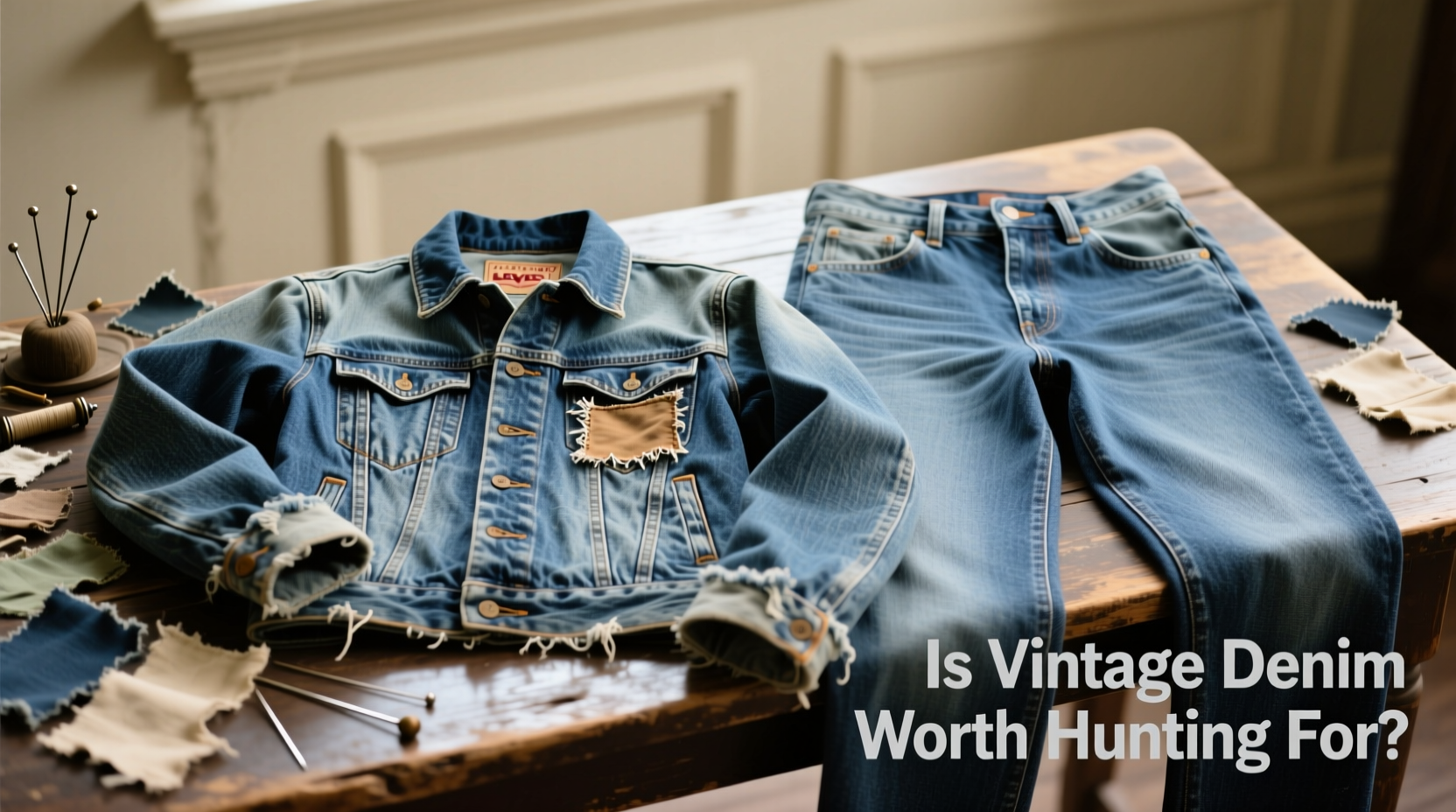
Vintage denim carries an undeniable mystique. A well-worn pair of 1960s raw selvedge jeans doesn’t just fit the body—it tells a story. Each fade, whisker, and honeycombed crease maps years of movement and use. For enthusiasts, these marks aren’t flaws; they’re badges of authenticity.
One major appeal lies in craftsmanship. Pre-1980s denim, particularly from American mills like Cone Mills’ White Oak facility, was often made on shuttle looms that produced tighter, more durable fabric with a signature self-edge (selvedge). These jeans were built to last, using higher cotton quality and minimal chemical processing compared to today’s mass-market alternatives.
Beyond material integrity, vintage denim offers unique silhouettes. High rises, roomy thighs, and tapered ankles defined older cuts—styles now celebrated by modern fashion revivals but once standard in workwear. Finding original pieces means wearing designs before they were altered for fast-fashion efficiency.
Tip: When shopping vintage, check pocket stitching, button material (brass vs. plastic), and red tabs for brand clues. Real vintage Levi’s often have two horses pulling apart a pair of jeans on early labels.The Rise of Sustainable New Denim
While vintage lovers praise heritage, critics point out its limitations: inconsistency in sizing, wear-related damage, and no guarantees about past labor conditions. Enter sustainable denim—a rapidly evolving sector focused on transparency, reduced water use, non-toxic dyes, and fair wages.
Modern eco-brands like Studio Watt, Outland Denim, and Re/Done combine innovation with intentionality. They use organic cotton, recycled fibers, laser finishing instead of sandblasting, and regenerative farming practices. Some even offer repair programs or take-back schemes to extend garment life.
Crucially, new sustainable denim gives buyers control. You choose the exact fit, rise, leg opening, and wash—without gambling on whether a secondhand find will survive tailoring. Plus, many sustainable labels publish factory audits and carbon footprint data, something impossible to verify with decades-old garments.
“Sustainability isn’t just about recycling old clothes—it’s about building systems that don’t create waste in the first place.” — Dr. Lena Patel, Textile Ethicist at the Fashion Institute of Technology
Comparing Environmental Impact
At first glance, reusing vintage seems inherently greener than buying anything new. After all, extending a garment’s life by nine months reduces its carbon footprint by 30%, according to WRAP UK. But the full picture is more nuanced.
Vintage shopping avoids immediate production emissions, yet transportation can add up—especially when sourcing rare pairs shipped across continents. Additionally, not all vintage denim is truly “pre-loved” anymore. Resellers often buy bulk lots from developing countries, disrupting local markets and turning affordable clothing into luxury commodities.
On the flip side, sustainable new denim may require resources to produce, but it does so under regulated conditions. Brands using closed-loop water systems can save up to 98% of the water typically used in denim finishing. Innovations like bio-based indigo dye and ozone bleaching further reduce ecological harm.
| Factor | Vintage Denim | Sustainable New Denim |
|---|---|---|
| Raw Material Use | None (existing inventory) | Organic/recycled cotton |
| Water Consumption | Zero additional use | Reduced via tech (laser, ozone) |
| Chemical Processing | Unknown (likely conventional) | Limited, non-toxic alternatives |
| Carbon Footprint | Low, unless imported globally | Moderate, offset by clean energy |
| Labor Ethics | Unverifiable | Transparent supply chains |
A Real-World Example: Maya’s Denim Dilemma
Maya, a 32-year-old designer in Portland, wanted her first high-quality pair of raw selvedge jeans. She loved the idea of vintage but struggled to find her size (US 12) in good condition. Thrift stores offered stiff, faded pairs with stretched-out knees or broken zippers. Online auctions had better options—but prices exceeded $250 for mid-’80s Lee Riders.
Instead, she turned to a sustainable brand offering Japanese-mill selvedge with a similar cut. The jeans cost $220, came with a repair guide, and were made in a solar-powered factory. Two years later, they’ve developed natural fades without fraying, and she’s sent them in once for hemming under the company’s lifetime service program.
“I didn’t get the instant history,” she says, “but I’m creating my own story—one I know didn’t exploit workers or pollute rivers.”
How to Decide: A Step-by-Step Guide
Choosing between vintage and sustainable new denim doesn’t have to be binary. Follow this decision framework to align your purchase with your priorities:
- Assess Your Fit Needs: If you need consistent sizing or have specific proportions, new denim likely offers better reliability.
- Evaluate Condition Tolerance: Are minor flaws acceptable? Vintage often requires repairs; new sustainable denim starts pristine.
- Prioritize Values: Rank what matters most—environmental impact, labor ethics, uniqueness, longevity.
- Research Provenance: For vintage, learn how to date tags and identify reputable sellers. For new, check third-party certifications (e.g., GOTS, Fair Trade).
- Consider Long-Term Cost: Divide total price by expected wear cycles. A $300 pair worn 300 times costs $1 per wear—often cheaper than replacing three $80 fast-fashion pairs.
Checklist: Buying Smart Denim, Whether Vintage or New
- ✅ Check fabric content: Look for 100% cotton or high-recycled blends
- ✅ Inspect stitching: Double-stitched seams and chain-link bottoms indicate durability
- ✅ Feel the weight: Heavy denim (12–16 oz) tends to last longer and fade beautifully
- ✅ Verify origin: Know where and how it was made
- ✅ Ask about care: Can it be washed cold? Does the brand recommend soak-and-wear?
- ✅ Plan for repairs: Do you have access to a tailor or a brand repair program?
Debunking Common Myths
Myth 1: All vintage denim is eco-friendly.
Reality: While reuse is beneficial, large-scale vintage export disrupts economies in Africa and Asia where secondhand clothes flood local markets, undermining domestic textile industries.
Myth 2: Sustainable denim is too expensive.
Yes, upfront costs are higher, but lifespan evens the playing field. One pair lasting seven years replaces five cheaper pairs bought every 18 months.
Myth 3: New denim can’t develop authentic fades.
Wrong. Raw selvedge from premium mills—whether vintage or newly produced—fades based on body friction. The process is identical if cared for properly.
Frequently Asked Questions
Can I make new denim look vintage?
Absolutely. Raw denim naturally develops fades over time with regular wear and minimal washing. Techniques like spot cleaning, selective soaking, and friction enhancement (e.g., sitting on rough surfaces) accelerate personalized wear patterns. Avoid artificial distressing services that grind holes into fabric—these compromise longevity.
Does buying vintage support unethical practices?
Not directly, but mass extraction of used clothing from Global South nations raises ethical concerns. Charities collect donations expecting local reuse, yet much gets sold in bulk to exporters. This deprives communities of affordable clothing and turns donated goods into profit-driven commodities. Buy vintage locally when possible, or support organizations that keep textiles circulating responsibly.
Are sustainable brands really better for workers?
Many are. Leading sustainable labels audit factories, pay living wages, and partner with certified facilities. Look for B Corp certification, SA8000 social accountability standards, or membership in the Fair Wear Foundation. Transparency reports should list mills and subcontractors—not just headquarters.
The Verdict: It’s Not Either/Or—It’s About Intention
Vintage denim offers irreplaceable character and avoids new resource consumption. Its charm lies in scarcity, history, and craftsmanship lost to industrial scaling. But it comes with trade-offs: inconsistent availability, unknown origins, and potential reinforcement of extractive resale markets.
New sustainable denim answers modern challenges head-on: water waste, chemical pollution, and labor exploitation. It provides consistency, innovation, and accountability. However, it still produces new garments—even if done responsibly.
The most thoughtful approach combines both. Hunt for vintage when you seek a unique piece with soul. Invest in sustainable new denim when fit, ethics, or durability are top priorities. Above all, buy less, choose well, and care deeply. Rotate pairs, patch knees, and embrace slow fashion as a practice—not just a trend.
💬 What’s your denim philosophy? Share your favorite pair, care routine, or brand discovery in the comments. Let’s build a community that values quality over quantity and stories over seasons.








