Hanging holiday ornaments with fishing line has become a popular technique among decorators seeking a “floating” effect—where baubles appear suspended in midair without visible support. The promise is simple: transparent monofilament mimics invisibility, creating the illusion that decorations are magically hovering. But in practice, does this method hold up under scrutiny? Or does the line betray its presence by catching light, reflecting glare, or distorting views? This article dives into the optical reality of using fishing line for ornament display, examining lighting conditions, material types, setup techniques, and expert observations to determine whether the method delivers on its promise.
The Science Behind Visibility: How Light Interacts with Fishing Line
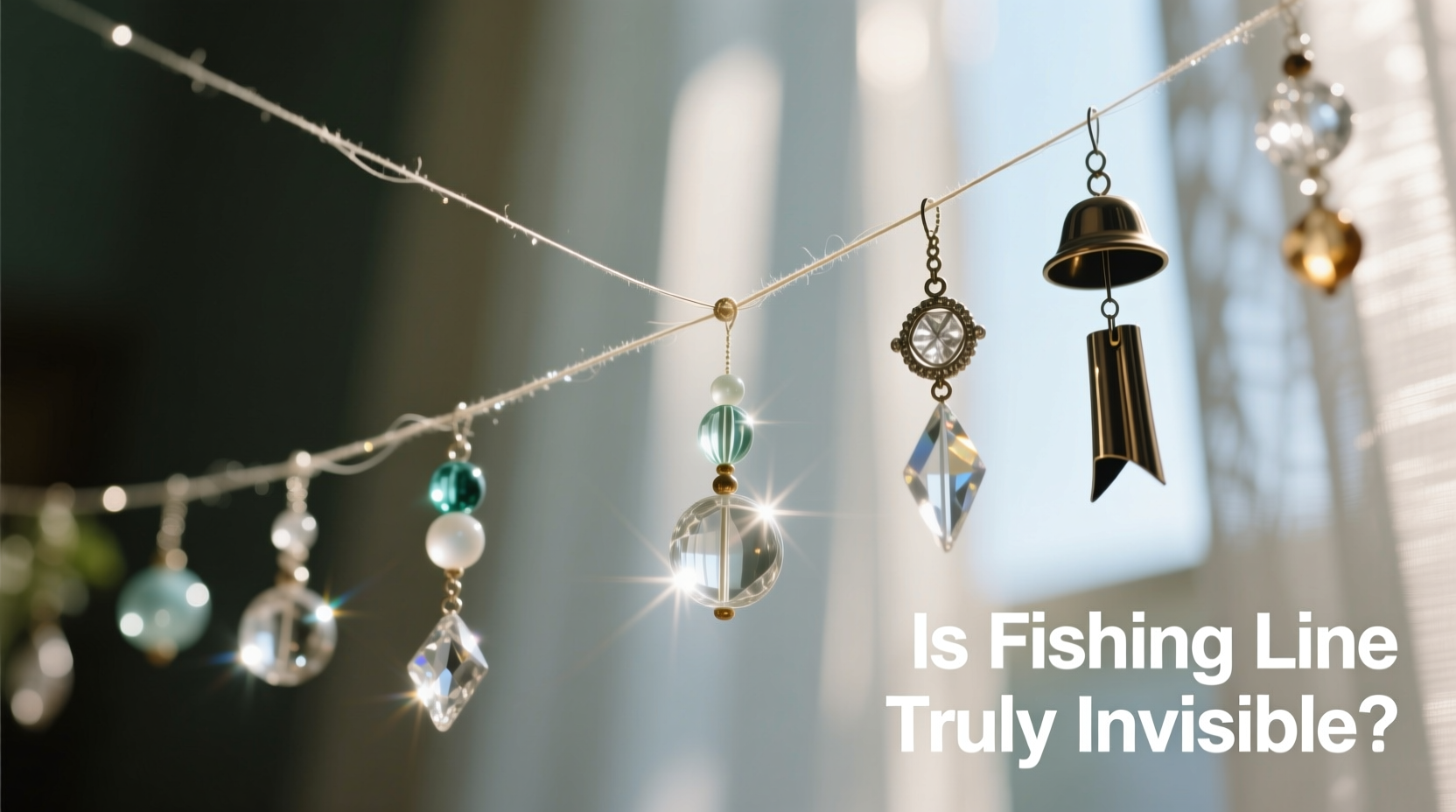
Fishing line is typically made from nylon or fluorocarbon, both of which are transparent polymers. While they allow light to pass through, they do not disappear completely. The perception of visibility depends on several physical factors: refractive index, surface texture, ambient lighting, viewing angle, and background contrast.
Nylon monofilament has a refractive index close to 1.55, meaning it bends light slightly more than air but less than glass. When surrounded by air and viewed against a busy background—like a lit Christmas tree—the line can scatter light and create faint glints. Fluorocarbon, with a refractive index closer to water (1.42), tends to blend better in certain environments because it bends light more similarly to natural surroundings.
However, no transparent material is truly invisible. What matters most is whether the human eye detects it under typical viewing conditions. In dim, diffused lighting, fishing line often recedes from attention. But under direct spotlights, chandeliers, or sunlight streaming through a window, even high-quality line can produce specular highlights—tiny flashes that draw the eye like misplaced stars.
“Transparency isn’t the same as invisibility. All materials interact with light. The goal in decorative use is minimizing detection, not achieving magic.” — Dr. Lena Torres, Optical Physicist, University of Colorado Boulder
Real-World Performance: Where Fishing Line Succeeds and Fails
To evaluate real-world effectiveness, consider three common display scenarios:
- Indoor tree decoration: On a well-lit artificial or real tree with multi-directional mini lights, fishing line generally performs well. The complexity of the branches and shimmering bulbs distracts the eye, making thin (4–6 lb test) monofilament nearly undetectable from a distance of 3 feet or more.
- Ceiling or wall-mounted displays: When suspending ornaments over a dining table or in a gallery-style arrangement, visibility increases. Open space offers fewer visual distractions, and overhead lighting creates strong angles where reflections occur.
- Window or sunlit room installations: Direct sunlight is the harshest test. Even ultra-clear fluorocarbon lines can flare under midday sun, especially when viewed at acute angles. In these cases, what begins as an elegant display may end up looking like a spiderweb caught in a spotlight.
Comparative Analysis: Fishing Line vs. Alternatives
While fishing line is affordable and widely available, it's not the only option for invisible suspension. Below is a comparison of common methods used by professional stylists and interior designers.
| Method | Visibility Level | Strength | Best For | Drawbacks |
|---|---|---|---|---|
| Nylon Fishing Line (4–6 lb) | Moderate (low in dim light) | High | Heavy ornaments, indoor trees | Glare under direct light, slight stretch over time |
| Fluorocarbon Line | Low | High | Sunlit rooms, ceiling hangs | More expensive, stiffer to handle |
| Clear Thread (quilting or beading) | High (visible up close) | Low to moderate | Lightweight decor, craft projects | Limited weight capacity, frays easily |
| Invisible Hanging Wire (stainless steel micro-cable) | Very low at distance | Very high | Large installations, galleries | Costly, requires hardware |
| Double-Sided Tape / Adhesive Strips | None (but limits placement) | Low (humidity-sensitive) | Flat ornaments on windows/mirrors | Not reusable, residue risk |
For most home decorators, fluorocarbon fishing line offers the best balance between cost, strength, and near-invisibility. However, those staging photo shoots or designing high-end displays often invest in micro-cables or rigging systems used in museum exhibitions.
Pro Techniques to Minimize Visibility
Even the clearest line can fail if installed poorly. The key to achieving true “invisibility” lies not just in the material, but in how it’s used. Follow these tested strategies to reduce detectability.
1. Choose the Right Gauge
Thinner lines are less visible. Opt for 2–6 pound test monofilament or fluorocarbon. Avoid heavy-duty lines (10+ lb), which have a thicker diameter and catch more light.
2. Control Lighting Angles
Position lights so they don’t shine directly onto the line. Use warm, diffused lighting rather than focused beams. LED string lights with omni-directional glow help obscure fine threads.
3. Match Background Complexity
Hang ornaments against textured or cluttered backdrops—like pine boughs, tinsel garlands, or layered wreaths. The busier the background, the harder it is to isolate a thin line.
4. Use Dual Anchoring Points
Instead of a single vertical line, use two short strands attached diagonally from opposite sides of the ornament to the support structure. This reduces sway and minimizes the length of exposed line.
5. Pre-Stretch and Clean the Line
New fishing line often has a slight oil coating and memory curl. Wipe it with rubbing alcohol and stretch it gently between your hands before use. This removes residues that attract dust and reduces kinks that catch light unevenly.
Tip: Run the line through a lint-free cloth dampened with isopropyl alcohol to remove manufacturing residue—this eliminates microscopic films that increase reflectivity.Mini Case Study: A Designer’s Holiday Window Display
Jamie Reed, a visual merchandiser based in Portland, was commissioned to create a holiday window display for a boutique featuring delicate glass orbs seemingly floating in air. The client wanted a “dreamlike levitation” effect with zero visible supports.
Jamie initially used standard nylon fishing line (6 lb test). During daytime walkthroughs, the display looked elegant. But during evening photography under store spotlights, the lines created distracting halos around each orb. After reviewing test footage, Jamie switched to fluorocarbon line and repositioned the lights to shine upward from below, grazing the ornaments without hitting the suspension lines directly.
The result? From street level, the orbs appeared to hover effortlessly. Only upon pressing one’s face to the glass could the thinnest hint of support be seen—and even then, only at a sharp angle. The revised setup succeeded because it combined the right material with intelligent lighting design.
“When invisibility is the goal, you’re not just choosing a thread—you’re choreographing light, angle, and perception.” — Jamie Reed, Visual Designer
Step-by-Step Guide: How to Hang Ornaments with Near-Invisible Results
Follow this sequence for optimal clarity and stability:
- Select fluorocarbon line (4–6 lb test) – Purchase a spool labeled “high clarity” or “low refractive index.”
- Cut and pre-treat the line – Cut 6–12 inch lengths (depending on drop height), then wipe each with alcohol-soaked cloth.
- Stretch lightly – Pull each strand firmly between gloved hands to remove coil memory.
- Attach to ornament – Loop the line through the ornament’s hook or cap. For glass pieces, tie a small knot at the end and secure with a dot of clear-drying glue (avoid cyanoacrylate, which can fog glass).
- Anchoring strategy – Secure the top end to a discreet point: tree branch, ceiling pin, wire frame, or adhesive hook painted to match the wall.
- Adjust spacing and alignment – Step back frequently during installation. View from multiple angles, including where guests will stand.
- Test under final lighting – Turn on all intended lights at night. Walk around the display slowly. If you see glints, adjust line position or add diffusion (e.g., sheer fabric behind the scene).
Common Mistakes That Reveal the Line
Even experienced decorators fall into traps that compromise the illusion. Avoid these errors:
- Using old or dusty line: Over time, fishing line collects dust and static, increasing visibility. Replace annually.
- Overloading a single strand: Stretching causes micro-thinning and irregular light refraction. Use multiple supports for heavy ornaments.
- Ignoring ambient reflections: Mirrors, glass tables, or polished floors can reflect the underside of the line, revealing it from unexpected angles.
- Poor knot placement: Bulky knots near the ornament break the clean line. Keep knots tight and hidden within the cap or behind decorative elements.
Frequently Asked Questions
Can I use regular thread instead of fishing line?
Regular thread (like polyester or cotton) is usually more visible due to fibrous texture and lower tensile strength. It also lacks the smooth surface needed to minimize glare. Fishing line is superior for both durability and optical performance.
Does colored fishing line work better?
No. Green or blue-tinted lines are designed to blend underwater, not in air. They often appear more obvious indoors because their hue contrasts with neutral backgrounds. Always use crystal-clear line for decorative purposes.
How long does fishing line last in a display?
Monofilament degrades under UV exposure. Indoors, away from direct sunlight, it can last 2–3 seasons. Fluorocarbon resists UV better and may last 4–5 years. Inspect annually for brittleness or cloudiness.
Checklist: Achieving Truly Discreet Ornament Suspension
Before finalizing your display, go through this checklist:
- ☐ Used fluorocarbon or high-clarity nylon line (4–6 lb test)
- ☐ Pre-stretched and cleaned each line segment
- ☐ Anchored securely with minimal slack
- ☐ Tested visibility from 3 primary viewing angles
- ☐ Adjusted lighting to avoid direct reflection on lines
- ☐ Ensured no dust or smudges on line or ornaments
- ☐ Verified weight distribution—no single line overloaded
Conclusion: Managing Expectations for the “Invisible” Effect
Fishing line does not make ornaments truly invisible—but in the right context, it comes remarkably close. Its success hinges on understanding optics, selecting quality materials, and applying thoughtful installation techniques. Under ideal conditions—diffused lighting, complex backgrounds, and proper line treatment—monofilament can vanish into the visual noise of a festive display. But in harsh light or minimalist settings, it may still catch the eye.
The truth is, perfect invisibility is less important than effective illusion. What matters is whether the viewer perceives magic, not mechanics. With careful planning, fishing line remains one of the most accessible and effective tools for creating that sense of wonder.
💬 Have you tried using fishing line for holiday decor? Share your results, tricks, or challenges in the comments—your experience could help others master the art of invisible ornament hanging!








