
In the fast-moving world of social media, content is king—and visuals reign supreme. Whether you're crafting Instagram Reels, TikTok videos, or YouTube Shorts, the quality of your imagery can influence engagement, credibility, and audience growth. As smartphone manufacturers push the limits with cameras boasting 200-megapixel sensors, many creators face a pressing question: Is upgrading to a 200MP camera phone actually beneficial, or is it just marketing hype?
The short answer: It depends on how you create and what kind of content you produce. While higher megapixels suggest sharper images, real-world performance involves more than just numbers. Sensor size, pixel binning, software processing, lighting conditions, and platform compression all play critical roles in determining whether that extra resolution translates into meaningful creative advantages.
Understanding Megapixels: What 200MP Really Means
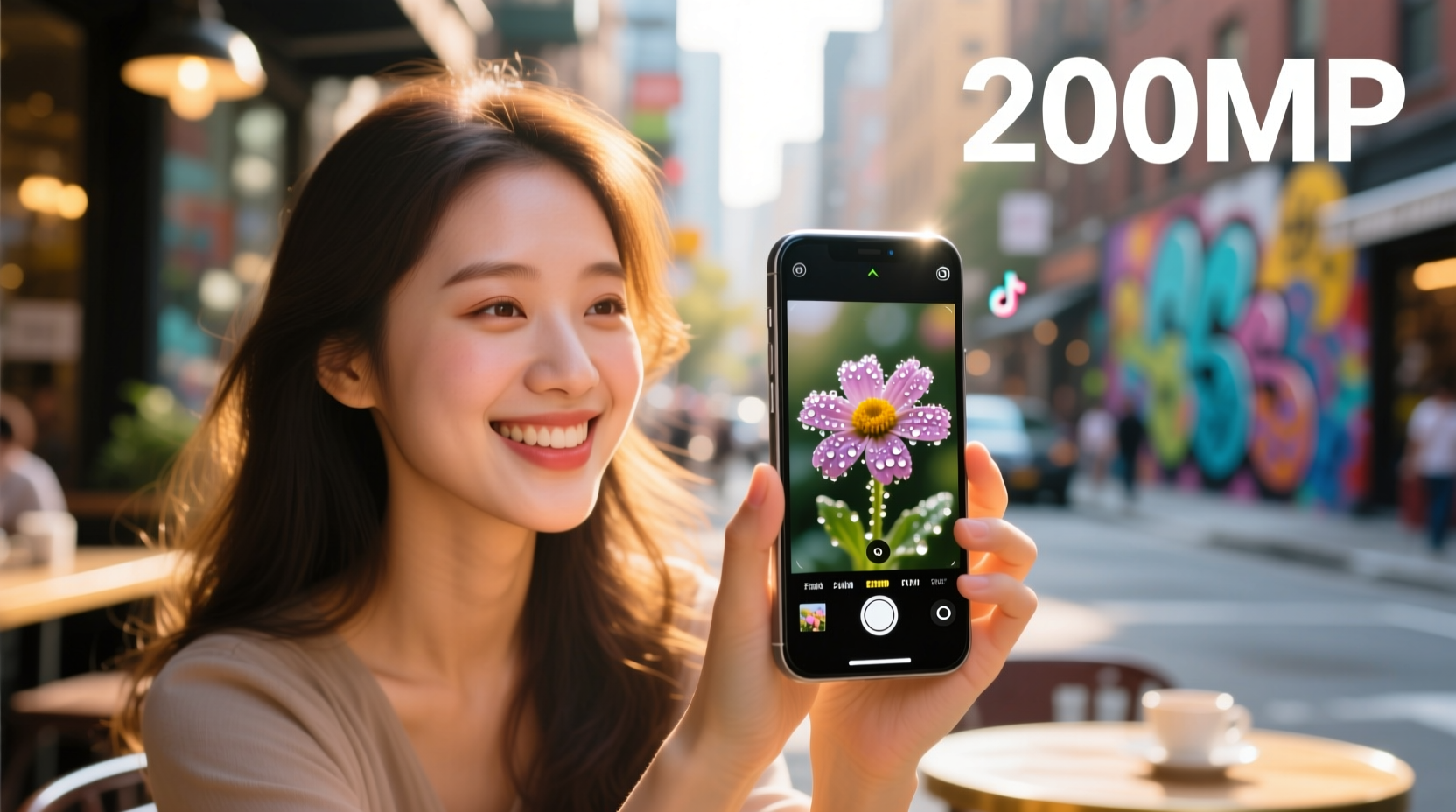
Megapixels measure the total number of pixels in an image sensor. A 200-megapixel sensor captures approximately 200 million pixels per photo—far beyond the 12MP standard found in most flagship phones just a few years ago. On paper, this sounds like a massive leap in detail, allowing for extreme cropping and large-format printing without losing clarity.
However, most 200MP cameras don’t output full-resolution images by default. Instead, they use a technique called pixel binning, where groups of smaller pixels are combined into one larger virtual pixel. For example, Samsung’s 200MP sensor typically outputs a 12MP or 50MP image using 4-in-1 or 16-in-1 binning, improving low-light performance and dynamic range while reducing file sizes.
This means the full 200MP resolution is only used in specific modes, often requiring good lighting and steady hands. In everyday shooting, especially for social media, the difference between a 12MP shot from a mid-tier phone and a binned 12MP shot from a 200MP sensor may be subtle unless scrutinized at full zoom.
Tip: Enable the high-resolution mode only when capturing static scenes in bright light—otherwise, rely on default binned output for better overall image quality.Real-World Benefits for Content Creators
For social media creators, the true value of a 200MP camera lies not in raw specs, but in how it enhances workflow, flexibility, and final output. Let’s examine key scenarios where high-resolution sensors offer tangible benefits:
- Heavy Cropping Without Quality Loss: When filming vertical video or shooting wide group shots, being able to crop tightly in post without sacrificing sharpness is invaluable. A 200MP still allows significant digital zoom after capture.
- Print-Ready Still Photography: Creators who also sell prints or use photography in merch design benefit from ultra-high-resolution files.
- Future-Proofing Content: Higher resolution gives room for reformatting across platforms (e.g., extracting stills from video or repurposing content).
- Improved Detail in Well-Lit Environments: Under optimal conditions, 200MP shots reveal textures and fine details that lower-resolution sensors miss—ideal for product photography or fashion content.
That said, these benefits are situational. Most social platforms compress uploaded images and videos aggressively. Instagram, for instance, caps feed photos at around 1080px width. Even TikTok limits video resolution to 1080p for most users. This means much of the detail captured by a 200MP sensor gets stripped away during upload.
“More megapixels aren’t always better if the final delivery medium doesn’t support them. The bottleneck isn't the camera—it's the platform.” — Lena Torres, Mobile Photography Educator & Creator Coach
Camera Tech Beyond Megapixels
Focusing solely on megapixels ignores other critical components that define image quality:
| Feature | Why It Matters More Than Megapixels |
|---|---|
| Sensor Size | Larger sensors capture more light, resulting in cleaner images in low light—a common challenge for indoor creators. |
| Aperture (f-stop) | A wider aperture (e.g., f/1.8) lets in more light and creates pleasing background blur (bokeh), enhancing visual storytelling. |
| Image Stabilization | Optical (OIS) and electronic (EIS) stabilization reduce shake, crucial for handheld vlogging and smooth transitions. |
| Software Processing | AI-enhanced HDR, noise reduction, and color tuning often have a bigger impact on final look than raw resolution. |
| Video Capabilities | 4K/60fps, log profiles, and microphone input matter far more for video-first creators than still photo resolution. |
In fact, many professional creators prioritize consistent color science, reliable autofocus, and clean audio over sheer pixel count. A phone like the iPhone 15 Pro or Google Pixel 8 Pro delivers excellent results with “only” 48MP main sensors because their computational photography and ecosystem integration are finely tuned.
Mini Case Study: Travel Creator Evaluates the Upgrade
Jamie Lin, a travel content creator with 420K followers on Instagram, upgraded from a 12MP iPhone 13 to a 200MP Samsung Galaxy S24 Ultra. Over three months, she tested both devices in real-world scenarios: sunrise timelapses in Bali, street food reels in Bangkok, and hiking vlogs in the Swiss Alps.
Her findings were mixed. The 200MP mode excelled when capturing detailed landscapes—she was able to crop into distant mountain peaks and still retain usable resolution for close-up thumbnails. However, in low-light situations or fast-paced environments, the iPhone produced more natural colors and faster shot-to-shot response.
“I used the 200MP setting maybe five times total,” Jamie noted. “Most of my content is consumed on mobile screens. People aren’t zooming in on my photos. They care about mood, story, and pacing—not whether I can resolve individual leaves on a tree 100 feet away.”
She concluded that while the upgrade offered niche advantages, her workflow didn’t fundamentally improve. She now uses the Android device selectively—for landscape photography—but continues relying on her older iPhone for daily posting.
When a 200MP Phone Makes Sense
Despite the limitations, certain types of creators stand to gain real value from a 200MP upgrade:
- Product Photographers: Those showcasing jewelry, cosmetics, or intricate crafts benefit from microscopic detail and lossless cropping.
- Architectural & Interior Visualizers: High-resolution sensors help capture expansive rooms with clarity, allowing selective framing later.
- Hybrid Creators: If you publish both social content and high-res print work (e.g., coffee table books, exhibitions), having native 200MP files adds long-term versatility.
- Reviewers & Tech Influencers: Demonstrating camera capabilities requires pushing hardware to its limits, making high-MP modes useful for comparison content.
Even then, success depends on mastering the tools. Shooting in 200MP mode often requires a tripod, manual settings, and longer processing time—hardly ideal for spontaneous content creation.
Tip: Use a timer or remote shutter to minimize shake when shooting in full-resolution mode. Even slight movement can ruin fine detail.Step-by-Step: Maximizing a 200MP Camera for Social Media
If you’ve already upgraded—or are considering one—follow this sequence to get the most out of your high-resolution sensor:
- Assess Your Needs: Determine if your content regularly demands extreme detail or cropping. If not, focus on optimizing lighting and composition instead.
- Shoot in Optimal Conditions: Use 200MP mode only in bright daylight or well-lit studios. Avoid dim environments where noise will degrade the image.
- Stabilize the Device: Use a mini tripod, grip, or rest your arms against a surface to prevent motion blur.
- Enable Pro Mode: Adjust ISO (keep under 400), set shutter speed appropriately, and shoot in RAW if supported for maximum editing flexibility.
- Edit Strategically: Crop and extract frames only as needed. Don’t force 200MP usage where 12MP suffices—smaller files save storage and bandwidth.
- Compress Before Uploading: Resize images to 1080–1440px wide before posting to avoid unnecessary load times and platform compression artifacts.
Checklist: Should You Upgrade?
Before investing $1,000+ in a new phone, ask yourself the following:
- ☑ Do I frequently need to crop into photos without losing detail?
- ☑ Am I creating content that benefits from print-level resolution?
- ☑ Do I shoot in controlled, well-lit environments where 200MP performs best?
- ☑ Is my current phone limiting my creativity due to poor dynamic range or noise?
- ☑ Can I commit time to learning advanced camera features and post-processing?
If fewer than three apply, your money might be better spent on lighting gear, audio equipment, or a dedicated compact camera.
Frequently Asked Questions
Does a 200MP photo look better on Instagram?
No. Instagram resizes and compresses all uploads, typically capping image width at 1080 pixels. Any detail beyond that is discarded, making the visual difference between 12MP and 200MP indistinguishable in the feed.
Can I record 200MP video?
No. Current smartphones do not support 200MP video recording. The highest video resolution available is 8K (around 33MP per frame), and even that is rarely used due to file size and limited playback support.
Are there downsides to 200MP photos?
Yes. Files can exceed 50MB each, consuming storage quickly. They also slow down sharing, editing, and backup processes. Additionally, full-resolution mode often disables HDR and AI enhancements, potentially reducing dynamic range.
Conclusion: Prioritize Purpose Over Pixels
A 200MP camera phone is an impressive technological feat, but for most social media creators, it’s not a game-changer. Platforms optimize for speed and compatibility, not archival-quality resolution. What matters more is consistency, authenticity, and storytelling—not whether your photo has 12 million or 200 million pixels.
Instead of chasing megapixels, invest in skills: learn lighting techniques, master audio clarity, refine your editing style, and deepen your connection with your audience. These elements have a far greater impact on content performance than sensor resolution ever will.
If you're drawn to a 200MP phone for reasons beyond pure specs—such as improved telephoto lenses, better battery life, or enhanced video features—then the upgrade may be justified. But don’t buy it solely for the headline number. True creative power comes not from how much detail you capture, but how meaningfully you use it.
🚀 Ready to elevate your content? Focus on mastering your current tools, experiment with composition, and share your journey. Great storytelling transcends specs—start creating today.








