By late 2025, the PlayStation 5 has been on the market for nearly five years. Most early adopters have already made the switch, and the console’s library of native titles is robust. Meanwhile, Sony continues to support the PS4 with patches and limited cross-gen releases. For those still holding onto a PS4—whether due to budget constraints, satisfaction with current performance, or uncertainty about benefits—the question remains: Is upgrading now still worth it?
The answer isn’t a simple yes or no. It depends on your gaming habits, expectations, and how much you value technological advancements. The PS5 isn’t just a faster version of the PS4—it represents a generational leap in responsiveness, immersion, and future-proofing. But with high-quality used PS4s available for under $200 and many games still playable across generations, the upgrade calculus has shifted.
Performance Gains: Beyond Just Speed
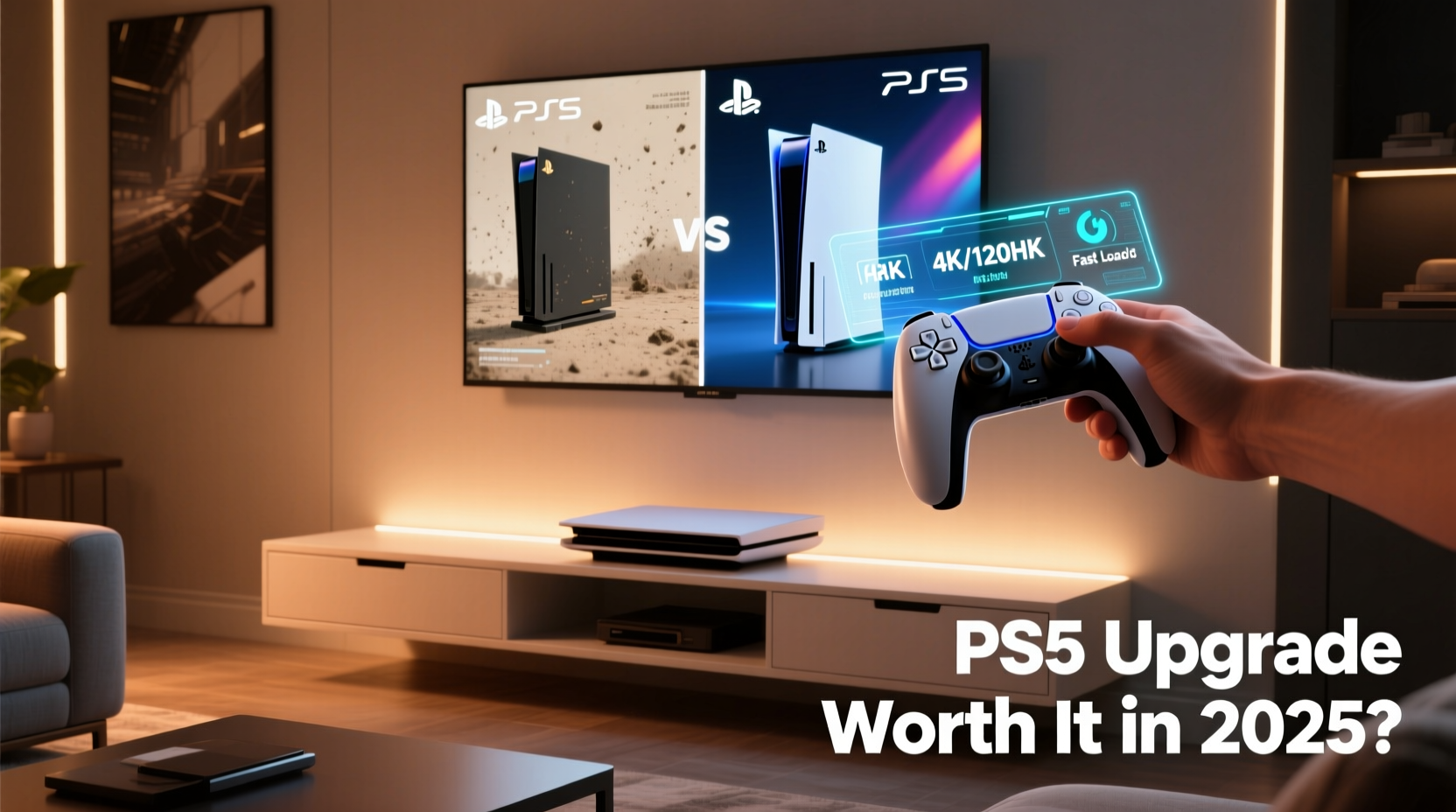
The most immediate difference between the PS4 and PS5 is raw performance. While the PS4 relied on a standard hard disk drive (HDD) and older AMD Jaguar architecture, the PS5 features a custom SSD, significantly more RAM bandwidth, and a modern CPU/GPU design based on AMD’s Zen 2 and RDNA 2 architectures.
This translates into real-world improvements:
- Near-instant load times: Games that took minutes to load on a PS4 often boot in under 10 seconds on a PS5.
- Higher and more stable frame rates: Titles like Spider-Man: Miles Morales and Horizon Forbidden West offer performance modes targeting 60fps consistently, whereas the PS4 versions frequently dip below 30fps during intense scenes.
- Improved resolution and texture clarity: Native PS5 versions render at higher resolutions (often up to 4K), with better dynamic lighting and draw distances.
- Faster fast-travel and menu navigation: Even within-game menus feel snappier thanks to the SSD.
Sony’s Game Boost technology also enhances select PS4 titles on PS5 hardware, allowing them to run at higher frame rates or with improved stability. For example, Ghost of Tsushima sees a more consistent 30fps on PS5 compared to frequent drops on PS4 Pro.
Backward Compatibility: How Much Does It Matter?
Sony markets the PS5 as having extensive backward compatibility with PS4 games—over 99% of the library works, according to official data. However, compatibility doesn’t mean identical experience.
While you can play most PS4 discs and digital purchases on a PS5, there are caveats:
- Some older PS4 titles don’t benefit from Game Boost unless specifically patched.
- PS4 VR titles require an adapter for use with PS5, and full PSVR2 integration is separate.
- DualShock 4 controllers only work with select PS4 games on PS5—not all.
For users with large PS4 libraries, this backward compatibility reduces friction. You’re not starting from scratch. But if your collection consists mostly of last-gen exclusives like The Last of Us Part II or God of War (2018), consider whether enhanced performance alone justifies the cost of a new console.
“Backward compatibility is great, but true next-gen experiences require native development. The PS5 unlocks design possibilities developers couldn’t explore on PS4.” — Marcus Reed, Senior Console Analyst at GameTech Insights
Exclusive Titles and Future Game Development
One of the strongest arguments for upgrading lies in exclusivity. By late 2025, Sony’s first-party studios have largely transitioned to PS5-only development.
Recent major releases such as Marvel’s Wolverine, Ghost of Yōtei, and the confirmed sequel to Returnal are built exclusively for PS5. These titles leverage advanced haptics from the DualSense controller, adaptive triggers, 3D audio via Tempest Engine, and intricate SSD-based level streaming—all features absent on PS4.
Even cross-platform franchises are shifting focus. Call of Duty and FIFA/EA Sports FC continue releasing on PS4, but their PS5 versions include significant quality-of-life improvements: faster matchmaking, richer visuals, and support for variable refresh rate (VRR).
| Feature | PS4 | PS5 |
|---|---|---|
| Storage Type | HDD (5400 RPM) | Custom NVMe SSD |
| Average Load Time (Modern Game) | 45–90 seconds | 3–8 seconds |
| Max Resolution | 1080p (up to 1440p on Pro) | Up to 4K HDR |
| Frame Rate Support | 30fps (60fps in select modes) | 60fps standard; 120fps in supported titles |
| DualSense Features | Not supported | Haptics, adaptive triggers, motion sensing |
| Backward Compatible PS4 Games | Native | Yes (with enhancements) |
If you primarily play multiplayer or indie games that release across platforms, the urgency to upgrade diminishes. But for fans of narrative-driven, visually intensive single-player experiences, the PS5 is increasingly becoming the only way to access the full scope of what modern gaming offers.
Real-World Example: Sarah’s Upgrade Decision
Sarah, a 32-year-old graphic designer from Portland, had owned a launch PS4 since 2014. She played casually—mostly story games like The Last of Us, Uncharted, and occasional online matches in Fortnite. By early 2025, she noticed friends raving about Horizon Forbidden West: Burning Shores and Final Fantasy XVI, both unavailable on PS4.
She considered buying a PS5 but hesitated due to cost. After renting a PS5 for a weekend through a local electronics store, she experienced:
- Loading into Horizon in under 5 seconds vs. over a minute on her PS4.
- Feeling raindrops and terrain changes through the DualSense’s haptic feedback.
- Playing in smooth 60fps with ray-traced reflections—a stark contrast to her PS4 Pro’s unstable performance.
Convinced by the sensory depth and fluidity, Sarah purchased a PS5 Digital Edition secondhand for $420. She transferred her digital library via Wi-Fi and kept her favorite PS4 games running with boosted performance. Within two months, she completed three PS5 exclusives she hadn’t previously considered possible on her old system.
Sarah’s case illustrates that while functional parity exists, the qualitative leap in immersion and responsiveness can redefine how you engage with games.
Cost-Benefit Analysis: Is the Price Justified?
In late 2025, PS5 pricing has stabilized. New models retail at:
- PS5 Standard (with disc drive): $499
- PS5 Digital Edition: $449
Used or refurbished units can be found between $350–$420, depending on condition and storage capacity. Many retailers also bundle popular games or offer trade-in credits for old consoles.
Meanwhile, a used PS4 can be purchased for $150–$250. For budget-conscious players, especially parents buying for children or casual gamers, this remains a viable option. However, longevity is a concern. Sony has reduced firmware updates for PS4, and third-party publishers are phasing out support.
Consider this timeline:
- 2025: Most AAA games still support PS4, but with degraded features.
- 2026: Major studios begin dropping PS4 versions; Sony may stop producing replacement parts.
- 2027 and beyond: PS4 likely enters legacy status, similar to PS3 post-2017.
Buying a PS4 in 2025 means investing in a platform with diminishing returns. Upgrading to PS5 extends your usable lifespan by at least another 5–6 years, aligning with the expected end of PS5 lifecycle around 2029–2030.
Tip: Look for bundles during holiday sales or back-to-school promotions. Retailers often include free games or subscriptions to PlayStation Plus, adding hundreds in value.Checklist: Should You Upgrade?
Use this checklist to evaluate your personal upgrade readiness:
- ✅ Do you own a 4K TV or monitor? → PS5 delivers full visual potential.
- ✅ Are you frustrated by long load times or frame rate drops? → SSD and GPU upgrades solve this.
- ✅ Do you want to play upcoming exclusives like Wolverine or Ghost of Yōtei? → Only available on PS5.
- ✅ Is your PS4 more than 5 years old? → Risk of hardware failure increases.
- ✅ Can you transfer your digital library? → Yes, via account sync.
- ✅ Are you using external drives for extra storage? → PS5 supports USB drives for PS4 games, but internal SSD expansion is faster.
If four or more apply, upgrading makes strong practical sense.
Frequently Asked Questions
Will PS4 games eventually stop working on PS5?
No official plans exist to disable backward compatibility. Sony has emphasized continuity, and disabling existing functionality would harm consumer trust. However, future PS6 backward compatibility with PS5 is not guaranteed.
Can I keep using my PS4 accessories on PS5?
Most USB peripherals (headsets, racing wheels) work. DualShock 4 works only with PS4 games on PS5. PS VR requires a camera adapter (free from Sony) and is incompatible with PSVR2 games.
Is the PS5 Digital Edition worth it if I have a lot of physical games?
If you own many PS4 discs, the standard PS5 with a disc drive preserves your investment. The Digital Edition saves money upfront but locks you into digital purchases moving forward.
Conclusion: A Strategic Move Toward the Future
Upgrading from PS4 to PS5 in late 2025 is less about catching up and more about positioning yourself for the next several years of gaming evolution. While the PS4 remains functional, it’s increasingly operating in a borrowed time window. Publishers are focusing resources on PS5, and the gap in experience—both technical and tactile—is widening.
The PS5 isn’t merely faster; it redefines interaction through immersive audio, responsive controls, and seamless world traversal. For gamers who value smooth performance, cutting-edge visuals, and access to exclusive content, the upgrade remains not just worthwhile, but necessary to stay engaged with modern game design.
Even at this stage in the console’s life cycle, the PS5 offers a decade-long horizon of relevance. Whether you choose new or refurbished, bundled or standalone, making the move now ensures you won’t face a steeper leap later.
🚀 Ready to experience gaming’s next chapter? Evaluate your needs using the checklist above, explore trade-in options, and take the step toward a faster, richer, and more immersive play experience today.








