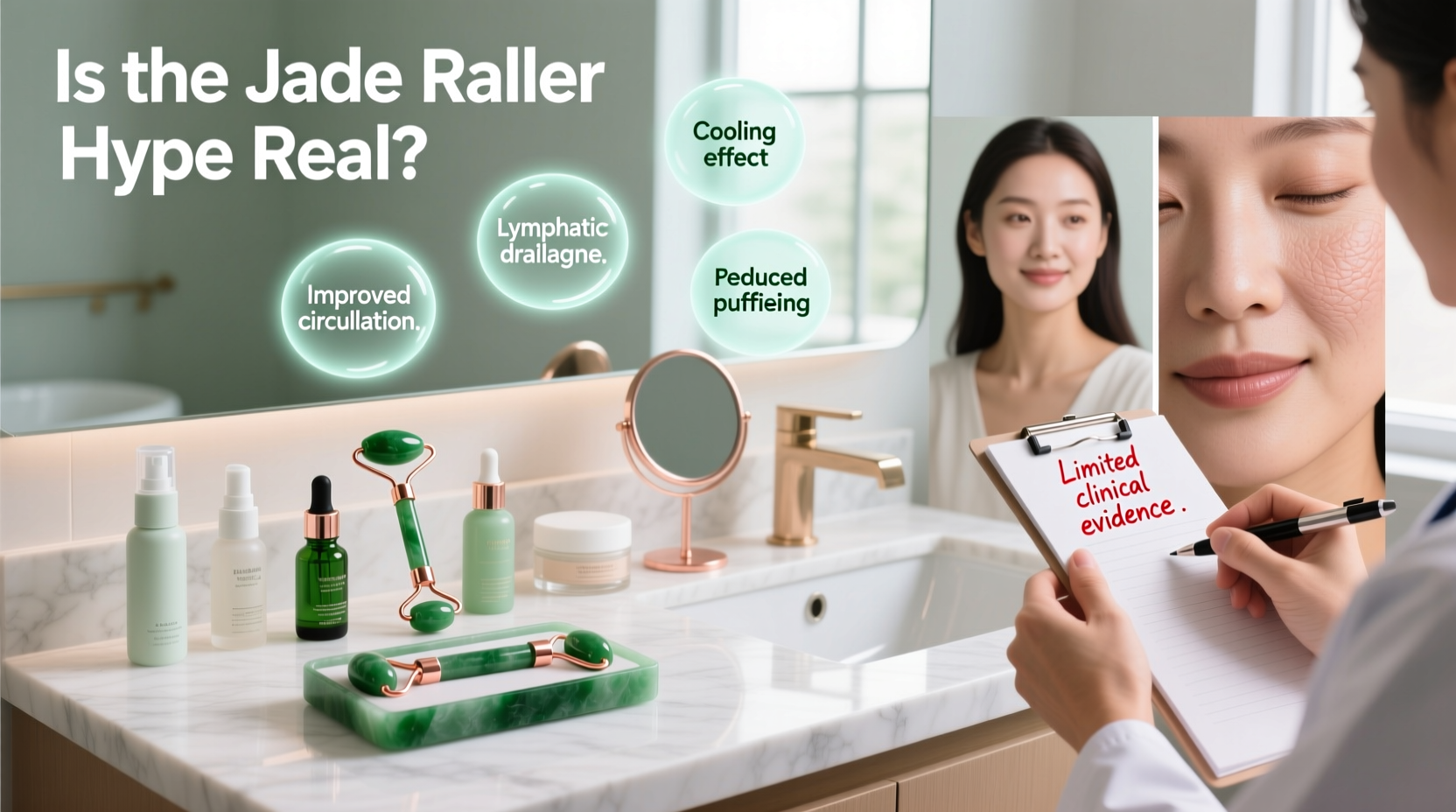
Jade rollers have become a staple in modern skincare routines, gracing bathroom counters and Instagram feeds alike. Marketed as tools for depuffing, enhancing circulation, and improving product absorption, their popularity has soared in recent years. But behind the glossy aesthetics and celebrity endorsements lies a critical question: do jade rollers actually deliver measurable skincare benefits, or is their appeal purely aesthetic and ritualistic?
To answer this, we need to look beyond the trend and into the physiology of the skin, existing scientific research, and dermatological perspectives. While anecdotal reports praise their soothing effects, understanding what’s truly happening beneath the surface helps separate marketing from measurable outcomes.
The Origins and Cultural Significance
Jade rolling traces its roots to traditional Chinese medicine (TCM), where jade has long been associated with healing, balance, and longevity. Historically, smooth stones were used in facial massage techniques believed to stimulate energy flow—known as \"qi\"—and promote overall wellness. The modern two-headed jade roller, typically featuring a larger end for cheeks and forehead and a smaller one for under-eyes and contours, evolved from these ancient practices.
Though rooted in tradition, today’s adoption of jade rollers is largely driven by Western beauty culture. Influencers tout them as essential tools for achieving “glass skin,” while brands position them as luxurious self-care accessories. This blend of heritage and contemporary branding contributes heavily to their allure—but doesn’t necessarily confirm efficacy.
Claimed Benefits vs. Scientific Evidence
Proponents of jade rollers often cite several key benefits:
- Reduced facial puffiness
- Improved lymphatic drainage
- Enhanced blood circulation
- Better absorption of serums and moisturizers
- Tension relief and muscle relaxation
Let’s evaluate each claim through the lens of available evidence.
Lymphatic Drainage and Puffiness Reduction
The most frequently cited benefit is reduced puffiness via stimulation of the lymphatic system. Lymphatic drainage involves moving excess fluid and waste products away from tissues. Since the face lacks major muscles to assist this process, gentle manual pressure—such as that applied during facial massage—can theoretically encourage fluid movement.
A 2020 review published in *Cosmetics* noted that mechanical stimulation, including facial massage devices, may temporarily reduce periorbital (under-eye) edema and improve contour definition. However, the studies referenced were small, short-term, and often lacked control groups. While results showed mild improvement, they did not conclusively prove that jade rollers outperform other forms of massage.
Tip: For maximum depuffing effect, store your jade roller in the refrigerator before use. The cold temperature enhances vasoconstriction, which can further minimize swelling.Circulation and Glow Enhancement
Facial massage increases local blood flow, leading to a temporary flush that gives skin a brighter, more awake appearance. This effect is well-documented and applies to any form of mechanical stimulation—not uniquely to jade rollers.
Dr. Lindsey Zubritsky, a board-certified dermatologist based in Pittsburgh, explains:
“Any repetitive motion on the skin will boost microcirculation. That rosy glow people see after using a jade roller isn't magic—it's increased blood flow. But it’s transient, lasting maybe 20 to 30 minutes.”
In essence, the radiance achieved post-rolling is real but temporary. It does not equate to long-term skin health improvements such as collagen production or wrinkle reduction.
Serum Absorption and Product Penetration
Manufacturers often claim that rolling helps skincare products penetrate deeper into the skin. While massage can enhance delivery slightly by increasing permeability and spreading products evenly, there’s no clinical evidence that jade rollers significantly improve absorption compared to fingertip application.
In fact, over-rolling on damp or wet skin could dilute active ingredients or cause tugging if too much pressure is applied—especially problematic for delicate areas like the eye contour.
Material Matters: Why Jade?
While some rollers are made from rose quartz or amethyst, jade remains the most popular choice due to its cultural symbolism and cool retention properties. Nephrite jade, the authentic mineral used in quality rollers, naturally stays cool to the touch, providing a soothing sensation when glided across the skin.
However, many affordable rollers on the market are made from synthetic materials or dyed stones that don’t retain cold temperatures effectively. Authenticity varies widely, and without certification, consumers may unknowingly purchase ineffective imitations.
| Roller Material | Thermal Retention | Durability | Common Issues |
|---|---|---|---|
| Nephrite Jade | High | Very durable | Expensive; frequent counterfeits |
| Rose Quartz | Moderate | Durable | Less cooling effect than jade |
| Synthetic Stone/Resin | Low | Porous, prone to cracking | May harbor bacteria; poor glide |
“Just because something feels nice doesn’t mean it’s doing anything biologically significant.” — Dr. Ranella Hirsch, former president of the American Society for Dermatologic Surgery
Practical Guide: How to Use a Jade Roller Effectively
If you choose to incorporate a jade roller into your routine, technique matters. Improper use can lead to skin irritation, stretch marks, or ineffective results. Follow this step-by-step guide for optimal practice:
- Cleanse your face. Start with a clean canvas to avoid pushing dirt or oil into pores.
- Apply a serum or facial oil. Use a slippery base to reduce friction. Water-based gels may dry too quickly.
- Chill the roller (optional). Place it in the fridge for 10–15 minutes for added depuffing benefits.
- Begin at the center of the face. Use upward and outward motions, following lymphatic pathways.
- Under-eyes: Gently roll from inner corner to outer corner using the small end.
- Cheeks: Start at the nose and roll outward toward the ears.
- Forehead: Roll from the center outward, then upward toward the hairline.
- Jawline: Roll from chin along the jaw toward the lymph nodes below the ears.
- Repeat 3–5 times per area. Avoid excessive pressure—let the weight of the tool do the work.
- Clean after each use. Wash with lukewarm water and mild soap; dry thoroughly.
Real-World Example: A Weeklong Test
Samantha, a 34-year-old graphic designer, decided to test a genuine nephrite jade roller every morning for seven days. She had moderate morning puffiness and was curious whether the tool would make a visible difference.
She followed proper technique, applying a hyaluronic acid serum before rolling for five minutes daily. By day three, she noticed her under-eyes appeared less swollen, particularly after nights with poor sleep. However, photos taken under consistent lighting showed minimal structural change. Her skin felt refreshed and the routine became a calming part of her mornings—but she concluded the visual improvements were subtle and likely amplified by the serum itself.
After a week, Samantha said: “It didn’t transform my skin, but I enjoyed the ritual. If anything, it made me more mindful about my skincare habits.”
This case illustrates a common experience: psychological and sensory benefits often outweigh dramatic physical changes.
Do’s and Don’ts of Jade Rolling
To get the most out of your jade roller—and avoid harming your skin—follow this checklist:
| Do’s | Don’ts |
|---|---|
| Use gentle, upward strokes | Press too hard or drag aggressively |
| Roll on damp or oiled skin | Use on dry or irritated skin |
| Clean the roller weekly | Share your roller (risk of bacterial transfer) |
| Store in a clean, dry place | Leave it in humid bathrooms |
| Pair with compatible products | Use over active acne or broken skin |
Expert Verdict: Worth It or Wellness Theater?
Dermatologists remain divided. Some acknowledge the value of facial massage as part of a holistic approach to skincare, even if benefits are modest.
Dr. Hadley King, clinical instructor of dermatology at Weill Cornell Medical College, states:
“Facial tools like jade rollers aren’t medical devices, but they can complement a good routine. The act of massaging may support lymphatic function and provide relaxation—which indirectly benefits skin health by reducing stress-related flare-ups.”
Others remain skeptical. “There’s zero evidence that jade has unique energetic properties,” says Dr. Elizabeth Tanzi, co-director of the Washington Institute of Dermatologic Laser Surgery. “Cold metal spoons do the same thing. It’s the motion and temperature that matter—not the stone.”
In truth, jade rollers fall somewhere between functional tool and mindfulness accessory. Their greatest strength may lie not in biological transformation, but in encouraging consistency in skincare rituals.
Frequently Asked Questions
Can jade rollers reduce wrinkles?
No credible evidence suggests jade rollers reduce wrinkles or fine lines. They do not stimulate collagen or elastin production in a clinically meaningful way. Anti-aging results are more effectively achieved through proven ingredients like retinoids, peptides, and sunscreen.
How often should I use a jade roller?
Daily use is safe if done gently. Many users prefer morning sessions to combat puffiness or evening use to unwind. Listen to your skin—if you notice redness or sensitivity, reduce frequency.
Are there hygiene risks?
Yes. Like any skincare tool, jade rollers can harbor bacteria, especially if stored in moist environments. Clean yours regularly with mild soap and water, and avoid sharing to prevent cross-contamination.
Final Thoughts: Separating Ritual from Results
The hype around jade rollers is partially justified—but only within realistic expectations. They offer mild, temporary improvements in puffiness and circulation, enhanced by the placebo effect of ritual and tactile pleasure. For many, the true benefit lies not in dermatological transformation, but in creating a moment of pause in a busy day.
If you enjoy the sensation, find it helps your products absorb more evenly, or simply love the aesthetic of having one on your vanity, a high-quality jade roller can be a worthwhile addition. Just don’t expect it to replace medical-grade treatments or deliver overnight rejuvenation.
Ultimately, skincare is both science and self-care. Tools like jade rollers may not alter your skin’s biology, but they can enrich your relationship with your routine—provided you use them wisely, keep them clean, and maintain perspective.
🚀 Ready to optimize your skincare ritual? Try a jade roller with intention—not expectation. Share your experience in the comments and help others navigate the line between beauty myth and mindful practice.








