For individuals managing knee pain or joint instability, finding a cardiovascular workout that doesn’t aggravate discomfort can be a challenge. Traditional high-impact exercises like running or jumping rope often worsen symptoms, leading many to search for gentler alternatives. Rebounding — the act of bouncing lightly on a mini trampoline — has gained attention as a low-impact, joint-friendly form of cardio. But is it truly beneficial for those with bad knees? The answer, supported by physical therapists and exercise scientists, is generally yes — when done correctly.
Rebounding combines cardiovascular conditioning with improved balance, coordination, and lymphatic circulation, all while exerting significantly less force on the joints than ground-based activities. This makes it an attractive option for people with osteoarthritis, post-injury recovery, or general knee sensitivity. However, not all rebounding routines are created equal, and technique matters just as much as frequency.
Why Low-Impact Cardio Matters for Knee Health
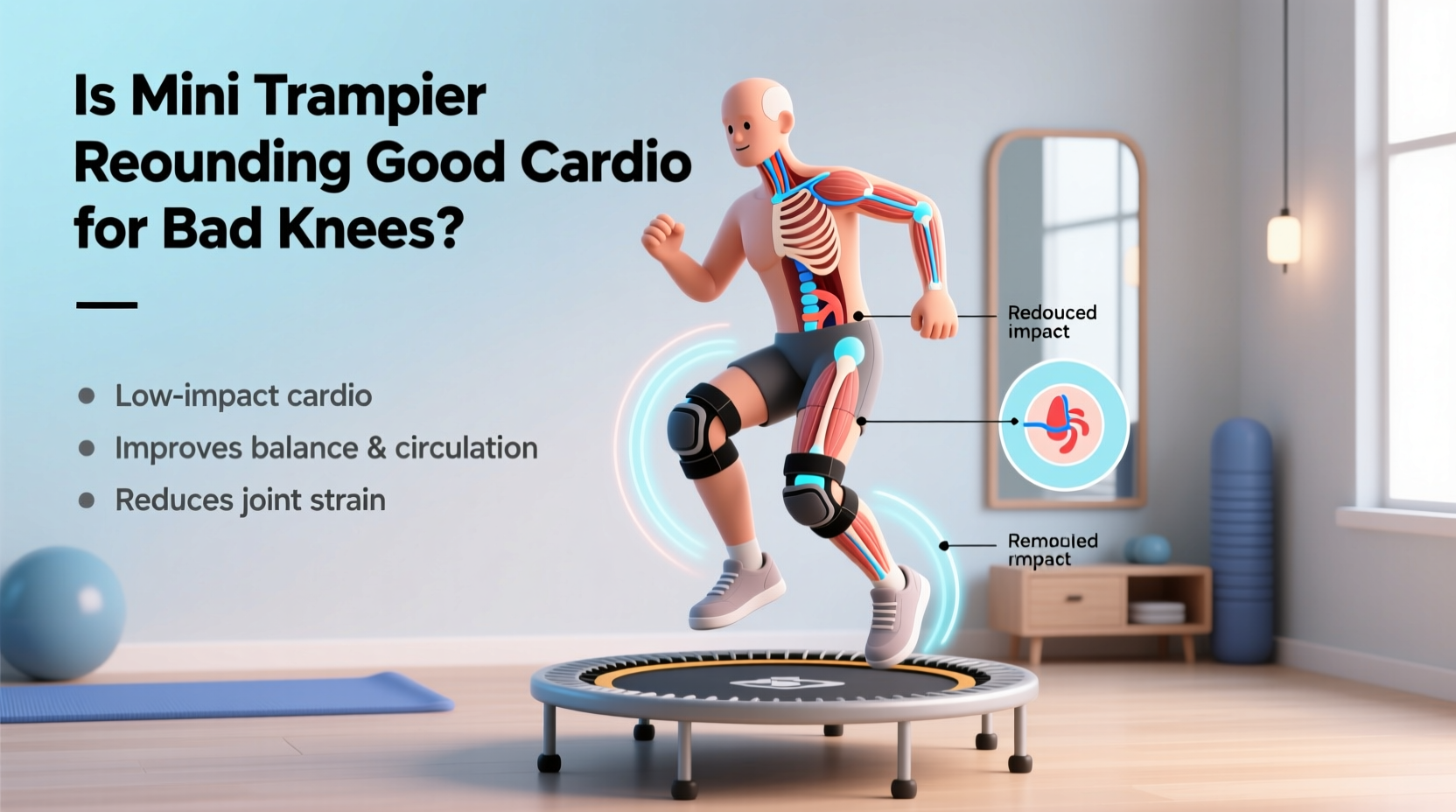
The knees bear the brunt of most weight-bearing movements. Every step, jump, or squat creates forces that travel through the patella, meniscus, and surrounding ligaments. For someone with degenerative changes, past injuries, or chronic inflammation, high-impact activities can accelerate wear and increase pain.
Low-impact cardio reduces stress on the joints while still elevating heart rate and improving circulation. Unlike jogging, which can generate impact forces up to 2.5 times body weight, rebounding absorbs up to 80% of gravitational force due to the trampoline’s elastic surface. This means the same cardiovascular benefit can be achieved with far less strain on the knee joint.
“Rebounding provides aerobic conditioning with minimal joint loading, making it one of the safest options for patients with mild to moderate knee osteoarthritis.” — Dr. Lena Torres, Physical Therapist and Movement Specialist
How Rebounding Supports Joint-Friendly Cardiovascular Fitness
The mechanics of rebounding create a unique combination of suspension and controlled landing. When you bounce gently — staying in constant contact with the mat (a technique known as “health bounce”) — the movement becomes cyclical and fluid, minimizing abrupt jolts.
During each bounce:
- The trampoline surface decelerates your descent, reducing peak impact.
- Muscles around the knee engage eccentrically to control landing, strengthening support without compression.
- Bone density stimulation occurs gently due to micro-gravitational shifts.
- Heart rate increases steadily, supporting cardiovascular endurance.
A 2016 study published in the Journal of Sports Science & Medicine found that participants who engaged in 20 minutes of moderate rebounding three times per week saw improvements in VO2 max comparable to treadmill walking, but reported lower perceived joint stress.
Tip: Always use the \"health bounce\" technique—keep your feet in light contact with the mat and avoid high jumps to protect your knees.Key Benefits of Mini Trampoline Workouts for Sensitive Knees
When performed mindfully, rebounding offers several advantages specifically beneficial for individuals with compromised knee function:
1. Reduced Ground Reaction Force
The spring or bungee system in quality mini trampolines disperses impact across the entire surface, drastically lowering the force transmitted to the knees compared to concrete or hardwood floors.
2. Enhanced Proprioception and Stability
The unstable surface of the trampoline requires subtle adjustments from stabilizing muscles in the ankles, hips, and core. Over time, this improves neuromuscular control, which helps prevent awkward movements that could strain the knees.
3. Improved Circulation and Swelling Management
Gentle bouncing encourages lymphatic drainage, which may reduce inflammation around arthritic or injured joints. Many users report decreased stiffness after consistent sessions.
4. Muscle Strengthening Without Excessive Load
Quadriceps, hamstrings, and glutes activate during each phase of the bounce. Because resistance comes from body weight and momentum rather than external load, strength gains occur without compressive stress on the knee joint.
5. Accessibility and Scalability
Rebounding can be adapted for nearly all fitness levels. A person recovering from surgery might start with seated bouncing, while someone with mild arthritis can progress to standing bounces with arm movements for added intensity.
Precautions and Best Practices for Safe Rebounding
While rebounding is generally safe, improper form or equipment choice can negate its benefits — or even cause harm. To ensure safety and effectiveness, follow these guidelines:
Choose the Right Equipment
Not all mini trampolines are suitable for therapeutic use. Look for models with:
- Sturdy, non-slip mats
- Spring or bungee systems designed for smooth rebound (avoid cheap coil-only models)
- A weight capacity exceeding your body weight by at least 50 pounds
- Stability bars or handrails, especially if balance is a concern
Master Proper Form
Stand centered on the mat with feet hip-width apart. Keep a slight bend in the knees and engage your core. Avoid locking joints or bouncing too high. Your goal is rhythm, not height.
Start Slowly
Begin with 5–10 minute sessions every other day. Gradually increase duration to 20–30 minutes as tolerated. If pain increases during or after rebounding, stop and reassess your technique or consult a healthcare provider.
| Do’s | Don’ts |
|---|---|
| Warm up with ankle circles and gentle knee bends | Bounce aggressively or perform high jumps |
| Wear supportive footwear or go barefoot on a clean mat | Use a worn-out or wobbly trampoline |
| Hold onto a wall or chair for balance if needed | Ignore sharp or persistent knee pain |
| Focus on smooth, rhythmic motion | Exercise through swelling or acute injury |
Step-by-Step Guide to Starting a Knee-Safe Rebounding Routine
Follow this structured approach to integrate rebounding into your weekly fitness plan safely and effectively.
- Week 1: Foundation and Familiarization
Perform 5-minute sessions every other day. Stand on the trampoline and practice shifting weight side to side and front to back. Try small, controlled bounces with soft knees. Goal: Build comfort and balance. - Week 2: Introduce Rhythmic Bouncing
Increase to 8–10 minutes. Use the health bounce technique: rise just enough to feel the mat release underfoot, then land softly. Add arm pumps (like marching) to elevate heart rate slightly. - Week 3: Build Duration and Coordination
Extend sessions to 15 minutes. Incorporate simple patterns like heel taps, gentle twists, or side-to-side leans. Maintain steady breathing and stop if discomfort arises. - Week 4 and Beyond: Consistent Conditioning
Aim for 20–30 minutes, 3–5 times per week. You may add light hand weights (1–2 lbs) or incorporate music for motivation. Monitor joint response closely.
Real Example: Mary’s Recovery Journey with Rebounding
Mary, a 62-year-old woman with bilateral knee osteoarthritis, had stopped exercising due to increasing pain from walking and stair climbing. Her doctor advised low-impact activity but cautioned against swimming due to shoulder issues. After researching options, she purchased a medical-grade rebounder with a stability bar.
Starting with seated bouncing for 5 minutes daily, she gradually progressed to standing bounces over six weeks. She incorporated gentle arm movements and focused on posture. Within two months, her morning stiffness decreased, and she was able to walk longer distances without discomfort. Her primary care physician noted improved lower limb strength during her next check-up and credited the consistency of her rebounding routine.
“I didn’t think I’d enjoy something that looked like a child’s toy,” Mary said. “But it’s the first exercise in years that doesn’t leave my knees aching. I do it while watching the news — it’s become part of my day.”
Frequently Asked Questions
Can rebounding make knee pain worse?
It can, if done incorrectly. High-impact bouncing, poor form, or using a low-quality trampoline may increase joint stress. Stick to low-amplitude bounces and stop immediately if pain intensifies. Consult a physical therapist before starting if you have severe arthritis or recent surgery.
Is rebounding better than walking for bad knees?
In some cases, yes. While walking is excellent for overall health, it generates continuous ground impact. Rebounding, particularly the health bounce, reduces joint loading while offering similar cardiovascular benefits. It also enhances balance more than flat-surface walking. However, both can be part of a balanced routine depending on tolerance.
How often should I rebound with knee issues?
Start with 5–10 minutes every other day. If well-tolerated, build up to 20–30 minutes, 3–5 times per week. Listen to your body — soreness is normal, but sharp or lasting pain is not. Adjust frequency based on how your knees respond.
Expert Recommendations and Final Insights
Physical therapists increasingly recommend rebounding as part of rehabilitative programs for lower limb conditions. Its ability to improve circulation, strengthen supporting musculature, and enhance joint proprioception makes it a multifaceted tool.
“Rebounding isn’t just about cardio — it’s about retraining movement patterns in a forgiving environment. That’s invaluable for people rebuilding confidence in their knees.” — Dr. Rajiv Mehta, Rehabilitation Specialist
However, experts emphasize that rebounding should complement, not replace, a comprehensive care plan. This includes strength training (especially for the glutes and quadriceps), flexibility work, proper nutrition, and, when necessary, medical interventions like bracing or injections.
Conclusion: A Sustainable Path to Cardiovascular Health with Compromised Knees
Rebounding on a mini trampoline is not only good cardio for people with bad knees — it may be one of the best options available. By combining cardiovascular stimulation with reduced joint impact, it allows individuals to stay active without sacrificing comfort or long-term joint health. With proper technique, gradual progression, and attention to body signals, rebounding can become a sustainable, enjoyable part of daily wellness.
The key lies in approaching it not as a high-energy workout trend, but as a mindful movement practice. Whether you're recovering from injury, managing arthritis, or simply seeking a gentler way to stay fit, rebounding offers real, science-backed benefits. Choose quality equipment, prioritize form over intensity, and let your knees guide your pace.
🚀 Ready to try rebounding safely? Start with five minutes today using the health bounce technique. Track how your knees feel over the next week — your journey to joint-friendly cardio begins now.








