For years, campers made do with the bare essentials: a flashlight, a cooler, and maybe a battery-powered radio. Today, modern outdoor adventures look different. Whether you're car camping with the family, overlanding through remote terrain, or hosting a weekend festival setup, access to electricity isn’t just convenient—it’s becoming essential. Portable power stations have surged in popularity, but many still wonder: are they really worth it if your needs go beyond charging phones?
The short answer is yes—especially when you consider what these compact energy hubs can power. But the real value lies not just in what they can run, but in how they transform the camping experience. From extending trip duration to improving safety and comfort, a portable power station does far more than keep your devices alive.
What Can a Portable Power Station Actually Power at Camp?
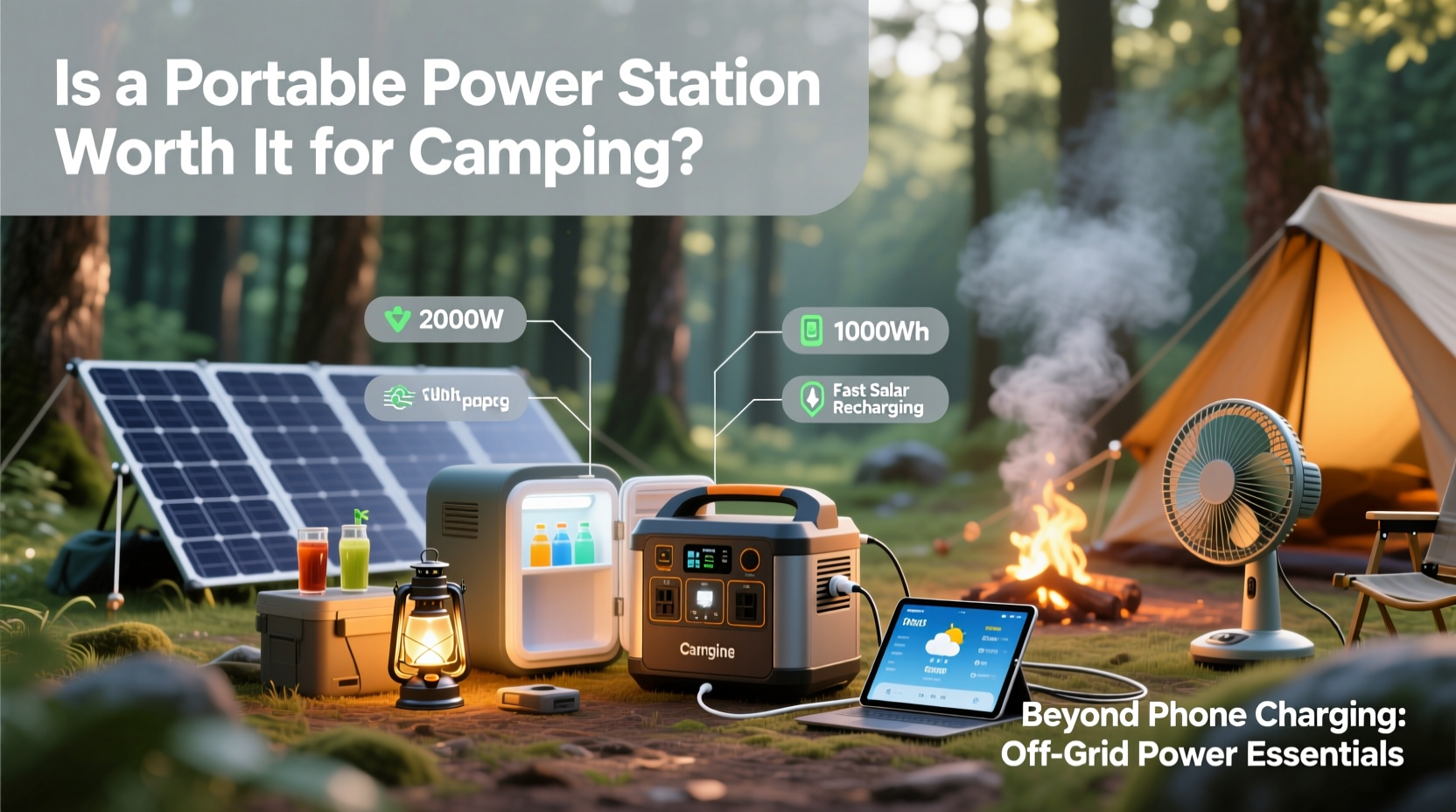
Modern portable power stations range from 300Wh to over 3,000Wh in capacity, with output capabilities that support everything from USB gadgets to full-size appliances. While most people initially think of them as glorified phone chargers, their versatility opens up a new tier of off-grid living.
Here’s a realistic breakdown of common camping gear powered by a mid-range (500–1000Wh) station:
| Device | Wattage | Runtime on 750Wh Station |
|---|---|---|
| Smartphone (full charge) | 10W | ~60 charges |
| Laptop | 60W | ~10 hours |
| Camping fridge (small, 12V/45W) | 45W | ~14 hours (with cycling, ~2–3 days) |
| LED lighting strip | 10W | ~60 hours |
| Coffee maker (electric drip) | 800W | ~45 minutes (one full pot) |
| Electric kettle | 1200W | ~30 minutes (if supported by inverter) |
| Fan (personal or tent-mounted) | 20W | ~30 hours |
| Ductless mini-split heater (low setting) | 600W | ~1 hour (only feasible with large units) |
Note that actual runtime depends on efficiency losses, temperature, and usage patterns. Still, this table illustrates that even modest-capacity units can handle multiple devices simultaneously and sustainably.
Tip: Prioritize low-wattage, high-efficiency appliances to maximize your station's usable time. For example, an electric pressure cooker uses less energy than a stovetop kettle.Real-World Use Cases That Justify the Investment
It’s one thing to list what a power station can run—it’s another to understand how it changes life in the wild. Consider these practical scenarios where a portable power station proves indispensable.
Extended Family Camping Trips
When traveling with children or elderly relatives, convenience becomes a necessity. A small refrigerator keeps baby formula cool, medications stable, and drinks chilled. Electric coffee makers eliminate the need for propane in the morning rush. Charging tablets and cameras ensures memories are captured without anxiety over dead batteries.
Overlanding and Remote Adventures
In off-grid locations, solar-charged power stations provide reliable backup energy. They power GPS units, satellite communicators like Garmin inReach, and dashcams during long drives. One overlander in Utah reported using a 1000Wh unit to run a CPAP machine nightly during a two-week desert expedition—something previously impossible without bulky generators.
“Portable power stations have quietly revolutionized backcountry accessibility. For medical device users, they’re not luxury—they’re lifelines.” — Dr. Lena Torres, Wilderness Medicine Specialist
Festival and Glamping Setups
Music festivals often lack reliable power. With a portable station, you can run string lights, Bluetooth speakers, and even a mini projector for movie nights. Glampers use them to power heated blankets, air mattresses with built-in pumps, and LED mood lighting—elevating comfort without sacrificing mobility.
Emergency Preparedness
Camping trips don’t always go as planned. Sudden storms, injuries, or vehicle issues require communication and navigation tools. A fully charged power station ensures your phone, walkie-talkies, and headlamps stay operational when help may be hours away.
Comparing Power Stations vs. Generators: Why Silent Energy Wins
Traditional gas generators have long been the go-to for high-power camping needs. But they come with significant drawbacks: noise, fumes, maintenance, and fuel logistics. Portable power stations offer a cleaner, quieter alternative—with trade-offs.
| Feature | Gas Generator | Portable Power Station |
|---|---|---|
| Noise Level | 70–90 dB (loud) | 0 dB (silent) |
| Fuel Source | Gasoline, propane | Battery (rechargeable) |
| Maintenance | Regular oil changes, carburetor cleaning | Nearly none |
| Indoor Use | Never safe (CO risk) | Safe anywhere |
| Recharging Options | Refuel only | Wall outlet, car port, solar panels |
| Lifespan | 5–10 years with care | 500–2000 charge cycles (~5–8 years) |
| Cost Over Time | Higher (fuel, maintenance) | Lower after initial investment |
While generators still win in raw output and refueling speed, power stations excel in usability, safety, and environmental impact. For most campers, especially those prioritizing peace and quiet, the silent operation alone makes them worth the premium.
Step-by-Step Guide: How to Maximize Your Power Station’s Utility
Getting the most out of your portable power station requires planning and smart usage. Follow this timeline before, during, and after your trip.
- Before the Trip – Assess Needs and Recharge
List all devices you plan to power. Calculate total watt-hours needed per day. Fully charge the station via wall outlet or solar array. If using solar, ensure panels are clean and angled correctly. - Pack Compatible Accessories
Bring necessary cables, adapters, and a DC-to-AC converter if needed. Include a solar charging kit if staying longer than two days without grid access. - At Camp – Optimize Placement and Usage
Place the unit in a shaded, dry area to prevent overheating. Connect high-draw devices (like kettles) only when necessary. Use energy-efficient settings—e.g., dim lights, low fan speeds. - During the Day – Recharge with Solar
If equipped with solar input, position panels south-facing (in the northern hemisphere) at a 30–45° angle. Monitor charge levels via app or display. Avoid shading—even partial shade reduces output significantly. - After Use – Store Properly
Don’t store the unit fully drained or fully charged. Aim for 50–80% capacity. Keep in a cool, dry place. Charge every 3–6 months if unused.
Mini Case Study: The Van Life Upgrade
Jamie and Taylor, a couple documenting their Pacific Coast road trip, initially relied on car charging and public outlets to power their gear. After investing in a 1,024Wh power station with dual solar inputs, their routine changed dramatically.
They powered a 40L compressor fridge continuously, ran a laptop for video editing, and used a portable induction cooktop for meals. Solar panels recharged the unit daily, even under partial cloud cover. Most importantly, Taylor, who uses a CPAP machine, no longer had to cut trips short due to power concerns.
“We used to plan around outlets,” Jamie said. “Now we can stop anywhere and still feel ‘plugged in.’ It’s freedom with comfort.”
Checklist: Is a Portable Power Station Right for Your Camping Style?
- ✅ Do you camp for more than one night regularly?
- ✅ Do you rely on electronic medical devices (e.g., CPAP, insulin cooler)?
- ✅ Do you bring refrigeration or cooking appliances?
- ✅ Do you value quiet, emission-free environments?
- ✅ Are you willing to invest $300–$1,500 upfront for long-term utility?
- ✅ Do you already own or plan to buy solar panels?
If you answered yes to three or more, a portable power station is likely a worthwhile investment.
FAQ: Common Questions About Portable Power Stations for Camping
Can I run an air conditioner with a portable power station?
Only very small, low-wattage units (e.g., personal evaporative coolers under 100W). Standard RV or window AC units require 1,000–3,500W and are impractical for battery power unless using industrial-grade systems.
How long does it take to recharge a power station with solar panels?
Depends on panel wattage and sunlight. A 200W solar panel in ideal conditions (direct sun, no clouds) can recharge a 1,000Wh station in 5–7 hours. Real-world conditions often extend this to 8–12 hours.
Are power stations safe to use in rainy conditions?
The units themselves should be kept dry, but many are splash-resistant. Never expose ports or outlets to direct water. Use a waterproof canopy or pop-up shelter for protection.
Conclusion: Beyond Convenience—A New Standard for Outdoor Living
A portable power station is more than a gadget. It’s an enabler of comfort, safety, and independence in the outdoors. While charging phones is its most visible function, its true value emerges when powering fridges, medical devices, lights, and kitchen tools—transforming temporary shelters into livable spaces.
For campers who want to disconnect from stress but stay connected to essentials, the investment pays off in flexibility, reliability, and peace of mind. As battery technology improves and prices decline, these units are shifting from niche accessories to standard gear—much like tents or sleeping bags were decades ago.
🚀 Ready to upgrade your camping experience? Evaluate your energy needs, compare models with solar compatibility, and take the step toward truly self-sufficient adventures. Share your power station tips or ask questions in the comments below—let’s build smarter outdoor habits together.








