
Hiking socks are more than just an afterthought—they’re a critical part of your trail performance. A poor choice can lead to blisters, discomfort, or even force you off the trail early. As outdoor enthusiasts weigh options between natural fibers like merino wool and engineered synthetic blends, one question keeps surfacing: is merino wool worth the higher price tag? The answer isn’t simple, but with a deeper look at moisture management, odor resistance, durability, and overall comfort, it becomes clear that value goes beyond cost per pair.
The Performance Breakdown: Merino Wool vs. Synthetic Blends
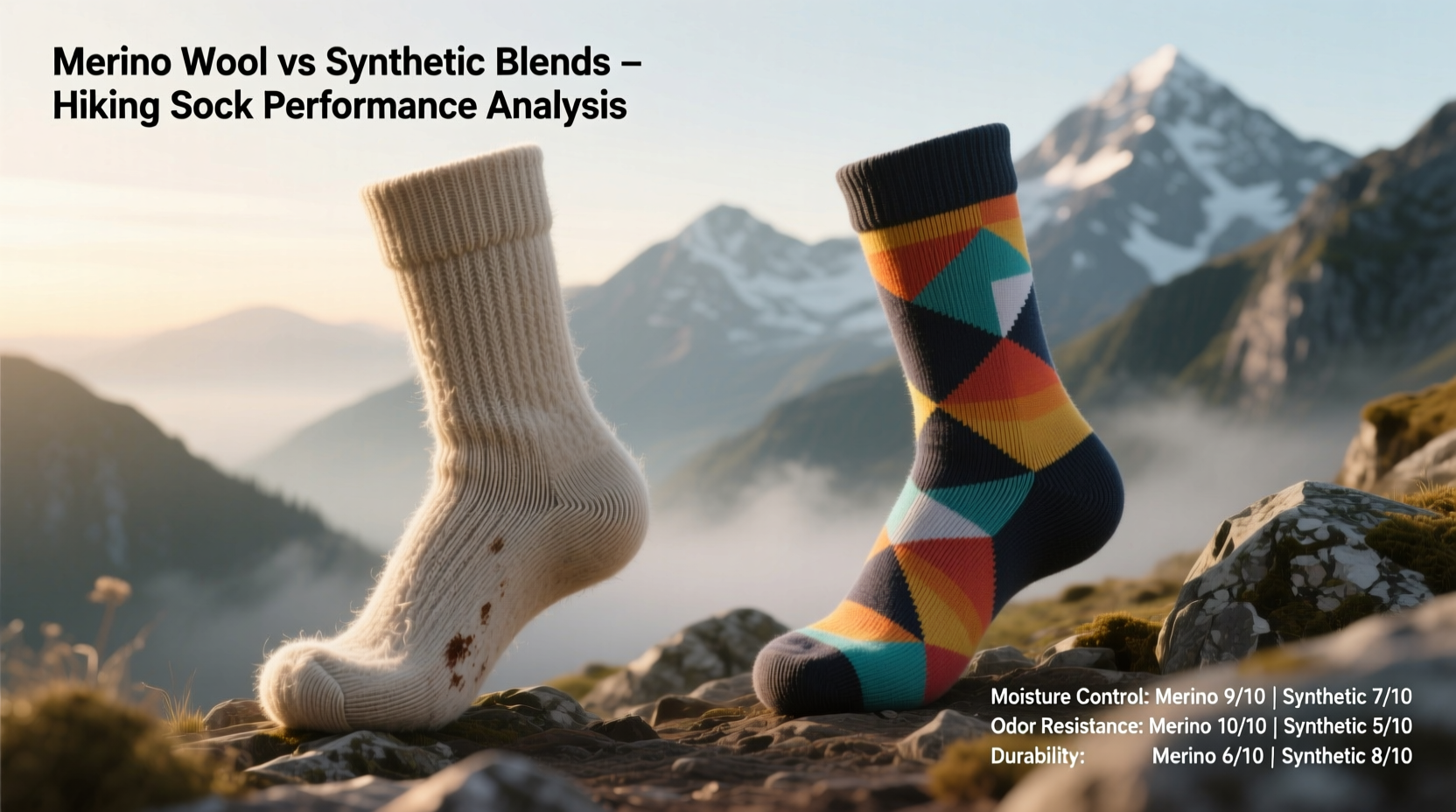
When comparing hiking socks, it's essential to evaluate them across key performance metrics. Merino wool and synthetic materials—typically nylon, polyester, or spandex blends—each have distinct advantages and trade-offs.
Moisture Management: Merino wool excels in wicking moisture away from the skin while retaining warmth even when damp. Unlike cotton, which holds water and increases friction, merino pulls sweat to the fiber’s surface where it evaporates. Synthetics also wick well, often faster than wool, but lack the same thermal regulation when wet.
Temperature Regulation: Merino naturally insulates in cold weather and breathes in heat, making it adaptable across seasons. Synthetics tend to trap heat, which can be a disadvantage on long summer hikes unless specifically designed for ventilation.
Odor Resistance: One of merino’s standout features is its natural resistance to odor-causing bacteria. This means you can wear merino socks multiple days without washing—ideal for backpacking trips. Most synthetics begin to smell within hours of heavy use unless treated with antimicrobial coatings, which degrade over time.
Comfort and Feel: Merino fibers are soft and non-itchy, unlike traditional wool. They conform to the foot with minimal friction, reducing blister risk. Synthetics can feel slick or abrasive depending on weave and blend, especially when seams are poorly constructed.
Tip: If you're prone to hot spots or blisters, prioritize seamless construction and cushioning zones regardless of material.Cost Analysis: Upfront Price vs. Long-Term Value
Merino wool socks typically cost 20–50% more than their synthetic counterparts. A quality pair ranges from $18 to $30, while basic synthetic hiking socks may be as low as $8–$12 per pair. But cost should be evaluated not just per purchase, but per mile worn.
High-quality merino socks often last 500–800 miles with proper care. Their natural resilience helps maintain shape and cushioning over time. In contrast, many synthetic blends lose elasticity after 200–400 miles, leading to slippage, compression loss, and reduced support.
Additionally, because merino resists odor, you wash them less frequently. Less laundering means slower degradation of fibers. Synthetics, needing frequent washing to stay fresh, break down faster in the wash cycle due to abrasion and heat exposure.
“Over a year of regular weekend hikes, I’ve replaced three pairs of synthetics but am still on my first set of merino wool socks.” — Daniel Reyes, Pacific Crest Trail thru-hiker
Comparison Table: Merino Wool vs. Synthetic Blends
| Feature | Merino Wool | Synthetic Blend |
|---|---|---|
| Moisture Wicking | Excellent (retains warmth when damp) | Very Good (fast-drying) |
| Odor Resistance | Natural and long-lasting | Chemical treatment required; fades over time |
| Durability (approx. miles) | 500–800 | 200–400 |
| Temperature Range | Cold to moderate (adaptable) | Best in cool to warm conditions |
| Care Frequency | Low (wear multiple days) | High (wash after each use) |
| Average Price (per pair) | $18–$30 | $8–$15 |
Real-World Case Study: A Weeklong Backpacking Trip in the Rockies
Jessica M., an experienced hiker, tested two sock systems during a seven-day trek through Colorado’s Maroon Bells-Snowmass Wilderness. She wore merino wool socks (Smartwool PhD Outdoor) on her left foot and a high-performance synthetic blend (Darn Tough Vertex) on her right.
Conditions included morning snowmelt crossings, afternoon temperatures near 75°F, and steep ascents above 11,000 feet. After five days, she noted significant differences:
- The synthetic sock developed a faint odor by day three, despite airing out at camp.
- The merino sock remained virtually odor-free and felt consistently dry, even after crossing streams.
- Both socks maintained cushioning, but the synthetic began to slip slightly around the heel by day six.
- Jessica reported no hot spots or blisters on either foot.
Her conclusion? “The merino didn’t perform better in blister prevention, but I trusted it more. I didn’t worry about dampness or stink. For multi-day trips, that peace of mind is worth the extra $10.”
When Synthetic Blends Make Sense
Despite merino’s advantages, synthetic blends still have a place in a hiker’s gear rotation. They shine in specific scenarios:
- Hot, humid environments: Synthetics dry faster than wool, which can remain damp longer in tropical climates.
- Swim hikes or water crossings: If you’re constantly soaking your socks, quick-dry synthetics may be more practical.
- Budget constraints: For casual hikers doing short trails, affordable synthetics offer adequate protection without major investment.
- Gym or trail running use: Short-duration activity doesn’t leverage merino’s long-term benefits, making synthetics a cost-effective alternative.
Some brands now offer hybrid models—merino blended with synthetic fibers—to balance performance and cost. These typically contain 60–70% merino with nylon or spandex for added durability and stretch. While they lose some odor resistance compared to pure merino, they maintain much of the comfort and temperature control.
Tip: Look for socks with reinforced heels and toes if you carry heavy packs or hike rocky terrain—this extends life regardless of material.Step-by-Step Guide: Choosing the Right Sock for Your Hike
- Assess your trip duration: For overnight or multi-day hikes, prioritize merino for odor resistance and comfort over time.
- Evaluate climate: Cold or variable conditions favor merino. Hot, wet environments may benefit from fast-drying synthetics.
- Consider pack weight: Heavy loads increase foot stress—choose cushioned socks with anatomical padding zones.
- Check fit and construction: Ensure no internal seams rub against toes or heels. Try them on with your hiking boots.
- Review care requirements: Merino needs gentle washing (cold water, mild detergent) and air drying. Synthetics tolerate machine washing but degrade faster with heat.
- Test before committing: Wear new socks on shorter hikes to assess comfort and performance before relying on them in remote areas.
“The best sock isn’t always the most expensive—it’s the one that matches your environment, effort level, and personal physiology.” — Dr. Lena Patel, Sports Podiatrist and Outdoor Medicine Specialist
Frequently Asked Questions
Can merino wool cause itching or irritation?
No, modern merino wool used in hiking socks is ultra-fine (typically 17.5 microns or less), making it soft and non-irritating. It’s specially processed to eliminate the coarse fibers found in traditional wool. Most people, including those who think they’re “wool-sensitive,” find merino comfortable next to skin.
Do synthetic socks really wear out faster?
Yes, in most cases. While high-end synthetics (like those with Dyneema or Cordura blends) can be durable, standard nylon-polyester mixes lose elasticity and compress under repeated stress. This leads to thinning in high-impact zones like heels and balls of the feet. Merino maintains structural integrity longer, especially when washed properly.
Are merino socks suitable for summer hiking?
Absolutely. Merino regulates temperature effectively. Many lightweight merino hiking socks are designed specifically for warm weather, using mesh zones and reduced thickness. They breathe well and prevent overheating, all while resisting odor—crucial when you're sweating heavily.
Final Verdict: Is Merino Worth the Investment?
For serious hikers and backpackers, merino wool delivers measurable returns on its higher upfront cost. Its ability to manage moisture, resist odor, and maintain comfort over days of continuous wear makes it ideal for extended trips where laundry isn’t an option. The fiber’s natural temperature regulation works across seasons, reducing the need for multiple sock types.
Synthetic blends remain viable for day hikers, budget-conscious users, or those in consistently hot, wet conditions. However, their shorter lifespan and need for frequent washing can offset initial savings over time.
If you hike regularly—especially on multi-day adventures—investing in two or three high-quality merino wool sock pairs pays off in fewer replacements, better foot health, and greater trail enjoyment. Think of it not as spending more, but as optimizing performance and comfort where it matters most: underfoot.
🚀 Ready to upgrade your hiking experience? Try a single pair of merino wool socks on your next trail outing. Track how they feel after mile 10, after a stream crossing, and at the end of a long day. The difference might just change your entire approach to trail footwear.








