
Intermittent fasting has gained widespread popularity as a flexible approach to weight management, metabolic health, and longevity. But most of its protocols are designed around a conventional day schedule—eat during daylight, fast at night. For shift workers, whose waking and eating hours often flip this rhythm, the question arises: is intermittent fasting truly sustainable outside the 9-to-5 world, or is it merely a daytime routine myth?
With over 15 million Americans working non-traditional shifts—including night, rotating, or split schedules—the need for adaptable health strategies is urgent. This article examines the physiological realities of circadian biology, real-world experiences of shift workers, and evidence-based modifications that make intermittent fasting not only possible but potentially beneficial—even when your day starts at midnight.
The Circadian Challenge: Why Timing Matters
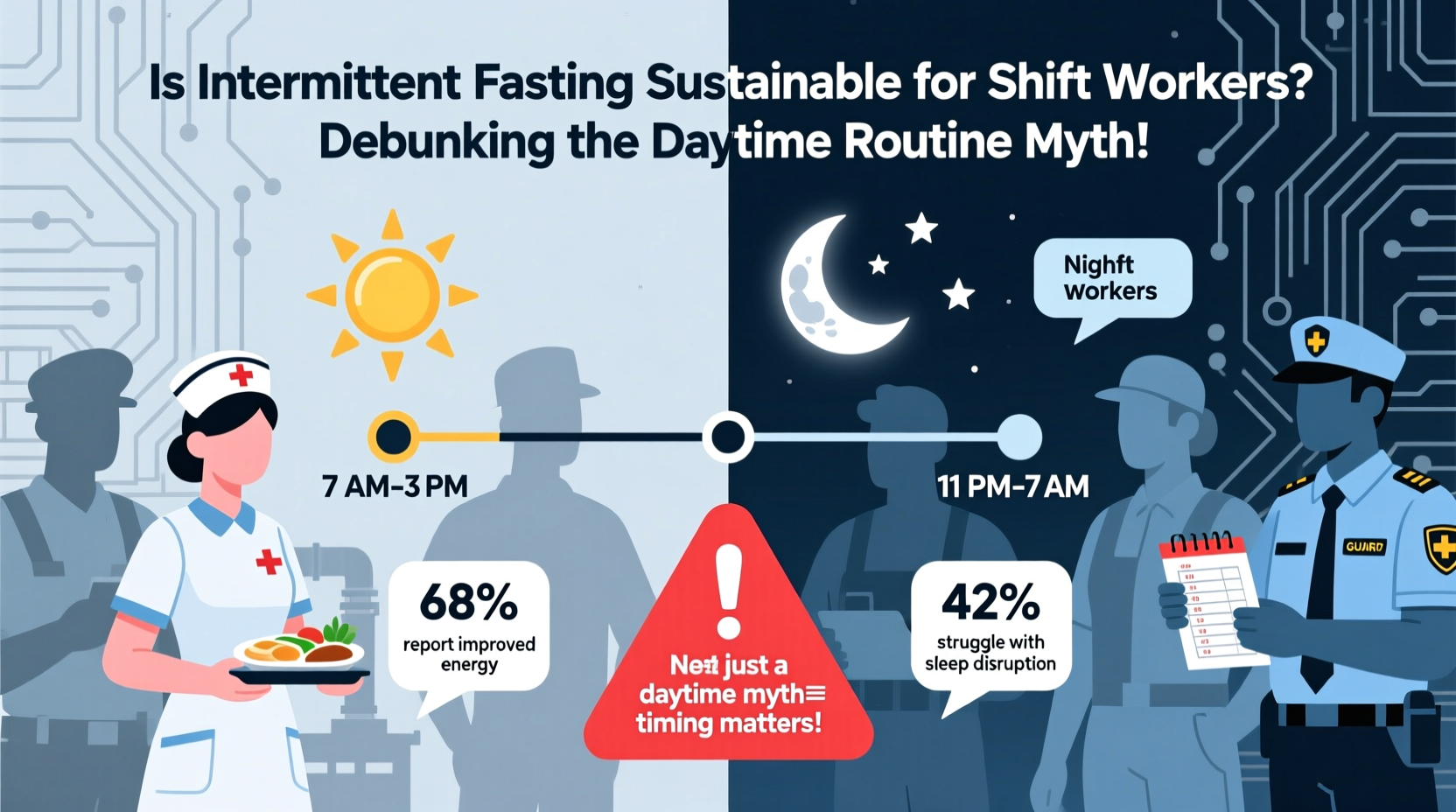
Human physiology runs on a 24-hour internal clock governed by circadian rhythms. These rhythms regulate hormone release, body temperature, digestion, and sleep-wake cycles. The master clock, located in the brain’s suprachiasmatic nucleus, syncs primarily with light exposure. When people work overnight or irregular shifts, their biological clocks become misaligned with environmental cues—a condition known as circadian misalignment.
Eating late at night, especially during night shifts, disrupts metabolic processes. Insulin sensitivity drops, glucose tolerance declines, and fat oxidation slows compared to daytime eating. A study published in Science Translational Medicine found that restricting food intake to a 9-hour window during the day improved insulin sensitivity and energy levels—even without calorie reduction.
For shift workers, the problem isn’t just *when* they eat, but whether their eating window aligns with their active phase, regardless of clock time. This insight reframes intermittent fasting from a “daytime-only” practice to a more personalized rhythm tied to wakefulness and activity.
“Fasting isn’t about the sun; it’s about synchronizing metabolism with your actual lifestyle. Shift workers can benefit—if the protocol fits their rhythm.” — Dr. Sujay Kansagra, Sleep Health Expert and Author of Training Your Brain to Sleep
Adapting Fasting Windows for Non-Traditional Schedules
The classic 16:8 method (16 hours fasting, 8 hours eating) assumes an 8 AM to 4 PM feeding window. But for a nurse starting a night shift at 11 PM, this doesn’t align with energy needs. Instead, the key is to anchor the eating window around periods of peak alertness and physical activity.
Consider these modified approaches:
- Night-Shift Fasting: Eat between 7 PM and 3 AM during the shift, then fast until 7 PM the next evening. This creates a 16-hour fast while accommodating real-world demands.
- Rotating Shift Adaptation: Use a 14:10 window instead of 16:8 to allow flexibility when transitioning between day and night duties.
- Post-Shift Refuel Strategy: Avoid eating immediately before sleeping. Wait 2–3 hours after finishing a night shift before consuming a meal to support better sleep and digestion.
Case Study: Maria, ER Nurse on Rotating Shifts
Maria, 42, works three 12-hour night shifts followed by two days off. Initially, she tried a standard 16:8 fast during her days off but struggled with low energy during night shifts. She often skipped dinner before work, then binged on snacks at 3 AM out of fatigue.
After consulting a nutritionist, she redesigned her fasting window. On night shifts, she eats a balanced meal at 6 PM before work, another light meal at midnight, and finishes eating by 3 AM. Her fast begins post-shift and lasts until 6 PM the next day—about 17 hours. On days off, she shifts to a 10 AM–6 PM window.
Within six weeks, Maria reported improved alertness during shifts, reduced bloating, and a 5-pound weight loss. “It’s not about skipping meals,” she says. “It’s about timing them right for when my body is actually awake and burning fuel.”
Practical Strategies for Sustainable Fasting on Shifts
Sustainability hinges on customization, consistency, and minimizing disruption to sleep and performance. Here’s how to build a realistic intermittent fasting plan for shift work.
Step-by-Step Guide: Building Your Shift-Friendly Fasting Routine
- Map Your Work Schedule: Identify your active hours across a typical week. Are you mostly nights? Rotating? Split shifts?
- Determine Your Natural Eating Window: Note when you feel hungry and energized. This often aligns with your alertness peaks.
- Choose a Fasting Method: Start with 14:10 or 12:12 to ease into the rhythm. Gradually extend to 16:8 if tolerated.
- Anchor Meals Around Shifts: Eat your largest meal before or during the first half of your shift. Avoid heavy meals right before sleep.
- Stay Hydrated: Drink water, herbal tea, or black coffee during fasting periods. Avoid sugary drinks or excessive caffeine late in your shift.
- Monitor Energy & Sleep: Track mood, focus, and sleep quality. Adjust timing if fatigue or insomnia increases.
- Be Flexible on Transition Days: When switching from night to day shifts, shorten the fast temporarily to help your body adapt.
| Fasting Approach | Best For | Implementation Tips |
|---|---|---|
| Modified 16:8 (e.g., 7 PM–3 AM) | Night shift workers | Begin eating before shift; stop 2–3 hours before bedtime |
| 14:10 with variable windows | Rotating shift workers | Adjust daily based on shift start time; avoid drastic changes |
| Time-restricted eating (TRE) aligned with daylight on off-days | All shift workers | Reinforce circadian rhythm on rest days to improve recovery |
| One meal after shift (OMAD-style) | Short-term use during intense rotations | Not recommended long-term due to nutrient risk |
Common Pitfalls and How to Avoid Them
Even well-intentioned fasting can backfire without proper planning. Shift workers face unique risks:
- Sleep disruption: Eating too close to bedtime can impair sleep onset and quality.
- Energy crashes: Over-restricting calories during fasting may reduce alertness during critical work hours.
- Nutrient deficiencies: Skipping meals increases reliance on processed convenience foods.
- Metabolic confusion: Constantly shifting eating windows without consistency can stress the body.
To mitigate these issues, prioritize nutrient-dense meals during your eating window. Include protein, fiber, healthy fats, and complex carbohydrates to sustain energy. Avoid using fasting as an excuse to undereat—this can lead to muscle loss and slowed metabolism over time.
“Intermittent fasting should enhance performance, not compromise it. If you’re feeling foggy or irritable, it’s a sign the protocol needs adjustment.” — Dr. Courtney Peterson, Associate Professor of Nutrition Sciences, University of Alabama at Birmingham
Checklist: Is Intermittent Fasting Right for Your Shift Pattern?
- ✅ I understand my circadian rhythm and how my shifts affect it
- ✅ I can plan meals ahead of time to avoid unhealthy choices
- ✅ My job doesn’t require high physical or cognitive output during fasting hours
- ✅ I’m not pregnant, breastfeeding, or managing diabetes without medical supervision
- ✅ I’m willing to adjust my fasting window based on how I feel
- ✅ I prioritize sleep hygiene and aim for 7–8 hours of quality rest
Frequently Asked Questions
Can I fast while working nights if I have diabetes?
Fasting with diabetes, especially type 1 or insulin-dependent type 2, requires close medical supervision. Blood sugar fluctuations are more likely during irregular hours. Always consult your healthcare provider before starting any fasting regimen.
Won’t fasting make me more tired during my shift?
Initially, yes—some fatigue is common as your body adapts. However, many shift workers report increased mental clarity once adapted, especially when paired with adequate hydration and balanced meals. Avoid prolonged fasting (>18 hours) during active duty.
What should I eat during my feeding window?
Focus on whole foods: lean proteins (chicken, fish, legumes), vegetables, whole grains, and healthy fats (avocado, nuts, olive oil). Avoid relying on high-sugar, high-carb convenience foods common in hospital cafeterias or gas stations.
Conclusion: Beyond the Daytime Myth
Intermittent fasting is not inherently a daytime-only practice. Its core principle—aligning eating with active, alert periods—can be applied across diverse lifestyles, including those of shift workers. The myth lies not in the impossibility of fasting off-hours, but in the assumption that one-size-fits-all protocols work universally.
Sustainability comes from personalization. By respecting circadian biology, honoring individual energy needs, and making informed adjustments, shift workers can harness the benefits of time-restricted eating without sacrificing performance or well-being.
💬 Have experience with intermittent fasting on a non-traditional schedule? Share your story in the comments—your insights could help others navigate this challenging but rewarding path.