For many busy professionals, time is the most valuable commodity. Between back-to-back meetings, last-minute deadlines, and unpredictable work hours, maintaining a consistent routine—especially around eating—can feel nearly impossible. Intermittent fasting (IF) has gained popularity as a flexible approach to weight management, metabolic health, and mental clarity. But can it realistically work when your schedule shifts from day to day?
The short answer is yes—but not in the rigid way it’s often presented. Sustainability depends less on strict adherence to a 16:8 or 5:2 protocol and more on intelligent adaptation. When tailored to the realities of an erratic professional life, intermittent fasting can be both practical and beneficial. The key lies in flexibility, planning, and understanding the physiological principles behind IF, rather than treating it as a one-size-fits-all diet.
Understanding Intermittent Fasting Beyond the Hype
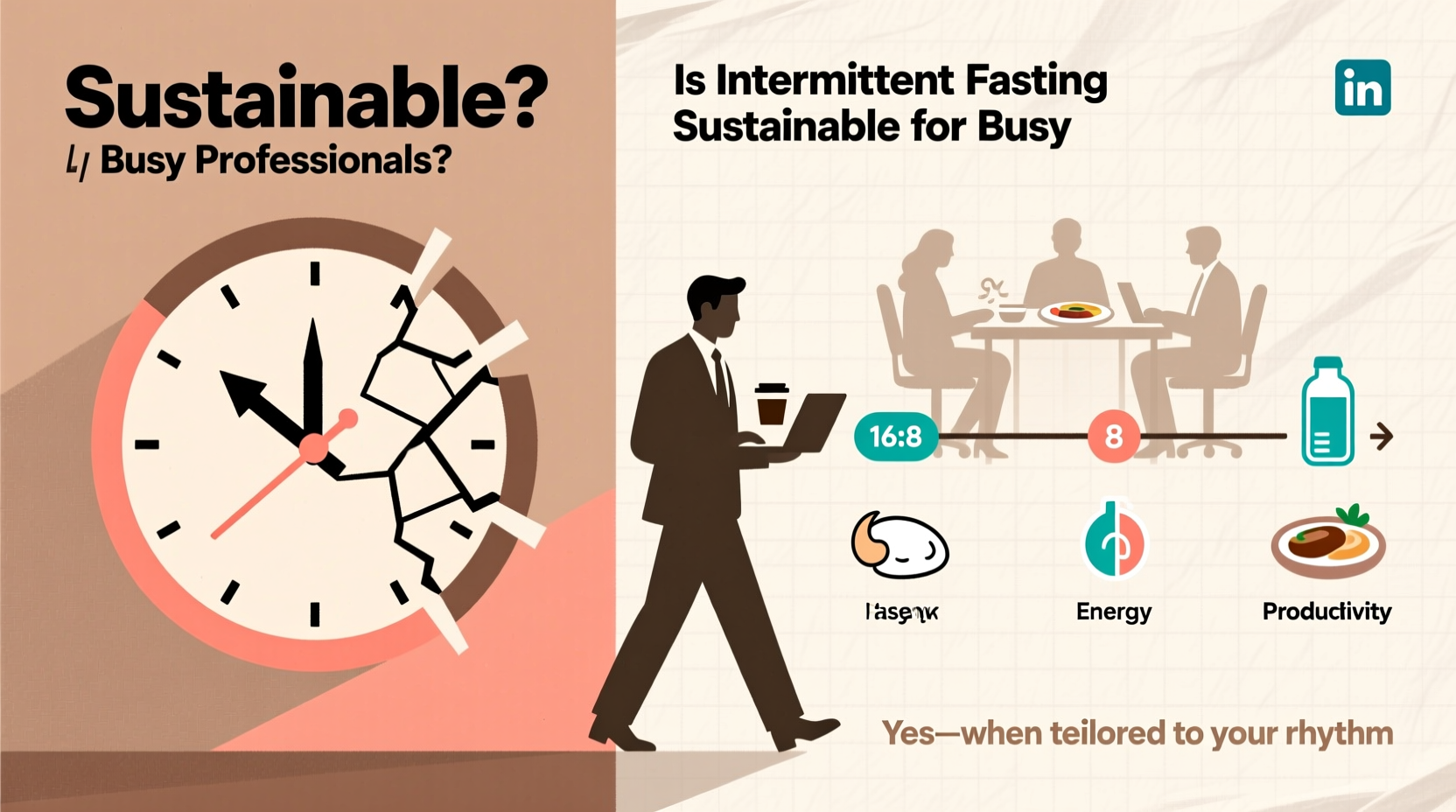
Intermittent fasting isn’t a diet in the traditional sense; it’s an eating pattern that alternates between periods of eating and fasting. Common methods include:
- 16:8 method: Fast for 16 hours, eat within an 8-hour window.
- 5:2 method: Eat normally for five days, restrict calories (500–600) on two non-consecutive days.
- Alternate-day fasting: Alternate between regular eating and fasting days.
- Warrior Diet (20:4): Fast for 20 hours, consume all meals in a 4-hour window.
Research shows that IF can support weight loss, improve insulin sensitivity, reduce inflammation, and even enhance cognitive function by promoting autophagy—the body’s process of cellular cleanup. However, these benefits depend on consistency and sustainability. For someone whose workday might start at 6 a.m. one day and stretch past midnight the next, a fixed fasting window may not only fail—it could lead to burnout or disordered eating patterns.
“Fasting should serve your lifestyle, not complicate it. The goal is metabolic flexibility, not rigidity.” — Dr. Lena Patel, Functional Medicine Physician
Challenges for Busy Professionals with Irregular Schedules
Professionals in high-pressure roles—such as consultants, healthcare workers, tech executives, or freelancers—often face:
- Unpredictable meeting times and travel demands
- Extended work hours without breaks
- Frequent social or client dinners outside normal eating windows
- Mental fatigue that increases cravings for quick, sugary foods
- Limited access to healthy food options during long work stretches
These factors make traditional IF protocols difficult to maintain. Attempting to fast from 8 p.m. to noon daily becomes problematic when a late-night presentation pushes dinner to 9 p.m., or a morning flight requires eating at 6 a.m. Rigid timing can lead to frustration, skipped meals, overeating later, or abandoning the practice altogether.
Tip: Instead of anchoring your fast to the clock, anchor it to your energy levels and workload. Start fasting when you’re least likely to need fuel.Adapting Intermittent Fasting for Real-World Schedules
Sustainability comes from personalization. Here’s how to make IF work—even when your day doesn’t follow a script.
1. Shift from Time-Based to Event-Based Fasting
Rather than fixating on specific hours, use natural pauses in your day as fasting triggers. For example:
- Begin fasting after your last meaningful meal before a long meeting block.
- Extend your overnight fast if you wake up without hunger.
- Use travel days or low-energy days as opportunities to fast lightly.
This event-driven model aligns with circadian biology while accommodating unpredictability.
2. Embrace ��Mini-Fasts” Instead of Full Days
If a full 16-hour fast isn’t feasible, aim for shorter, intentional gaps between meals. A 12- to 14-hour overnight fast still offers metabolic benefits and is easier to maintain across shifting schedules.
3. Prioritize Protein and Fiber During Eating Windows
When time is limited, nutrient density matters. Meals rich in protein, healthy fats, and fiber keep you satiated longer, reducing the urge to snack during work chaos. This makes fasting periods more manageable, even if they vary in length.
4. Use Hydration Strategically
Dehydration often masquerades as hunger. Drinking water, herbal tea, or black coffee during fasting periods helps manage appetite and supports focus during demanding work stretches.
Step-by-Step Guide: Building a Flexible IF Routine
Follow this timeline to integrate intermittent fasting into an unpredictable professional life.
- Week 1: Observe Your Natural Rhythms
Track when you eat, work, and feel hungry. Note patterns without changing behavior. - Week 2: Establish a Baseline Fast
Aim for a 12-hour nightly fast (e.g., 7 p.m. to 7 a.m.). Adjust based on actual bedtime and wake time. - Week 3: Extend Flexibly
On lighter days, extend to 14 hours. On heavy workdays, maintain 12 hours without guilt. - Week 4: Introduce Variable Windows
Let your eating window shift based on workload. Example: 10 a.m.–6 p.m. on Monday, 1 p.m.–9 p.m. on Thursday. - Ongoing: Refine Based on Energy & Output
Adjust duration and timing based on mental clarity, sleep quality, and stress levels—not just weight.
Real-World Example: Sarah, Marketing Director
Sarah leads a global marketing team with calls spanning three time zones. Her workday ranges from 5:30 a.m. to 11 p.m., depending on the week. Initially, she tried the 16:8 method but found herself ravenous during early meetings and overeating at night.
She shifted to a flexible approach:
- On early-start days, she eats a high-protein breakfast at 6 a.m. and finishes dinner by 7 p.m.—achieving a 13-hour fast.
- On late-work days, she delays her first meal until 11 a.m., allowing a 14-hour overnight fast.
- She avoids snacking during work blocks and hydrates consistently.
After eight weeks, Sarah reported improved focus, reduced bloating, and better sleep—without feeling deprived. Her version of IF isn’t textbook, but it works because it respects her reality.
Do’s and Don’ts: A Practical Table for Success
| Do | Don't |
|---|---|
| Align fasting with low-energy or low-interruption periods | Force fasting during high-focus or high-stress tasks |
| Use hydration to manage hunger cues | Replace meals with excessive coffee or artificial sweeteners |
| Adjust fasting windows weekly based on calendar load | Abandon the practice entirely due to one “failed” day |
| Eat balanced, satisfying meals during eating windows | Compensate by bingeing on processed foods post-fast |
| Listen to hunger signals—fasting shouldn’t cause dizziness or irritability | Ignore signs of fatigue, brain fog, or hormonal imbalance |
Checklist: Sustainable IF for Irregular Schedules
Use this checklist to stay on track without rigidity:
- ☑ Track your weekly schedule every Sunday to anticipate high-demand days
- ☑ Prepare grab-and-go meals for long work blocks
- ☑ Set hydration goals (e.g., 2L water/day)
- ☑ Identify your natural hunger peaks and avoid fasting during them
- ☑ Allow a minimum 12-hour fast most nights—even if timing varies
- ☑ Reassess monthly: Are you feeling energized, focused, and balanced?
- ☑ Consult a healthcare provider if you have a history of disordered eating or metabolic conditions
Frequently Asked Questions
Can I drink anything during my fasting window?
Yes. Zero-calorie beverages like water, black coffee, and unsweetened herbal tea are allowed and encouraged. They help suppress appetite and maintain hydration without breaking the fast.
What if I have a client dinner during my eating window?
Flexibility is key. Adjust your eating window to accommodate the event. You can start earlier, end later, or even compress your eating period into one substantial meal. The metabolic benefits of IF come from overall eating rhythm, not perfect timing.
Will intermittent fasting affect my productivity?
It depends on implementation. Done well—with adequate nutrition and hydration—many professionals report improved concentration and reduced post-lunch crashes. However, forcing a fast during a critical project phase or high-cognitive-load task can impair performance. Match your fasting strategy to your workload, not against it.
Conclusion: Sustainability Through Smart Adaptation
Intermittent fasting can be sustainable for busy professionals with irregular schedules—but only if it evolves from a rigid rule into a responsive tool. The goal isn’t to adhere to a trendy protocol, but to harness the science of metabolic health in a way that fits real life.
By focusing on consistency over perfection, prioritizing nutrient-dense meals, and adjusting fasting windows based on daily demands, professionals can enjoy the benefits of IF without sacrificing performance or peace of mind. It’s not about skipping meals; it’s about creating space for better energy, clearer thinking, and long-term resilience.
💬 Ready to make intermittent fasting work for your schedule? Start by tracking your week ahead and identifying natural fasting opportunities. Share your experience or questions in the comments—your insight could help others navigate the same challenges.








