For years, intermittent fasting has been praised as a powerful tool for weight management, metabolic health, and longevity. But as women age—particularly past 40—hormonal shifts, slower metabolism, and changing body composition raise important questions. Is intermittent fasting still safe and effective for women in their 40s and beyond? The answer isn't a simple yes or no. It depends on individual physiology, lifestyle, and how the practice is implemented.
Women over 40 often face unique challenges: declining estrogen levels, increased abdominal fat storage, disrupted sleep, and higher stress sensitivity. These factors can influence how the body responds to fasting. While some women thrive on time-restricted eating, others may experience fatigue, hormone disruption, or worsened insulin resistance if not approached thoughtfully.
This article explores the science behind intermittent fasting for perimenopausal and postmenopausal women, shares expert insights, and provides practical guidance for adapting fasting protocols to support long-term health—not just short-term weight loss.
The Science of Aging, Hormones, and Metabolism After 40
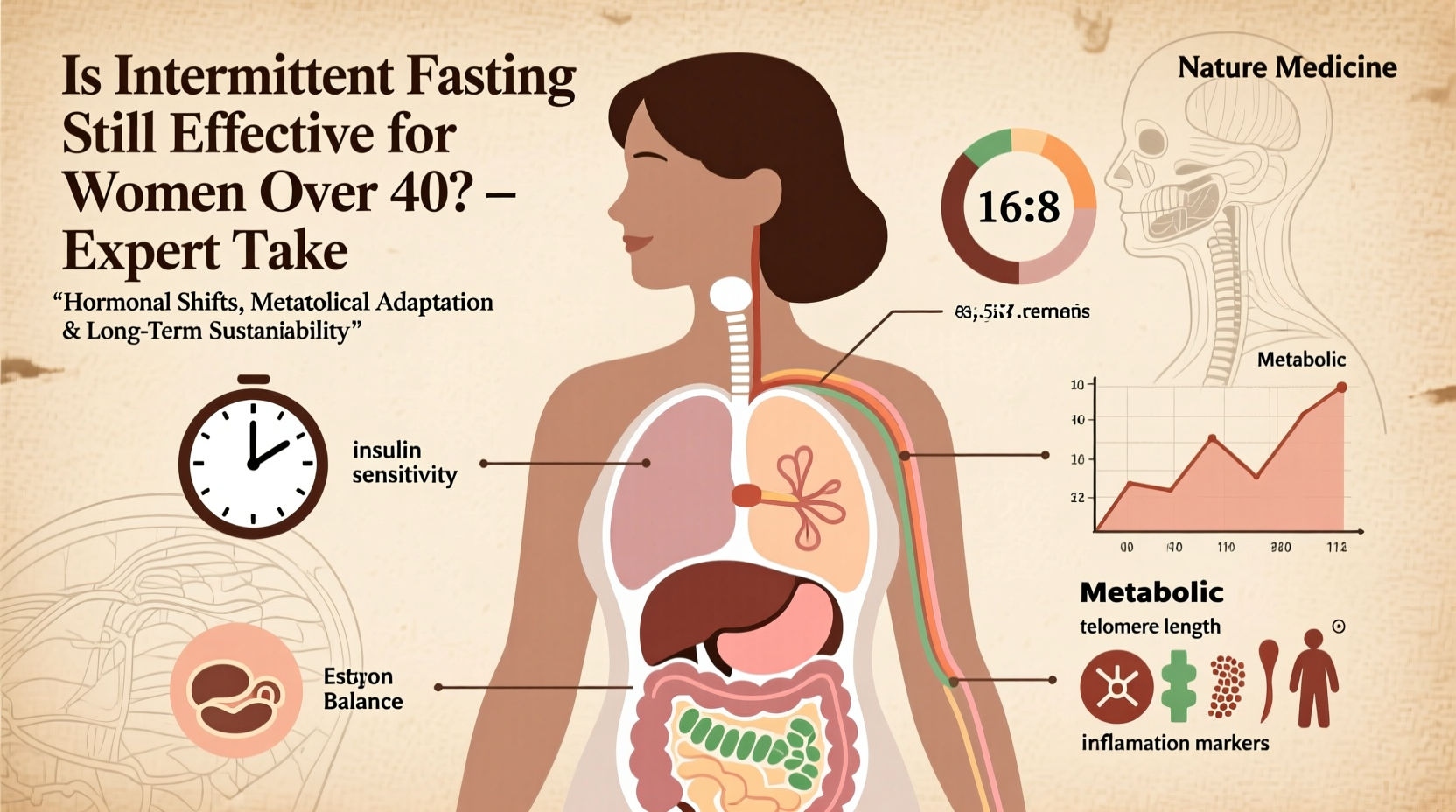
After age 40, women enter a transitional phase marked by shifting hormones. Perimenopause typically begins in the mid-40s and can last up to a decade before menopause officially occurs (defined as 12 consecutive months without a period). During this time, estrogen and progesterone fluctuate unpredictably, affecting everything from mood and sleep to appetite regulation and fat distribution.
Metabolically, women lose about 5% of their basal metabolic rate (BMR) per decade after 30. This decline accelerates slightly after 40 due to reduced muscle mass and changes in mitochondrial efficiency. Insulin sensitivity also tends to decrease, increasing the risk of weight gain—especially around the abdomen—even with no change in diet or activity.
In this context, intermittent fasting (IF) can offer benefits by improving insulin sensitivity, supporting cellular repair through autophagy, and encouraging fat oxidation. However, the female endocrine system is highly sensitive to energy availability. When calorie restriction or prolonged fasting signals scarcity, the hypothalamus may downregulate reproductive hormones, even in women who are no longer menstruating. This can exacerbate symptoms like fatigue, brain fog, and sleep disturbances.
“Fasting can be beneficial for women over 40, but it must be personalized. A one-size-fits-all approach risks disrupting cortisol and thyroid function, especially during hormonal transitions.” — Dr. Lena Patel, Functional Medicine Physician
How Intermittent Fasting Can Help—And When It Might Harm
When done correctly, intermittent fasting offers several science-backed advantages for women over 40:
- Improved insulin sensitivity: Fasting periods allow insulin levels to drop, helping the body access stored fat for energy.
- Reduced inflammation: Studies link time-restricted eating with lower markers of chronic inflammation, which increases with age.
- Support for cellular repair: Autophagy—the body’s way of clearing damaged cells—is enhanced during extended fasts (typically 16+ hours).
- Simplified eating patterns: Many women find that limiting their eating window reduces mindless snacking and emotional eating.
However, potential downsides exist, particularly when fasting is too aggressive or poorly timed:
- Hormonal imbalance: Excessive fasting may elevate cortisol, disrupt thyroid hormones, and worsen hot flashes or insomnia.
- Muscle loss: Without adequate protein intake and strength training, fasting can accelerate sarcopenia (age-related muscle loss).
- Nutrient deficiencies: A shortened eating window may make it harder to consume enough calcium, vitamin D, magnesium, and other key nutrients critical for bone and heart health.
- Disordered eating patterns: Women with a history of restrictive diets may find IF triggers old habits or increases food obsession.
Expert-Recommended Approaches for Women Over 40
Rather than adopting popular but rigid protocols like 16:8 or OMAD (One Meal a Day), experts recommend a more adaptive strategy tailored to individual needs. Here are evidence-based guidelines for making intermittent fasting work safely and effectively after 40.
1. Prioritize Circadian Rhythm Alignment
Eating within daylight hours supports natural circadian rhythms, which regulate metabolism, sleep, and hormone production. Research shows that early time-restricted eating (eTRE)—such as finishing meals by 6 p.m.—can improve blood pressure, insulin levels, and energy balance in midlife women.
2. Focus on Nutrient Density Over Calorie Restriction
The goal should be nourishment, not deprivation. Women over 40 need more high-quality protein (1.2–1.6g per kg of body weight daily), healthy fats, fiber, and bone-supportive nutrients. Fasting shouldn’t compromise this.
3. Adjust Based on Menstrual Cycle Phase (if still cycling)
Even in perimenopause, many women retain some cycle rhythm. Estrogen peaks in the follicular phase (post-period) may enhance fat burning and exercise tolerance, making this an ideal time for longer fasts. In contrast, the luteal phase (pre-period) often brings increased hunger and lower energy—shorter fasting windows may be better tolerated.
4. Monitor Stress and Sleep
Cortisol and fasting interact closely. If you’re already stressed, sleep-deprived, or exercising intensely, adding a 16-hour fast could tip your system into survival mode. Track how you feel: irritability, cold hands, missed periods, or worsening sleep are red flags.
5. Combine Fasting with Strength Training
To preserve lean muscle and boost metabolism, pair time-restricted eating with resistance training at least 2–3 times per week. Muscle tissue burns more calories at rest and helps maintain insulin sensitivity.
“We see the best outcomes when women use fasting as part of a holistic plan—good nutrition, movement, sleep, and stress management—not as a standalone fix.” — Dr. Alicia Monroe, Endocrinologist and Women’s Health Specialist
Practical Guide: How to Adapt Intermittent Fasting After 40
Follow this step-by-step approach to implement intermittent fasting safely and sustainably.
- Assess your current health status: Consider lab work (thyroid, fasting insulin, vitamin D, sex hormones) and discuss your plans with a healthcare provider, especially if you have a history of disordered eating, diabetes, or adrenal issues.
- Choose a flexible fasting window: Start with 12:12 (12 hours fasting, 12 hours eating), then progress to 14:10 or 15:9 if well tolerated. Avoid jumping straight into 16:8 unless you’ve built up gradually.
- Time your eating window strategically: Aim to eat earlier in the day. For example, 8 a.m. to 6 p.m. aligns better with circadian biology than 12 p.m. to 8 p.m.
- Break your fast mindfully: Begin with a balanced meal containing protein, healthy fats, and fiber—like eggs with avocado and spinach—to stabilize blood sugar.
- Stay hydrated: Drink water, herbal teas, or electrolyte-infused beverages during the fast. Dehydration mimics hunger and strains the kidneys.
- Track your response: Keep a journal for two weeks noting energy levels, sleep quality, digestion, mood, and any hormonal symptoms.
- Adjust based on feedback: If you feel worse—more anxious, tired, or hungry—shorten the fast or pause altogether. Fasting should enhance well-being, not detract from it.
Real-Life Example: How Sarah Found Balance at 47
Sarah, a 47-year-old project manager, began experiencing weight gain around her midsection despite eating “clean” and walking daily. She tried the popular 16:8 method she read about online, skipping breakfast and eating from noon to 8 p.m. Within three weeks, she felt more irritable, had trouble falling asleep, and noticed her morning cortisol was elevated on a functional test.
She consulted a functional nutritionist who suggested switching to a 13-hour overnight fast (7 p.m. to 8 a.m.) with all meals completed by 7 p.m. She added a small protein-rich snack before bed (Greek yogurt with chia seeds) to stabilize nighttime blood sugar. She also started lifting weights twice a week.
Within six weeks, Sarah reported improved sleep, less belly bloating, and gradual fat loss—about 1.5 pounds per month. More importantly, her energy stabilized, and she no longer felt obsessed with food. Her success wasn’t from stricter fasting, but from smarter alignment with her body’s needs.
Do’s and Don’ts of Intermittent Fasting for Women Over 40
| Do | Don’t |
|---|---|
| Start with a 12-hour fast and build slowly | Rush into 16:8 or 18:6 without testing tolerance |
| Eat nutrient-dense meals during your eating window | Use fasting as an excuse to skip protein or vegetables |
| Listen to your body’s signals (hunger, energy, sleep) | Ignore signs of fatigue, hair loss, or menstrual changes |
| Combine fasting with strength training | Rely solely on cardio and calorie restriction |
| Fast occasionally, not necessarily daily | Force daily fasting even when stressed or ill |
Frequently Asked Questions
Can intermittent fasting cause early menopause?
No direct evidence shows that intermittent fasting causes early menopause. However, extreme calorie restriction or chronic stress from prolonged fasting may temporarily suppress ovarian function, leading to missed periods. This is usually reversible with improved nutrition and reduced stress.
Is 16:8 safe for women over 40?
It can be, but only if well-tolerated. Many women do fine with 16:8, especially if they’re metabolically healthy and active. Others find it too stressful. Start milder and assess how you feel. Women with adrenal fatigue, low body weight, or poor sleep should avoid it initially.
Should I fast every day?
Not necessarily. Some women benefit more from intermittent fasting 3–5 days per week, taking breaks during high-stress periods or travel. Occasional fasting (e.g., once a week) can still offer metabolic benefits without constant restriction.
Final Thoughts: Fasting as a Tool, Not a Rule
Intermittent fasting can still be effective for women over 40—but only when applied with wisdom, flexibility, and self-awareness. The goal isn’t to adhere rigidly to a trend, but to support hormonal balance, metabolic health, and long-term vitality.
The most successful women don’t view fasting as a punishment or shortcut. Instead, they use it as one element of a broader lifestyle focused on nourishment, movement, rest, and resilience. Whether you choose to fast 12 hours a night or experiment with occasional 14-hour breaks, let your body guide you. Honor its signals. Respect its changes.
If you're considering intermittent fasting, begin gently, monitor your response, and consult a knowledgeable practitioner if you have underlying conditions. Small, consistent choices matter far more than extreme measures.
💬 Have you tried intermittent fasting after 40? Share your experience, challenges, or wins in the comments below—your story could help another woman find her path.








