
In recent years, intermittent fasting (IF) has evolved from a niche wellness trend into a widely studied dietary approach. Once hailed as a revolutionary path to weight loss, metabolic health, and longevity, it now faces growing scrutiny. With new clinical trials emerging and long-term data becoming available, many are asking: is intermittent fasting still backed by science, or has the research shifted?
The answer isn't binary. While early enthusiasm was fueled by promising animal studies and short-term human trials, the scientific landscape has matured—bringing both validation and caution. Today’s evidence reveals that intermittent fasting can offer benefits for certain individuals, but its effects are more nuanced than once believed. The key lies in understanding who benefits, under what conditions, and how sustainable these outcomes truly are.
The Evolution of Intermittent Fasting Research
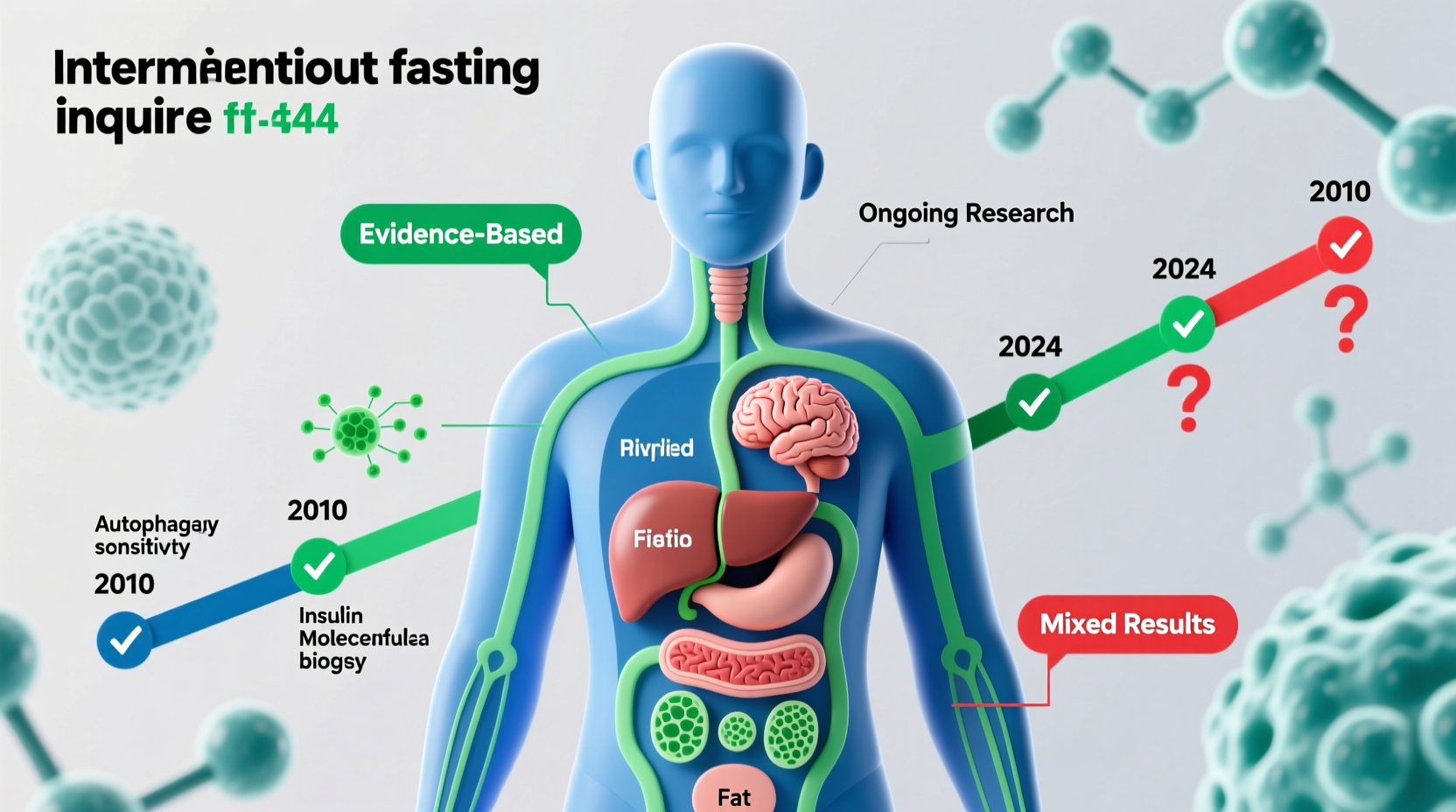
Intermittent fasting first gained traction in the early 2010s, largely due to studies showing improved insulin sensitivity, cellular autophagy, and fat oxidation in rodents subjected to time-restricted feeding. These findings led to widespread interest in protocols like 16:8 (fasting for 16 hours, eating within an 8-hour window), alternate-day fasting, and the 5:2 method (eating normally five days a week, restricting calories on two non-consecutive days).
Initial human trials, often small and short-term (ranging from 4 to 12 weeks), reported modest weight loss, reduced inflammation markers, and better blood sugar control. However, many of these studies lacked control groups, relied on self-reported data, or failed to account for overall calorie reduction—the most critical factor in weight management.
As larger, more rigorous trials emerged—particularly randomized controlled trials (RCTs) published between 2020 and 2024—the picture became more complex. A landmark 2022 study published in The New England Journal of Medicine compared time-restricted eating (TRE) with daily calorie restriction in adults with obesity. After one year, both groups lost similar amounts of weight—about 8% of initial body weight—suggesting that timing alone wasn’t superior to traditional dieting when calories were matched.
“Time-restricted eating can be a useful tool, but it’s not a magic bullet. The real driver of results is energy balance.” — Dr. Krista Varady, Professor of Nutrition at the University of Illinois Chicago
This shift doesn’t invalidate intermittent fasting; rather, it contextualizes it. Science hasn’t abandoned IF—it’s refined our understanding of where and how it works.
What the Current Evidence Supports
Despite the tempered expectations, several peer-reviewed studies continue to support specific benefits of intermittent fasting, particularly in metabolic health and adherence:
- Improved insulin sensitivity: Multiple RCTs show TRE can reduce fasting insulin levels and improve glucose regulation, especially in people with prediabetes.
- Blood pressure and lipid profile: Some studies report modest reductions in systolic blood pressure and LDL cholesterol, though results vary.
- Sustainability and adherence: Many participants find time-restricted eating easier to maintain than constant calorie counting, leading to better long-term compliance.
- Cellular repair mechanisms: Animal models consistently show increased autophagy during fasting periods, though direct human evidence remains limited.
A 2023 meta-analysis in Nature Reviews Endocrinology concluded that while IF produces comparable weight loss to continuous caloric restriction, it may offer unique advantages in reducing visceral fat and liver fat—key markers for metabolic syndrome.
Tip: If using intermittent fasting for metabolic health, pair your eating window with nutrient-dense meals—timing matters less if you're consuming processed foods.Where the Research Has Shifted
Recent findings have challenged earlier assumptions about IF’s superiority over other diets. Key shifts include:
- No metabolic advantage: Studies now confirm that IF does not significantly boost resting metabolic rate. Any weight loss is attributable to reduced calorie intake, not enhanced metabolism.
- Gender differences: Emerging data suggest women may respond differently to prolonged fasting, with some experiencing disrupted menstrual cycles or increased stress hormones (cortisol).
- Muscle preservation concerns: Unlike high-protein calorie restriction, standard IF protocols don’t inherently protect lean mass, which can decline without resistance training and adequate protein intake.
- Long-term sustainability doubts: Dropout rates in longer trials (beyond 6 months) are significant—up to 30% in some studies—raising questions about real-world feasibility.
Moreover, researchers are increasingly focused on circadian alignment. Eating late in the day—even within an 8-hour window—appears to blunt metabolic benefits. A 2024 trial found that participants who ate earlier (e.g., 7 a.m. to 3 p.m.) showed greater improvements in insulin sensitivity than those eating later (12 p.m. to 8 p.m.), despite identical fasting durations.
Practical Applications: Who Benefits Most?
Intermittent fasting isn’t a one-size-fits-all solution. Based on current evidence, it tends to work best for:
- Individuals with mild insulin resistance or prediabetes
- People seeking structure in their eating patterns without counting calories
- Those with stable lifestyles and no history of disordered eating
- Shift workers who can align their eating window with active hours
Conversely, it may be inappropriate or risky for:
- Pregnant or breastfeeding women
- Individuals with a history of eating disorders
- Underweight individuals or those with high energy demands (e.g., athletes)
- People on medications requiring food intake (e.g., insulin, sulfonylureas)
| Population | Recommended? | Rationale |
|---|---|---|
| Adults with obesity, sedentary lifestyle | Yes, with monitoring | Can aid weight loss and improve metabolic markers when combined with healthy eating |
| Type 2 diabetes (on medication) | Cautiously, under medical supervision | Risk of hypoglycemia during fasting periods |
| Endurance athletes | Limited benefit | May impair performance and recovery without careful planning |
| Postmenopausal women | Variable | Some benefit for weight and insulin; monitor for sleep or mood changes |
| Teens and young adults | No | Interferes with growth, development, and hormonal balance |
Step-by-Step Guide to Starting Intermittent Fasting Safely
If you’re considering intermittent fasting, follow this evidence-based sequence to maximize benefits and minimize risks:
- Consult your doctor: Especially if you have chronic conditions or take medications.
- Choose a protocol: Start with 12:12 (12 hours fasting, 12 hours eating) to build tolerance before progressing to 14:10 or 16:8.
-
Begin your eating window shortly after waking (e.g., 7–8 a.m.) and finish 2–3 hours before bedtime. - Focus on nutrition quality: Prioritize whole grains, lean proteins, healthy fats, and fiber-rich vegetables during your eating window.
- Stay hydrated: Drink water, herbal teas, or black coffee during fasting periods to manage hunger and support metabolism.
- Monitor symptoms: Track energy levels, sleep quality, mood, and menstrual regularity (if applicable). Discontinue if adverse effects arise.
- Reassess every 3 months: Evaluate progress toward goals and adjust based on sustainability and health markers.
“Start slow. Your body adapts to fasting over weeks, not days. Rushing increases dropout risk.” — Dr. Satchidananda Panda, Circadian Biology Expert, Salk Institute
Mini Case Study: Real-World Application
James, a 47-year-old software engineer with prediabetes and a BMI of 31, struggled with evening snacking and inconsistent meal times. After consulting his physician, he began a 14:10 intermittent fasting plan—eating from 8 a.m. to 6 p.m.—while maintaining his usual diet initially.
Within three weeks, he noticed reduced nighttime hunger and slightly improved energy. He then worked with a dietitian to optimize his meals, increasing protein and fiber. Over six months, he lost 12 pounds, lowered his HbA1c from 6.1% to 5.6%, and reduced his waist circumference by 3 inches.
However, when travel disrupted his schedule, he found adherence difficult. He eventually transitioned to a flexible 12:12 approach on busy days, demonstrating that consistency—not perfection—is key.
James’s experience reflects a broader truth: success with IF depends less on rigid rules and more on integration into personal lifestyle.
Frequently Asked Questions
Does intermittent fasting cause muscle loss?
Not necessarily—but only if protein intake and resistance training are prioritized. Without sufficient protein (at least 1.6g per kg of body weight daily) and strength exercise, any calorie-deficit diet, including IF, can lead to muscle loss.
Can I drink anything during the fast?
Yes. Zero-calorie beverages like water, black coffee, and unsweetened tea are permitted and can help suppress appetite. Avoid adding sugar, cream, or bone broth with significant calories, as these may break the fast metabolically.
Is intermittent fasting safe long-term?
There is limited data beyond one year. While no major red flags have emerged, long-term safety depends on individual health status, nutritional adequacy, and psychological well-being. Regular check-ins with a healthcare provider are advised.
Actionable Checklist for Success
Checklist: Getting Started with Intermittent Fasting- ☑ Consult your healthcare provider before beginning
- ☑ Choose a gradual entry point (e.g., 12:12 or 13:11)
- ☑ Align eating window with daylight/active hours
- ☑ Plan balanced meals rich in protein and fiber
- ☑ Hydrate consistently during fasting periods
- ☑ Track physical and mental responses for first 4 weeks
- ☑ Adjust or pause if fatigue, dizziness, or mood changes occur
Conclusion: A Tool, Not a Trend
Intermittent fasting remains backed by science—but not in the way it once was. It is no longer seen as a metabolic miracle or universal solution. Instead, it’s recognized as one effective dietary strategy among many, valuable primarily for its simplicity and potential to regulate eating patterns.
The research hasn’t shifted away from IF; it has simply matured. We now understand that its benefits are context-dependent, influenced by genetics, lifestyle, meal timing, and food quality. For some, it’s a sustainable path to better health. For others, it may do more harm than good.
Rather than chasing trends, the future of fasting lies in personalization. By combining scientific insight with self-awareness, individuals can determine whether—and how—intermittent fasting fits into their lives.
🚀 Ready to explore intermittent fasting? Start with a conversation—talk to your doctor, assess your goals, and begin with small, sustainable steps. Share your journey or questions in the comments below and join a community redefining health, one meal window at a time.








