For women navigating their fourth decade and beyond, metabolism slows, hormones shift, and weight management becomes more complex. Intermittent fasting (IF) has surged in popularity as a tool for weight loss, metabolic health, and longevity. But is it equally effective—and safe—for women over 40? While some report dramatic results, others experience fatigue, hormone disruption, or stalled progress. The answer lies not in anecdote but in scientific evidence, hormonal physiology, and individual context.
This article examines the latest research on intermittent fasting specifically for women over 40, covering its impact on weight loss, insulin sensitivity, hormonal balance, and long-term sustainability. We’ll break down what works, what doesn’t, and how to tailor IF to your biology—without compromising health.
The Science Behind Intermittent Fasting and Aging
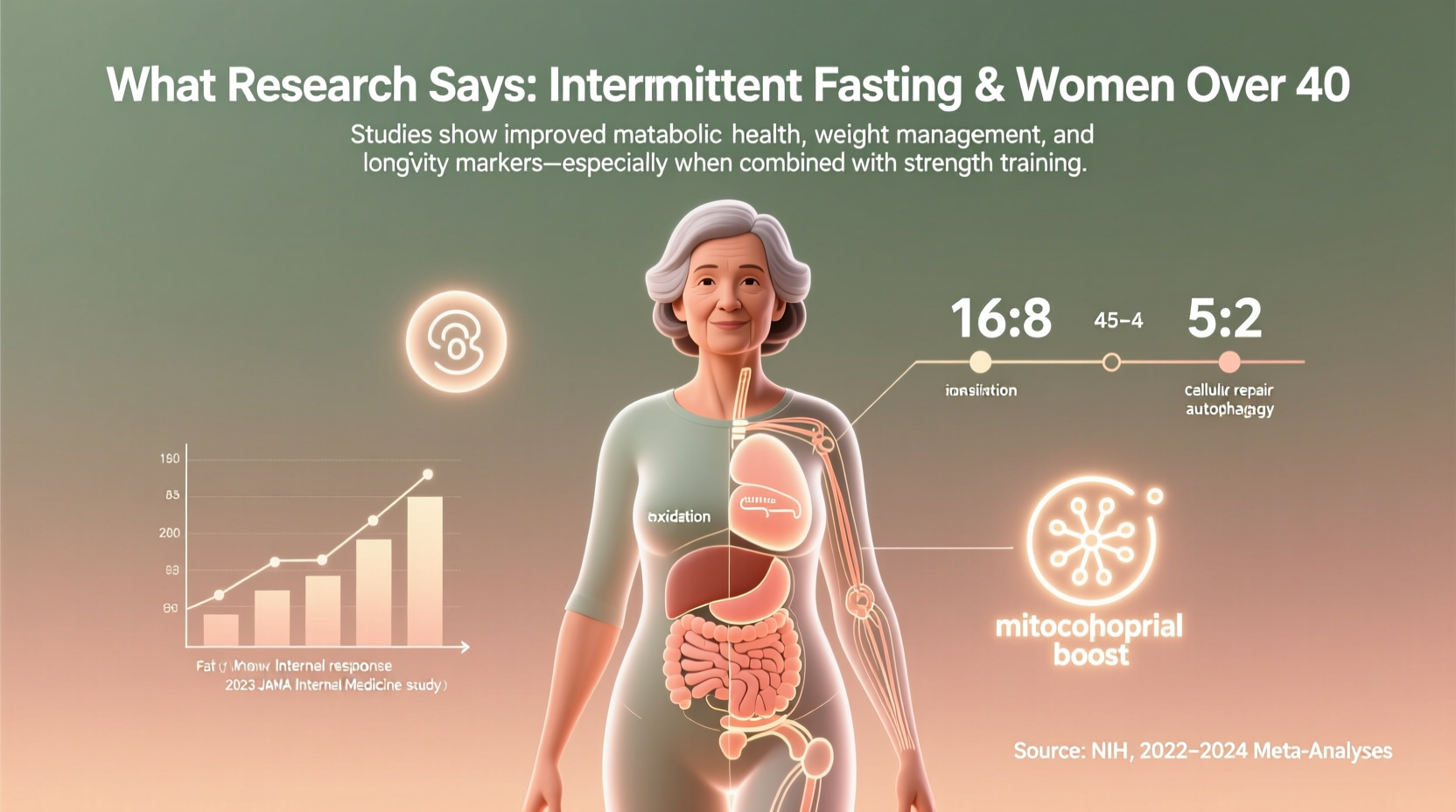
Intermittent fasting involves cycling between periods of eating and fasting. Common methods include the 16:8 method (16 hours fasting, 8-hour eating window), 5:2 fasting (eating normally five days, restricting calories two non-consecutive days), and alternate-day fasting.
At the cellular level, fasting triggers several biological adaptations:
- Autophagy: A cellular cleanup process where damaged components are recycled, potentially slowing aging and reducing disease risk.
- Insulin sensitivity: Fasting lowers insulin levels, improving glucose metabolism—a key factor in preventing type 2 diabetes.
- Growth hormone release: Studies show fasting can increase human growth hormone (HGH) by up to 1,250% in women, aiding fat loss and muscle preservation.
- Reduced inflammation: Chronic inflammation rises with age; IF has been linked to lower inflammatory markers like CRP and IL-6.
A 2020 review published in The New England Journal of Medicine concluded that time-restricted eating improves metabolic health, supports weight loss, and may protect against neurodegenerative diseases. However, most studies included both men and women, with limited focus on midlife female physiology.
“Fasting can be powerful, but women’s bodies respond differently than men’s—especially during perimenopause and beyond. One-size-fits-all protocols often backfire.” — Dr. Sara Gottfried, MD, Hormone Specialist and Author of *The Menopause Solution*
How Hormonal Shifts After 40 Impact Fasting Outcomes
Women over 40 often face fluctuating estrogen, progesterone, cortisol, and insulin levels due to perimenopause, stress, or lifestyle changes. These shifts influence how the body responds to calorie restriction and fasting.
Estrogen helps regulate insulin sensitivity and fat distribution. As estrogen declines, fat tends to accumulate around the abdomen, increasing insulin resistance. This makes metabolic flexibility harder to achieve—yet also more critical.
Cortisol, the stress hormone, plays a pivotal role. Prolonged fasting or overly aggressive protocols can elevate cortisol, especially in women already under stress. High cortisol increases appetite, promotes belly fat storage, and disrupts sleep and thyroid function.
Tip: If you're experiencing insomnia, irritability, or worsened menstrual cycles while fasting, your nervous system may be signaling stress overload. Consider shortening your fast or switching to gentler protocols.Leptin and ghrelin—the hunger-regulating hormones—also behave differently in women during extended fasts. A 2016 study in Obesity found that women experienced greater hunger and less satiety after fasting compared to men, suggesting gender-specific responses to energy restriction.
What Research Says About Weight Loss and Metabolic Health
Several clinical trials have evaluated intermittent fasting in middle-aged women. Results are promising—but nuanced.
A 2022 randomized trial published in JAMA Internal Medicine followed 54 overweight women aged 40–65 using either a 16:8 fasting protocol or standard calorie restriction. After 12 weeks, both groups lost similar amounts of weight (about 7–8 pounds), but the fasting group showed greater improvements in insulin resistance and systolic blood pressure.
However, adherence was lower in the fasting group. Nearly 30% dropped out due to difficulty maintaining the eating schedule, increased hunger, or disrupted sleep.
Another study from the University of Illinois at Chicago observed that postmenopausal women who practiced early time-restricted eating (e.g., finishing dinner by 3 PM) had improved insulin sensitivity—even without weight loss. This suggests that timing matters more than total calories for metabolic health in this demographic.
| Study | Participants | Fasting Method | Key Findings |
|---|---|---|---|
| Treu et al., 2022 (JAMA Intern Med) | 54 women, 40–65 | 16:8 | Equal weight loss vs. calorie restriction; better insulin sensitivity |
| Jamshed et al., 2019 (Cell Metabolism) | 11 pre/postmenopausal women | 6-hour eating window | Reduced appetite, improved sleep, lower oxidative stress |
| Patterson et al., 2015 (Annual Review of Nutrition) | Meta-analysis including women | Various IF models | Moderate weight loss (3–5% body weight); effects plateau after 6 months |
While weight loss occurs initially, long-term maintenance depends on sustainability. For many women over 40, rigid fasting windows conflict with family meals, social events, or energy needs, leading to burnout or rebound eating.
Best Practices: How Women Over 40 Can Fast Safely and Effectively
Not all fasting approaches work equally well for midlife women. The key is alignment with circadian rhythm, hormonal status, and lifestyle. Below is a step-by-step guide to implementing IF safely.
Step 1: Choose the Right Protocol
Start gentle. Aggressive fasting (e.g., 20-hour fasts or alternate-day restriction) may increase cortisol and disrupt menstrual cycles. Instead, begin with:
- 14:10 method: Fast for 14 hours, eat within a 10-hour window (e.g., 8 AM to 6 PM). Ideal for beginners.
- Early time-restricted feeding (eTRF): Eat earlier in the day (e.g., 8 AM to 3 PM). Shown to improve insulin sensitivity and reduce evening cravings.
Step 2: Prioritize Nutrient-Dense Meals
Fasting isn’t a license to undereat or consume junk during eating windows. Women over 40 need adequate protein (1.2–1.6g/kg body weight) to preserve muscle mass and support metabolism. Include healthy fats, fiber, and phytonutrients to stabilize hormones.
Step 3: Monitor Energy and Cycle Response
Track how fasting affects your energy, mood, sleep, and cycle regularity. Signs it’s not working include:
- Increased anxiety or brain fog
- Missed or irregular periods
- Worsening hot flashes or night sweats
- Compulsive eating during feeding windows
Step 4: Adjust Based on Life Phase
Perimenopausal women may benefit more from consistent meal timing than prolonged fasting. Postmenopausal women often tolerate longer fasts better due to stabilized hormones. Listen to your body and adjust accordingly.
Step 5: Combine with Strength Training
Fasting alone can lead to muscle loss if not paired with resistance exercise. Lifting weights 2–3 times per week enhances fat burning during fasting and protects bone density—critical after 40.
Tip: Break your fast with a high-protein meal (e.g., eggs, Greek yogurt, or lean meat) to minimize muscle breakdown and stabilize blood sugar.Real-World Example: Maria’s Journey at Age 47
Maria, a 47-year-old teacher from Portland, struggled with 15 pounds of stubborn weight gain around her midsection despite regular walking and a clean diet. She tried 18:6 fasting for three weeks but noticed worsening insomnia and irritability.
After consulting a functional nutritionist, she switched to a 13:11 schedule—eating from 8:30 AM to 7:30 PM—with an emphasis on protein at breakfast and dinner. She added two weekly strength training sessions and reduced intense cardio, which was elevating her cortisol.
Within eight weeks, Maria lost 10 pounds, her energy improved, and her fasting insulin dropped from 9 μIU/mL to 5.8. “I realized I didn’t need to suffer through long fasts,” she said. “Eating earlier and lifting weights made all the difference.”
Common Mistakes and What to Avoid
Even well-intentioned fasting can backfire when misapplied. Here’s a checklist of pitfalls to avoid:
📋 Intermittent Fasting Checklist for Women Over 40- ✅ Start with 12–14 hour fasts before progressing
- ✅ Eat enough calories and protein during feeding windows
- ✅ Avoid excessive caffeine or exercise during fasts
- ❌ Don’t skip meals the next day to “make up” for breaking a fast
- ❌ Avoid fasting during high-stress periods or travel
- ❌ Never use fasting as a way to restrict severely—this can trigger disordered eating patterns
Also, avoid combining IF with very low-calorie diets. A 2021 study in Nutrients warned that severe energy restriction in midlife women can accelerate bone loss and reduce lean mass.
Frequently Asked Questions
Can intermittent fasting cause hormonal imbalance in women over 40?
Yes, if done too aggressively. Extended fasts or chronic calorie deficits can disrupt the hypothalamic-pituitary-adrenal (HPA) axis, leading to elevated cortisol, suppressed thyroid function, and irregular cycles. Moderation and proper nutrition are essential to prevent imbalance.
Is 16:8 fasting safe for postmenopausal women?
Generally, yes—many postmenopausal women tolerate 16:8 well, especially when combined with strength training and balanced nutrition. However, individual responses vary. Monitor energy, sleep, and digestion, and adjust if negative symptoms arise.
Should I fast every day?
No. Some women benefit from 3–5 fasting days per week rather than daily. Cyclical fasting—aligning with your menstrual cycle (if still cycling)—can also help. For example, fasting during the follicular phase (post-period) may be easier than during the luteal phase (pre-period), when energy needs are higher.
Final Thoughts: A Personalized Approach Wins
Intermittent fasting can be effective for women over 40—but only when tailored to individual biology, lifestyle, and goals. The research supports its potential for improving insulin sensitivity, supporting modest weight loss, and enhancing metabolic markers. However, it’s not a universal solution, nor should it come at the cost of hormonal harmony or mental well-being.
The most successful outcomes occur when fasting is part of a broader strategy: nutrient-rich eating, strength training, stress management, and quality sleep. Rather than chasing extreme protocols, focus on consistency, self-awareness, and sustainable habits.
🚀 Ready to try intermittent fasting the smart way? Start with a 12-hour overnight fast, track how you feel, and gradually adjust based on your body’s feedback. Share your journey in the comments—your experience could help another woman find balance.








