For women navigating their fourth decade and beyond, weight management often becomes more complex. Metabolism slows, muscle mass declines, and hormonal shifts—particularly around perimenopause and menopause—can make traditional calorie-restricted diets less effective. In this landscape, intermittent fasting (IF) has emerged as a popular alternative, promising fat loss, improved insulin sensitivity, and enhanced longevity. But does the science support its use specifically for women over 40? And are there unique considerations that could affect outcomes?
This article explores the physiological realities of aging in women, reviews clinical evidence on intermittent fasting, and provides actionable, research-backed guidance tailored to this demographic.
The Changing Physiology of Women Over 40
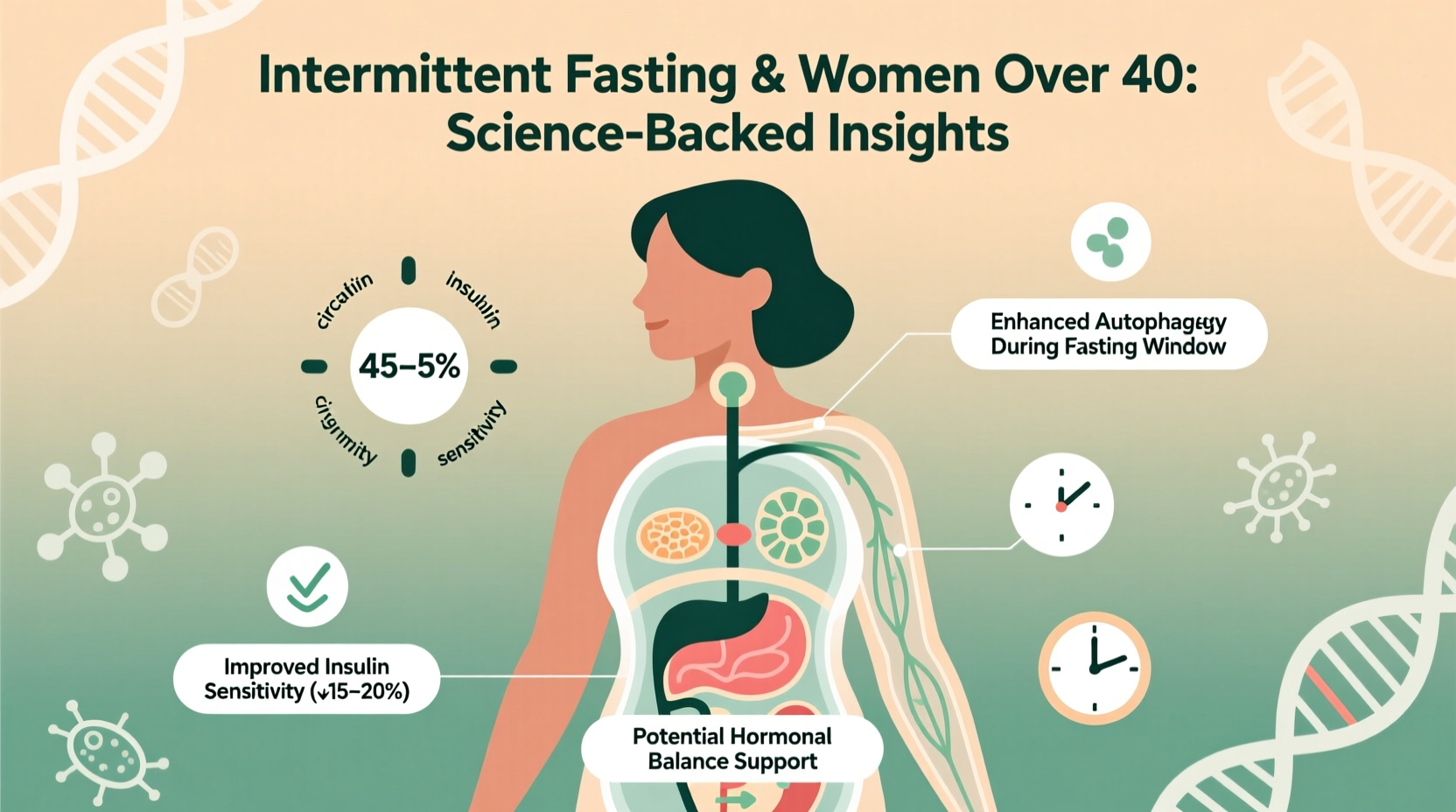
Women over 40 experience several biological transitions that influence how their bodies respond to diet and fasting. The most significant of these is the shift toward menopause, which typically begins between ages 45 and 55 but can start earlier with perimenopause. During this phase, estrogen and progesterone levels fluctuate and eventually decline. These hormonal changes have cascading effects:
- Reduced metabolic rate: Basal metabolic rate drops by about 2–3% per decade after age 30, accelerating slightly after 40 due to decreasing lean muscle mass.
- Increased visceral fat storage: Declining estrogen promotes fat accumulation around the abdomen, raising cardiometabolic risk.
- Insulin resistance: Hormonal shifts and aging contribute to reduced insulin sensitivity, increasing the risk of type 2 diabetes.
- Sleep disruption: Hot flashes and hormonal fluctuations often impair sleep quality, which in turn affects appetite regulation and cortisol levels.
These factors mean that dietary strategies must be both metabolically efficient and hormonally considerate. Intermittent fasting may offer advantages—but only if applied appropriately.
What the Science Says: Intermittent Fasting and Female Health
Intermittent fasting involves cycling between periods of eating and fasting. Common protocols include the 16:8 method (fasting for 16 hours, eating within an 8-hour window), 5:2 fasting (eating normally five days a week, restricting calories two non-consecutive days), and alternate-day fasting.
A growing body of research suggests IF can improve markers of metabolic health. A 2020 randomized clinical trial published in Cell Metabolism found that participants following a 16:8 schedule lost significantly more visceral fat and improved insulin sensitivity compared to controls, even without calorie restriction. However, subgroup analyses revealed that benefits were less consistent in postmenopausal women.
Another study in Obesity (2019) showed that premenopausal women responded well to time-restricted eating, but some postmenopausal women reported increased fatigue, disrupted sleep, and worsened mood—side effects linked to altered cortisol rhythms and neurotransmitter balance under prolonged fasting.
“While intermittent fasting can enhance metabolic flexibility, its impact varies widely in midlife women due to hormonal status. One-size-fits-all approaches may do more harm than good.” — Dr. Felice Gersh, OB-GYN and integrative medicine specialist
The key takeaway: intermittent fasting isn’t inherently ineffective for women over 40—but timing, protocol, and individual health status dramatically influence outcomes.
Optimizing Intermittent Fasting for Women Over 40
Success with IF at this stage of life depends on alignment with biological needs. Here’s how to tailor the approach based on current research.
Choose the Right Protocol
Aggressive fasting regimens like 20-hour fasts or alternate-day cycles may stress the hypothalamic-pituitary-adrenal (HPA) axis, leading to elevated cortisol. For many women over 40, especially those with sleep issues or high stress, a gentler entry is better.
Tip: Start with a 12:12 fasting-to-eating ratio (e.g., stop eating at 8 p.m., resume at 8 a.m.) and gradually extend to 14:10 or 16:8 only if energy, sleep, and mood remain stable.Align Eating Windows with Circadian Rhythms
Emerging chronobiology research emphasizes that when you eat matters as much as how long you fast. A 2022 study in Nature Communications demonstrated that early time-restricted eating (eTRF)—consuming meals between 8 a.m. and 2 p.m.—improved insulin sensitivity and blood pressure in prediabetic men. Though female data was limited, similar patterns were observed in women who ate earlier in the day.
For women over 40, front-loading calories may support metabolic health while minimizing nighttime digestive strain and improving sleep.
Prioritize Protein and Nutrient Density
Muscle preservation is critical after 40. Sarcopenia—the age-related loss of muscle—accelerates without adequate protein intake. Fasting can increase muscle catabolism if not balanced with sufficient amino acids during feeding windows.
Aim for 1.6–2.2 grams of protein per kilogram of body weight daily, distributed across 2–3 meals. Include complete proteins like eggs, fish, poultry, Greek yogurt, and legumes.
Monitor Hormonal and Emotional Responses
Some women report worsened PMS-like symptoms, irregular cycles (in perimenopausal women), or heightened anxiety when starting IF. These signals suggest potential HPA axis dysregulation or inadequate fueling.
If dizziness, irritability, insomnia, or menstrual irregularities occur, shorten the fasting window or discontinue temporarily. Fasting should not come at the cost of hormonal harmony.
Do’s and Don’ts of Intermittent Fasting After 40
| Do | Don't |
|---|---|
| Eat within a 12–16 hour fasting window aligned with daylight hours | Fast for more than 16 hours regularly, especially if stressed or sleep-deprived |
| Consume protein-rich, fiber-filled meals during eating periods | Break fasts with sugary or processed foods that spike insulin |
| Stay hydrated with water, herbal tea, or electrolyte-infused drinks | Ignore signs of fatigue, brain fog, or mood swings |
| Combine IF with strength training to preserve lean mass | Rely solely on fasting without attention to overall nutrition quality |
| Adjust fasting schedule during high-stress periods or illness | Treat IF as a rigid rule rather than a flexible tool |
Mini Case Study: Sarah’s Experience with Time-Restricted Eating
Sarah, a 47-year-old marketing executive, began gaining abdominal weight despite consistent cardio and portion control. She struggled with afternoon energy crashes and frequent nighttime awakenings. After reading about intermittent fasting, she adopted a strict 16:8 plan, skipping breakfast and eating from noon to 8 p.m.
Initially, she lost 3 pounds in two weeks. But by week four, her sleep worsened, her periods became irregular, and she felt increasingly anxious. She consulted a functional medicine practitioner who suggested shifting her eating window earlier and adding protein at each meal.
She switched to eating from 8 a.m. to 4 p.m., included eggs, salmon, lentils, and vegetables, and added resistance training three times a week. Within six weeks, her energy stabilized, sleep improved, and she lost another 5 pounds—this time sustainably.
Sarah’s story illustrates that while IF can work, timing and nutrient composition are just as important as the fast itself.
Step-by-Step Guide to Starting Intermittent Fasting Safely
- Assess your current health: Consult your doctor if you have diabetes, thyroid issues, adrenal fatigue, or a history of disordered eating.
- Begin with a 12-hour fast: Stop eating at 7 p.m., resume at 7 a.m. Maintain this for 1–2 weeks to assess tolerance.
- Incorporate nutrient-dense meals: Focus on whole foods—lean proteins, healthy fats, complex carbs, and fiber.
- Gradually extend the fast: Move to 14:10, then 16:8 only if energy, mood, and digestion remain stable.
- Track symptoms: Keep a journal of sleep quality, hunger levels, mood, and menstrual changes.
- Adjust based on feedback: Shorten the fast during stressful periods or if negative side effects emerge.
- Combine with lifestyle supports: Prioritize sleep, manage stress through mindfulness or yoga, and engage in strength training.
Frequently Asked Questions
Can intermittent fasting cause hormonal imbalance in women over 40?
Yes, in some cases. Prolonged or aggressive fasting may disrupt cortisol, leptin, and reproductive hormones—especially in women already experiencing hormonal fluctuations due to perimenopause. Mild to moderate fasting protocols are generally safer and more sustainable.
Will intermittent fasting help me lose belly fat after 40?
It can, particularly when combined with proper nutrition and exercise. Studies show IF reduces visceral fat by improving insulin sensitivity and promoting fat oxidation. However, results vary, and excessive fasting may backfire by increasing cortisol-driven abdominal fat storage.
Is it safe to fast if I’m going through menopause?
For many women, yes—but caution is advised. Menopause already challenges metabolic and hormonal balance. If you experience hot flashes, insomnia, or mood swings, a less restrictive approach (like 12:12 or 14:10) may be preferable. Always listen to your body and adjust accordingly.
Checklist: Is Intermittent Fasting Right for You?
- ☑ I have no history of eating disorders or extreme weight loss
- ☑ My blood sugar is stable (no hypoglycemia)
- ☑ I get 7+ hours of quality sleep most nights
- ☑ I manage stress effectively (through meditation, therapy, etc.)
- ☑ I consume enough protein and nutrients during eating windows
- ☑ I’m willing to adjust or stop if I feel unwell
- ☑ I’ve consulted my healthcare provider if I have chronic conditions
Conclusion: A Strategic, Personalized Approach Wins
Intermittent fasting can be effective for women over 40—but not universally, and not without nuance. The science supports its potential to improve metabolic health, reduce visceral fat, and enhance cellular repair processes like autophagy. Yet, its success hinges on thoughtful implementation that respects the hormonal and metabolic realities of midlife women.
Rather than adopting IF as a rigid trend, treat it as one tool among many. Pair it with strength training, prioritize sleep, eat whole foods rich in phytonutrients, and stay attuned to your body’s signals. When personalized and practiced with awareness, intermittent fasting can be a powerful ally in maintaining vitality, energy, and long-term health.
💬 Have you tried intermittent fasting after 40? Share your experience, challenges, or questions in the comments—your insights could help others navigate this journey with confidence.








