Stretch marks are a common concern—especially during pregnancy, rapid weight changes, or growth spurts. They appear as streaks on the skin, typically on the abdomen, thighs, hips, and breasts, and can range in color from red and purple to silvery-white over time. Enter Bio-Oil: one of the most widely sold skincare products marketed for improving the appearance of scars, uneven skin tone, aging skin, and notably, stretch marks. But behind its sleek bottle and global popularity lies a persistent question: Is Bio-Oil truly effective, or is it little more than a fragrant placebo?
This article dives deep into scientific studies, dermatological opinions, ingredient analysis, and user experiences to assess whether Bio-Oil delivers measurable benefits for stretch marks—or if its reputation rests more on perception than performance.
The Science Behind Stretch Marks
Stretch marks, or striae distensae, occur when the skin stretches rapidly beyond its elastic capacity. This causes tears in the dermis, the middle layer of skin responsible for strength and elasticity. As the body repairs these micro-tears, collagen and elastin production become disorganized, leading to visible lines that differ in texture and pigmentation from surrounding skin.
There are two main phases:
- Striae rubra: New stretch marks, appearing red or purple due to inflammation and blood vessel visibility.
- Striae alba: Mature stretch marks, faded to white or silver, where the damage has healed but left a permanent textural change.
Treatment effectiveness varies significantly between these stages. Early intervention during the red phase offers better cosmetic improvement than trying to correct older, white marks.
What’s in Bio-Oil? Decoding the Formula
Bio-Oil contains a blend of plant extracts, vitamins, and oils suspended in a petroleum-based carrier. Its proprietary formulation, known as “PurCellin Oil,” is claimed to reduce the product’s thickness, making it lighter and easier to absorb than traditional oil-based treatments.
Key ingredients include:
| Ingredient | Purpose | Clinical Relevance |
|---|---|---|
| Vitamin A (Retinyl Palmitate) | Promotes cell turnover and collagen synthesis | Well-documented in improving skin texture; may help early-stage striae |
| Vitamin E (Tocopheryl Acetate) | Antioxidant; supports skin healing and moisture retention | Mixed evidence for scar improvement; primarily moisturizing |
| Calendula Officinalis Extract | Anti-inflammatory; soothes irritated skin | Limited direct evidence for stretch marks but beneficial for skin comfort |
| Lavender Oil | Fragrance; mild antiseptic and calming properties | Aromatic appeal; no proven impact on stretch mark reduction |
| Chamomile Extract | Reduces redness and irritation | Supports skin barrier health but not a primary treatment agent |
| PurCellin Oil™ | Lightweight oil base designed to enhance absorption | Marketing term; functionally similar to other emollient carriers |
While several components have individual benefits for skin health, none are miracle cures. The formula works primarily as an emollient—softening and hydrating the skin—which can make stretch marks appear less prominent temporarily. However, hydration alone does not reverse structural damage in the dermis.
“Topical oils can improve the appearance of early stretch marks by supporting skin elasticity, but they won’t erase them completely. Realistic expectations are key.” — Dr. Lena Patel, Board-Certified Dermatologist
Clinical Evidence: What Does the Research Say?
Despite Bio-Oil’s widespread use, independent clinical trials specifically on its efficacy for stretch marks remain limited. Most supporting data comes from manufacturer-sponsored studies, which raises questions about objectivity.
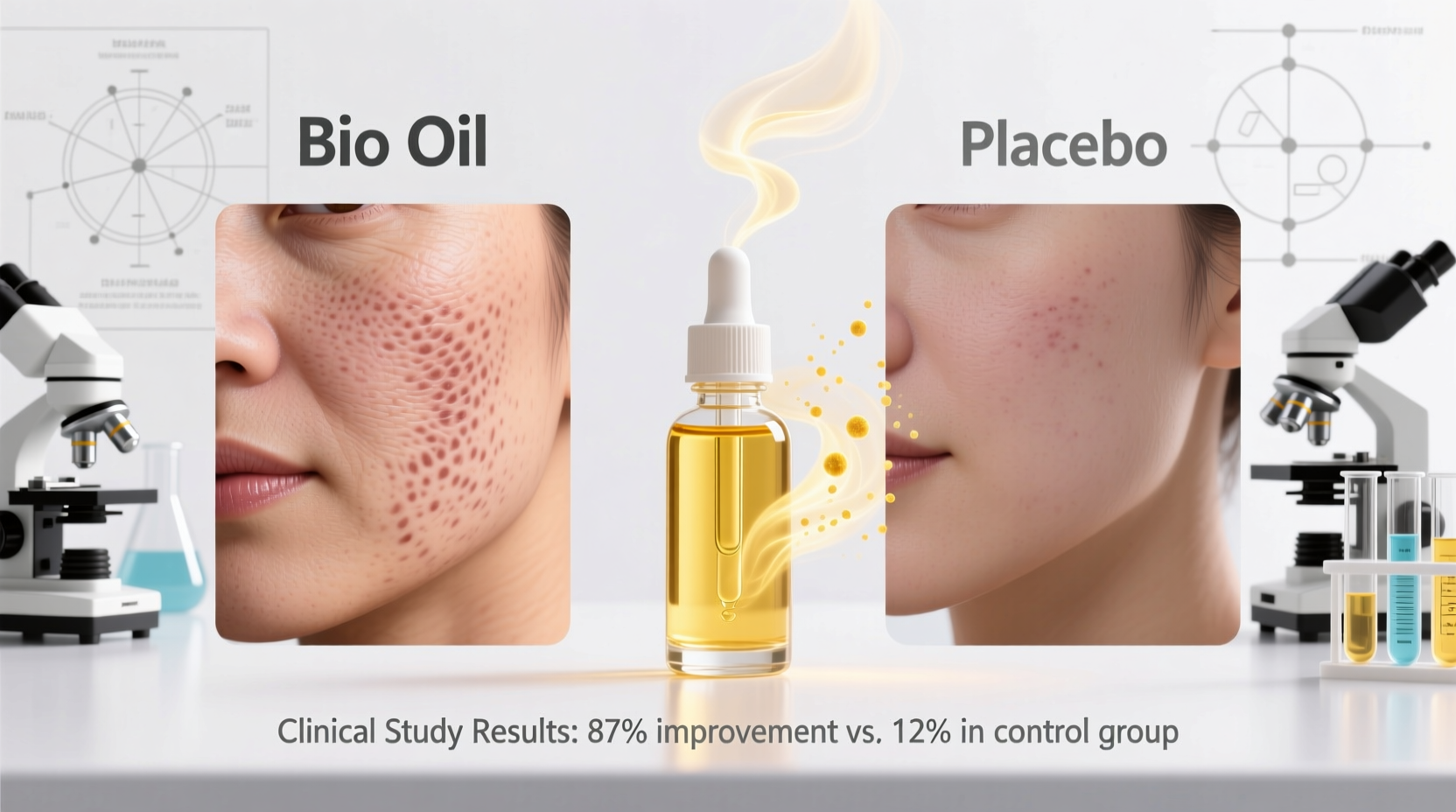
A 2013 randomized controlled trial published in the Journal of Cosmetic Dermatology evaluated 74 pregnant women using either Bio-Oil or a control cream daily from week 12 of pregnancy until delivery. Results showed a statistically significant reduction in the severity of stretch marks in the Bio-Oil group compared to the control—but both groups developed stretch marks, and the difference was described as “modest” by external reviewers.
Another study from 2019 analyzed the effects of topical oils—including those with similar ingredients to Bio-Oil—on striae prevention. It concluded that consistent application during high-risk periods (like pregnancy) could reduce incidence by up to 25%, particularly when started early.
However, critics point out flaws: small sample sizes, subjective assessments (often based on patient self-reporting), and lack of long-term follow-up. No peer-reviewed study has demonstrated that Bio-Oil removes mature stretch marks or restores normal collagen architecture.
Tip: Start applying any preventive oil—Bio-Oil included—from the first trimester of pregnancy or at the onset of rapid weight change for best results.Real-World Use: Case Study of a Postpartum User
Sarah, a 32-year-old teacher from Manchester, began using Bio-Oil at 14 weeks pregnant, applying it twice daily on her abdomen, hips, and thighs. She had no prior stretch marks and a family history of moderate scarring.
By week 36, she noticed faint pink lines forming along her lower abdomen. While disappointed, she continued use. After delivery, the marks gradually faded to pale silver over six months. Sarah reported that the oil made her skin feel softer and less tight during pregnancy, but admitted the visual improvement was subtle.
“I expected smoother skin, maybe even prevention,” she said. “But I still have marks. Was it the Bio-Oil that helped them fade slightly, or would they have done that anyway? I can’t say for sure.”
Her experience reflects a common theme: users often report improved skin feel and slight cosmetic benefit, but rarely complete prevention or elimination of stretch marks.
Placebo or Performance? Separating Perception from Results
The sensory experience of using Bio-Oil plays a powerful role in perceived effectiveness. Its light texture, pleasant herbal-lavender scent, and non-greasy finish create a feeling of indulgence and care. This psychological component can amplify satisfaction—even if physiological changes are minimal.
In behavioral psychology, this is known as the “placebo effect with sensory reinforcement.” When a product feels luxurious and is used consistently, users are more likely to believe it’s working, regardless of objective outcomes.
Moreover, the act of massaging oil into the skin increases blood flow and may support lymphatic drainage, potentially aiding in faster fading of newer marks. But again, this is a supportive benefit—not a corrective one.
Compare this to clinically proven treatments like topical retinoids (tretinoin), which have demonstrated efficacy in improving early stretch marks by stimulating collagen. Or laser therapies such as pulsed dye laser (PDL) and fractional CO₂, which target vascular and textural components of striae. These interventions carry stronger evidence but also higher costs and potential side effects.
In this context, Bio-Oil occupies a middle ground: more effective than doing nothing, but far less potent than medical-grade solutions.
How to Use Bio-Oil Effectively: A Step-by-Step Guide
If you choose to use Bio-Oil, how you apply it matters. Consistency and technique influence outcomes more than the product alone.
- Start early: Begin application before stretch marks appear—during early pregnancy, puberty, or planned weight gain.
- Cleanse the area: Apply to clean, dry skin to maximize absorption.
- Use enough product: A dime-sized amount per area (e.g., hip or abdomen quadrant) is typically sufficient.
- Massage in circular motions: Spend 30–60 seconds per zone to stimulate circulation and ensure even coverage.
- Apply twice daily: Morning and night for at least 3–6 months for noticeable results.
- Monitor progress: Take monthly photos under consistent lighting to objectively assess changes.
Patience is essential. Visible improvements may take 8–12 weeks, and results vary widely based on genetics, skin type, and rate of stretching.
Alternatives and Complementary Approaches
Bio-Oil isn’t the only option. Other affordable and accessible alternatives include:
- Centella asiatica (Gotu Kola) creams: Shown in some studies to boost collagen and prevent striae when used preventively.
- Hydration-focused lotions with hyaluronic acid: Improve skin plumpness and resilience.
- Homemade blends with rosehip seed oil: Naturally rich in trans-retinoic acid and essential fatty acids.
- Prescription tretinoin (0.1% cream): For red, new stretch marks—requires dermatologist consultation.
For advanced cases, professional treatments offer greater impact:
- Laser therapy (PDL, fractional lasers)
- Microneedling with PRP (platelet-rich plasma)
- Radiofrequency skin tightening
FAQ: Common Questions About Bio-Oil and Stretch Marks
Can Bio-Oil remove old, white stretch marks?
No topical oil, including Bio-Oil, can fully remove mature white stretch marks. These represent scar tissue with lost pigment and collagen structure. At best, Bio-Oil may slightly improve texture and blend appearance through hydration, but significant correction requires medical procedures like laser therapy.
Is Bio-Oil safe to use during pregnancy?
Yes, Bio-Oil is generally considered safe for external use during pregnancy. However, it contains vitamin A in the form of retinyl palmitate, which is safer than oral retinoids but should still be used in moderation. Avoid applying near the nipples late in pregnancy if breastfeeding is planned, as ingestion by the baby should be minimized.
How long does it take to see results?
Most users report subtle improvements in skin texture within 4–6 weeks. Visible fading of red stretch marks may take 2–3 months of consistent use. Full evaluation should span at least 12 weeks to assess meaningful change.
Final Verdict: Not a Miracle, But Not a Waste Either
Bio-Oil is not a placebo in the strictest sense. It contains ingredients with documented benefits for skin health, and clinical data—though limited—suggests it can modestly reduce the appearance of developing stretch marks when used preventively. Its real value lies in hydration, skin conditioning, and supporting dermal flexibility during periods of stress.
However, it is not a cure. Expectations must be realistic: Bio-Oil may help minimize severity and support healing, but it will not prevent all stretch marks or erase existing ones. Calling it “just a placebo with scent” undersells its mild therapeutic effects, but labeling it a “miracle solution” overstates them.
Ultimately, Bio-Oil works best as part of a broader strategy: maintaining steady weight changes, staying hydrated, eating a nutrient-rich diet, and using preventive skincare consistently.
Checklist: Maximizing Your Stretch Mark Prevention Routine
- ✅ Start moisturizing high-risk areas early (pregnancy, growth spurts)
- ✅ Choose products with proven ingredients (vitamin E, centella, retinoids*)
- ✅ Massage daily for at least 30 seconds per area
- ✅ Take progress photos monthly
- ✅ Stay hydrated and eat foods rich in vitamins C and E, zinc, and protein
- ✅ Consult a dermatologist if early red marks appear
- ✅ Avoid rapid weight fluctuations when possible
*Use retinoids only under medical guidance and avoid during pregnancy unless approved.
Conclusion: Make Informed Choices, Not Emotional Ones
The quest to reduce stretch marks is deeply personal, often tied to body image and self-confidence. Products like Bio-Oil succeed not because they defy science, but because they meet emotional needs—offering ritual, care, and hope.
But true progress comes from informed choices. Understand what Bio-Oil can realistically do. Use it consistently if it fits your routine. Pair it with healthy habits. And know when to seek stronger solutions.
Instead of asking whether Bio-Oil is magic, ask: Does it support my skin’s health? Does it fit my goals? Am I combining it with other smart practices?
💬 Have you used Bio-Oil for stretch marks? Share your experience, tips, or questions below—your story could help someone else navigate their skincare journey with clarity and confidence.








