
For outdoor enthusiasts and full-time van lifers alike, reliable electricity off the grid is no longer a luxury—it’s a necessity. Whether you're powering a coffee maker at dawn, charging camera gear after a hike, or running a mini-fridge in your campervan, access to clean, quiet energy can redefine your experience in nature. Portable power stations have surged in popularity over the last few years, promising freedom from noisy generators and fragile solar setups. But are they truly worth the investment for weekend camping trips and mobile living? The answer depends on your usage patterns, power needs, and long-term goals.
Understanding Portable Power Stations
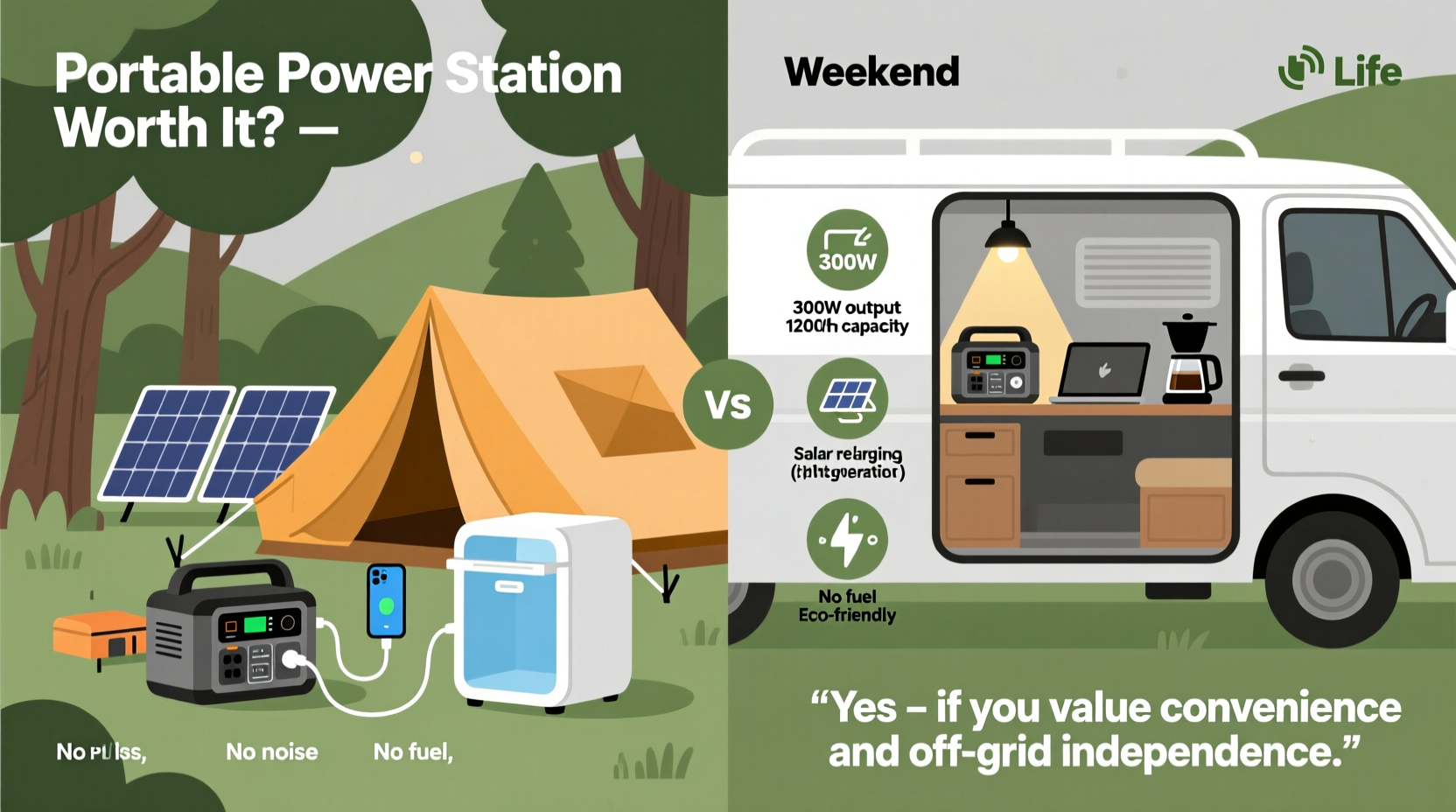
A portable power station is a compact, battery-powered device that stores electrical energy for later use. Unlike gas generators, these units produce zero emissions and operate silently. They typically feature multiple output ports—USB-A, USB-C, AC outlets, DC ports, and sometimes even wireless charging—making them compatible with everything from smartphones to small appliances.
Most models are rechargeable via wall outlets, car chargers, or solar panels, offering flexibility in how and where you refill them. Capacities range from 200 watt-hours (Wh) for lightweight backpacking kits to over 3,000 Wh for heavy-duty van life systems. While early versions were bulky and inefficient, modern lithium-ion or LFP (lithium iron phosphate) batteries offer improved safety, lifespan, and performance in cold weather.
“Portable power stations bridge the gap between convenience and sustainability for off-grid travelers.” — Dr. Alan Reyes, Renewable Energy Systems Engineer
When a Portable Power Station Makes Sense
The value of a portable power station isn’t universal—it hinges on your lifestyle and energy demands. For some, plugging in a phone using a car adapter suffices. For others, maintaining refrigeration, lighting, and communication tools requires more robust solutions.
Weekend campers who enjoy car camping with moderate tech use—such as charging phones, running LED lights, or powering a small fan—can benefit significantly from a mid-range unit (300–600Wh). These devices eliminate the need to drain a vehicle’s starter battery and allow for setup independence from the car.
Van lifers, especially those living full-time or traveling long-term, often rely on larger systems (1,000Wh+) paired with rooftop solar panels. In this context, a portable station acts as a primary or backup power source, supporting essentials like laptops, medical devices, electric kettles, and CPAP machines. It also enables work-from-the-wild lifestyles without constant reliance on cafes or RV parks.
Tip: If you regularly use more than three electronic devices per trip, a portable power station likely pays for itself in convenience and reliability.Cost vs. Value: Breaking Down the Investment
Portable power stations vary widely in price, from $200 for entry-level models to over $2,000 for high-capacity, solar-ready systems. To assess whether one is worth it, consider both upfront cost and long-term utility.
| Capacity Range | Average Price | Ideal Use Case | Lifespan (Cycles) |
|---|---|---|---|
| 200–400Wh | $200–$400 | Light weekend camping, phone/laptop charging | 500–1,000 cycles |
| 500–1,000Wh | $500–$900 | Frequent camping, van life basics | 800–1,500 cycles |
| 1,000–2,000Wh | $1,000–$1,800 | Full-time van dwelling, multi-device use | 2,000+ cycles (LFP models) |
| 2,000Wh+ | $2,000+ | Extended off-grid stays, home backup hybrid | 3,000+ cycles (industrial-grade) |
Compare this to alternatives: gas generators cost less initially ($150–$500) but require fuel, maintenance, and noise tolerance. Solar-only setups may be cheaper in theory, but without storage, they’re useless at night or during cloudy days. A well-chosen power station reduces dependency on all three while offering plug-and-play simplicity.
Real Example: Sarah’s Transition to Van Life
Sarah, a freelance photographer based in Colorado, upgraded to a 1,024Wh LFP power station after months of struggling with dead batteries and inconsistent solar charging. She previously relied on her van’s alternator to charge devices, which limited her ability to work when parked. After integrating a portable unit with two 200W solar panels, she gained the freedom to edit photos remotely, refrigerate perishables, and run a small heater on chilly mornings.
“It wasn’t just about convenience,” she said. “It was about being able to sustain my livelihood while living outdoors. The power station paid for itself within six months by eliminating daily café stops and emergency generator rentals.”
Key Factors to Consider Before Buying
Not all power stations are created equal. Choosing the right one requires evaluating several technical and practical factors.
1. Total Power Needs
Add up the wattage of all devices you plan to run simultaneously. For example:
- Laptop: 60W
- Mini fridge: 50W (cycles on/off)
- LED lights: 10W
- Phone charger: 20W
Total continuous load: ~140W. Over 5 hours, that’s 700Wh. Choose a station with at least 20% more capacity to account for inefficiencies and aging.
2. Recharge Flexibility
Can you recharge from solar? From your car? From an outlet? Models with dual-input capability (AC + solar) offer faster recovery. Look for solar input compatibility matching your panel voltage (e.g., 12–60V).
3. Weight and Portability
A 1,000Wh unit weighs 20–30 lbs. If you frequently carry gear from car to campsite, prioritize lighter models under 15 lbs, even if it means lower capacity.
4. Battery Chemistry
Lithium iron phosphate (LFP) batteries last longer (3,000+ cycles), handle heat better, and are safer than standard lithium-ion. Though pricier, they’re ideal for frequent or long-term use.
5. Expandability
Some brands (like EcoFlow, Jackery, Bluetti) offer expandable systems where you can add extra battery packs later. This allows incremental upgrades instead of replacing the entire unit.
Tip: Always check peak surge watts—some appliances (like fridges or blenders) draw double their rated power briefly on startup.Step-by-Step Guide: Choosing the Right Model
- Inventory Your Devices: List every item you want to power and note its wattage (found on labels or manuals).
- Estimate Daily Usage: Multiply each device’s wattage by hours used per day. Sum totals to get daily watt-hour demand.
- Select Capacity: Choose a station with 1.5x your daily need to avoid deep discharges and extend battery life.
- Evaluate Recharge Options: Determine how you’ll recharge—solar, car, or shore power—and ensure compatibility.
- Test Real-World Reviews: Search for field tests from van lifers or campers with similar needs. Pay attention to noise, build quality, and app integration.
- Budget for Accessories: Factor in costs for solar panels, cables, or mounting hardware if not included.
- Purchase and Test: Run a full cycle before heading into remote areas—discharge and recharge under normal conditions.
Common Pitfalls to Avoid
- Overestimating solar input: A 200W panel rarely produces 200W due to angle, shade, and weather. Assume 60–70% efficiency in real conditions.
- Ignoring inverter efficiency: Most stations lose 10–15% energy converting DC to AC power. Account for this in planning.
- Using undersized cables: Thin or low-gauge extension cords reduce efficiency and create fire risks.
- Storing at low charge: Leaving a unit below 20% for weeks degrades battery health. Store between 30–80%.
Checklist: Is a Portable Power Station Right for You?
Answer “yes” to three or more of these questions to determine if a purchase makes sense:
- Do you camp more than four weekends a year?
- Do you rely on electronics for work or safety (GPS, comms, medical devices)?
- Have you used or considered a gas generator but dislike the noise or fumes?
- Are you building out a van or camper with electrical needs beyond basic lighting?
- Do you want to reduce wear on your vehicle’s alternator and starter battery?
- Are you interested in sustainable, solar-rechargeable energy solutions?
If most answers are yes, investing in a portable power station is likely a smart move.
Frequently Asked Questions
Can I run a coffee maker or hot plate from a portable power station?
Yes, but only if the station has sufficient capacity and output. A typical electric coffee maker draws 800–1,200W. You’ll need a unit with at least 1,000Wh capacity and 1,000W+ AC output. Smaller pour-over heaters (like the AeroPress Go) are more feasible for lower-capacity stations.
How long does a portable power station last?
With proper care, most last 5–10 years. LFP models endure 3,000+ charge cycles, meaning daily use for 8+ years before dropping below 80% capacity. Lithium-ion lasts 500–1,000 cycles, suitable for occasional users.
Are they safe inside a van or tent?
Yes. Unlike gas generators, they emit no carbon monoxide and generate minimal heat. However, ensure ventilation and avoid placing near flammable materials. LFP batteries are inherently more stable and less prone to thermal runaway.
Final Verdict: Worth It or Not?
For casual campers who spend weekends disconnected and use minimal electronics, a portable power station might be overkill. A simple car charger or solar bank could suffice. But for anyone integrating technology into their outdoor life—whether for comfort, productivity, or health—a quality power station delivers tangible benefits.
In van life, the case is even stronger. Reliable electricity supports cooking, cooling, communication, and remote work. When paired with solar, it creates a self-sustaining ecosystem that enhances mobility and independence. The initial cost is offset by reduced generator fuel, fewer RV park fees, and greater peace of mind.
Ultimately, a portable power station isn’t just about powering devices—it’s about empowering your lifestyle. It removes constraints, expands possibilities, and lets you live comfortably beyond the reach of power lines.
🚀 Ready to take control of your off-grid energy? Start by calculating your daily watt-hour needs and explore models that match your rhythm of travel. Share your setup or ask questions in the comments—your journey inspires others.








