
Disconnecting from the digital world is often the entire point of going camping. The idea of sitting by a fire, listening to birdsong, and sleeping under the stars without notifications or screen time holds deep appeal. For many outdoor enthusiasts, especially those embracing a minimalist or back-to-basics approach, bringing electronic devices — let alone a portable power station — seems counterintuitive. Yet, even in the absence of high-tech gadgets, there are practical, safety-related, and subtle lifestyle reasons why a portable power station might still be worth considering.
This article explores whether investing in a portable power station makes sense when your camping trip involves no smartphones, laptops, drones, or other modern tech accessories. We’ll examine overlooked needs, emergency preparedness, lighting solutions, and how even low-tech campers benefit from access to stored electricity — all while respecting the ethos of simplicity and immersion in nature.
The Minimalist Camper’s Dilemma
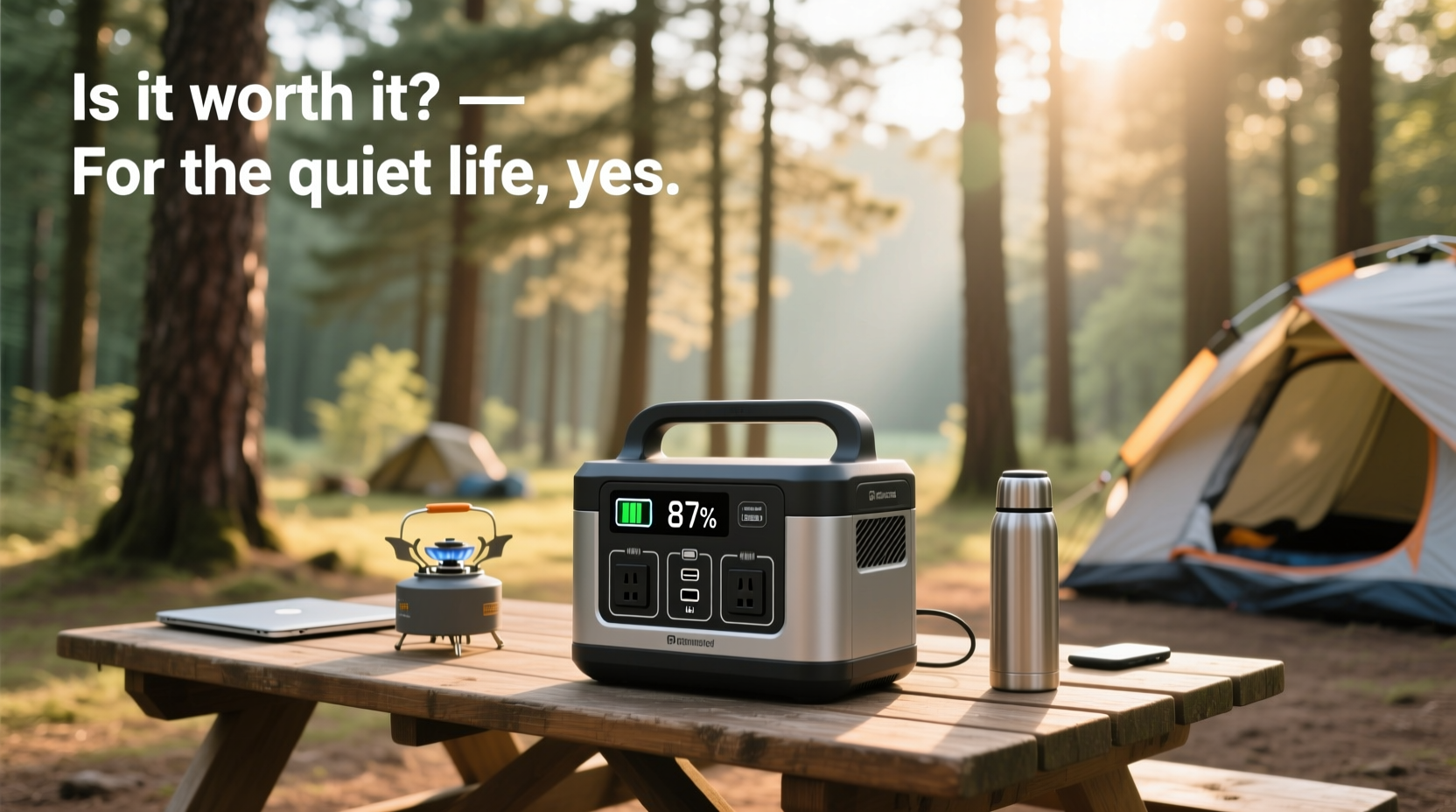
Minimalist camping emphasizes self-reliance, reduced environmental impact, and a deeper connection with the natural world. Many choose this style specifically to escape the noise and dependency of modern life. Carrying heavy gear like a 10- or 20-pound power station can feel at odds with that philosophy. After all, if you're not charging anything, what's the point?
But the assumption that “no gadgets” means “no need for power” overlooks several quiet but meaningful applications. Even the most analog-focused camper may find themselves relying on small electric tools or safety equipment that require occasional recharging. The value isn’t always about convenience — it’s about capability, resilience, and peace of mind.
Tip: A lightweight power station (under 5 lbs) with USB-only output can serve emergency needs without adding significant pack weight.Hidden Uses for Power in Low-Tech Camping
Even without smartphones or entertainment devices, electricity plays a role in modern outdoor safety and comfort. Consider these often-overlooked uses:
- Headlamps and flashlights: While battery-powered options exist, rechargeable models are more sustainable and cost-effective over time. A single charge lasts days, but having a reliable backup source ensures you’re never left in the dark.
- First aid devices: Some advanced medical kits include electronic thermometers, pulse oximeters, or emergency beacons (like PLBs or satellite messengers), which require periodic charging.
- Camping fans or heated clothing (seasonal): In extreme heat or cold, personal climate control gear — such as battery-heated gloves or compact ventilation fans — can improve sleep quality and safety.
- Water purification systems: UV sterilization pens (e.g., SteriPen) rely on batteries or direct charging. These offer fast, chemical-free water treatment where boiling isn't practical.
- Emergency communication: Though you may not carry a phone daily, keeping one powered off in a dry bag for emergencies means you’ll need a way to charge it if needed.
These aren’t luxuries; they’re tools that enhance safety and comfort without compromising the spirit of disconnecting. A modest 150–300Wh power station can support multiple charges across such devices over a long weekend.
“Even minimalists benefit from redundancy. When weather turns bad or someone gets injured, access to power for a GPS or comms device can be the difference between a minor setback and a serious situation.” — Daniel Reyes, Wilderness First Responder & Outdoor Educator
Power Stations vs. Alternatives: A Practical Comparison
Before deciding whether a power station is worth it, compare it to traditional alternatives commonly used by low-tech campers.
| Solution | Pros | Cons | Best For |
|---|---|---|---|
| Disposable Batteries | No charging needed; widely available | Expensive long-term; environmentally harmful; bulkier over time | Occasional flashlight use |
| Rechargeable AA/AAA + Solar Charger | Eco-friendly; reusable; moderate upfront cost | Slow charging; inconsistent in cloudy conditions; limited capacity | Light-duty electronics |
| Portable Power Station (e.g., 200–300Wh) | High energy density; fast charging; powers multiple devices; stable output | Heavier; higher initial cost; requires pre-trip charging | Versatile, multi-day trips |
| Hand-Crank Devices | No fuel or sun dependence; emergency-ready | Tiring to use; low efficiency; short runtime | Last-resort scenarios |
| No Power Source | Lightest option; purest disconnection | No flexibility; risk during emergencies; limits tool choice | Short, fair-weather trips near roads |
The data shows that while disposable batteries work for simple needs, they become inefficient and wasteful over time. Solar chargers are appealing but unreliable without consistent sunlight. A compact power station offers reliability and versatility — particularly valuable when conditions deteriorate unexpectedly.
A Real-World Scenario: Backcountry Rainstorm
Consider Mark, an experienced hiker who prefers paper maps, candle lanterns, and silence on his solo backpacking trips. He avoids gadgets entirely — except for a fully charged smartphone stored in a waterproof case, turned off unless absolutely necessary.
On a three-day trek through the Pacific Northwest, he encountered unseasonal rain. His trail shoes soaked through, visibility dropped, and navigation became difficult. By day two, he needed to check the weather radar and confirm his route using offline maps on his phone. Without a way to recharge it, he had only 12% battery remaining — enough for one last GPS check before losing contact.
Had he carried a small 200Wh power station — weighing about 5 pounds — he could have safely powered his phone, headlamp, and even a compact fan to dry damp gear inside his tent vestibule. That extra layer of security wouldn’t have changed his experience much, but it would have reduced stress significantly.
This isn’t about encouraging dependency on technology. It’s about recognizing that nature doesn’t always conform to plans — and being prepared shouldn’t mean abandoning simplicity.
Smart Ways to Use a Power Station Without Compromising Simplicity
You don’t need to turn your campsite into a mobile office to justify owning a power station. Here’s how to integrate one thoughtfully:
- Use it passively: Charge all your devices at home before departure. The power station acts as a silent backup, stored away until needed.
- Prioritize safety gear: Reserve its capacity for emergency tools — radios, locator beacons, medical devices — rather than entertainment.
- Choose solar-compatible models: Pair a small station with a foldable solar panel. During daylight hikes, leave the panel outside your pack or tent to harvest free energy.
- Share with others: On group trips, one shared unit can support everyone’s essential needs without each person carrying duplicate batteries.
- Downsize appropriately: Opt for entry-level models like the Jackery Explorer 240 (240Wh) or Anker Solix C100 (192Wh). These weigh less than 7 pounds and fit easily in a car-camping setup.
Frequently Asked Questions
Do I really need a power station if I’m not using any electronics?
If you truly use zero rechargeable devices — including headlamps, GPS units, or emergency phones — then a power station adds unnecessary weight. However, most people do use at least one such device, even minimally. In those cases, a small station improves preparedness without demanding constant use.
Can I rely solely on solar panels instead?
Solar panels alone lack storage capacity. They only generate power when the sun shines and typically require a battery (like a power station) to store energy. Relying only on solar without a buffer means unpredictable availability, especially during storms or early mornings.
What size power station is appropriate for gadget-free camping?
For low-power needs, a 150–300Wh model is sufficient. This range can recharge a headlamp dozens of times, power a satellite messenger multiple times, or run a small fan for hours. Larger units (500Wh+) are better suited for base camps or RV-style setups.
Step-by-Step: Evaluating Whether a Power Station Fits Your Style
Follow this decision framework to determine if a portable power station aligns with your minimalist camping goals:
- Inventory your gear: List every device you bring that uses batteries. Are any rechargeable? If yes, note their voltage and typical usage frequency.
- Assess trip length and location: Longer trips or remote areas increase the value of having backup power. Urban-proximate or short hikes reduce the need.
- Weigh the alternatives: Calculate how many disposable batteries you’d consume versus the weight of a compact power station. Often, the latter pays off after 3–4 trips.
- Determine emergency protocols: Ask yourself: What would I do if someone got hurt and I needed to call for help? Could I charge a device quickly if needed?
- Test a rental first: Before buying, rent a basic model for one trip. Experience the logistics firsthand — packing, charging, usage — to see if it enhances or hinders your experience.
This method removes guesswork and grounds the decision in actual behavior, not assumptions.
Conclusion: Value Beyond Convenience
A portable power station isn’t just about charging gadgets — it’s about expanding your margin of safety, reducing waste from disposable batteries, and maintaining control when conditions shift. For the camper who values simplicity, the question isn’t whether they use technology, but whether they want resilience without complexity.
In reality, even the most stripped-down adventurers benefit from thoughtful preparation. A compact, well-chosen power station doesn’t pull you out of nature — it helps ensure you return from it safely. It’s not a crutch; it’s insurance. And like any good piece of outdoor gear, it sits quietly until called upon.
💬 Have you used a power station on a low-tech camping trip? Share your experience — did it prove useful, or was it dead weight? Your insights could help others make smarter decisions.








