For modern campers, staying powered isn’t just about convenience—it’s often essential. Whether you're charging a phone for navigation, running a CPAP machine, or powering a mini-fridge for fresh meals, electricity plays a growing role in outdoor experiences. But when it comes to off-grid energy, two options dominate the conversation: portable power stations and solar chargers. One offers robust output and storage; the other promises lightweight simplicity. So which solution truly fits your needs? The answer depends on your gear, trip duration, and expectations.
Understanding the Basics: Power Stations vs. Solar Chargers
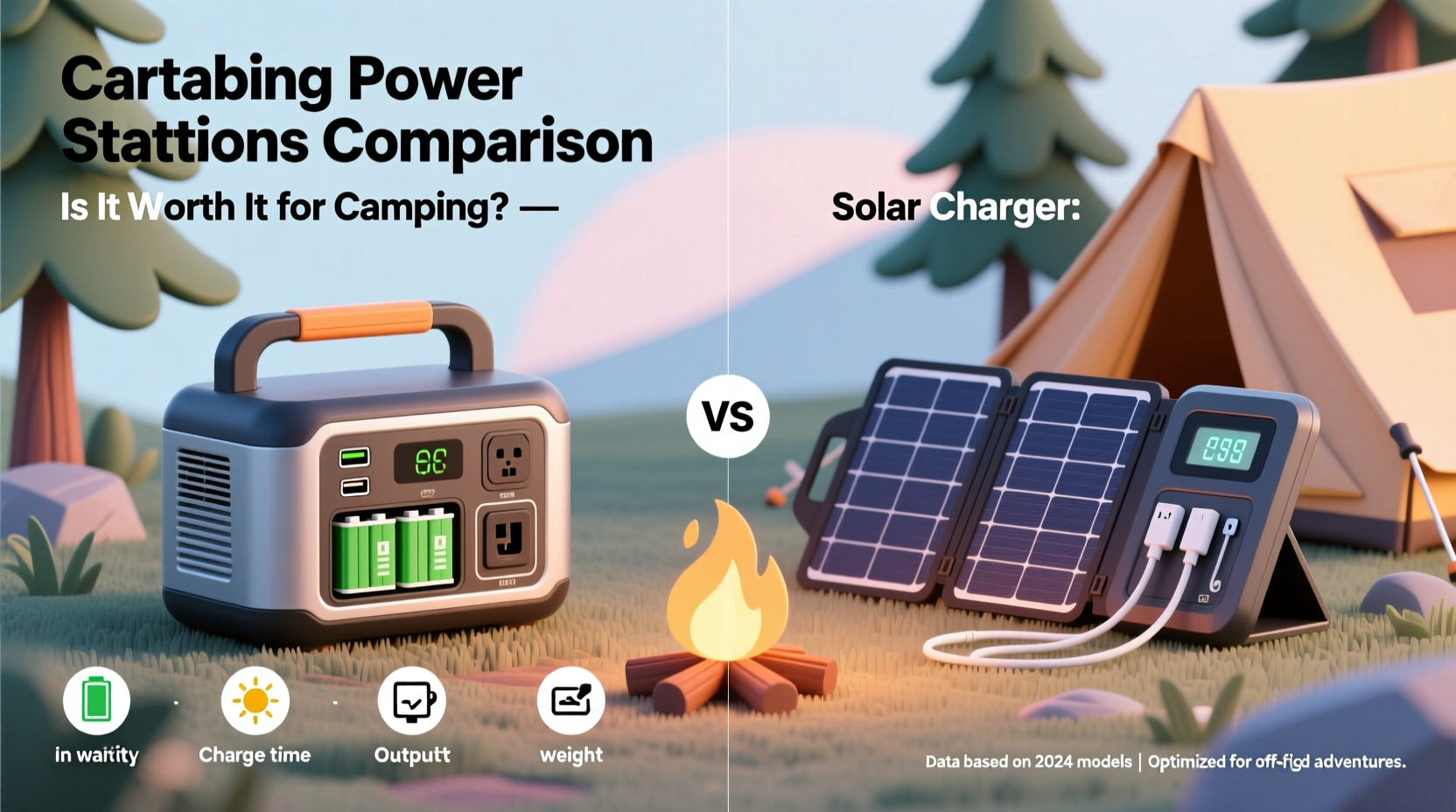
A portable power station is essentially a large-capacity battery pack with multiple output ports—AC outlets, USB-A/C, DC, and sometimes even wireless charging. These units store energy internally and can be recharged via wall outlet, car adapter, or solar panels. They range from compact 300Wh models suitable for weekend trips to heavy-duty 2000Wh+ systems capable of powering small appliances.
In contrast, a solar charger typically refers to a foldable solar panel kit designed to charge devices directly or replenish smaller power banks. Most operate between 20W and 100W and lack built-in batteries (though some include small buffer cells). Their primary function is to convert sunlight into usable electricity, making them dependent on weather and daylight hours.
The key distinction lies in energy capacity and delivery. A power station stores energy like a gas tank, while a solar charger acts more like a fuel pump—only working when the sun shines. This fundamental difference shapes their practical applications in the wild.
“Many campers underestimate how much power they actually need until they’re stranded with dead devices. It’s not just about phones—it’s headlamps, GPS, cameras, and medical equipment.” — Jordan Lee, Outdoor Gear Engineer at Trail Current Labs
When a Portable Power Station Makes Sense
If your camping style leans toward comfort, extended stays, or reliance on electronic gear, a portable power station may be indispensable. Consider these scenarios:
- You use a CPAP machine at night, requiring consistent 50–70Wh per hour.
- You want to run a 12V camping fridge continuously (30–60Wh daily).
- You’re filming vlogs or photos and need to recharge multiple camera batteries.
- You camp during winter or in shaded areas where solar input is limited.
- You travel with family and need to charge several phones, tablets, and lights each day.
Take the example of Sarah, a van-lifer who spends weekends in remote forests. She uses a 1000Wh power station to run her mini-cooler, charge her laptop for remote work, power LED string lights, and keep her phone and drone batteries topped off. “I tried relying only on a 60W solar panel,” she says, “but after two cloudy days, everything shut down. Now I bring both—a power station pre-charged at home and a solar panel to extend runtime.”
Tip: Pre-charge your power station at home before departure. This gives you a full energy reserve regardless of weather conditions.When a Solar Charger Is Enough
Solar chargers excel in minimalist, weight-conscious, or short-duration trips. Hikers, backpackers, and solo adventurers often find that a lightweight 20–60W solar panel paired with a power bank covers all their needs.
For instance, if your goal is to keep a smartphone charged for maps and emergency calls, a 20,000mAh power bank (about 74Wh) combined with a 30W solar panel can provide up to three full phone charges per day under ideal sun exposure. Add a headlamp and GPS device, and you’re still within manageable energy limits.
Backcountry trekkers on multi-day trails benefit most from solar chargers due to weight savings. A 60W foldable panel weighs around 2 lbs, compared to a 1000Wh power station that can exceed 25 lbs. In such cases, efficiency and portability outweigh raw power.
However, success depends heavily on environmental factors. Direct sunlight, panel angle, and seasonal daylight length significantly impact charging speed. On overcast days, a 60W panel might produce only 20–30% of its rated output.
Real Example: Lightweight Backpacking Trip
Mark hiked the John Muir Trail for 10 days with minimal gear. His electronics included a smartphone, Garmin inReach Mini, and headlamp. He carried a 20,000mAh Anker power bank and a 28W Goal Zero Nomad panel. Each morning, he propped the panel against a rock near his tent. By midday, he’d generated enough power to recharge the bank and maintain all devices. “It wasn’t fast,” he admits, “but it worked. I never ran out.” For ultralight missions, this setup proved sufficient—and far lighter than any power station.
Comparative Breakdown: Features, Costs, and Use Cases
| Feature | Portable Power Station | Solar Charger |
|---|---|---|
| Typical Capacity | 300Wh – 2000Wh+ | 0–50Wh (if includes battery) |
| Weight | 7–30 lbs | 0.5–2 lbs |
| Recharge Options | Wall outlet, car, solar panels | Sunlight only (or USB input on hybrid models) |
| Output Ports | AC, USB, DC, sometimes 12V | USB only (usually) |
| Weather Dependency | Low (can be pre-charged) | High (needs direct sun) |
| Lifespan (cycles) | 500–2000+ charge cycles | Long-term durability varies; panels last 5–10 years |
| Cost Range | $200–$2,000+ | $50–$300 |
| Best For | Car camping, RVs, base camps, medical needs | Backpacking, day hikes, emergency kits |
This comparison highlights a crucial point: neither option is universally superior. Instead, they serve different roles. A power station delivers reliability and versatility; a solar charger prioritizes portability and sustainability.
Hybrid Approach: Combining Both for Maximum Flexibility
Many experienced outdoorspeople don’t choose one over the other—they use both. A common strategy involves bringing a mid-sized power station (e.g., 500–1000Wh) pre-charged at home, then pairing it with a 60–100W solar panel to extend runtime during longer trips.
This hybrid model offers several advantages:
- Energy Resilience: Even on cloudy days, stored power ensures critical devices stay online.
- Extended Trips: No need to return early due to dead batteries.
- Faster Recharging: Multiple solar panels can reduce recharge time significantly.
- Off-Peak Usage: Devices can draw power at night while solar recharges the station during the day.
For example, a couple camping for a week in a national park used a Jackery 1000 paired with two 100W SolarSaga panels. They powered a small electric kettle for morning coffee, kept phones charged, ran a fan in hot afternoons, and even operated a portable projector for stargazing videos. During daylight, the panels fed energy back into the station, maintaining a near-steady charge level despite daily usage.
Step-by-Step Guide: Building Your Off-Grid Power Plan
- Assess Your Power Needs: List all devices you plan to use and their watt-hour consumption. Multiply device watts by hours of use per day.
- Calculate Total Daily Usage: Sum up all watt-hours. For example: Phone (10Wh) + Headlamp (3Wh) + Camera (15Wh) + Fridge (40Wh) = 68Wh/day.
- Determine Trip Length: Multiply daily usage by number of days. A 3-day trip at 68Wh/day requires ~204Wh minimum.
- Select Equipment: Choose a power station with at least 1.5x your total need (for buffer and degradation). For solar, aim for 10–15W per 100Wh of station capacity.
- Test Before You Go: Run a mock setup at home. Charge the station, power your devices, and simulate solar recharging.
FAQ: Common Questions About Camping Power Solutions
Can I run a coffee maker or electric grill from a portable power station?
Yes, but only if the station can handle the surge and continuous wattage. A typical electric coffee maker draws 800–1200W. You’ll need a 1000Wh+ station with a 1000W+ AC inverter. Check both peak and continuous ratings before connecting high-wattage appliances.
Do solar chargers work on cloudy days?
They do, but efficiency drops dramatically—often to 10–30% of rated output. A 60W panel might generate only 10–18W under thick clouds. Position the panel in direct light whenever possible and avoid shading from trees or tents.
How long do portable power stations last?
Most lithium-ion models last 500–2,000 charge cycles before capacity degrades below 80%. With proper care—avoiding full discharges and extreme temperatures—they can remain functional for 5–7 years. LFP (lithium iron phosphate) models offer longer lifespans, up to 3,000+ cycles.
Final Verdict: Which Option Fits Your Adventure?
The question isn't whether a portable power station is “better” than a solar charger—it’s whether it’s necessary for your specific situation. If you prioritize comfort, convenience, and device diversity, a power station brings unmatched utility. It’s an investment in peace of mind, especially when camping far from infrastructure.
But if you move quickly, carry your gear on foot, or embark on short trips, a solar charger—or a solar + power bank combo—offers a leaner, more sustainable path. It reduces reliance on pre-charged batteries and aligns with low-impact principles.
Ultimately, the smartest choice may lie in integration. Start with a modest power station and add solar later. Or begin with a solar charger and upgrade as your needs evolve. Technology now allows seamless pairing between brands, so your system can grow with your adventures.
“The future of outdoor power isn’t about choosing between grid-like convenience and wilderness purity. It’s about balance—using technology to enhance the experience without compromising the journey.” — Dr. Lena Torres, Sustainable Recreation Researcher, University of Colorado
Checklist: Choosing Your Camping Power Solution
- ✅ List all electronic devices you plan to use
- ✅ Calculate total daily watt-hour consumption
- ✅ Determine trip duration and access to sunlight
- ✅ Decide between car camping or backpacking (weight matters)
- ✅ Evaluate budget: $100–$300 for solar, $200–$1,500 for power stations
- ✅ Consider hybrid options: power station + solar panel
- ✅ Test equipment compatibility before heading out
Conclusion
Whether you're sipping coffee from an electric kettle beside your tent or navigating rugged trails with a fully charged GPS, reliable power enhances every aspect of camping. A portable power station offers robust, dependable energy for those who demand more from their outdoor experience. A solar charger provides a nimble, eco-conscious alternative for minimalists and backpackers. Neither is inherently better—each serves a purpose.
Now that you understand the trade-offs, capabilities, and real-world applications, you’re equipped to make an informed decision. Assess your needs honestly, plan your energy budget carefully, and choose the solution that empowers your adventure—without weighing you down.
🚀 Ready to power your next trip? Share your favorite camping energy setup in the comments or help others decide by explaining what works for you!








