When planning a camping trip, reliable power can make the difference between a comfortable outdoor experience and one filled with frustration. Whether you're charging phones, running a mini-fridge, or powering lights and a coffee maker, having electricity on hand is increasingly essential. For decades, gas generators have been the go-to solution. But in recent years, portable power stations—battery-powered units charged via solar, wall outlet, or car—have surged in popularity. So, which is truly better for camping?
The answer depends on your priorities: Are you seeking maximum runtime and high-wattage output? Or do you value quiet operation, clean energy, and ease of use? Let’s break down the key differences to help you choose the right power source for your next adventure.
Noise Levels and Camping Experience
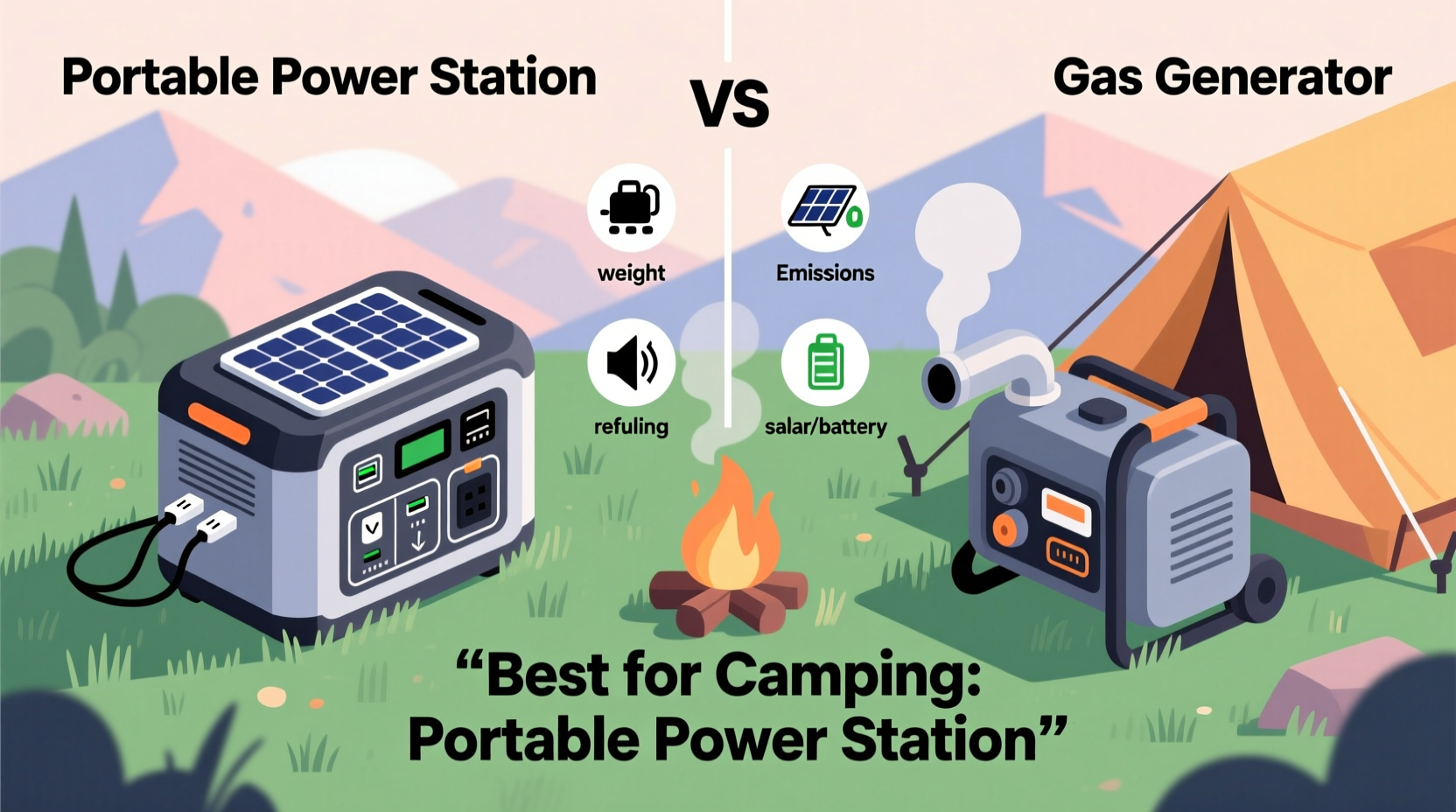
One of the most immediate differences between gas generators and portable power stations is noise. Gas generators typically operate at 60–75 decibels, comparable to a normal conversation or a vacuum cleaner. That may not sound extreme, but in the stillness of nature—especially at night—it can be disruptive to both you and nearby campers.
In contrast, portable power stations are virtually silent. With no moving parts or combustion engine, they generate zero operational noise. This makes them ideal for maintaining the peaceful ambiance of a campsite, particularly in group settings or designated quiet zones.
Tip: If you’re camping in a national park or shared campground, a silent power station helps you respect quiet hours and avoid complaints.A real-world example: Sarah and Mark, frequent campers in the Sierra Nevada, used a 2,000-watt gas generator on their first family trip. While it powered their electric cooler and lights, the constant hum annoyed their children and drew frowns from neighboring tents. The following year, they switched to a 1,500Wh portable power station. Though they had to manage usage more carefully, the silence enhanced their overall experience. “We actually heard the birds again,” Sarah said.
Fuel, Maintenance, and Environmental Impact
Gas generators require fuel—typically gasoline—which must be transported, stored, and replenished. This introduces logistical challenges: fuel degrades over time (usually within 3–6 months), can spill, and poses fire risks. Additionally, refueling mid-trip often means driving to a gas station, which defeats the purpose of remote camping.
Portable power stations eliminate these concerns. They run on lithium-ion or LiFePO4 batteries and can be recharged via solar panels, a car’s 12V socket, or standard AC outlets when available. No fuel means less weight, no odor, and no risk of leaks. They also produce zero emissions during use, making them environmentally friendlier and safer for indoor or enclosed tent setups.
“Battery-based systems are transforming off-grid recreation. They reduce carbon footprint and eliminate exposure to harmful exhaust.” — Dr. Lena Torres, Sustainable Energy Researcher at Rocky Mountain Institute
Maintenance is another advantage. Gas generators need regular oil changes, air filter cleaning, spark plug checks, and carburetor maintenance—especially if stored for long periods. Portable power stations require almost no upkeep beyond occasional full discharge/recharge cycles and storage at 50–80% charge to prolong battery life.
Power Output and Runtime Comparison
While portable power stations excel in convenience and quiet operation, gas generators still lead in raw power and extended runtime. A typical 2,000-watt gas generator can run continuously for 8–12 hours on a single tank and handle high surge loads—such as starting a refrigerator compressor or an electric heater.
Portable power stations, however, have fixed battery capacities measured in watt-hours (Wh). A 1,000Wh unit can theoretically deliver 1,000 watts for one hour, or 100 watts for ten hours. In reality, inefficiencies and inverter losses reduce this slightly. High-draw appliances like electric kettles (1,200W) or heaters (1,500W+) can drain even large stations in under an hour.
To illustrate, here's a comparison of common camping devices and estimated runtimes on a 1,000Wh power station:
| Device | Power Draw (Watts) | Estimated Runtime on 1,000Wh Station |
|---|---|---|
| LED Lights (set) | 20W | ~50 hours |
| Laptop Charging | 60W | ~15 hours |
| Cooler (12V) | 50W | ~18 hours |
| Mini Projector | 100W | ~9 hours |
| Electric Kettle | 1,200W | ~40 minutes (with inverter strain) |
For short trips or light power needs, a power station is sufficient. For longer excursions or heavy-duty use, a gas generator offers greater flexibility.
Safety and Portability
Safety is a critical factor when using power sources in outdoor environments. Gas generators emit carbon monoxide (CO), a deadly, odorless gas. Using them inside tents, vehicles, or poorly ventilated areas has led to tragic accidents. Even outside, placement matters—they should be at least 20 feet from shelters and never operated in rain without proper cover.
Portable power stations pose none of these risks. They are safe to use indoors, in RVs, or under pop-up shelters. Most modern units include built-in safety features like overcharge protection, temperature control, short-circuit prevention, and low-voltage cutoffs.
Portability is another win for power stations. Many models weigh between 10–30 lbs and come with handles or wheels. Gas generators of similar output often exceed 40–50 lbs and lack ergonomic design. Carrying a heavy generator over uneven terrain can be cumbersome and risky.
Tip: Choose a power station with MPPT solar charging support to maximize efficiency when recharging off-grid.Cost and Long-Term Value
Upfront cost is where the decision gets tricky. Entry-level portable power stations start around $300–$500 for 300–500Wh capacity. Larger units (1,000Wh+) range from $800 to $1,500. Solar panels add $200–$600 depending on wattage.
Gas generators are generally cheaper upfront—a 2,000W inverter generator costs $500–$900. However, ongoing expenses add up: fuel, oil, maintenance parts, and potential repairs. Over five years, a gas generator can cost hundreds more in consumables alone.
Additionally, lithium batteries in quality power stations last 5–10 years (2,000+ cycles for LiFePO4), while gas generators may require major servicing after 500–1,000 hours of use. When factoring in durability, environmental impact, and user experience, many find that portable power stations offer better long-term value despite higher initial cost.
Step-by-Step Guide: Choosing the Right Option for Your Trip
Follow this decision-making process to determine whether a portable power station or gas generator suits your camping needs:
- Assess your power needs: List all devices you plan to run and their wattage. Add up total daily consumption in watt-hours.
- Determine trip duration: Short weekend trips favor power stations. Multi-week expeditions may require gas or hybrid solutions.
- Evaluate access to recharging: Will you have sunlight for solar panels? Access to grid power? If not, gas provides consistent refueling.
- Consider noise sensitivity: Are you in a crowded campground or seeking solitude? Silence may outweigh power limitations.
- Weigh portability: How far will you carry the unit? Can it fit in your vehicle easily?
- Decide on budget: Include not just purchase price, but long-term fuel and maintenance costs.
- Choose your solution: Match your findings to either a high-capacity power station or a quiet inverter generator.
Hybrid Approach: Best of Both Worlds?
Some campers opt for a hybrid setup—using a portable power station as the primary source and a small gas generator as backup. This strategy maximizes benefits: silent, clean power most of the time, with the ability to recharge the station or run high-load appliances when needed.
For instance, Jake, an overlanding enthusiast in Colorado, uses a 2,000Wh power station paired with a 100W solar suitcase. He runs all his gear during the day and recharges via sun. On cloudy days, he fires up a compact 2,200W inverter generator for 30 minutes to top off the station. “It’s the perfect balance,” he says. “I get peace and power without compromise.”
Frequently Asked Questions
Can a portable power station run a rooftop air conditioner?
Most rooftop AC units require 1,000–1,500 watts to run and 2,000+ watts to start. Only the largest portable power stations (2,000Wh+, 3,000W+ inverter) can handle this, and even then, runtime will be limited. A gas generator is usually more practical for sustained AC use.
How long does it take to recharge a portable power station?
Recharge time varies by model and method. From a wall outlet: 3–8 hours. From a car charger: 6–12 hours. Via solar: 6–20 hours, depending on panel wattage and sunlight. Some high-end models support fast charging (under 2 hours).
Are portable power stations waterproof?
No. Most are water-resistant to splashes but not designed for rain or submersion. Always use under a shelter or canopy. Gas generators also require protection from moisture, though some models have better weather sealing.
Checklist: What to Evaluate Before Buying
- ✔ Total watt-hour capacity needed for your devices
- ✔ Continuous and surge wattage output
- ✔ Recharge options (AC, DC, solar)
- ✔ Weight and portability features
- ✔ Noise level tolerance
- ✔ Safety certifications (UL, CE, etc.)
- ✔ Battery type (LiFePO4 lasts longer than NMC)
- ✔ Warranty and customer support
Final Verdict: Which Is Better?
For most campers today, a portable power station is the better choice. It delivers clean, silent, low-maintenance power perfectly suited to modern camping needs. Advances in battery technology and solar integration have closed much of the gap with gas generators, especially for trips under a week and moderate power demands.
However, gas generators remain superior for high-power applications, extended off-grid stays without solar access, or situations requiring rapid refueling. They are also more cost-effective for occasional users who don’t mind the noise and maintenance.
The ideal solution isn't always one or the other. As outdoor lifestyles evolve, so do power strategies. Whether you go fully electric, stick with gas, or blend both, the goal is the same: to enjoy nature without sacrificing comfort or safety.
🚀 Ready to upgrade your camping power? Start by calculating your daily watt-hour needs and test a mid-sized power station on your next trip. Share your experience and help others make smarter choices in the wild!








