
Foldable e-bikes have surged in popularity over the past few years, especially among urban commuters, apartment dwellers, and travelers. With sleek designs and compact footprints when folded, they promise unmatched convenience. But they often come with a higher price tag—typically 20% to 40% more than comparable traditional electric bikes. So, is that premium justified? The answer depends on your lifestyle, storage space, commuting needs, and long-term usage patterns.
This article examines the tangible benefits and trade-offs of foldable e-bikes versus traditional models. We’ll explore performance differences, practical use cases, durability concerns, and total cost of ownership to help you determine whether paying more for a folding model delivers real value—or just novelty.
Portability and Space Efficiency
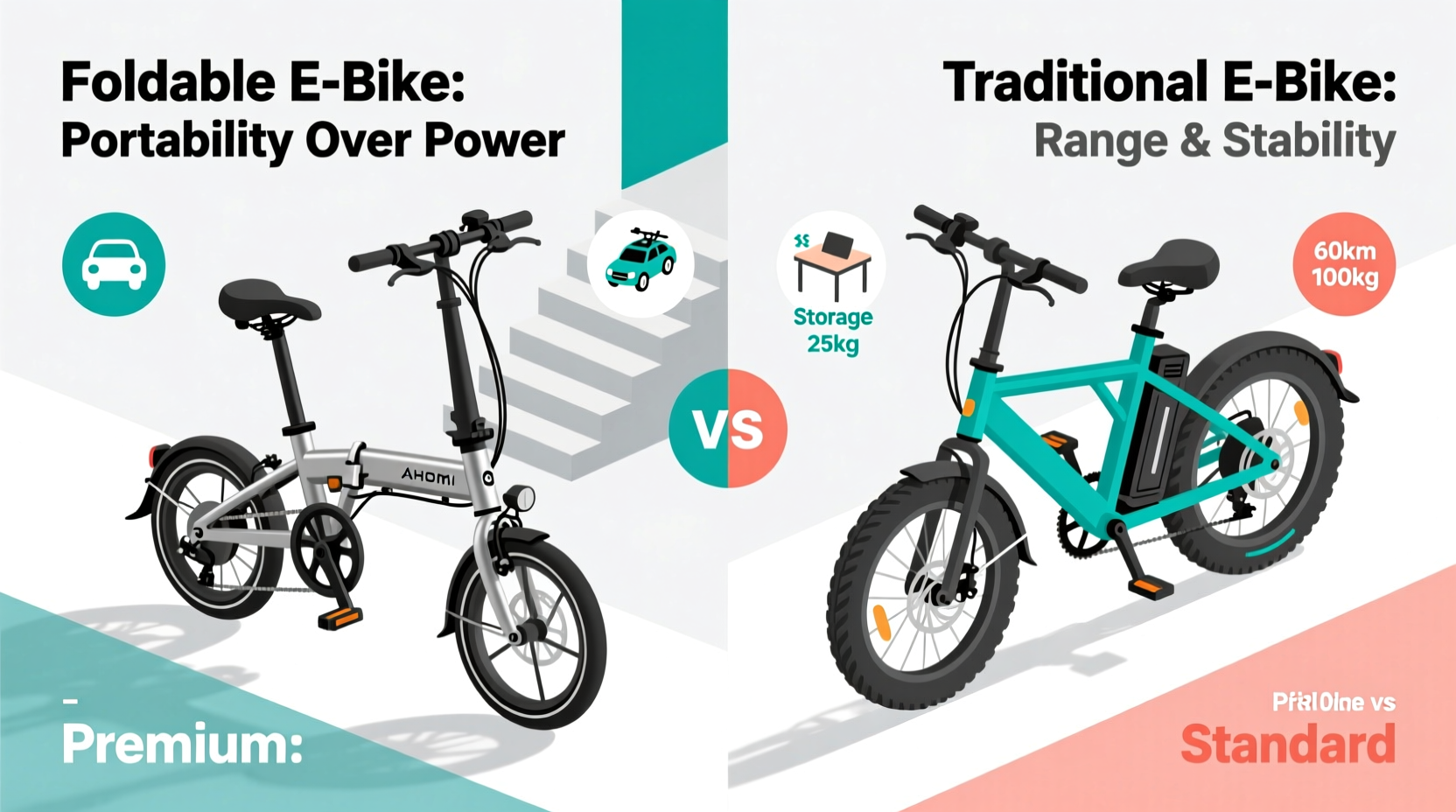
The most compelling advantage of a foldable e-bike is its ability to collapse into a compact form. Most models reduce their footprint by 40–60%, making them easier to store in small apartments, under desks, or in car trunks. For city residents living in studios or high-rises without dedicated bike storage, this feature alone can be transformative.
Traditional e-bikes typically require at least 5 square feet of floor space and are difficult to maneuver indoors. In contrast, a folded e-bike can fit beside a couch, in a closet, or even in the overhead bin of a regional train (on certain carriers). This makes them ideal for multimodal commuters who combine biking with public transit.
Tip: Measure your available storage space before purchasing. A foldable e-bike only helps if it actually fits where you plan to keep it.However, portability comes at a cost. Folding mechanisms add complexity and weight. Most foldable e-bikes weigh between 45–55 lbs, which means lifting them up stairs or onto racks can still be challenging despite their compact size. Some users report that the convenience of folding is offset by the physical effort required to carry the bike regularly.
Performance and Ride Quality
When comparing performance, traditional e-bikes generally outperform their foldable counterparts. Larger frames allow for bigger wheels (typically 26” or 27.5”), longer wheelbases, and more stable geometry. These factors contribute to smoother rides, better shock absorption, and improved handling at higher speeds.
Foldable e-bikes often use smaller wheels (16”–20”) to maintain compactness. Smaller wheels respond faster but transmit more road vibration, leading to a bumpier ride on uneven pavement. Additionally, the folding joints in the frame can introduce slight flex, reducing overall rigidity and efficiency during pedaling or acceleration.
| Feature | Foldable E-Bike | Traditional E-Bike |
|---|---|---|
| Wheel Size | 16”–20” | 26”–29” |
| Average Weight | 45–55 lbs | 40–50 lbs |
| Battery Range | 30–50 miles | 40–70 miles |
| Top Speed | 20 mph (Class 2/3) | 20–28 mph (Class 3) |
| Frame Stability | Moderate (due to hinges) | High |
That said, advancements in engineering have narrowed the performance gap. High-end foldable models like the Brompton Electric or Tern Vektron now offer responsive motors, integrated batteries, and suspension systems that rival mid-tier traditional e-bikes. Still, for riders prioritizing speed, comfort, or off-road capability, traditional frames remain superior.
Total Cost of Ownership and Longevity
The initial purchase price of a quality foldable e-bike starts around $2,500 and can exceed $4,000. Comparable traditional e-bikes with similar motor power and battery capacity often range from $1,800 to $3,000. The $700–$1,000 premium must be evaluated against long-term utility.
One concern with foldable designs is mechanical wear. Hinges, latches, and folding levers are stress points that may degrade over time. While manufacturers reinforce these areas, repeated folding and unfolding—especially under load—can lead to loosening or fatigue. Regular maintenance becomes more critical.
“Foldable e-bikes are impressive feats of engineering, but every joint is a potential failure point. Inspect locking mechanisms monthly.” — David Lin, Urban Mobility Engineer at CycleTech Labs
On the upside, foldable e-bikes often retain resale value better due to sustained demand in dense urban markets. Their niche appeal keeps them desirable on secondhand platforms like eBay or Facebook Marketplace, sometimes fetching 60–70% of original price after two years, compared to 40–50% for standard models.
Real-World Example: Commuting in San Francisco
Consider Maria, a marketing consultant living in a downtown San Francisco apartment. Her office is a 3-mile uphill ride from home, but Muni buses are unreliable, and parking costs $300/month. She considered both a traditional e-bike and a foldable model.
She chose the Tern Vektron SFX after realizing she could ride to the subway, fold the bike in under 30 seconds, take it onboard, and avoid bike theft risk. On days when meetings run late, she stores it in her cubicle. Over 18 months, she’s saved over $1,200 in parking and ride-share fees. Despite paying $3,800 upfront—$1,000 more than a comparable non-folding bike—the space savings, security, and seamless integration with transit made the premium worthwhile.
For Maria, the foldable e-bike wasn’t just convenient—it was essential to making cycling viable in a space-constrained, transit-dependent environment.
When the Premium Makes Sense: A Decision Checklist
Not every rider needs a foldable e-bike. Use this checklist to evaluate whether the added cost aligns with your actual needs:
- Do you live in an apartment or small home? Limited storage favors foldable models.
- Do you use public transportation regularly? Folding bikes are allowed on many trains and buses where full-sized bikes are restricted.
- Is bike theft a concern? Being able to bring your bike indoors reduces risk significantly.
- Do you travel frequently? Some airlines permit folded e-bikes as checked luggage (under 50 lbs).
- Are you combining biking with other modes? If you drive partway and bike the last mile, trunk storage matters.
- Do you prioritize top speed or long-range rides? If yes, traditional e-bikes likely serve you better.
- Can you lift 50+ lbs comfortably? Portability doesn’t eliminate the need for strength when carrying.
Step-by-Step: Evaluating Your Foldable E-Bike Investment
Follow this sequence to determine if the premium is justified for your situation:
- Map your typical routes. Identify distances, terrain, and transit connections.
- Assess your storage options. Can a traditional bike stay locked and dry? Is indoor access possible?
- Calculate cost alternatives. Compare expenses of current transport (gas, parking, transit passes) against e-bike ownership.
- Determine usage frequency. Will you ride 3+ times per week? Lower usage reduces ROI on any e-bike.
- Research local regulations. Some cities restrict e-bike classes or prohibit them on trails.
- Test ride multiple models. Pay attention to folding ease, weight distribution, and seated posture.
- Evaluate long-term maintenance. Are replacement parts readily available? Does the brand offer extended warranties?
This process helps separate emotional appeal (“it looks cool”) from functional necessity (“I literally can’t store a full-size bike”).
Common Misconceptions About Foldable E-Bikes
Despite growing popularity, several myths persist:
- Myth: They’re all lightweight. Reality: Most are heavier than traditional bikes due to reinforced frames and compact components.
- Myth: Folding means fragile. Reality: Modern designs use aerospace-grade aluminum and rigorous stress testing.
- Myth: You can’t ride far on them. Reality: Top models offer 50-mile ranges—sufficient for most urban commutes.
- Myth: They’re only for short trips. Reality: Riders regularly complete 20+ mile daily commutes on foldables.
The key is selecting a reputable brand with proven reliability. Avoid no-name imports; stick with established names like Brompton, Tern, Gocycle, or Lectric XPremium.
Frequently Asked Questions
Can I leave a foldable e-bike outside?
It’s not recommended. While some models have weather-resistant coatings, the folding joints can trap moisture, leading to corrosion. Like all e-bikes, they should be stored indoors when possible.
Do foldable e-bikes charge slower?
No. Charging speed depends on the battery and charger, not the frame type. Most take 4–6 hours for a full charge, whether folding or not.
Are replacement parts hard to find?
For major brands, parts are widely available through official dealers and online stores. For lesser-known models, sourcing hinges or custom brackets may take weeks and increase repair costs.
Final Verdict: Is the Premium Worth It?
The value of a foldable e-bike isn’t measured in raw performance, but in lifestyle optimization. If you live in a crowded city, rely on mixed transportation, lack secure storage, or travel with your bike, the premium is almost certainly worth it. The ability to seamlessly integrate cycling into constrained environments outweighs minor compromises in ride quality.
But if you have garage space, prioritize long-distance comfort, or ride primarily on weekends, a traditional e-bike offers better performance per dollar. You’ll get larger wheels, smoother handling, and often greater range—all at a lower price.
In essence, the foldable e-bike isn’t objectively “better”—it’s *different*. It solves specific problems exceptionally well. Paying more makes sense only when those problems are yours to solve.
💬 Have you switched to a foldable e-bike? Did the premium pay off? Share your experience below and help others decide whether folding is the future of their commute.








