
For rideshare drivers, the smartphone is more than a communication tool—it’s the command center. From navigation and passenger coordination to earnings tracking and customer ratings, every aspect of the job flows through that screen. But constantly reaching for your phone while driving isn’t just inconvenient; it’s dangerous. That’s where the car phone holder comes in. Marketed as a simple solution for hands-free access, these mounts are now standard equipment in many Uber, Lyft, and delivery vehicles. Yet some drivers remain skeptical: Is a phone holder truly essential, or does it just add clutter and temptation behind the wheel?
The truth lies somewhere in between—and depends on how you use it. When chosen wisely and installed correctly, a quality phone holder can enhance safety, improve efficiency, and even reduce driver fatigue. But a poorly designed or misused mount can become a source of distraction, frustration, or even risk.
The Role of the Smartphone in Rideshare Driving
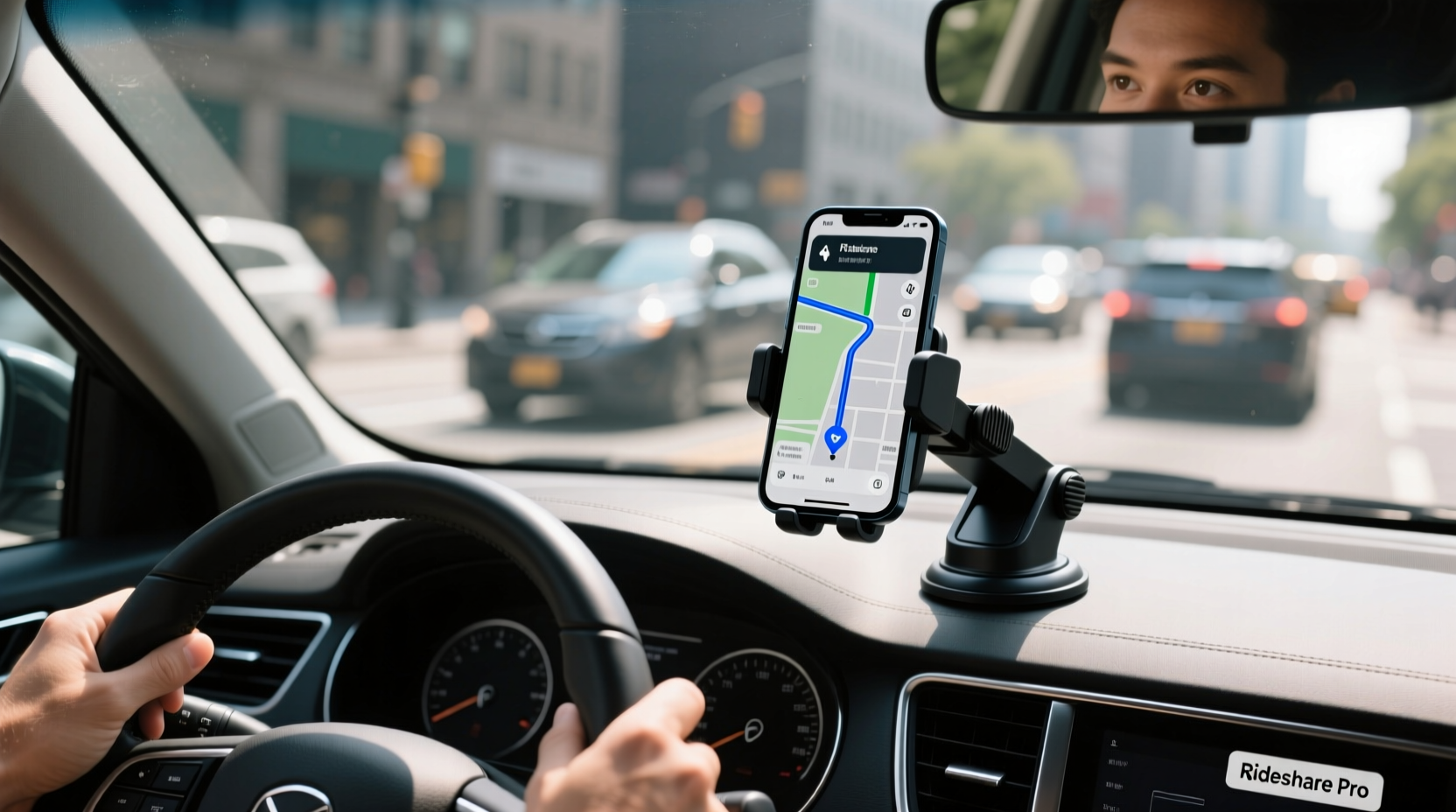
In modern rideshare operations, the smartphone is indispensable. It serves multiple critical functions:
- Navigation: Real-time GPS guidance helps avoid traffic, construction zones, and unfamiliar neighborhoods.
- Ride Management: Accepting trips, viewing pickup locations, and confirming drop-offs all happen via app.
- Passenger Communication: Messaging, calling, and verifying rider identity rely on constant connectivity.
- Earnings Tracking: Drivers monitor trip progress, surge pricing, and total pay per ride.
- Safety Tools: Features like emergency assistance, trip sharing, and audio recording depend on phone access.
Given this reliance, having quick visual access to the device is necessary. However, holding the phone while driving—whether for directions or responding to a message—is illegal in most states and significantly increases accident risk. According to the National Highway Traffic Safety Administration (NHTSA), distracted driving claimed 3,522 lives in 2021 alone, with handheld phone use being a leading contributor.
Tip: Even glancing at your phone for two seconds doubles your chance of a crash. A secure phone holder keeps your eyes on the road and hands on the wheel.Safety vs. Distraction: The Fine Line
The core debate around phone holders isn't about utility—it's about behavior. A mount itself doesn't distract; what matters is how it’s used.
A well-placed holder allows drivers to glance briefly at turn-by-turn directions without fumbling for their phone. This reduces cognitive load and physical distraction. However, if the phone is positioned too far from the driver’s natural line of sight, or if the driver feels compelled to interact frequently with the screen (e.g., accepting back-to-back rides), the holder may encourage rather than prevent distraction.
Consider this scenario: You're approaching a complex intersection during rush hour. Without a mounted phone, you might take your eyes off the road for three seconds to check your route—long enough to miss a pedestrian crossing. With a properly mounted device in your peripheral vision, you can confirm the next turn with a quick glance, minimizing risk.
“Hands-free doesn’t mean risk-free. The goal isn’t just to comply with laws but to minimize cognitive distraction. A good mount supports that goal—if used responsibly.” — Dr. Lena Torres, Cognitive Ergonomics Researcher, University of Michigan Transportation Institute
Choosing the Right Phone Holder: What Works for Rideshare?
Not all phone holders are created equal. For rideshare drivers who spend hours on the road, investing in the right type can make a meaningful difference in comfort, visibility, and durability.
| Type | Pros | Cons | Best For |
|---|---|---|---|
| Vent Mount | Cheap, easy to install, rotates freely | Unstable on bumpy roads, blocks airflow, limited vent compatibility | Occasional drivers or short shifts |
| Dashboard Suction Cup | Stable, adjustable angles, wide visibility | May detach in heat, takes up dashboard space | Drivers in moderate climates |
| CD Slot Mount | No suction issues, out of way | Only works with CD players, limited adjustability | Older model vehicles |
| Magnetic Mount | Quick attachment, sleek design, reliable hold | Requires metal plate on phone/case, alignment sensitive | Drivers prioritizing speed and convenience |
| Windshield Mount (Suction) | Optimal positioning, highly adjustable, stable | May obstruct view if poorly placed, not legal in some states | Full-time rideshare professionals |
The ideal choice balances stability, ease of access, and compliance with local laws. For example, California prohibits any device that obstructs the windshield, so a high-mounted suction cup may be illegal unless placed in the lower corner of the windshield outside the driver’s primary field of view.
Key Selection Criteria
- Stability: Must withstand vibrations and sudden stops.
- Adjustability: Allows tilt, rotation, and extension for optimal viewing.
- Quick Access: One-handed operation for mounting and removing.
- Compatibility: Fits your phone size and case.
- Legal Compliance: Meets state regulations regarding placement.
Real-World Impact: A Day in the Life of Two Drivers
To understand the practical value of a phone holder, consider two drivers operating under similar conditions—one using a quality mount, the other relying on hand-holding or lap placement.
Driver A: Using a Windshield-Mounted Magnetic Holder
Jamal drives full-time for Lyft in Chicago. He uses a magnetic mount positioned just below his line of sight on the passenger side of the windshield. His phone automatically docks when he starts the engine. During a typical 10-hour shift:
- Navigates downtown traffic with minimal head movement.
- Accepts rides using voice commands and peripheral checks.
- Never touches his phone while moving.
- Reports less neck strain and mental fatigue at the end of the day.
Driver B: No Mount, Phone on Passenger Seat
Sophia drives part-time in Atlanta. She places her phone on the seat beside her, picking it up frequently for directions or ride alerts. Over the same period:
- Misses a turn due to delayed GPS check, requiring a U-turn in heavy traffic.
- Receives a low rating because she was late—she didn’t see the pickup pin until after passing the spot.
- Feels anxious about missing rides, leading to frequent phone checks.
- Experiences shoulder tension from twisting to view the screen.
The contrast highlights more than convenience—it reflects differences in safety, professionalism, and long-term sustainability. Jamal completes more rides with higher ratings and fewer stress-related complaints. Sophia, despite equal effort, faces preventable setbacks due to inefficient phone management.
Maximizing the Benefits: Best Practices for Rideshare Drivers
Having a phone holder isn’t enough. To get real value, follow these proven strategies:
Step-by-Step Setup Guide
- Choose the Right Location: Position the mount within natural eye sweep—typically near the instrument cluster or base of the windshield.
- Test Placement: Sit in the driver’s seat and ensure you can see navigation prompts without leaning or turning your head.
- Secure the Mount: Clean the surface thoroughly (dashboard or windshield) before applying suction or adhesive.
- Pair with Audio: Enable voice navigation so you don’t need to look at the screen for every instruction.
- Use Do Not Disturb Mode: Activate driving mode to silence non-essential notifications.
- Pre-Trip Check: Confirm the phone is securely mounted and charged before starting your shift.
Checklist: Optimizing Your Phone System
- ✅ Mount tested for stability on rough roads
- ✅ Navigation audio enabled and volume set
- ✅ Phone fully charged or connected to car charger
- ✅ Driving mode or Do Not Disturb activated
- ✅ Mount does not block airbags or critical visibility
- ✅ Easy one-handed removal for security when parked
Additionally, pair your hardware with smart software habits. Schedule breaks between rides to review routes, respond to messages, or reposition the phone safely. Avoid accepting back-to-back trips during peak congestion unless you’ve had a moment to prepare.
Frequently Asked Questions
Can using a phone holder still lead to distracted driving?
Yes—if you’re constantly looking at the screen instead of the road. A holder reduces physical distraction but doesn’t eliminate cognitive load. Use voice-guided navigation and limit interactions to essential glances (under two seconds).
Are magnetic mounts safe for all phones?
Most modern smartphones are unaffected by magnets. However, strong magnetic fields can interfere with compass sensors or wireless charging coils temporarily. If you notice navigation inaccuracies, reposition the magnet or switch to a mechanical clamp.
Do I need a different holder for different phone sizes?
Not necessarily. Many adjustable holders accommodate devices from 4.7” to 6.9”. Look for models with universal grips or expandable arms. For larger phones or tablets, choose a heavy-duty mount with reinforced support.
Conclusion: A Small Tool with Big Implications
A car phone holder isn’t just a convenience—it’s a strategic tool for professional rideshare drivers. When selected and used wisely, it enhances safety, improves job performance, and contributes to a more sustainable driving experience. It minimizes the temptation to handle the phone manually, supports smoother navigation, and helps maintain focus during high-pressure situations.
But like any tool, its value depends on how it’s used. A poorly mounted or distracting setup can do more harm than good. The key is intentionality: choosing the right model, installing it correctly, and committing to disciplined usage.
If you’re serious about your rideshare work—whether full-time or part-time—a quality phone holder is one of the most cost-effective upgrades you can make. At prices ranging from $15 to $40, it’s an investment that pays for itself in saved time, reduced stress, and improved passenger satisfaction.
🚀 Ready to upgrade your rideshare setup? Pick a holder today, install it with care, and drive smarter—not harder.








