
For many students and recent graduates, landing an internship feels like trying to win the lottery. You send dozens of applications, attend networking events, polish your resume endlessly—yet responses are few, rejections pile up, and opportunities seem scarce. It’s not just you. The internship market has become increasingly competitive, shaped by economic shifts, rising educational standards, and evolving employer expectations. Understanding why internships are so difficult to secure is the first step toward navigating the system more effectively.
The Growing Gap Between Supply and Demand
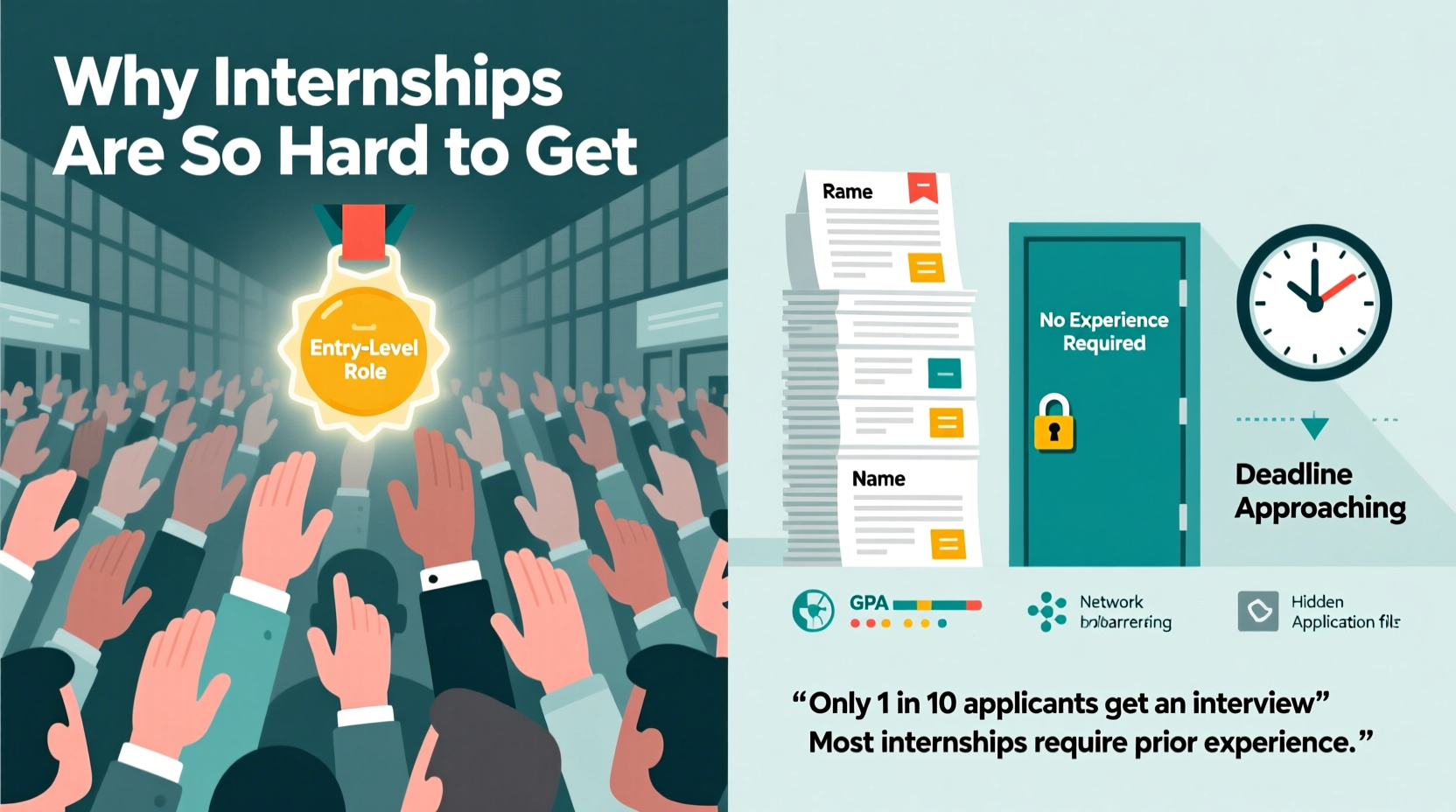
More students than ever are pursuing higher education, and with that comes heightened competition for limited internship spots. According to the National Association of Colleges and Employers (NACE), over 70% of undergraduate programs now require or strongly recommend internships for graduation. This surge in demand has not been matched by a proportional increase in available positions.
At the same time, companies have tightened their hiring practices. Internships are no longer seen as low-stakes training roles—they’re strategic pipelines for full-time talent. As a result, employers are selective, often favoring candidates from elite institutions, those with prior experience, or applicants who already possess niche skills.
Tip: Apply early. Many top firms fill internship roles 6–8 months in advance.Experience Requirements Create a Catch-22
One of the most frustrating aspects of the internship hunt is the \"experience paradox\": employers want candidates with experience, but students can’t gain experience without being hired. A 2023 survey by Handshake found that 61% of internship postings required at least one previous internship or relevant work experience—something most applicants lack.
This creates a self-reinforcing cycle. Students from privileged backgrounds who can afford unpaid or low-paid internships build résumés faster, while others fall behind. Meanwhile, industries like tech, finance, and media concentrate opportunities in major cities, further limiting access for underrepresented or geographically isolated candidates.
“Employers aren’t just looking for warm bodies—they want interns who can contribute from day one. That means they screen aggressively for demonstrated skills.” — Dr. Lena Torres, Career Development Researcher at Stanford University
Structural Barriers in the Hiring Process
Beyond competition, systemic issues make internships harder to obtain. These include:
- Lack of transparency: Many internships are filled through referrals or on-campus recruiting, bypassing public job boards.
- Unpaid roles: Over 40% of internships in the U.S. remain unpaid, excluding students who need income to survive.
- Automation and ATS: Applicant Tracking Systems (ATS) filter out résumés based on keywords, often disqualifying qualified but less polished applicants.
- Geographic concentration: High-value internships cluster in expensive urban centers, making relocation unaffordable for many.
These factors disproportionately affect first-generation college students, minorities, and those from lower-income households—groups already underrepresented in high-growth industries.
What You Can Do: A Step-by-Step Strategy
While the system is flawed, proactive strategies can improve your odds. Here’s a realistic, actionable timeline to boost your chances:
- 3–6 months before application season: Identify target industries and companies. Build foundational skills through free online courses (e.g., Google Certificates, Coursera).
- 2–3 months out: Refine your résumé with project-based achievements. Start networking via LinkedIn or alumni connections.
- 1 month out: Apply to 5–10 positions per week. Customize each cover letter to reflect company values and role requirements.
- After applying: Follow up politely within 7–10 days. Use email templates to maintain professionalism.
- If rejected: Request feedback when possible. Use it to refine future applications.
Mini Case Study: How Maria Landed Her Tech Internship
Maria, a computer science student at a mid-tier university, applied to over 30 internships during her junior year—with no interviews. Instead of giving up, she shifted tactics. She built a small portfolio website showcasing class projects, contributed to open-source tools on GitHub, and reached out to two alumni at mid-sized tech firms for informational interviews. One connection referred her to a hiring manager. Two weeks later, she landed a paid summer internship at a growing SaaS startup—her first real break.
Her success wasn’t luck. It was persistence, skill-building, and leveraging weak ties in her network. She didn’t have legacy status or unpaid time to spare, but she maximized what she could control.
Do’s and Don’ts: Navigating the Internship Hunt
| Do | Don't |
|---|---|
| Tailor your résumé and cover letter for each role | Use generic, copy-pasted applications |
| Apply to smaller or lesser-known companies | Only target FAANG or Fortune 500 firms |
| Highlight class projects, volunteer work, or freelance gigs | Leave your résumé blank due to “no experience” |
| Follow up after submitting an application | Assume silence means rejection—stop communicating |
| Ask for feedback if rejected | Take rejection personally or give up after a few tries |
Building Skills When Experience Is Lacking
You don’t need a formal internship to gain relevant skills. Consider these alternatives:
- Freelance micro-projects: Offer services on platforms like Fiverr or Upwork (e.g., social media content, data entry, coding tasks).
- Volunteer for nonprofits: Manage their website, run campaigns, or analyze data—real work with real impact.
- Create your own projects: Design an app prototype, write a research paper, or launch a blog analyzing industry trends.
- Join student organizations: Lead events, manage budgets, or organize teams—leadership counts.
FAQ: Common Questions About Internship Challenges
Why are so many internships unpaid?
Legally, unpaid internships must meet strict criteria (e.g., primarily benefiting the intern, not displacing regular employees). However, some companies exploit loopholes. Unpaid roles persist because supply exceeds demand, and students desperate for résumé lines accept them. That said, fields like non-profits, media, and arts still rely heavily on unpaid labor—though this is slowly changing due to advocacy and legislation.
Should I take an unpaid internship if it’s my only option?
Only if you can afford to. If you need income, consider part-time paid roles in unrelated fields while building skills on the side. Alternatively, look for stipended programs, remote micro-internships (like those on Parker Dewey), or short-term contract work that offers flexibility and pay.
Are internships still worth it?
Yes—but selectively. A strong internship in your field can lead to full-time offers, mentorship, and industry insight. However, not all internships are equal. Prioritize roles with structured learning, supervision, and opportunities to contribute meaningfully. Avoid “grunt work” traps where you’re expected to fetch coffee with no growth.
Conclusion: Your Path Forward Starts Now
The internship hunt is tough, but not impossible. The barriers are real: competition, inequity, automation, and experience gaps. Yet every year, thousands of students break through by being strategic, persistent, and resourceful. You don’t need perfect grades or elite connections to succeed—you need initiative.
Start today. Update your LinkedIn. Reach out to someone in your target field. Build one project, apply to three roles, ask for one referral. Small actions compound. The system may be stacked, but it’s not closed. Your next opportunity isn’t waiting at the end of a long line—it’s one bold move away.
🚀 Ready to take control? Pick one action from this article and do it within the next 24 hours. Progress begins with motion.








