
Choosing the right intermittent fasting protocol can make or break your long-term success. Two of the most popular approaches—16:8 and 5:2—offer distinct structures, benefits, and challenges. While both aim to improve metabolic health, support weight management, and enhance longevity, their sustainability depends heavily on individual lifestyles, eating preferences, and psychological resilience. Understanding the practical differences between them is essential for making an informed decision that aligns with daily routines and personal goals.
Understanding the 16:8 Method
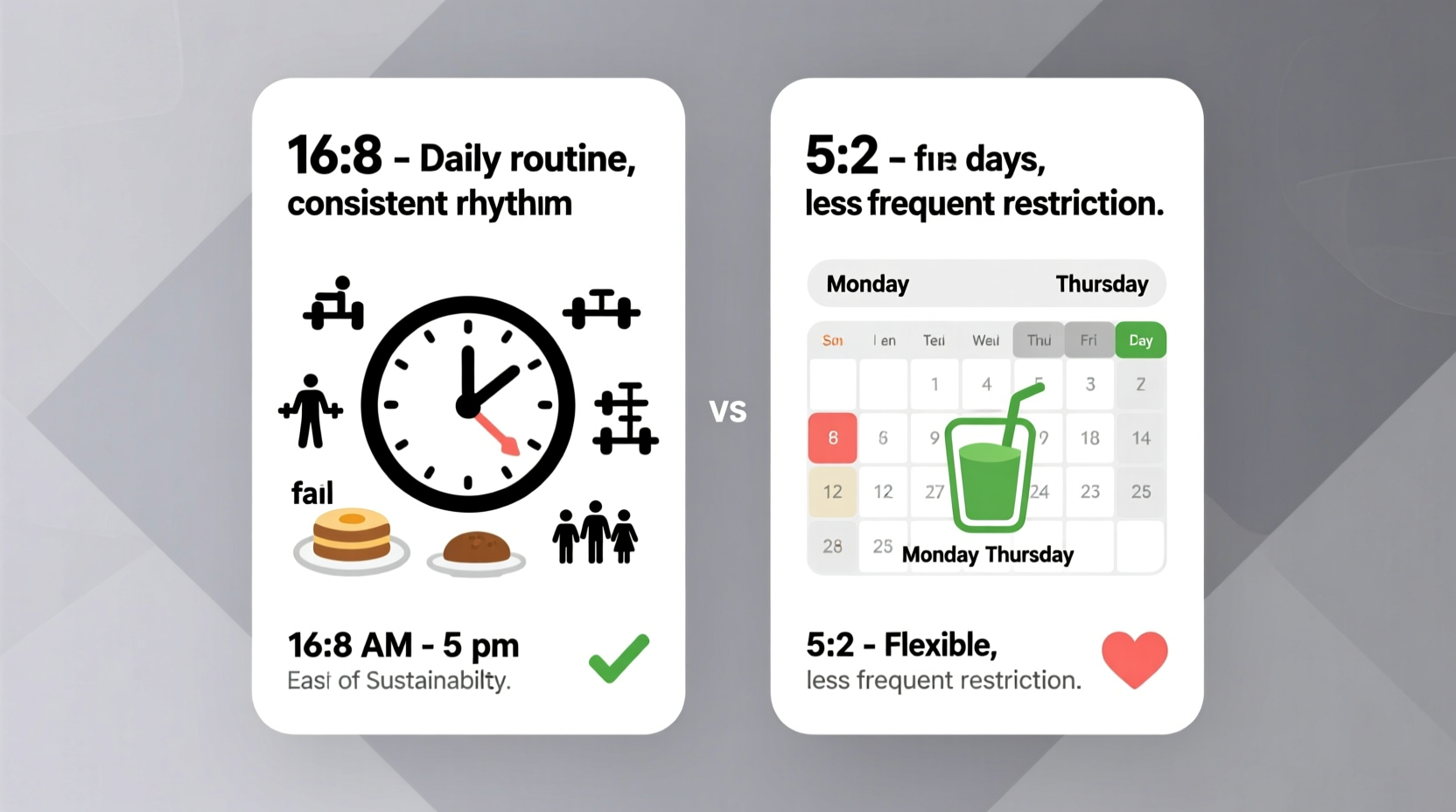
The 16:8 intermittent fasting method involves a 16-hour fast each day followed by an 8-hour eating window. For example, someone might eat between 12:00 PM and 8:00 PM, then fast from 8:00 PM until noon the next day. This approach is often considered more lifestyle-friendly because it doesn’t require calorie counting on most days and integrates naturally into circadian rhythms.
Because the overnight fasting period accounts for much of the 16 hours (including sleep), many find this method manageable without drastic changes to their routine. It’s particularly effective for those who naturally skip breakfast or prefer fewer, larger meals during the day.
Tip: Start by gradually shortening your eating window—from 10 hours down to 8—to ease into the 16:8 rhythm without shock to your system.How the 5:2 Diet Works
The 5:2 method takes a different approach. On five days of the week, you eat normally—without restriction—while on two non-consecutive days, you limit calorie intake to about 500–600 calories. These “fasting” days are not complete fasts but rather significant caloric reductions designed to trigger metabolic benefits similar to full fasting.
This method appeals to people who want flexibility in their weekly schedule. They can choose which two days to restrict based on social plans, workloads, or energy demands. However, the challenge lies in managing hunger, low energy, and food cravings on reduced-calorie days, especially if they occur during physically or mentally demanding periods.
“Many patients find the 5:2 plan initially appealing due to its promise of freedom on most days, but compliance drops when faced with actual calorie restriction.” — Dr. Lena Patel, Preventive Medicine Specialist
Comparing Sustainability: Key Factors
Sustainability isn’t just about weight loss or lab results—it’s about consistency over months and years. Several factors determine how well someone can maintain either protocol:
- Daily Routine Compatibility: The 16:8 method fits better into structured daily schedules, especially for those with regular meal patterns.
- Hunger Management: 5:2 requires enduring intense hunger twice a week, while 16:8 distributes mild hunger across all days, often making it feel less extreme.
- Social Flexibility: With 16:8, adjusting the eating window allows participation in dinners or events. In contrast, a 5:2 fasting day during a birthday dinner or holiday gathering can be socially isolating.
- Mental Load: Counting calories on fasting days adds cognitive effort. 16:8 typically avoids tracking, reducing mental fatigue.
- Energy Levels: Sudden drops in energy on 5:2 fasting days can affect productivity, workouts, and mood—especially for active individuals.
Real-Life Example: Sarah’s Experience
Sarah, a 38-year-old marketing manager, tried both protocols over six months. She started with 5:2, choosing Mondays and Thursdays as her low-calorie days. Initially motivated, she struggled by week three when a client dinner fell on a fasting day. Eating only a small salad while colleagues enjoyed a multi-course meal left her feeling deprived and irritable. After switching to 16:8, she set her eating window from 11:00 AM to 7:00 PM, allowing her to skip breakfast comfortably and still enjoy family dinners. Over time, she found this rhythm easier to maintain—even during vacations or busy weeks—because it didn’t require constant calculation or sacrifice on specific days.
Detailed Comparison Table
| Factor | 16:8 Method | 5:2 Method |
|---|---|---|
| Daily Structure | 16-hour fast, 8-hour eating window every day | Normal eating 5 days, 500–600 kcal on 2 non-consecutive days |
| Calorie Tracking | Not required | Required on fasting days |
| Hunger Pattern | Mild, consistent daily hunger | Intense hunger on fasting days |
| Social Adaptability | High—window can shift | Moderate to low—conflicts with events on fasting days |
| Mental Effort | Low—habit-based | Moderate to high—planning and portion control needed |
| Best For | Routine-oriented individuals, beginners, shift workers with stable sleep | Those who prefer dietary freedom most days, experienced dieters |
| Common Pitfalls | Overeating during the eating window, late-night snacking | Underestimating calories on fasting days, energy crashes |
Step-by-Step Guide to Choosing Your Sustainable Plan
Follow this timeline to assess which method suits your life best:
- Week 1: Self-Assessment
Track your current eating habits, energy levels, and social meal frequency. Note when you’re most active and when hunger strikes. - Week 2: Trial 16:8
Pick an 8-hour window aligned with your natural appetite. Avoid changing your diet—just compress when you eat. Monitor energy, focus, and hunger. - Week 3: Trial 5:2
Select two non-strenuous days for calorie restriction. Use a food scale or app to stay within 500–600 kcal. Record mood, cravings, and performance. - Week 4: Evaluate & Decide
Compare notes. Ask: Which felt more natural? Which disrupted life less? Did one cause irritability or fatigue? - Week 5+: Commit & Adjust
Choose the method that felt sustainable. Fine-tune timing or food choices. Reassess monthly.
Expert Insights on Long-Term Adherence
Research suggests that adherence is stronger when dietary interventions align with personal psychology and environment. A 2020 study published in Obesity Reviews found that time-restricted eating (like 16:8) had higher retention rates than periodic fasting methods, largely due to lower perceived difficulty and better integration into daily life.
“The key to lasting change isn’t the strictness of the rule, but how seamlessly it fits into someone’s identity and routine.” — Dr. Marcus Reed, Behavioral Nutrition Researcher
Experts emphasize that the “best” fasting method is the one you can follow consistently—not the one with the most dramatic short-term results. Many successful practitioners eventually transition from 5:2 to 16:8 after realizing that frequent calorie restriction was mentally taxing, even if effective initially.
Checklist: Is This Fasting Method Right for You?
Use this checklist to evaluate each option before committing:
- ✅ Do I have predictable daily routines that allow consistent meal timing? → Favors 16:8
- ✅ Am I comfortable planning and measuring food for two days a week? → Favors 5:2
- ✅ Do I frequently attend evening events or social meals? → 16:8 offers more flexibility
- ✅ Can I handle feeling hungry or low-energy twice a week without affecting work or mood? → Required for 5:2
- ✅ Have I struggled with yo-yo dieting or obsessive food tracking in the past? → 16:8 may be safer
- ✅ Am I looking for a long-term habit, not a short-term fix? → Prioritize ease and consistency
Frequently Asked Questions
Can I exercise while doing 16:8 or 5:2?
Yes, but timing matters. With 16:8, schedule workouts near the end of the fast or early in the eating window for optimal energy and recovery. For 5:2, avoid intense training on fasting days unless you’ve adapted to low-fuel exercise. Light cardio or yoga is usually manageable.
Which method leads to faster weight loss?
In controlled studies, both produce similar average weight loss over 3–6 months. However, 5:2 may yield quicker initial results due to sharper weekly calorie deficits, while 16:8 promotes gradual, steady fat loss through improved insulin sensitivity and reduced snacking.
Is it safe to fast two days a week regularly?
For healthy adults, yes—provided nutrient needs are met on non-fasting days. However, those with diabetes, eating disorders, or underweight status should consult a doctor. Pregnant or breastfeeding women should avoid 5:2 due to increased caloric demands.
Final Thoughts: Which Is Easier to Sustain?
When comparing 16:8 and 5:2, evidence and anecdotal experience consistently point to 16:8 as the more sustainable option for most people. Its daily rhythm reduces the psychological burden of “fasting days,” eliminates calorie counting, and adapts easily to life changes. The 5:2 method, while effective, demands greater discipline and planning, increasing the risk of dropout when real-life pressures arise.
That said, individual variation is significant. Some thrive on the structure of 5:2, appreciating the clarity of “fasting” versus “feasting” days. Others relish the simplicity of 16:8, where no special preparation is needed—just a consistent daily boundary.
The goal isn’t perfection; it’s persistence. Whether you choose 16:8, 5:2, or a personalized variation, the true measure of success is how long you can maintain it without burnout, guilt, or obsession. Focus on building a rhythm that supports your health without compromising your quality of life.
💬 Ready to take the next step? Try one method for two weeks and track how you feel—not just on the scale, but in energy, focus, and enjoyment of life. Share your experience or questions below to connect with others on the same journey.








