Intermittent fasting has emerged as one of the most effective dietary strategies for sustainable weight management. Among its various protocols, the 16:8 and 12:12 fasting windows are two of the most widely adopted. While both involve time-restricted eating, they differ significantly in duration, physiological impact, and suitability across lifestyles. Understanding the real-world outcomes of each can help individuals choose the right approach based on their goals, metabolism, and daily routine.
The core idea behind intermittent fasting is not about *what* you eat, but *when*. By confining food intake to specific hours, the body shifts from using glucose as its primary fuel to tapping into stored fat during the fasting window. This metabolic switch supports fat loss, improves insulin sensitivity, and may reduce inflammation. However, not all fasting windows produce identical results. The difference between fasting for 12 hours versus 16 hours per day can influence hormonal balance, hunger cues, and long-term adherence — all critical factors in successful weight management.
How 16:8 and 12:12 Fasting Work
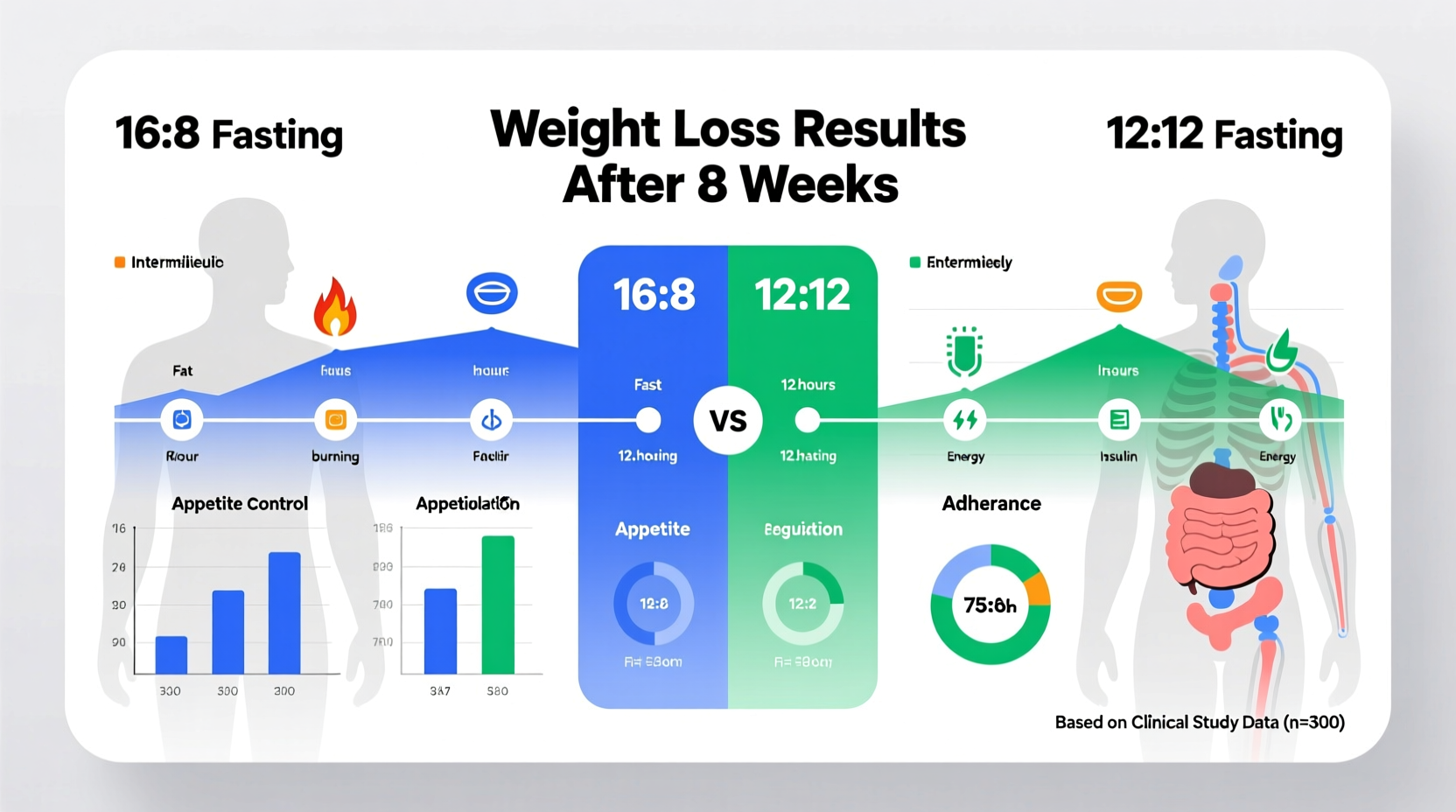
The 16:8 method involves fasting for 16 consecutive hours each day and consuming all meals within an 8-hour window. For example, someone might eat between 12:00 PM and 8:00 PM, then fast until noon the next day. This protocol typically skips breakfast and delays the first meal, making it popular among those seeking accelerated fat loss.
In contrast, the 12:12 method splits the day evenly—12 hours of eating followed by 12 hours of fasting. A common schedule would be eating from 8:00 AM to 8:00 PM, then fasting overnight until breakfast the next morning. This version aligns more closely with natural circadian rhythms and is often easier for beginners to adopt.
Both methods support a caloric deficit indirectly by reducing the number of eating opportunities. But the longer fast in 16:8 increases the time spent in a post-absorptive state, where insulin levels drop and fat oxidation rises. This extended period without food also enhances autophagy—a cellular cleanup process linked to longevity and metabolic health.
Tip: Start your fasting window at night—sleeping through part of the fast makes it easier to maintain, regardless of whether you follow 12:12 or 16:8.Weight Loss Outcomes: What the Research Shows
A growing body of clinical evidence compares time-restricted feeding regimens. A 2022 study published in Nutrition and Healthy Aging found that participants following 16:8 fasting lost an average of 3% of body weight over 12 weeks without intentional calorie restriction. Those on 12:12 showed modest reductions—around 1–1.5%—over the same period, primarily due to improved meal timing and reduced late-night snacking.
The greater weight loss in 16:8 appears tied to increased fat utilization. When insulin remains low for longer periods, lipolysis (fat breakdown) accelerates. Additionally, many people naturally consume fewer calories when confined to an 8-hour window, especially if they avoid compensatory overeating.
However, sustainability matters. In the same study, dropout rates were higher in the 16:8 group (approximately 30%) compared to just 12% in the 12:12 cohort. Participants cited hunger, social inflexibility, and difficulty maintaining energy levels as key challenges. This suggests that while 16:8 may offer superior short-term fat loss, 12:12 could deliver better long-term results through consistency.
“Time-restricted eating works best when it fits seamlessly into a person’s life. A slightly less aggressive window like 12:12 often leads to better adherence and sustained metabolic improvements.” — Dr. Satchidananda Panda, Circadian Biology Expert, Salk Institute
Metabolic and Hormonal Differences
The hormonal environment created by each fasting protocol plays a crucial role in weight regulation. Insulin sensitivity improves under both plans, but the effect is more pronounced in 16:8 due to prolonged fasting.
During a 16-hour fast, insulin levels fall significantly, allowing adipose tissue to release fatty acids. Growth hormone levels also rise, aiding fat metabolism and preserving lean muscle mass. Meanwhile, ghrelin—the hunger hormone—may spike initially but tends to normalize over time as the body adapts.
With 12:12, insulin still drops during the overnight fast, particularly if dinner ends early and breakfast isn’t immediate. However, the shorter duration means less time in deep fat-burning mode. On the other hand, cortisol regulation tends to be more stable with 12:12, especially in women and individuals prone to stress-related eating.
For individuals with insulin resistance or prediabetes, 16:8 may offer stronger therapeutic benefits. But for those managing stress, sleep issues, or hormonal imbalances (such as PCOS), starting with 12:12 provides a gentler transition without triggering metabolic stress.
Comparison Table: 16:8 vs 12:12 for Weight Management
| Factor | 16:8 Intermittent Fasting | 12:12 Intermittent Fasting |
|---|---|---|
| Fasting Duration | 16 hours | 12 hours |
| Eating Window | 8 hours | 12 hours |
| Average Weekly Weight Loss | 0.3–0.7 lbs (0.14–0.3 kg) | 0.1–0.3 lbs (0.05–0.14 kg) |
| Impact on Insulin Sensitivity | High improvement | Moderate improvement |
| Ease of Adherence | Moderate to low | High |
| Best For | Accelerated fat loss, metabolic reset | Beginners, long-term habit building |
| Risk of Overeating | Higher (due to restricted window) | Lower |
Real-World Example: Two Approaches, One Goal
Consider two professionals aiming to lose 15 pounds over six months:
- Sarah, 34, office manager: She tried 16:8 fasting after reading success stories online. Skipping breakfast was difficult at first, but she adapted within three weeks. Her lunch and dinner remained balanced, though she occasionally overate during her 8-hour window, especially on weekends. After 12 weeks, she lost 9 pounds—impressive, but plateaued afterward due to fatigue and disrupted sleep.
- James, 41, teacher: He started with 12:12, simply finishing dinner by 8 PM and waiting until 8 AM to eat again. No skipped meals, no drastic changes. Within four months, he lost 11 pounds gradually. He reported better digestion, fewer afternoon cravings, and improved focus. Because the plan felt effortless, he stuck with it beyond his initial goal.
This contrast illustrates a key insight: faster results don’t always translate to lasting change. James’ slower, more sustainable approach ultimately led to greater long-term success because it required minimal willpower and aligned with his lifestyle.
Step-by-Step Guide to Choosing Your Protocol
- Assess your current eating pattern. Track when you eat over three typical days. Note late-night snacks or irregular mealtimes.
- Determine your fasting readiness. If you rarely skip meals or struggle with hunger, start with 12:12. If you’re comfortable skipping breakfast, consider 16:8.
- Set a consistent sleep schedule. Aim for 7–8 hours nightly. Align your fasting window with your natural sleep cycle—this enhances circadian alignment.
- Begin with 12:12 for 2–4 weeks. Close your kitchen after dinner and delay breakfast by one hour every few days until you reach 12 hours.
- Evaluate progress and symptoms. Monitor energy, hunger, sleep quality, and scale changes. If weight loss stalls and you feel strong, cautiously extend to 14:10, then 16:8.
- Maintain flexibility. Adjust based on social events, travel, or stress. Even five days a week of consistency yields benefits.
Checklist: Getting Started with Time-Restricted Eating
- ☑ Choose your target fasting window (12:12 or 16:8)
- ☑ Set fixed start and end times for eating
- ☑ Prepare balanced meals rich in protein, fiber, and healthy fats
- ☑ Avoid sugary foods and refined carbs during eating windows
- ☑ Stay hydrated with non-caloric beverages during fasts
- ☑ Track your food and symptoms for the first month
- ☑ Prioritize sleep and stress management
- ☑ Reassess every 4 weeks and adjust as needed
Frequently Asked Questions
Can I drink anything during the fasting window?
Yes. Water, unsweetened tea, black coffee, and sparkling water are allowed. Avoid adding sugar, milk, or cream, as these can break the fast by spiking insulin. A splash of plant-based milk (under 1 oz) may be acceptable in 12:12 but should be minimized in 16:8 for optimal results.
Is 12:12 fasting effective for weight loss?
Yes, especially for beginners. While it produces slower results than 16:8, 12:12 helps regulate appetite, reduce nighttime eating, and improve metabolic rhythm. Many people find it easier to maintain long-term, leading to steady, sustainable fat loss.
Can women do 16:8 fasting safely?
Some women may experience hormonal disruptions—such as missed periods or increased anxiety—with prolonged fasting. It’s advisable for women to start with 12:12, monitor energy and menstrual cycles, and only progress to 16:8 if well-tolerated. Cycling fasting intensity (e.g., lighter on stressful days) can also help maintain balance.
Final Thoughts: Matching Method to Lifestyle
The choice between 16:8 and 12:12 intermittent fasting isn't about which is objectively better—it's about which one works better for you. 16:8 offers a powerful tool for jumpstarting weight loss and improving metabolic markers, but it demands discipline and may not suit everyone. 12:12, while less aggressive, excels in accessibility and long-term compliance, making it ideal for building foundational habits.
Weight management is not a sprint; it's a lifelong practice of small, consistent choices. Starting with a manageable routine like 12:12 allows the body to adapt, reduces reliance on willpower, and fosters a healthier relationship with food. From there, individuals can experiment with longer fasts if desired and appropriate.
Ultimately, the most effective fasting protocol is the one you can stick to without burnout. Whether you aim for rapid transformation or gradual improvement, aligning your approach with your biology, schedule, and personal preferences ensures lasting success.
💬 Ready to take control of your weight and health? Try the 12:12 method for two weeks and track how you feel. Share your experience in the comments—your journey could inspire someone else to begin theirs.








